Airport Photography
-
A Trip to Haneda to Relax and Spot the Lufthansa Five-Star Livery Aircraft
I’ve been quite busy lately and haven’t been out to spot planes for a long time.
I saw a news piece, Lufthansa becomes Europe’s first Skytrax 5-star airline.
According to Reuters, Lufthansa has passed Skytrax's 5-star certification, becoming Europe's first 5-star airline. To win passenger favor in a fiercely competitive market, Lufthansa has been continuously improving the passenger experience by updating its fleet and retrofitting cabins.
Then there was Lufthansa promoted to 5-star airline, the only one in Europe.
-
Aviation Spotting Photos at Nagoya Chubu Centrair International Airport Part 2
As a follow-up to Revisiting Chubu Centrair International Airport, here are a few photos taken when the lighting was decent. Feel free to click to view the full-size images.
N854NW Airbus A330-223 - Delta Air Lines <img src=https://imgproc.airliners.net/photos/airliners/9/0/8/4691809.jpg?v=v479e2106ff6 referrerpolicy=“no-referrer”> Delta Air Lines’ A330-200 is an uncommon sight; perhaps this is the first photo I’ve taken of one. I checked online, and it turns out there are only 11 of them in total.
-
A Return to Chubu Centrair International Airport
I took advantage of a break during my business trip to visit Nagoya Chubu Centrair International Airport.
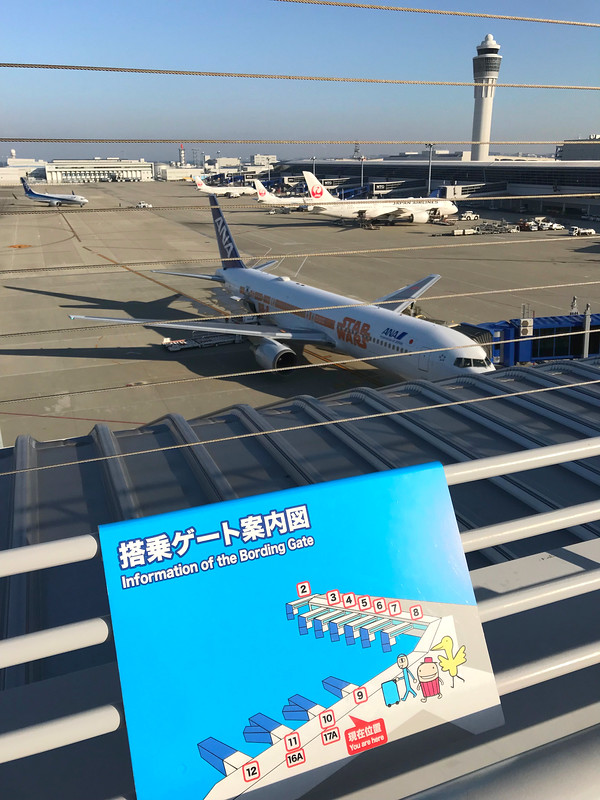 My last visit was four and a half years ago.
As mentioned in the Nagoya Centrair Training Plan,
I saw ANA continuously performing touch & gos at the field.
It was quite interesting.
My last visit was four and a half years ago.
As mentioned in the Nagoya Centrair Training Plan,
I saw ANA continuously performing touch & gos at the field.
It was quite interesting.Since it was against the light, I won’t post high-resolution photos; just take a look at the general view.
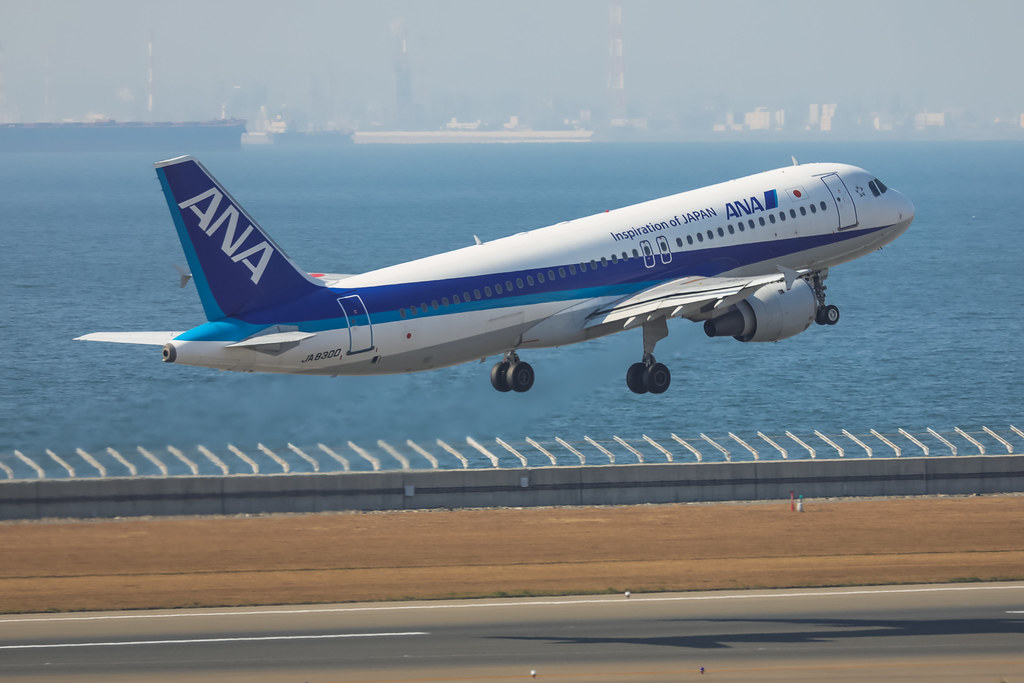
 You can see the landing gear hasn't been retracted yet on the downwind leg, confirming it looks like training.
I wasn’t lucky this time; unlike when I saw the DreamLifter last time, I only saw one four-engine aircraft, which is a huge regret.
-
On Discussing Depth of Field Issues in Aircraft Photography
As mentioned in the formula for calculating lens focal length based on the distance and size of the subject, regarding focal length calculations when photographing aircraft, below is a write-up on a simple depth of field calculation problem. However, this time, instead of using an estimation formula, I used an app.
On Instagram, I saw a work by a photographer I’ve known for a while (link), (who is also a co-author of the book Airplane Photography Bible) and became interested in its depth of field.
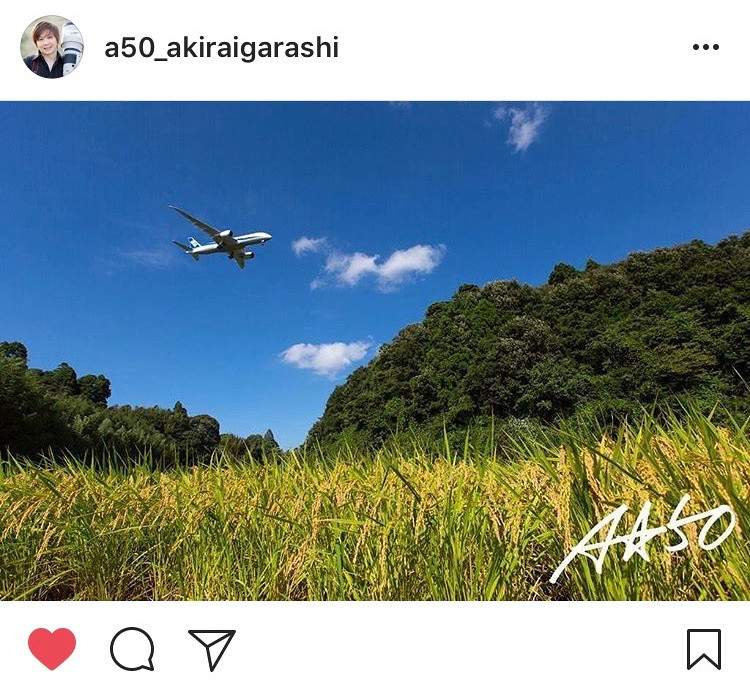 Because both the foreground and background in the photo were in very sharp focus, I really wanted to know the shooting method.
So, I asked the photographer directly on Instagram and got an answer.
Because both the foreground and background in the photo were in very sharp focus, I really wanted to know the shooting method.
So, I asked the photographer directly on Instagram and got an answer. -
Calculation Formula for Estimating Lens Focal Length Based on Subject Distance and Size
A very simple memo: Focal Length (mm) = Distance (m) x Sensor Size (mm) / Subject Length (m)
Full-frame DSLR sensor is 36mm, APSC is around 23mm.
For example, photographing an aircraft taking off from an airport observation deck, Distance to Runway is 500 meters, using a Canon 5D4, the subject is a Boeing 787-9 airliner, with a length of 63 meters. So, calculate using the formula above. Note that it is best to leave about 10% margin on both sides for the length, 500 x 36 / (63 x 1.2) = 238mm
-
Rocket Launch Views from a Pilot's Perspective
I saw a report in Ming Pao – Dutch pilot captures PLA anti-missile test, I looked up the Instagram page of this Boeing 747 freighter pilot Christiaan van Heijst, and sure enough, I found these precious photos.
Captured JAL Doraemon Jet JA610J by Coincidence on Retirement Day
Exactly one month ago, I wrote about coincidentally capturing the JAL Doraemon livery JA622J on the day of its retirement. Last Saturday, July 15th, I went to the Haneda International Terminal and spotted another Doraemon jet—JA610J. And once again, it was on the day of its retirement. What a coincidence!
This JA610J is known as the JAL Doraemon Jet No. 1. It was officially put into operation on September 22, 2016. On the JAL official website, there is even a short film documenting the production process. It records the entire journey from the initial manual application of the fuselage decals to the Doraemon jet finally taking to the skies.
Captured JAL Doraemon Livery JA622J by Chance on its Retirement Day
JAL uses Doraemon as a special livery for domestic and China routes, and there is even a dedicated Chinese page on their official website. You can see in the latest news that a new airframe has just been put into operation.
I haven’t personally seen a Doraemon livery on an international route yet. However, by sheer coincidence, while taking photos at Haneda Airport’s International Terminal on May 28th, I captured this JA622J domestic aircraft with the Nobita’s Great Adventure in the South Seas movie livery, which turned out to be its very last day in service—a real stroke of luck.
A Closer Look at Some A350 Fuselage Details
Two years ago, in the Vietnam Airlines A350-900 Takeoff article, I introduced some features of the A350 airframe. Here, let’s take another look at the details of the Singapore Airlines A350 photographed at Tokyo International Airport.
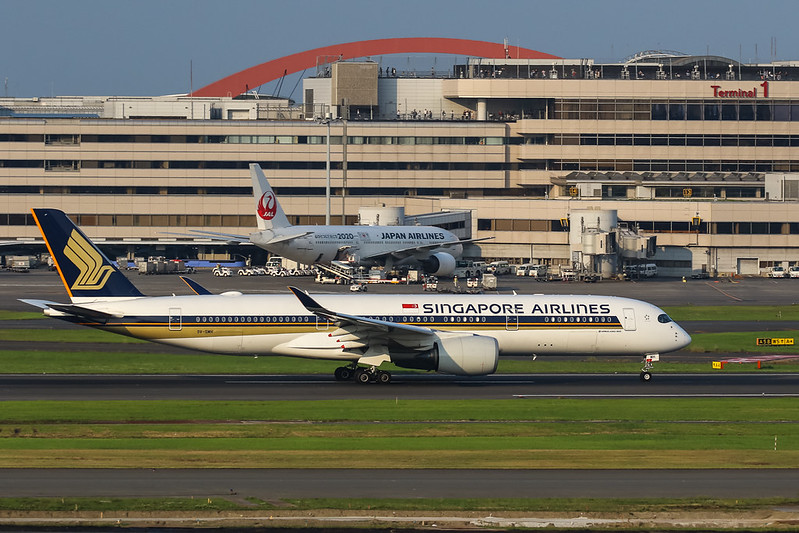 Its aircraft registration is 9V-SWH.
The three probes located at the lower front of the cockpit:
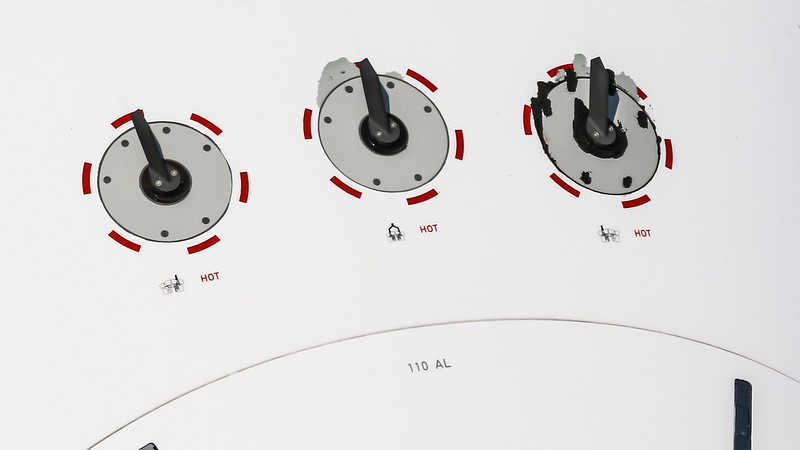 These are the No. 1, 2, and 3 Side Slip Angle (SSA) probes.
What’s interesting is that you can see icons painted below the probes,
indicating which side of the cockpit the probe is intended for.
The probe on the left is for the Captain’s seat, the one on the right is for the First Officer’s seat, and the one in the middle can be used by both sides.
This is not easy to spot without a telephoto lens,
Of course, the airport observation deck being close to the aircraft is also an important condition.
These are the No. 1, 2, and 3 Side Slip Angle (SSA) probes.
What’s interesting is that you can see icons painted below the probes,
indicating which side of the cockpit the probe is intended for.
The probe on the left is for the Captain’s seat, the one on the right is for the First Officer’s seat, and the one in the middle can be used by both sides.
This is not easy to spot without a telephoto lens,
Of course, the airport observation deck being close to the aircraft is also an important condition.The Before and After Hello Kitty Livery of B-16332
I’ve become quite accustomed to seeing EVA Air’s Hello Kitty jets—the result of a collaboration with Sanrio—at Haneda Airport, so they don’t seem like anything special anymore.
However, the other day I偶然 noticed that the livery on this Airbus A330-200 (B-16332) had been updated, changing from the Apple Jet “LOVES APPLES” to the Dream Jet “JOYFUL DREAM”.
I took a look at the official website, and sure enough, the livery has changed. The concept of the new Dream Jet livery is: A journey carrying the excitement of traveling abroad and the anticipation of returning home, letting Hello Kitty, Kiki & Lala, the adorable Pudding Dog, and other Sanrio family members accompany passengers to roam the skies, sailing together towards a dream country!
Trying to submit photos to airliners.net
After visiting the ANA and JAL maintenance hangars last week, seeing that the weather was clear with high Visibility, I went to the Haneda International Terminal with a few colleagues to take photos of aircraft for a few hours.
One of the highlights that day was capturing a rare airframe, HL7227, a Boeing 737 Business Jet (BBJ), belonging to Hanwha Chemical Corp. Since the lighting was good, I felt the photo results were decent, so I decided to submit it to airliners.net. The screening took over a week, and this time I was lucky enough to pass, so my first photo was published.
Which Aircraft Type Has the Most Beautiful Thrust Reverser Spray?
Spotting planes in the rain is quite interesting. After landing, when the engines deploy reverse thrust, the powerful airflow blasting backward kicks up standing water on the ground, creating a spectacular mist effect.
On this day, I was spotting at Haneda Airport just as a shower began, and I managed to capture several basic aircraft types. So, here is a small ranking to see which aircraft type produces the best effect.
ANA Star Wars Livery Jet No. 4 C-3PO
The ANA Star Wars livery series is finally complete, with the fourth aircraft, C-3PO, officially entering commercial operation this week on March 21.
One and a half years ago, I captured the first aircraft, R2-D2, on its first passenger flight and another look at the R2-D2 special liner’s takeoff. One year ago, I photographed ANA Star Wars Livery 2nd Jet JA604A. Half a year ago, I captured the 3rd Jet BB-8. Yesterday, I finally got the 4th jet as well, fulfilling a wish.
Filming the Hummingbird Departure Procedure Takeoff
About a year ago, I introduced the Hummingbird Departure Procedure at Tokyo International Airport. I mentioned that the reason this departure is extremely popular is that “you can capture a photo of the aircraft with Mount Fuji.” However, the shooting conditions are quite difficult because “the conditions require a winter morning, a north wind, taking off from RWY 34L, and limited to flights before 8:00 AM. Even if the weather meets these conditions, there are only 3 flights per day that can use this procedure.”
Osaka Itami Airport Photography Spot Introduction Part 3: Itami Sky Park
Near Osaka Airport, there is another famous spot for aviation photography: Itami Sky Park. Located on the south side of the Osaka International Airport Runway, it is a very long and narrow park, running essentially parallel to the Runway. Because it is so close to the Runway, you can capture photos from various angles.
To get to Itami Sky Park, take the JR Fukuchiyama Line from Osaka Station, get off at Itami Station; the ride takes about 15 minutes. After exiting the station, head to the right (northeast), walk through the AEON Mall, cross the Inagawa Bridge, and keep walking for another ten minutes to arrive.
# Introduction to Osaka Itami Airport Photography Spots Part 2: Night View at Itami Airport
A long time ago, I introduced the famous spotting point at the Runway end of Osaka International Airport (Itami Airport) - the Senri River embankment. It is truly a must-visit place for aviation enthusiasts.
Since I hadn’t taken night photos there, I went there recently and shot for about an hour and a half in the cold wind. Here are a few selected shots to share the results.
All Nippon Airways Boeing 777 before Takeoff
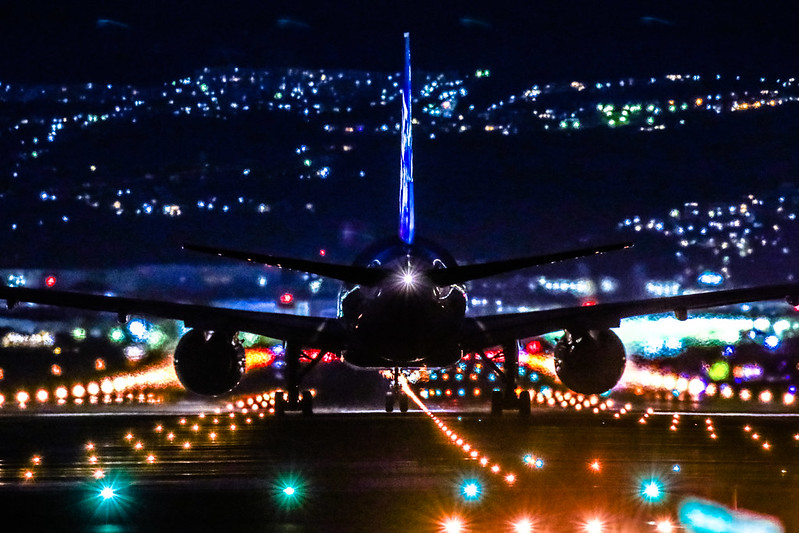 Ideally, for this kind of photography, a tripod is a must, it’s best to use RAW format, and a full-frame camera should be used.
However, due to limited conditions this time, I was shooting hand-held with a shutter speed of 1/30s, using a Canon 7D2 APS-C body in JPEG format, at ISO 3200. But I’m quite satisfied with getting this kind of result.
Ideally, for this kind of photography, a tripod is a must, it’s best to use RAW format, and a full-frame camera should be used.
However, due to limited conditions this time, I was shooting hand-held with a shutter speed of 1/30s, using a Canon 7D2 APS-C body in JPEG format, at ISO 3200. But I’m quite satisfied with getting this kind of result.Zhuhai Airshow 2016 Log: Part V
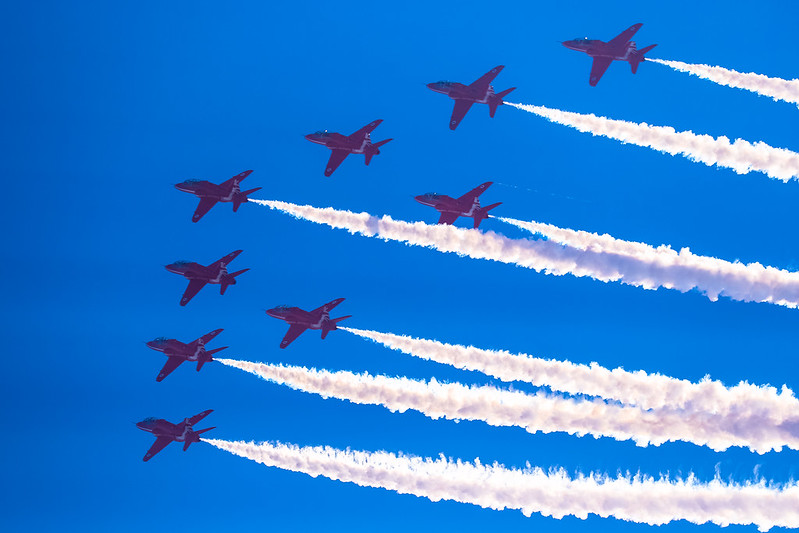
Continuing from the previous article, here is an introduction to the formation flying of the British RAF Red Arrows Aerobatic Team.
Formation 11: Goose
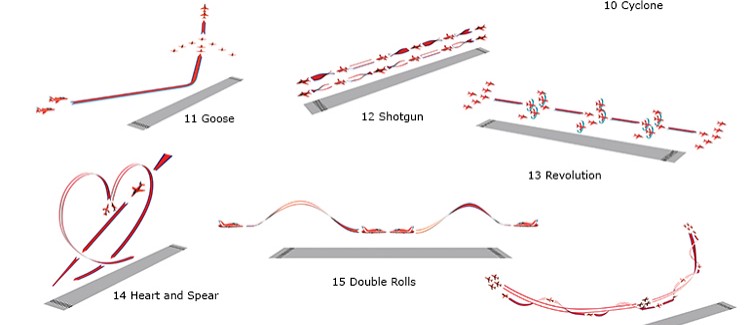
According to the official website, the next maneuver should be the Goose formation, but what was actually seen was completely different. Two aircraft made a pass from east to west.
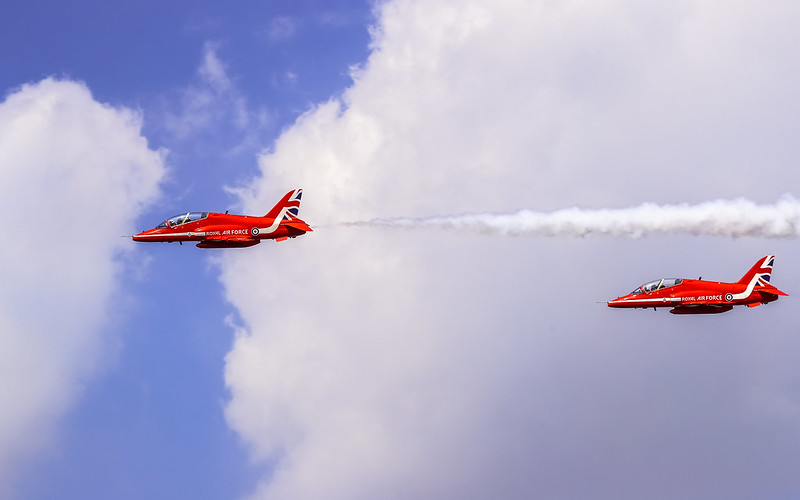 The other 7 aircraft formed a triangular formation, trailing white, blue, and red smoke, flying towards each other from west to east.
Zhuhai Airshow 2016 Record - Part 4
Following the previous article, continuing the introduction to the Royal Air Force Red Arrows Aerobatic Team’s formation flying.
Formation 6: Typhoon Roll
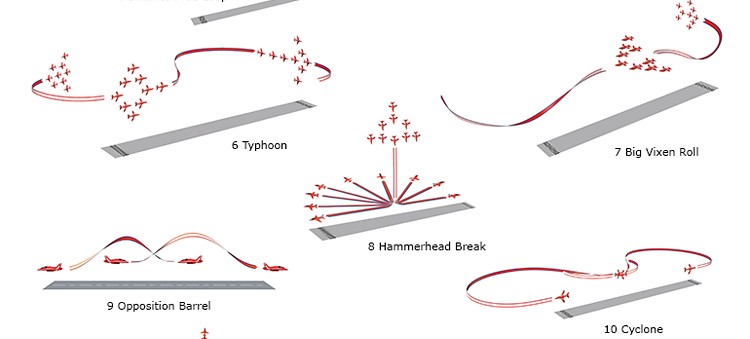
Still a 9-aircraft formation, continuously changing formation during the roll.
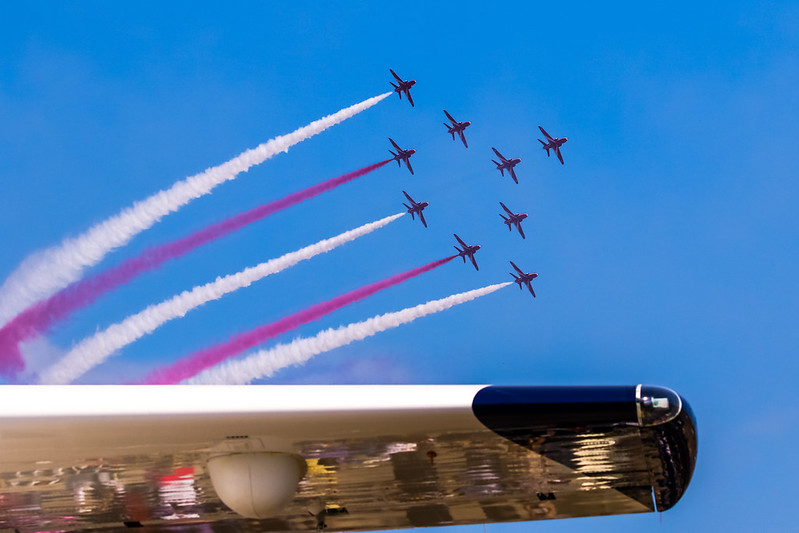
Formation 7: Big Vixen Roll
I really didn’t understand why this formation is called “Vixen”,
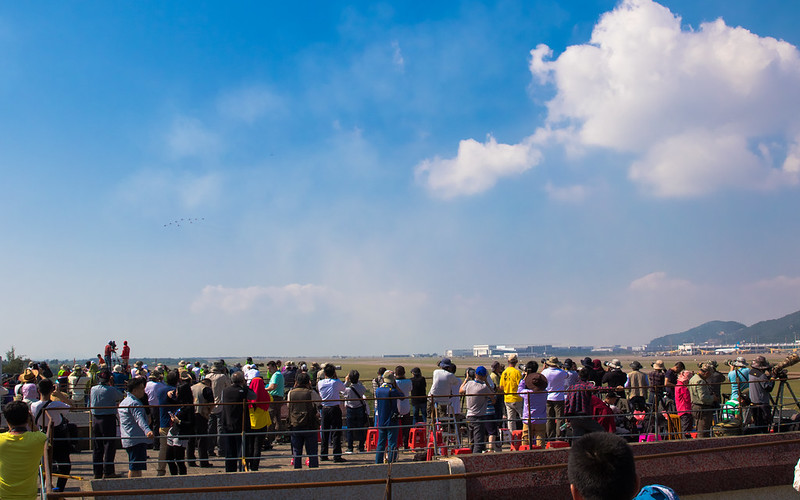 but you can see the formation completing the roll as a whole, with very precise movements,
New Photos of Some Airlines' A350-900
After finishing the first photos of the Airbus A320neo, I realized I still had some photos of the A350 taken over the past month, so I decided to share them as well. Two years ago, I introduced “Rain Man’s” first encounter with the A350 XWB, which was Airbus’s test flight aircraft. Last year, I posted photos of Vietnam Airlines A350-900 Ground Ops and photos of Vietnam Airlines A350-900 Takeoff. Today, I will be introducing the brand new A350s of Singapore Airlines, China Airlines, and Cathay Pacific.
First Flight in Airbus A320neo
The Airbus A320neo (New Engine Option) began commercial operations this year. As the A320 series has been the best-selling passenger jet for nearly 30 years, its new variant, the neo, is expected to continue to hold the top two spots on the sales charts alongside the Boeing 737 series.
According to Wikipedia,
Compared to the original A320 series, the main changes in the A320neo involve the use of larger and more efficient new engines, reducing fuel consumption by 15% and operating costs by 8%, along with lower noise and nitrogen oxide emissions. A320neo customers can choose between two engine types: the CFM International LEAP-X or the Pratt & Whitney PW1000G. Additionally, the A320neo airframe has undergone changes; in addition to installing newly designed Sharklets (also known as winglets, wingtip sails, or wingtip devices), the overhead bin space and air filtration systems have been improved to enhance passenger comfort.
I hadn’t had a chance to photograph this latest 320 model until yesterday, when the first A320neo introduced by ANA, registration JA211A, flew back to Haneda. Finally, my wish to photograph it was fulfilled. It is a pity that the aircraft landed late; the sun had set some time ago, and the ISO reached 16000, so I was unable to capture high-definition details of the airframe. I will have to find another opportunity to make up for this later.