Aviation Around Us
-
Waypoints Named After Häagen-Dazs Ice Cream and Shiroi Koibito Cookies
We have previously introduced waypoints named after cars and food and waypoints named after beers, but it looks like we can continue this topic. This time, the waypoint names introduced are from the famous ice cream manufacturer Häagen-Dazs and the Hokkaido Shiroi Koibito (White Lover) chocolate.
Looking at the ILS Z or LOC Z RWY08 Arrival procedure at Nakashibetsu Airport (RJCN/NAKASHIBETSU), the Intermediate Fix (IF) is named HAGEN, and the Final Approach Fix (FAF) is named DATZU. Although the spelling is inconsistent (Häagen-Dazs), when put together, doesn’t it sound like the Japanese pronunciation of Häagen-Dazs?
-
Encountering a Russian Tycoon's Yacht and Private Jet
While walking by the seaside in Yokohama, I stumbled upon a ship with a very unique appearance,
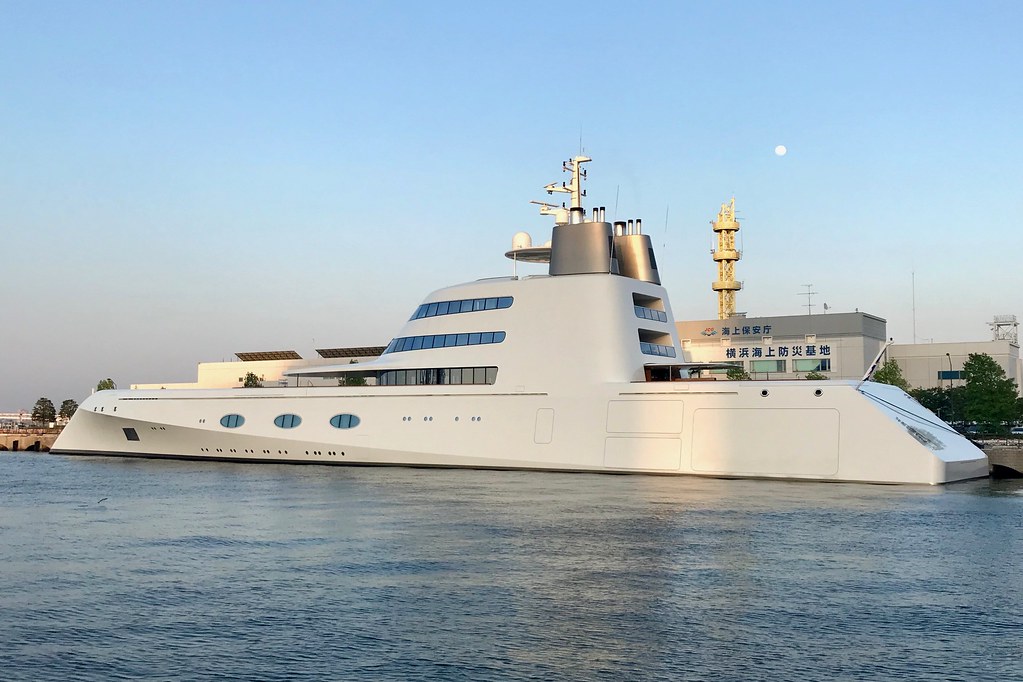 After consulting a friend familiar with ships, it turned out to be a super luxury Megayacht “A”,
a work by French designer Philippe Starck.
After consulting a friend familiar with ships, it turned out to be a super luxury Megayacht “A”,
a work by French designer Philippe Starck.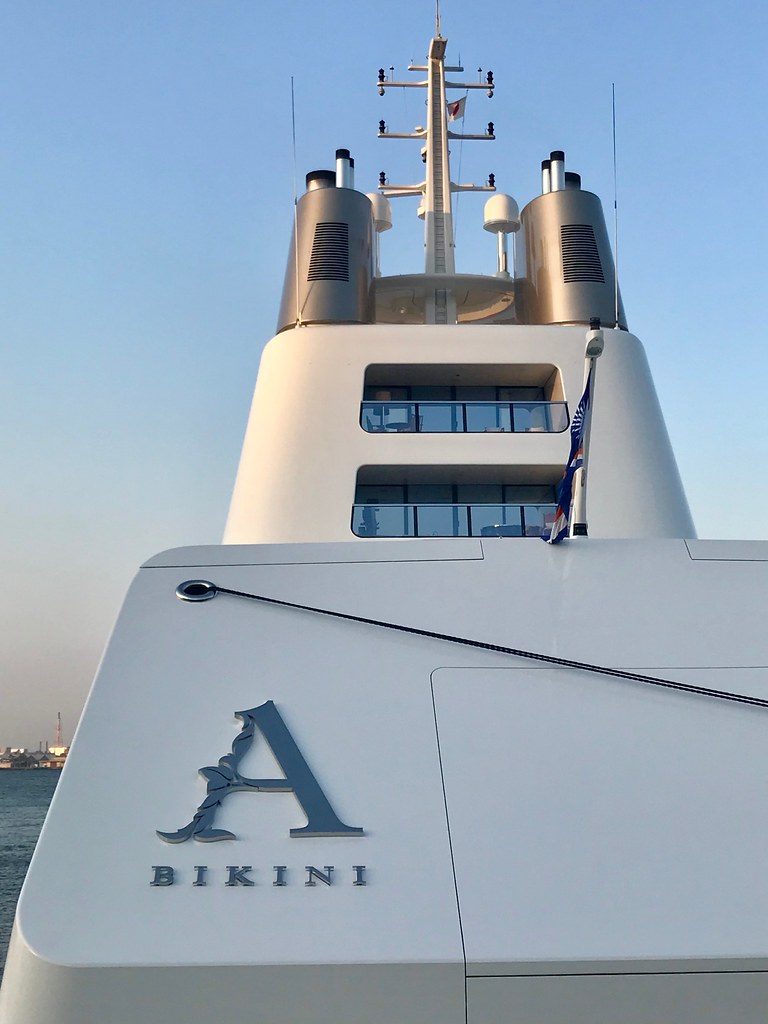 The ship is named "A", and the "BIKINI" below indicates its home port is Bikini, flying the Marshall Islands flag.
The owner is reportedly Russian billionaire Andrey Melnichenko,
a major shareholder of a Siberian coal and energy company, and a coal and fertilizer magnate,
ranked 56th in the 2013 Forbes global rich list.
The estimated cost of the entire ship is 300 million USD.
The ship is named "A", and the "BIKINI" below indicates its home port is Bikini, flying the Marshall Islands flag.
The owner is reportedly Russian billionaire Andrey Melnichenko,
a major shareholder of a Siberian coal and energy company, and a coal and fertilizer magnate,
ranked 56th in the 2013 Forbes global rich list.
The estimated cost of the entire ship is 300 million USD.
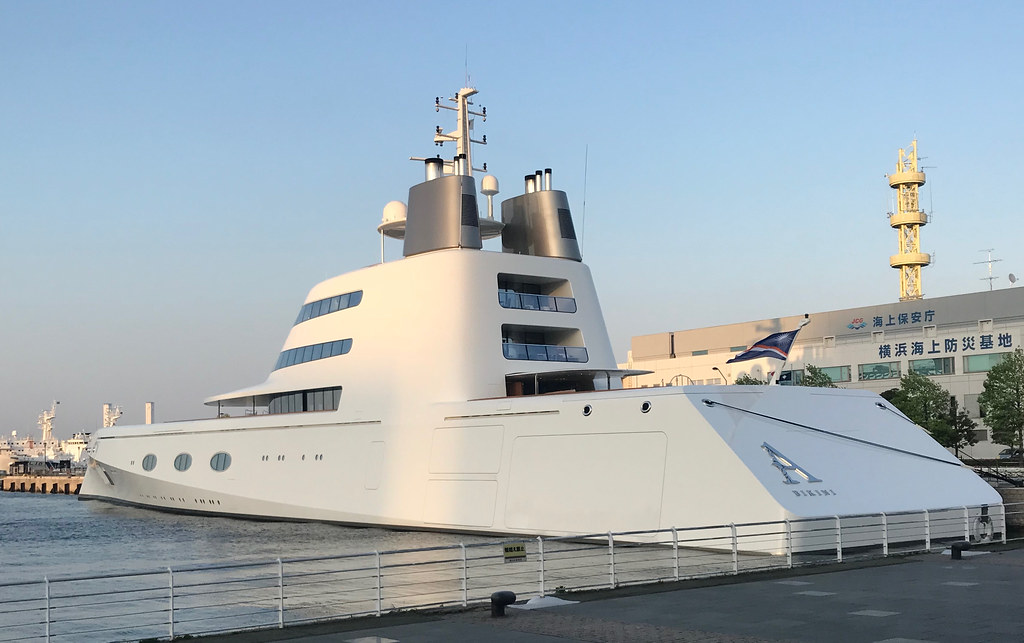 I checked Chinese media online and found this article's description is quite good, for reference only:
Russian tycoon spends $400 million to build private yacht that looks like a warship and a submarine
I checked Chinese media online and found this article's description is quite good, for reference only:
Russian tycoon spends $400 million to build private yacht that looks like a warship and a submarine
The next day, I went to Haneda to take photos of airplanes, and had the pleasure of meeting several aviation enthusiasts who came specifically from Beijing for this.
-
A Quick Visit to the Aichi Museum of Flight
A few months ago, I took a trip to the Aichi Museum of Flight. Since the itinerary was rushed, I only stayed for about two hours. I just snapped some souvenir photos with a point-and-shoot camera (RX100) and am posting them here to introduce the place.
The Aichi Museum of Flight is located right next to Nagoya Airport. (This is not Nagoya Chubu Centrair International Airport, but a joint civil-military local airport.) It just opened on November 30, last year (2017). According to the official Aichi tourism website, the facility consists of:
-
China-Japan routes overfly Korea without Korean control? Does Korean Air still have to pay transit fees to China?
Two years ago, I wrote an article titled Waypoints Named After Cars and Food, introducing some interesting names of navigation points. Among them, I mentioned a segment on the China-Japan route located south of Jeju Island, where the “AKARA Fukue Air Corridor” uses names like Ramen and Leeks for waypoints.
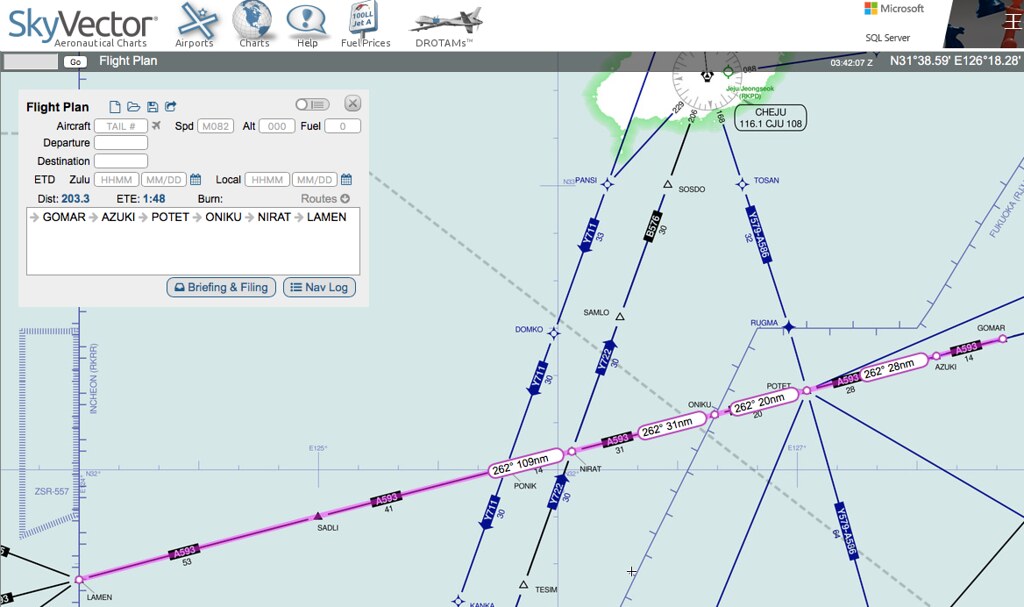 (The green area at the top of the image is Jeju Island)
Recently, I came across this article: China and Japan Controlled Korean Airspace for 35 Years; China Even Collects Transit Fees. It explains that although the AKARA Fukue Air Corridor passes through the Flight Information Regions (FIR) of China, South Korea, and Japan, it is not managed by South Korean air traffic control when flying over it, which makes Koreans quite unhappy.
-
The Volcano Crater Erupts in the 007 Movie
This month, Mount Kirishima (KIRISHIMAYAMA) located in Kagoshima, South Kyushu, Japan, has seen the eruption of the Shinmoedake volcano. Shinmoedake
新燃岳の噴火活動続く 噴煙の高さ一時300メートルに #西日本新聞 #ニュースhttps://t.co/6Gq31VY8Yq
— 西日本新聞web (@nishinippon_dsg) March 2, 2018Consequently, I checked the Volcanic Ash Advisory Center website. You can see that new information has been issued every few hours since March 1st.
When mentioning Shinmoedake volcano, people generally have no concept of it, but when referring to the famous 007 series movie “You Only Live Twice” from 1967, a vast number of people should know about it.
-
How to Look Up Aircraft Codes
Last week, I saw someone on Twitter asking what the aircraft designator code for the Boeing 787-10 is.
Coincidentally, I came across ICAO DOC8643 regarding Aircraft Type Designators, which perfectly solved this problem.
So, I went to the ICAO website DOC 8643 - Aircraft Type Designators to check.
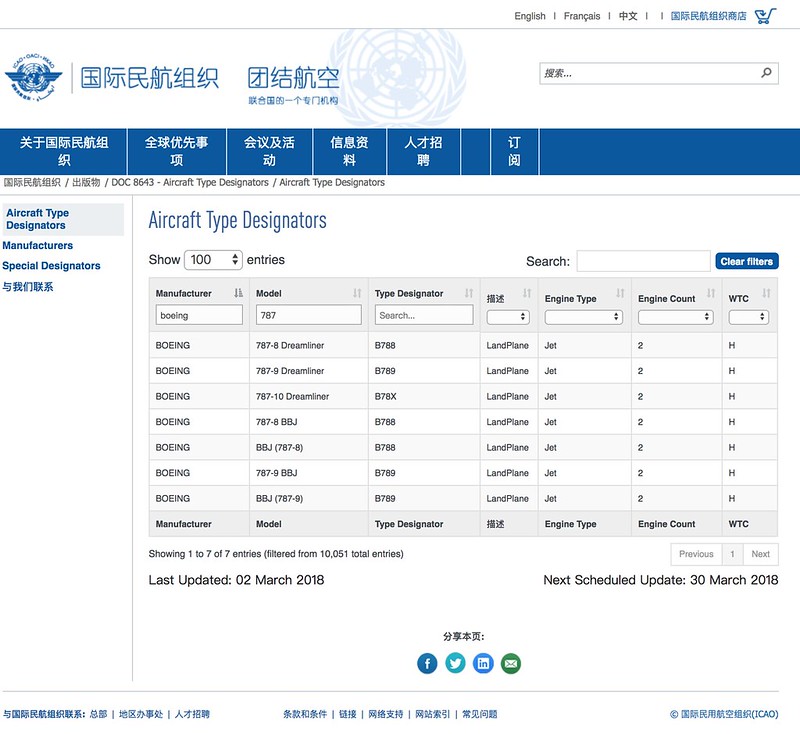 The answer is: the designator for the Boeing 787-10 is **B78X**.
Similarly:
- 737 MAX 7 is B37M
- 737 MAX 8 is B38M
- 737 MAX 9 is B39M
- 747-400LCF Dreamlifter is BLCF
- 747SCA Shuttle Carrier is BSCA
- 747SP is B74S
- 747SR is B74R
- 747-8 is B748
- 777-200LR and 777-F are B77L
- 777-300 is B773
- 777-300ER is B77W
- A-300ST Beluga and A-300ST Super Transporter are A3ST
- A-320neo is A20N
- A-319neo is A19N
- A-321neo is A21N
- A-330-900 is A339
- A-330-800 is A338
- A-350-900 XWB is A359
- A-350-1000 XWB is A35K
- A-380-800 is A388, and so on.
Additionally, the designator for the Cessna 172 is C172, but for the 172RG Cutlass RG it is C72R. The PA-28 Piper Cherokee has a large number of variants, and they are quite peculiar.
-
Ramblings on Aircraft Safety and Such
Chatting with friends, we always seem to come back to the same topics: “Is Airbus or Boeing safer?” “Are ANA flights stable?” “Are big planes safer than small planes?” “Which planes won’t make my ears hurt?” “Which aircraft model is the quietest?” And so on.
I’m not a professional, so naturally I can’t give authoritative answers to these questions. But speaking from my own experience, flying is not only safe but actually enjoyable. So today, I’ll jot down some thoughts on these casual topics.
-
Do the Left and Right Main Landing Gears Retract Simultaneously?
This site has previously discussed topics regarding landing gear, such as The Center Main Landing Gear Not Extending Landing Gear Override Trigger Nose Landing Gear of Several Aircraft Types Today, we will continue with this theme.
Recently, while plane spotting in Osaka, I noticed a phenomenon. When a Boeing 767-300ER retracted its landing gear after Takeoff, the left and right sides did not retract simultaneously, which was quite unexpected.
Below are four consecutive photos.
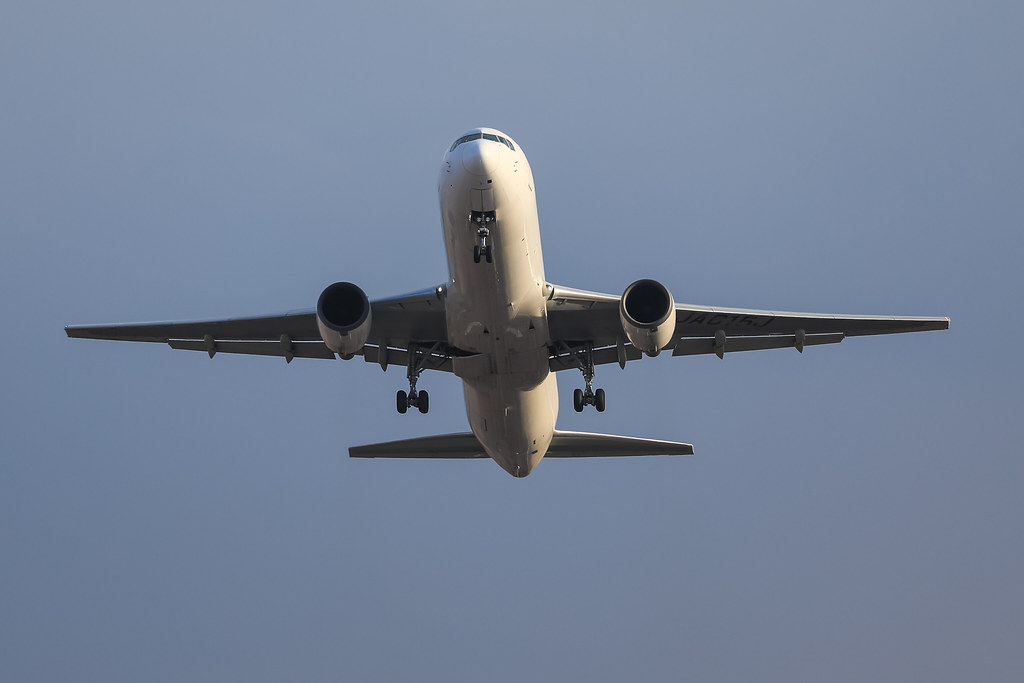 Fig 1, It can be seen that the right landing gear door opens slightly earlier than the left.
 -
simMarket Launches Simplified Chinese Version
simMarket is a famous online flight simulation store, offering a massive amount of airport Scenery, terrain, aircraft Plugins/Addons, and some hardware. Now it has launched a Simplified Chinese version, and supposedly Alipay is accepted for payment. This is truly great news for flight simulation enthusiasts.
Of course, while it’s called a Chinese version, it is actually still in a very preliminary stage. Only navigation information, titles, FAQs, and parts of product descriptions have been localized; the majority of the interface remains in English.
-
Future Changes to Runway Operations at Haneda Airport
Yesterday, the Japan Civil Aviation Bureau (MLIT) published the budget summary for FY2018. It reveals that significant changes are coming to Runway usage at Haneda Airport in the future, particularly regarding operations during Landing.
For plane spotters, when the Runways change, the shooting spots must also change, so there is high sensitivity to this information.
Currently, under sunny conditions with a South wind, Haneda Airport uses LDA Approaches for landing on Runways 22 and 23. Aircraft coming from the North enter Tokyo Bay and use the South side Runway 23, while aircraft coming from the South use the North side Runway 22, but both need to make a turn before landing.
-
The Go-Around in Front of You, Part 2
Going around during landing shouldn’t be a big deal, right? It has been introduced many times on this site. Just yesterday, I encountered it again while taking photos at the observation deck of the International Terminal at Haneda Airport.
(By the way, the news says the name of the “International Terminal” might be changed to “Terminal 3” in the future, because the current “Terminal 2”, which only operates domestic flights, will also launch international flights; otherwise, passengers will get lost.)
-
Cumulonimbus Clouds and Supercells over Tokyo
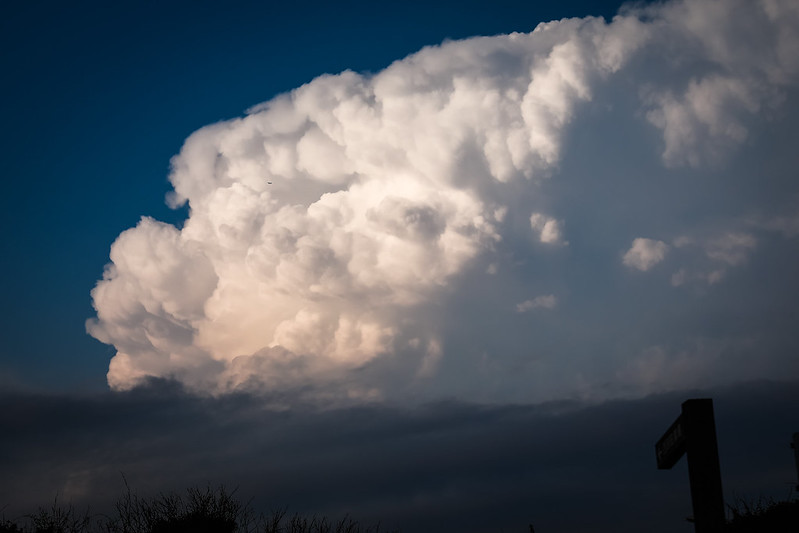
I came to the seaside for a stroll, only to be captivated by the massive cumulonimbus clouds over Tokyo. I watched them for quite a while.
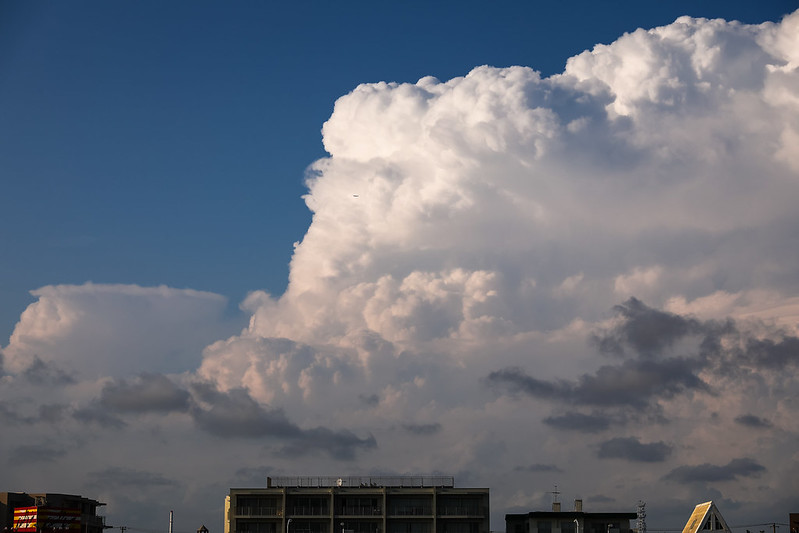 In the photo, you can see a passenger plane that has just taken off from Tokyo Haneda Airport.
I estimate the pilot must be on edge, worried about turbulence or something similar.
In the photo, you can see a passenger plane that has just taken off from Tokyo Haneda Airport.
I estimate the pilot must be on edge, worried about turbulence or something similar.Another passenger aircraft flying near the cumulonimbus clouds.
-
Boeing Uses a 787 to Draw a 787 on the Ground
Presumably for promotional purposes, Boeing used a 787 to fly a route, drawing the outline of a 787 on the map, which looks quite like it.
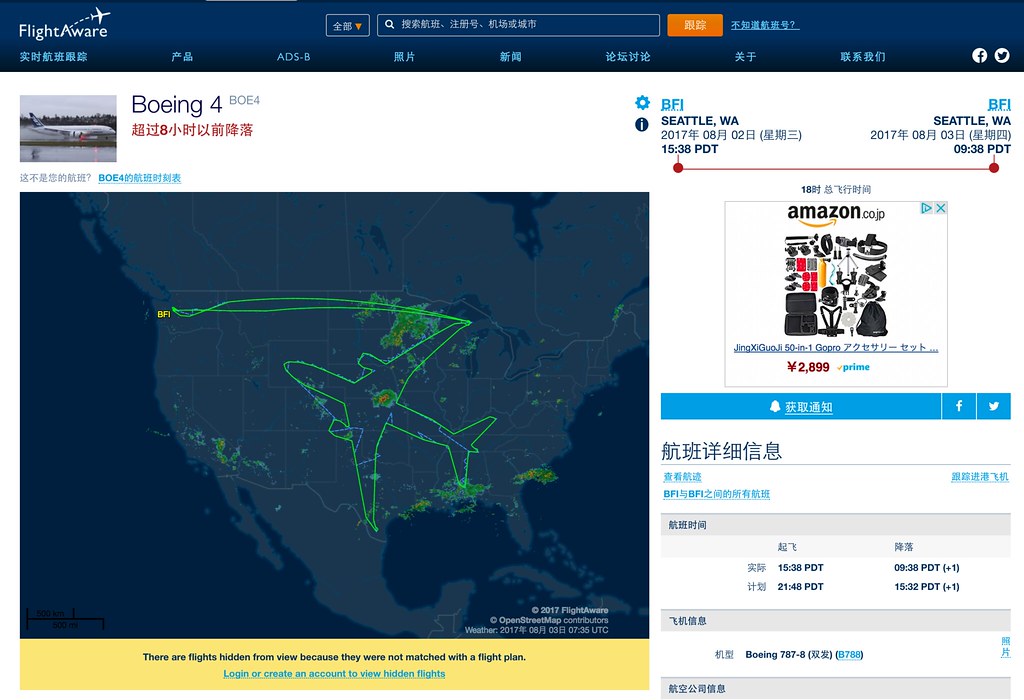
Let’s copy down the flight data:
Speed Filed: 920 km/h Altitude Filed: 10,680 m Distance Actual: 15,925 km (Planned: 25,448 km) Route SEA NORMY J70 MLP GTF 4632N/08706W 4626N/08908W 4301N/09715W 4352N/09907W 4358N/09958W 4306N/10033W 4245N/09958W 4229N/09834W 4122N/10101W 4254N/10552W 4312N/10730W 4314N/10848W 4302N/10919W 4235N/10907W 4157N/10820W 4112N/10654W 3932N/10210W 3717N/10133W 3757N/10243W 3803N/10323W 3702N/10401W 3633N/10320W 3604N/10117W 2827N/09937W 2652N/09820W 2814N/09844W 3438N/09829W 3538N/09819W 3745N/09715W 3610N/09249W 3533N/08953W 3148N/08837W 3126N/08754W 3503N/08731W 3457N/08616W 3539N/08713W 3809N/08411W 3820N/08458W 3642N/08915W 3804N/09148W 3935N/09604W 4143N/09442W 4230N/09354W 4601N/08829W 4631N/08706W
Copying this flight plan into SkyVector to take a look,
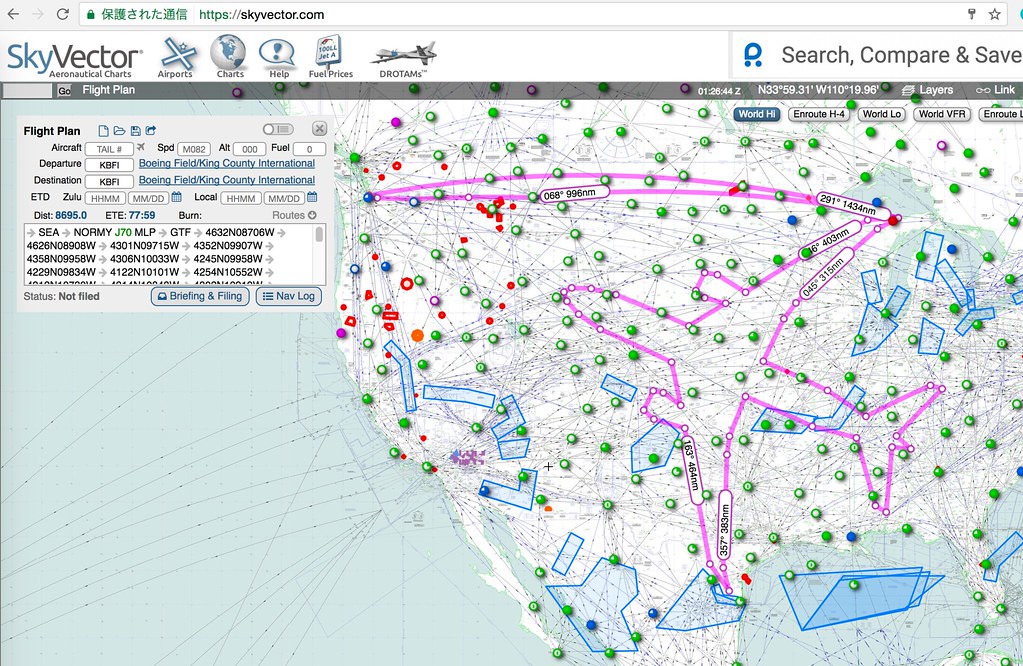 It matches the actual route, so it looks like flight simulation players can actually use this flight plan to give it a try.
 -
Training Plan for Nagoya Chubu Centrair International Airport
I wrote a photography note for Nagoya Chubu Centrair International Airport a long time ago, but haven’t had a chance to go back and take a look since. Actually, some airlines still use Chubu Centrair International Airport for takeoff and landing training. If the timing is right, you can watch large airliners practicing touch and go. Today, I saw the training schedule posted on the airport’s official website. For instance, there are basically sessions every day this month.
-
Book Notes--Topgun Days
Top Gun/壮志凌云/捍衛戰士 is probably my favorite aviation movie. I’ve watched it more than ten times. The F-14 Tomcat in the film looks incredibly cool, and it can be said to be my favorite among all fighters.
The first time I saw an F-14 was 20 years ago. I was visiting a temple near Kamakura when I suddenly heard the roar of huge engines. I looked up to find a twin-tail fighter flying past at high speed. At the time, I couldn’t tell if it was an F-14 or an F-15, but once I learned that there was a nearby naval base, “Atsugi Base,” I knew for sure it was an F-14.
-
Close-up Shot of Boeing 787 Air Conditioning Intake
On that day, during the ANA and JAL Maintenance Factory Tour, I was able to observe many details of the 787 airframe up close, such as the intake of the cabin air conditioning system.
In the past, when shooting from the observation deck at the airport terminal, it was difficult to see clearly due to the angle, but this time I was finally able to take satisfactory photos.
 Top: Heat exchanger inlet
Bottom: Deflector door and cabin air compressor inlet
Top: Heat exchanger inlet
Bottom: Deflector door and cabin air compressor inlet -
China Aeronautical Charts EAIP Updated to 201706
Spent several hours upgrading all files to the June 2017 version,
Aeronautical Information Publication (AIP) and Airport Charts of China
Please enjoy.
For specific updates over the past few months, please see the briefs below: 2017 5th Issue NAIP Revision Information Brief 2017 4th Issue NAIP Revision Information Brief 2017 3rd Issue NAIP Revision Information Brief 2017 2nd Issue NAIP Revision Information Brief
In addition, standard Airway regulations have been updated to 201706: <a href=/x-plane10/view.php?file=doc/International_Flights_from_Mainland_of_China_Nr1705.pdf>International Flight Routes from Mainland of China Nr1705 <a href=/x-plane10/view.php?file=doc/International_Flights_to_Mainland_of_China_Nr1705.pdf>International Flight Routes to Mainland of China Nr1705 <a href=/x-plane10/view.php?file=doc/Overflying_Flight_Routes_Form_Operation_Center_Nr1705.pdf>Overflying Flight Routes Nr1705 <a href=/x-plane10/view.php?file=doc/Regional_Flight_Routes_Nr1705.pdf>Regional Flight Routes Nr1705
-
Visiting the ANA and JAL Maintenance Hangars
A long time ago, I wrote a post about visiting the JAL Maintenance Hangar at Haneda Airport. By the way, this tour has become increasingly popular recently, surprisingly ranking #1 on TripAdvisor for option tours in Tokyo among foreign visitors!
ANA Maintenance Hangar Tour Reservation Website (Japanese) JAL Maintenance Hangar Tour Reservation Website (Japanese)
Recently, an enthusiastic colleague at the company booked the schedule online well in advance. A group of aviation enthusiasts gathered to visit both the ANA and JAL maintenance hangars. So, on this day, 8 of us met at Haneda Airport’s “New Maintenance Field” (Seibijo) station.
-
Renewing the Let's Encrypt Certificate
The electronic certificate is about to expire, so I’m playing with Let’s Encrypt again.
First, execute the command: $ certbot –config-dir ~/letsencrypt/etc –work-dir ~/letsencrypt/lib –logs-dir ~/letsencrypt/log certonly –manual -d yinlei.org -d www.yinlei.org -d yinlei.net -d www.yinlei.net Then, just like last time, a prompt will appear asking you to create the authentication file under .well-known/acme-challenge/ on the server. Once done, you get the following information: IMPORTANT NOTES:
- Congratulations! Your certificate and chain have been saved at ~/letsencrypt/etc/live/yinlei.org/fullchain.pem. Your cert will expire on 2017-06-28. To obtain a new or tweaked version of this certificate in the future, simply run certbot again. To non-interactively renew all of your certificates, run “certbot renew”
Let’s look under etc/live/yinlei.org/ $ ls -l total 32 lrwxr-xr-x 1 laoyanhunhua staff 34 3 30 19:07 cert.pem -> ../../archive/yinlei.org/cert2.pem lrwxr-xr-x 1 laoyanhunhua staff 35 3 30 19:07 chain.pem -> ../../archive/yinlei.org/chain2.pem lrwxr-xr-x 1 laoyanhunhua staff 39 3 30 19:07 fullchain.pem -> ../../archive/yinlei.org/fullchain2.pem lrwxr-xr-x 1 laoyanhunhua staff 37 3 30 19:07 privkey.pem -> ../../archive/yinlei.org/privkey2.pem
-
Comment Feature Restored
I just discovered a couple of days ago that the comment function on this site was broken. Users using Facebook could neither login nor leave comments, which is pretty incredible.
So I used the most basic debugging method to trace the logs bit by bit, and found that the response for the access token had changed.
The handling until now was like this:
    my $content = $response->decoded_content();
    return $app->errtrans("Invalid request.")
        unless $content =~ m/^access_token=(.*)/m;

    my $access_token = $1;
    $access_token =~ s/\s//g;
    $access_token =~ s/&.*//;
But recently it changed to a JSON format, so I commented out all the above code,