A Closer Look at Some A350 Fuselage Details
Two years ago, in the Vietnam Airlines A350-900 Takeoff article, I introduced some features of the A350 airframe.
Here, let’s take another look at the details of the Singapore Airlines A350 photographed at Tokyo International Airport.
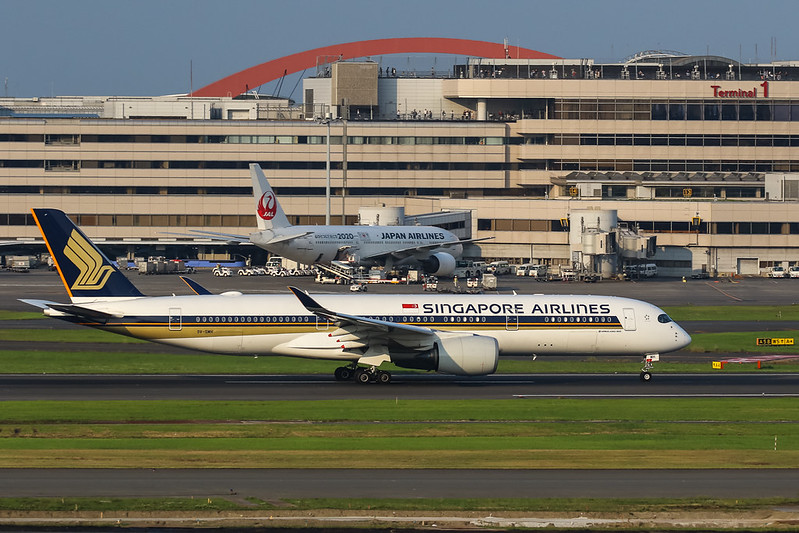 Its aircraft registration is 9V-SWH.
The three probes located at the lower front of the cockpit:
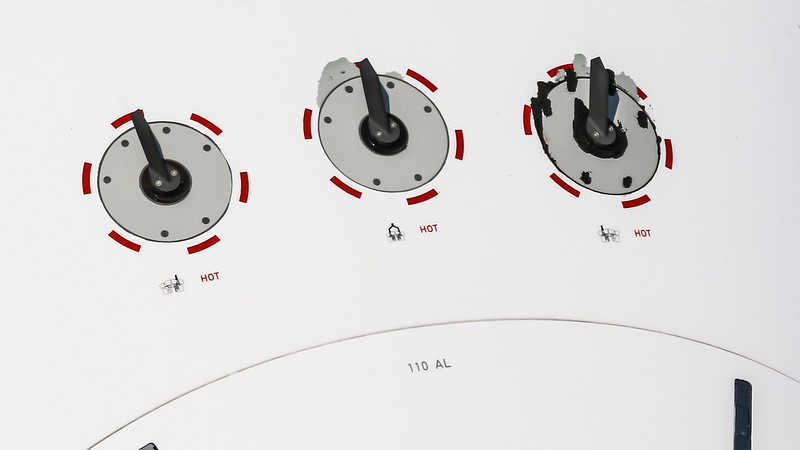 These are the No. 1, 2, and 3 Side Slip Angle (SSA) probes.
What’s interesting is that you can see icons painted below the probes,
indicating which side of the cockpit the probe is intended for.
The probe on the left is for the Captain’s seat, the one on the right is for the First Officer’s seat, and the one in the middle can be used by both sides.
This is not easy to spot without a telephoto lens,
Of course, the airport observation deck being close to the aircraft is also an important condition.
These are the No. 1, 2, and 3 Side Slip Angle (SSA) probes.
What’s interesting is that you can see icons painted below the probes,
indicating which side of the cockpit the probe is intended for.
The probe on the left is for the Captain’s seat, the one on the right is for the First Officer’s seat, and the one in the middle can be used by both sides.
This is not easy to spot without a telephoto lens,
Of course, the airport observation deck being close to the aircraft is also an important condition.
The No. 2 and No. 3 Multi-Function Probes (MFP) provide Total Pressure (PT), Total Air Temperature (TAT), and Angle of Attack (AOA) data to the avionics system;
The black part at the bottom is the ICE PROBE PROTECTOR.
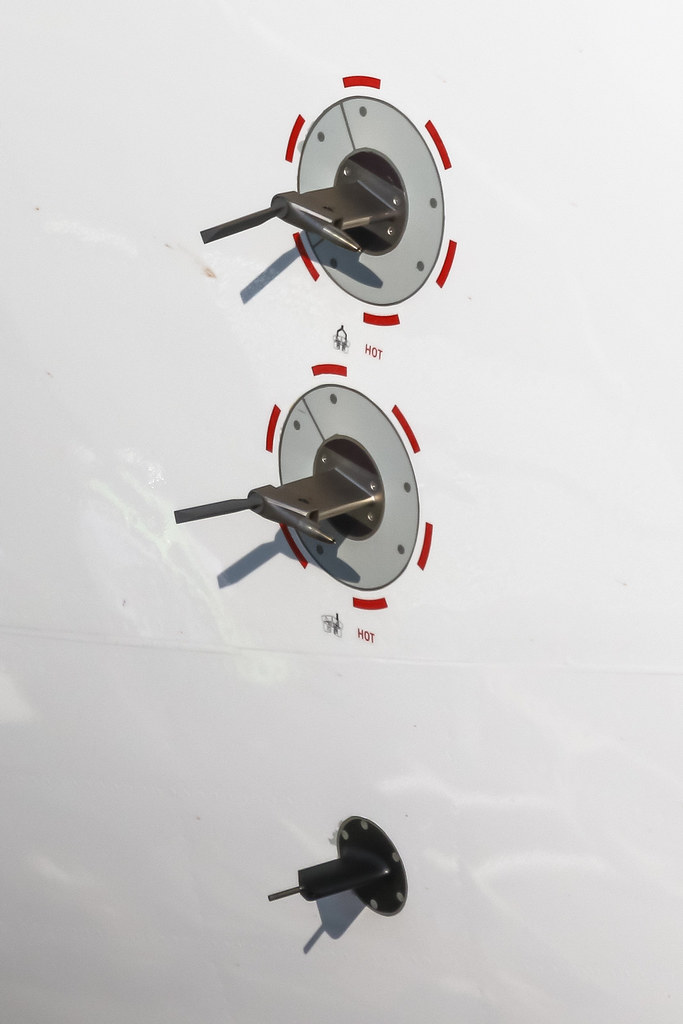 The shape of the MFP is quite distinctive. Does it look a bit like an ancient weapon?
The total pressure probe extends forward like a standard pitot tube,
The Angle of Attack probe extends perpendicular to the total pressure probe at a 90-degree angle,
The large plate-like section has a square opening at the front; this must be the TAT probe.
The shape of the MFP is quite distinctive. Does it look a bit like an ancient weapon?
The total pressure probe extends forward like a standard pitot tube,
The Angle of Attack probe extends perpendicular to the total pressure probe at a 90-degree angle,
The large plate-like section has a square opening at the front; this must be the TAT probe.
Additionally, just like with the SSA probes, icons are painted below the MFP probes, Indicating that the upper No. 2 probe is for both left and right sides, while the lower No. 3 probe is for the right side (First Officer’s seat).
The emergency escape hatch on top of the cockpit is quite simple,
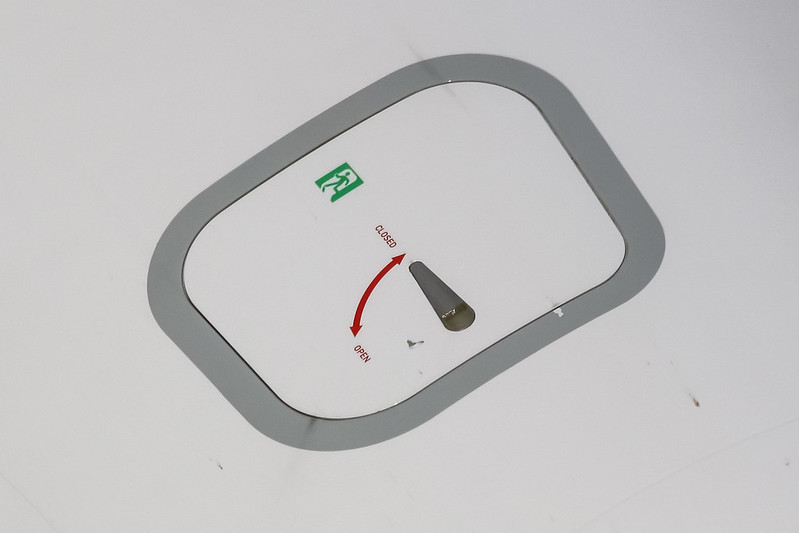 It has just a single handle.
Oh right, there is also the APU intake; this is a favorite topic on this site, hehe.
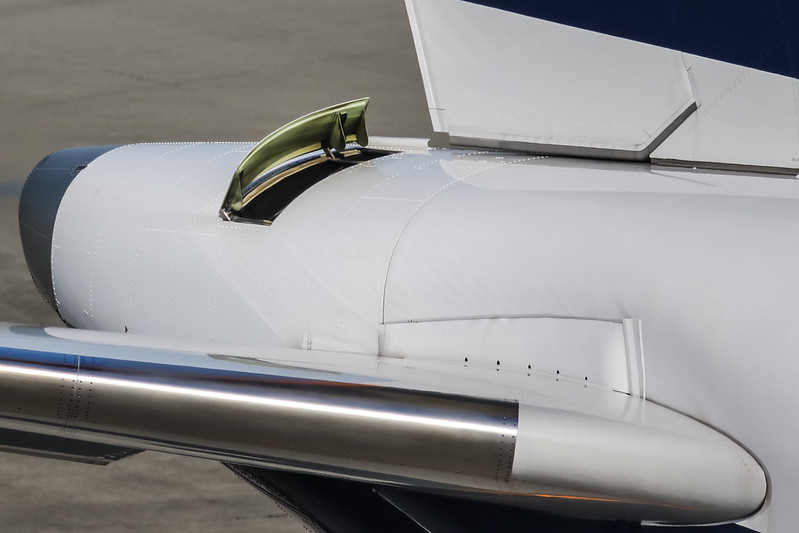
I don’t know much about the structure of the front landing gear, but seeing it gleaming brand new,
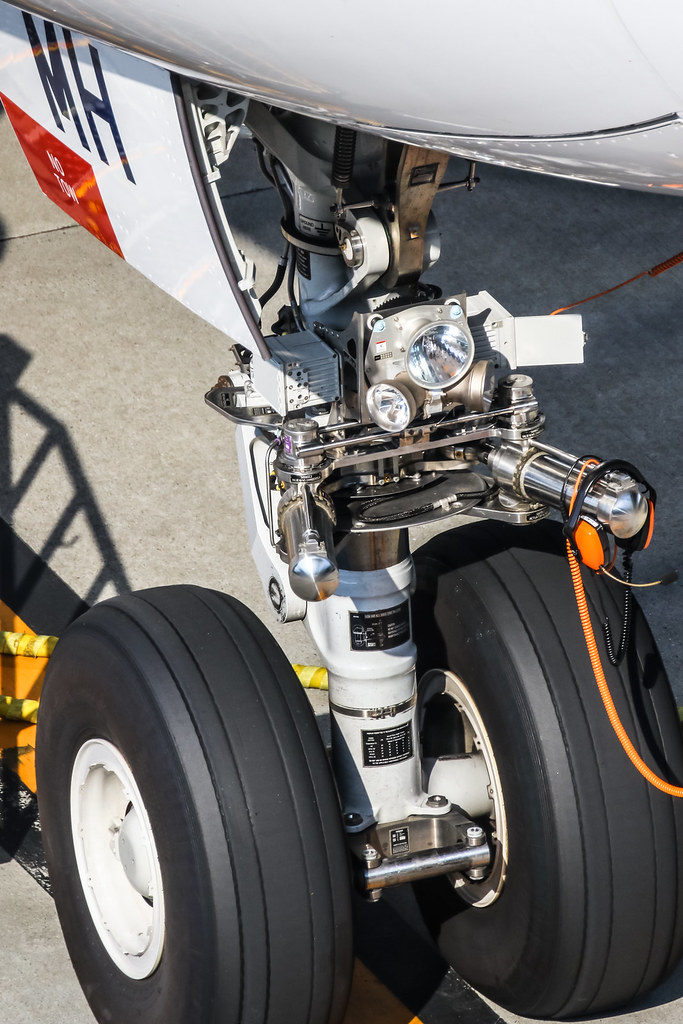 I decided to take a photo of it.
Finally, let’s check how much fuel was added. It takes over 7 hours to fly from Tokyo to Singapore,
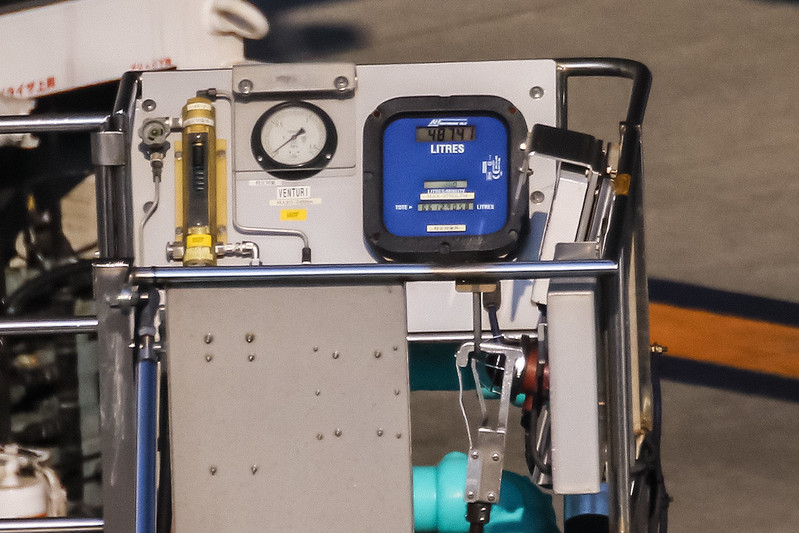 The result was a total of 48,741 liters. Doing the mental math, that’s just under 40 tons.
I previously wrote How much fuel is prepared for a one-hour flight?, That time it was 138,710 liters, equivalent to 10.8 tons of fuel.
Fin.