# Secrets of Airliner Flying 6.10 Shutdown Procedure
Once the aircraft has come to a complete stop, the flight crew initiates the final shutdown procedure, starting with setting the Parking Brake.
The Captain fully depresses the toe brakes at the front of the rudder pedals while simultaneously pulling up the Parking Brake handle located at the lower left behind the control stand. The red Parking Brake warning light to the right of the handle then illuminates, confirming that the brake is set, allowing the Captain to remove their feet from the rudder pedals.
Below is a photo of the Boeing 737 flight deck, showing the Parking Brake handle and warning light to the lower left of the throttle quadrant.
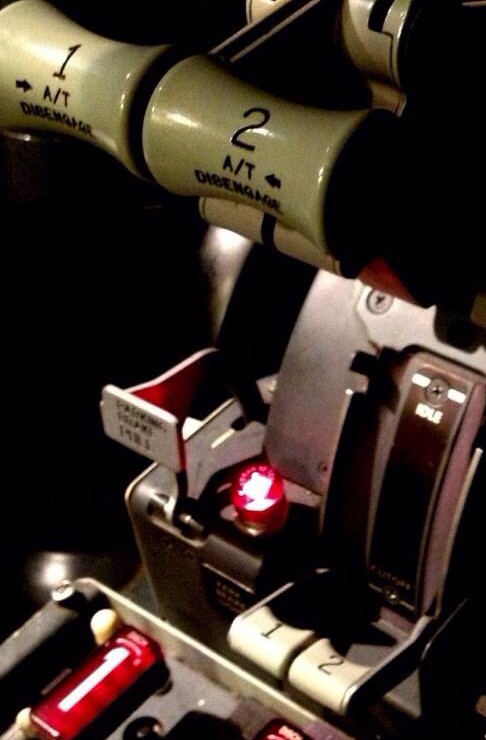
Once the First Officer confirms that the Captain has set the Parking Brake, and if APU power is required, they check the APU power on the overhead panel again, verifying that the APU Generator Bus Switch is in the ON position. If the power source is not confirmed before shutting down the engines, the aircraft will rely solely on battery power, and all cabin lighting except for emergency lights will be extinguished—imagine the chaos that would ensue in the cabin.
If external power is required, the First Officer will check if the GRD POWER AVAILABLE light is illuminated.
If this blue light is on, it indicates that the ground crew has connected the ground power unit to the aircraft;
the blue light illuminates automatically when power is available.
Once the First Officer confirms there are no issues, they turn the Ground Power Switch to ON.
Whether using APU or ground power, the First Officer must verify that the SOURCE OFF light is extinguished.
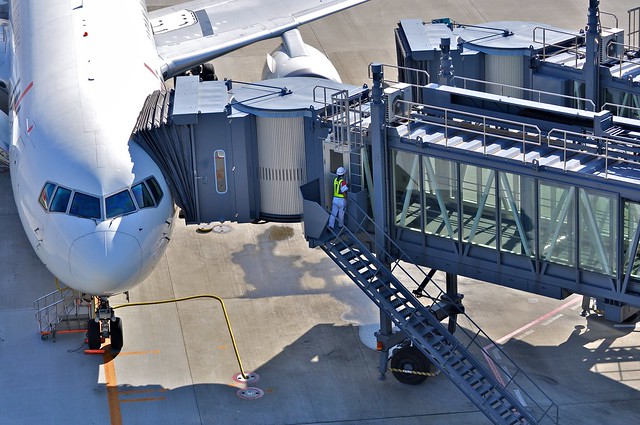 In the image above, the ground power cable can be seen connected.
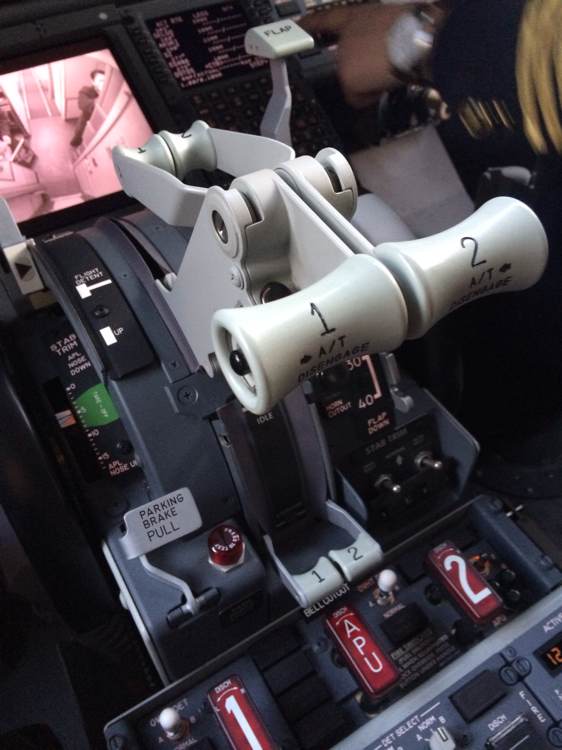
Next, the engines need to be cut to CUTOFF. The First Officer reaches under the left and right start levers with their index and middle fingers,
pulls both levers up simultaneously, and then pulls them back to the stop position.
This cuts off both the fuel and ignition systems to the engines, shutting them down.
 Observant passengers in the cabin will notice at this moment that the constant, low-pitched humming noise stops, making the cabin much quieter.
According to the 737 Operating Manual: “If possible, after high thrust operation (including reverse thrust), operate the engines at idle or near idle for 3 minutes prior to shutdown to cool the hot sections. Time at idle or near idle during taxi prior to shutdown may be included in this 3-minute period. If necessary, the engines may be shut down after 1 minute of cooling. Shutdowns with less than 3 minutes of cooling are not recommended.” However, for typical flights, the combined time for taxi and docking at the jet bridge generally satisfies this condition.
The next step is for the First Officer to turn off the Anti-Collision Light switch. Since this light must remain on while the engines are running, turning it off signals to ground personnel that the engine shutdown procedure in the flight deck is complete. Then, unnecessary Fuel Pump switches are turned off, also operated by the First Officer.
Next, well, actually the following steps involve operating various switches, including:
- Turn off Galley Power switch
- Turn off Seat Belt sign switch – Finally, waiting passengers can stand up, open overhead bins, pack their belongings, and prepare to disembark, though the pilots still have work to do.
- Turn off Wing Anti-Ice switch (OFF)
- Turn off Engine Anti-Ice switch (OFF)
- Turn off Electric Hydraulic Pump switch (OFF)
- Turn off Recirculation Fan switch (OFF)
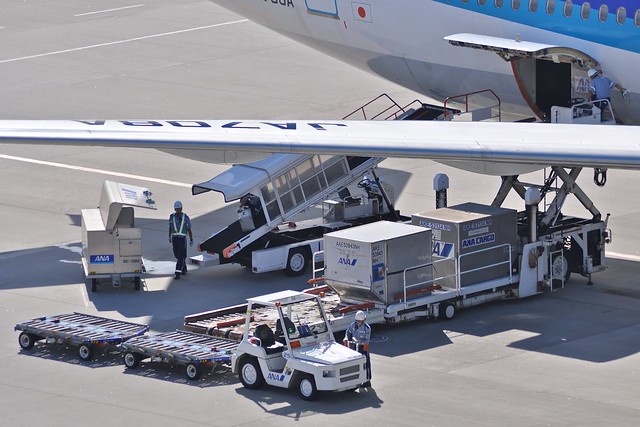
- Air Condition Pack switch (AUTO) – The air conditioning is not turned off, but set to AUTO. This is because the cabin still requires air conditioning; switching to AUTO means the left pack provides air while the right pack stops working. This prevents ground personnel working on the right side of the aircraft, such as those unloading cargo at the rear, from having to work in the blast of hot air exhausted from the AC outlet.
- Turn on Engine Bleed Air switch (ON)
- Turn on APU Bleed Air switch (ON)
- Release Parking Brake after chocks are in place And so on.
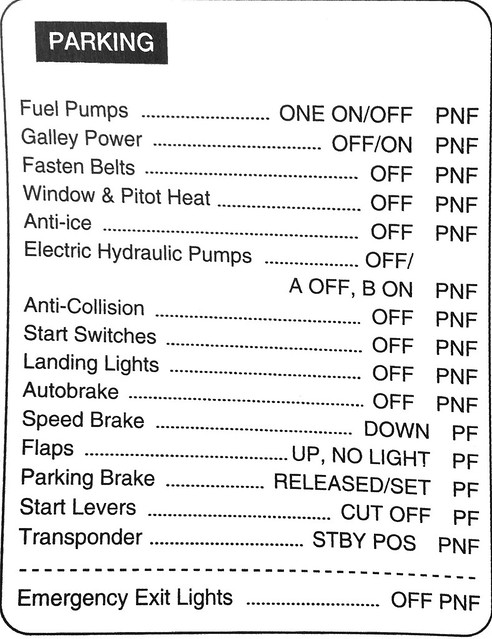 Next, the Captain calls for the "Shutdown Checklist," and the First Officer executes each item.
I won't explain each item individually; you can refer to the Boeing 737-500 shutdown checklist shown in the image above.
Next, the Captain calls for the "Shutdown Checklist," and the First Officer executes each item.
I won't explain each item individually; you can refer to the Boeing 737-500 shutdown checklist shown in the image above.
By this point, all passengers should have disembarked. The cabin purser will enter the flight deck to report to the Captain and confirm if there were any abnormalities in the cabin.
However, work in the flight deck is not yet complete. There is still the Secure Checklist to perform, which is also primarily executed by the First Officer. Items include:
- IRS Mode Selectors to OFF
- Emergency Exit Lights switch to OFF
- Window Heat switches to OFF
- Air Condition Pack (PACK) switches to OFF
After completion, the Captain calls for the “Secure Checklist,” and the First Officer is responsible for checking each item.
After this, ground maintenance personnel will arrive at the flight deck to check for any issues and hand over with the pilots. If this is the pilots’ final flight segment of the day, they need to stow their charts, sunglasses, stationery, gloves, headsets, etc., organize their flight bags, and leave the aircraft. Of course, they can’t go off duty just yet. After disembarking, the pilots must head to the airline’s operations office to report weather and other information observed during the flight. Since weather observations during flight are crucial for other flights, this was briefly mentioned in the section on Weather and Turbulence.
Alright, with this, a complete line flight task for the pilots is finally successfully accomplished. After this, whether it’s going to a hotel to rest or going straight home, I believe every pilot has their own plans, but that falls outside the scope of this series.
End