Unveiling Airliner Cockpit Secrets 6.8 Post-Landing Procedures
In the previous section, we reduced the ground speed to below 10 knots and prepared to exit the active Runway. At this point, the Tower should have issued instructions for the taxi route to the parking gate. Continuing with flight Air System 115 as an example:
Tower: “Air System 115, Turn Right B9, Taxi Down Runway 19L, A10” Pilot: “Right, B9, Taxi Down Runway 19L, A10, Air System 115”
The taxi route here involves turning right at exit B9, taxiing down Runway 19L to exit A10.
Immediately afterwards, the Tower notifies the aircraft again, requesting contact with Airport Ground Control on frequency 121.6 MHz:
Tower: “Air System 115, Contact Ground 121.6” Pilot: “121.6, Air System 115”
The pilot then adjusts the radio frequency to 121.6 MHz and contacts Ground Control:
Pilot: “Chitose Ground, Air System 115, A10, Spot 16” Ground: “Air System 115, Ground, Taxi to Spot 16 Via H6, T2”
Here, Ground gives the pilot the route to Spot 16 from A10, via exits H6 and T2. The pilot then read back the route: “H6, T2 to Spot 16, Air System 115” At this point, the ATC communication for this flight is essentially complete.
The taxiing techniques on the ground were explained in the previous article 2.5 Operations During Ground Taxiing, so we won’t repeat that here. Instead, let’s summarize the post-landing procedures.
First, the Captain moves the speedbrake lever to the DOWN (detent) position, deploying the raised speedbrakes on the wings.
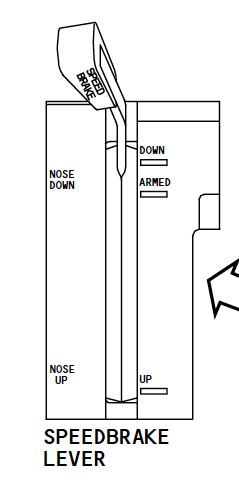
When the Captain calls out to lower the speedbrake lever, the First Officer begins executing their side of the procedure, specifically:
-
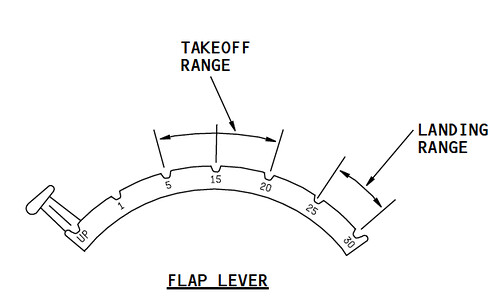
Retract the Flaps lever to the UP position;
-
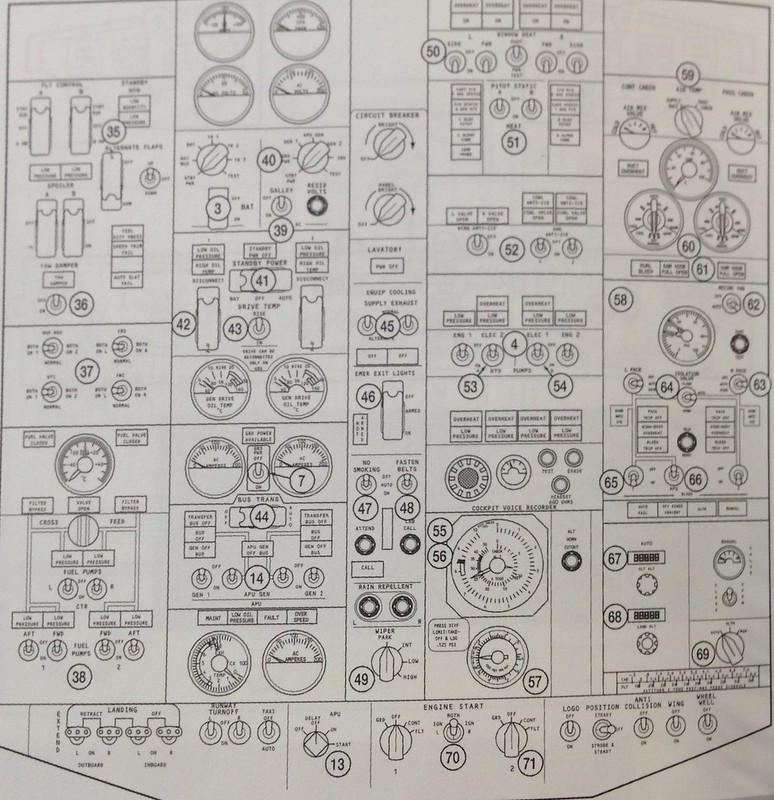
Start the APU switch on the cockpit overhead panel (marked with number 13 in the image below; turn the switch to the START position and release it; the switch will rotate back and stay in the ON position);
-
Turn OFF the Probe Heat switch on the overhead panel (marked with number 51 in the image below);
-
Turn off the Landing Lights, and set the Strobe Light switch to the STEADY position (switch in the bottom left corner of the image below). STEADY means the strobe lights are off, but the aircraft’s position lights remain illuminated;
-
Turn OFF (OFF) the Engine Start switches (marked with number 71 in the image below);
-
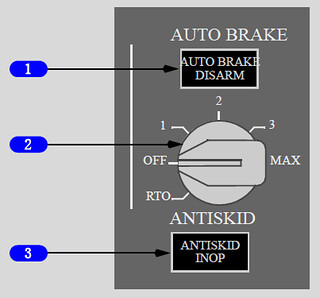
Turn OFF (OFF) the Autobrake Selector;
-
Set the Transponder Mode Selector switch from TA/TR to the STBY position.
Additionally, the Captain needs to turn off the Weather Radar switch. The radio waves emitted by the Weather Radar are extremely harmful to the human body and must be turned off promptly to prevent the radar from scanning ground personnel.
On the website of the Confidential Aviation Safety Reporting System SCASS (SCASS), I once found a report from a ground mechanic: “Flight AA, Aircraft B-XXXX, radar was not turned off. The exposed personnel experienced symptoms such as vomiting, nausea, dizziness, fatigue, and drowsiness.” The response from SCASS was: “This is an incident where staff suffered physical discomfort due to radiation exposure because the radar was not turned off. It is recommended that SCASS circulate this to relevant units and the authorities to urge flight personnel to strictly follow shutdown procedures. Additionally, it is recommended that maintenance personnel enhance their self-protection awareness, report similar issues promptly, and inform relevant personnel.” Such incidents should absolutely never occur, which is why the official response was quite stern.
After the APU starts, the aircraft’s power supply can switch from the engines to the APU. Therefore, even after the engines stop spinning, the power for the aircraft’s instruments and lighting is ensured.
At this point, the post-landing procedures are complete. Next, the pilots will execute the Docking procedures.
End
Prev: Landing Operations TOC: Table of Contents Next: Docking