Airliner Cockpit Secrets 6.4 Traffic Pattern
The Traffic Pattern (also known as circuit flying) defines the standard traffic flow for aircraft taking off and landing at an airport. This path forms a rectangular route relative to the Runway and is flown at a specific altitude. It allows pilots to anticipate and locate the position of other pilots flying near the airport. The Traffic Pattern is also a crucial training curriculum; pilots can learn essential flight skills such as Departure, Climb, Turn, Level Flight, Descent, and Landing from circuit flying.
The Traffic Pattern consists of five main legs:
- Departure Leg (Upwind)
- Crosswind Leg
- Downwind Leg
- Base Leg
- Final Approach (Final)
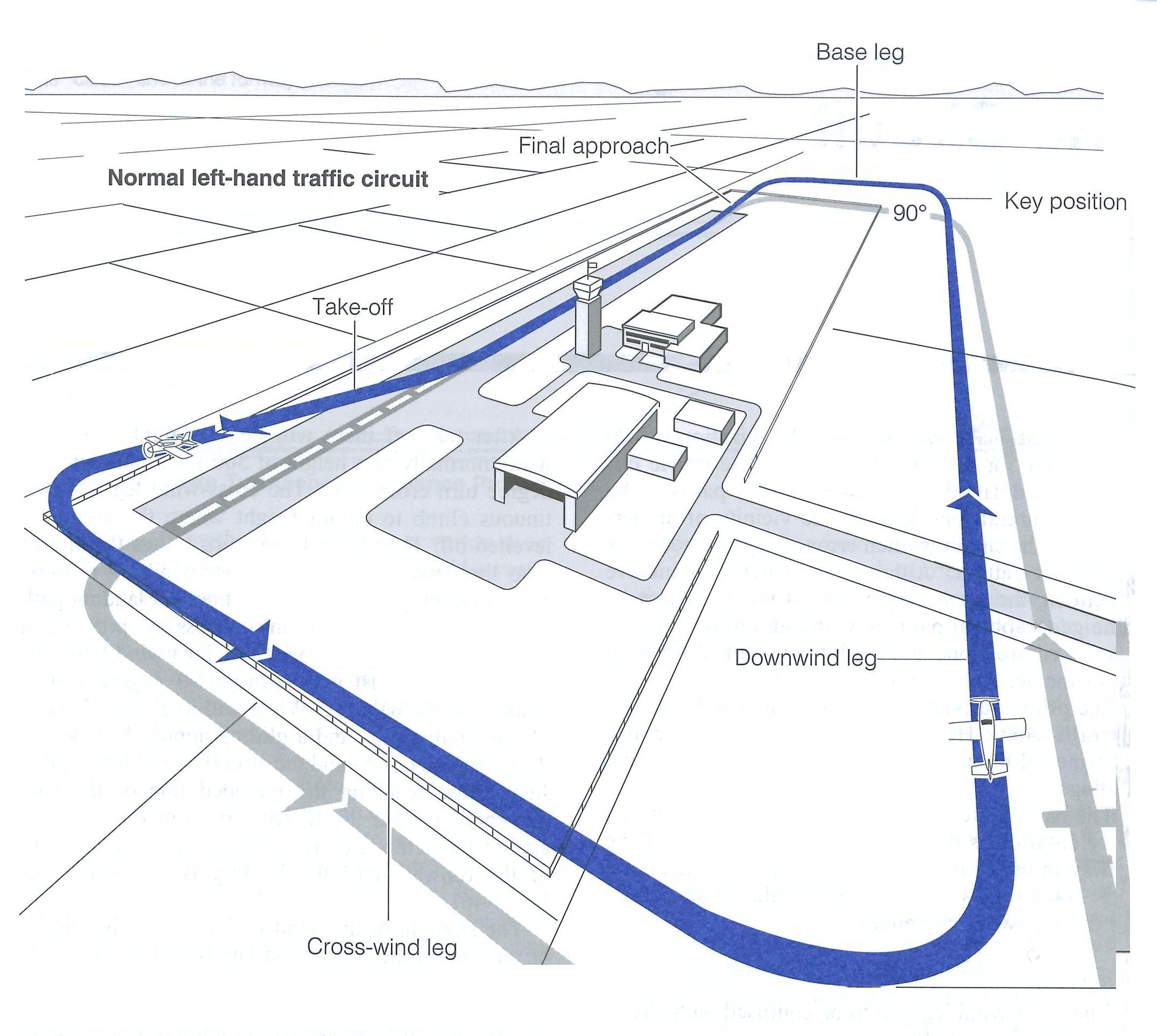
Depending on the Turn direction in the pattern, it can be divided into Left Traffic Pattern.
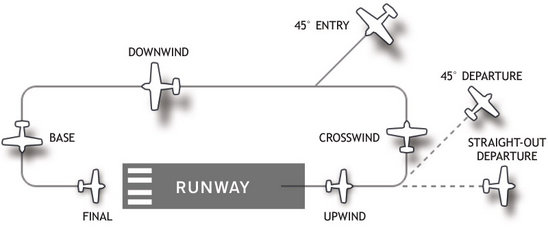
and Right Traffic Pattern.
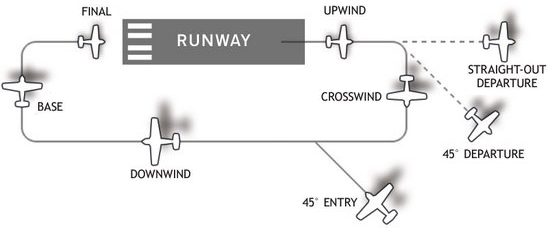
Generally, an airport’s standard pattern is to the left; However, due to terrain, city constraints, or to avoid intersecting with the patterns of nearby airports, it may be a right pattern; The flight altitude for the pattern is typically between 300 and 500 meters.
As seen in the diagram above, when an aircraft takes off and departs, it generally performs a straight out departure on the Upwind leg, or turns 45° to leave the Upwind leg (45° departure). When landing, aircraft generally join the pattern at a 45-degree angle to the Downwind leg (45° entry in the diagram above). Of course, when aircraft fly away from the airport to join Airways, or leave Airways to fly towards the airport, they must Climb or Descend according to the routes and altitudes specified in the airport’s regulations or Departure and Arrival procedures. Joining the pattern requires permission from Air Traffic Control, and aircraft must join along the flow of the pattern, not cut in laterally.
For aircraft using the ILS for landing, generally, they just need to intercept the localizer along the Runway direction and maintain a straight line to enter Final. This is called a straight-in ILS approach.
But what if the ILS antenna on the Runway is only equipped on one side? How do you land in the opposite direction?
In this case, a Circling Approach method can be used.
The Circling Approach is a visual maneuvering flight conducted around the airport immediately following the instrument Final Approach, before landing (landing along a visual circling path consistent with the traffic pattern).
As an independent Approach method, it exists widely in the Approach procedures of various airports.

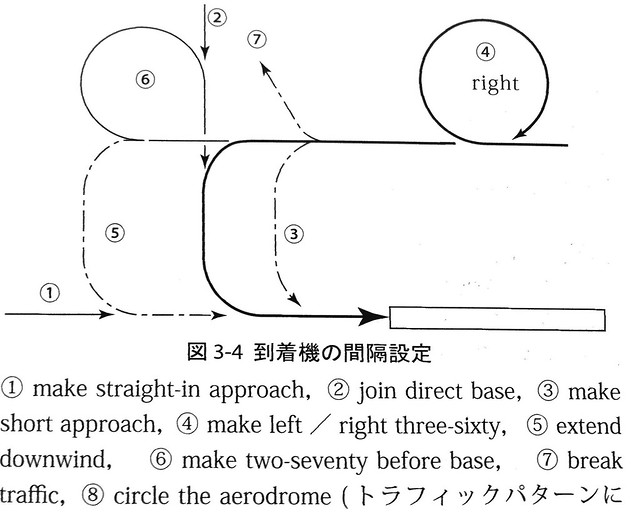
For landing aircraft in the pattern, Air Traffic Control may issue various spacing instructions to pilots depending on traffic congestion. Upon receiving a command, the pilot must alter their normal route and change flight path according to specific instructions. These instructions include the following types:
- straight-in approach: Join directly for landing.
- join direct base: Enter the pattern directly along the Base leg.
- make short approach: Shorten the Approach, minimizing the distance flown on the Downwind leg, instructing the aircraft to land as soon as possible.
- make left/right three sixty: Make a 360-degree left or right turn on the Downwind leg. This is used to hold the aircraft on the Downwind leg for a period because there are aircraft taking off or landing on Base and Final.
- extend downwind: Extend the Downwind leg. This is another method to make the aircraft wait.
- make two-seventy before base: Perform a 3/4 turn (270 degrees) before entering the Base leg, then enter normally. Another waiting method.
- break traffic: Exit the pattern. This is done because landing conditions are not currently met.
- circle the aerodrome: Continue flying one lap around the airport in the pattern. This is a method for a longer wait.
Closely related to the pattern is an aviation term frequently used called Touch and Go.
It refers to an aircraft touching down on the ground and immediately applying full power to take off again, also known as a stop-over or touch-and-go.
If the pilot brings the aircraft to a complete stop before taking off again, it is called Stop and Go.

Touch and Go is primarily used for pilot training and aircraft testing. For example, before the world’s first Boeing 787 Dreamliner was officially introduced into commercial airline service, All Nippon Airways (ANA) used the first 787 introduced to conduct continuous takeoff tests at Chubu Centrair International Airport in Nagoya. Many aviation enthusiasts, hearing the news in advance, rushed to Nagoya to see it. Additionally, if you have a general aviation or flight school airport near your home, you should be very familiar with seeing aircraft constantly performing touch and gos.
2017/5/27 Found this video explains it quite well, for your reference.
The English subtitle version can be found here.End Prev: Final Approach Fix and ILS Settings TOC: Index Next: Landing Procedures