Title: Unveiling Airliner Cockpit Secrets 3.1 3 Types of Takeoff Methods
Generally speaking, there are three takeoff methods for aircraft. Here is a brief introduction.
Normal Takeoff Method
The aircraft stops on the Runway with the nose facing the center line. While holding the brakes, push the thrust lever forward to N1 40%. After confirming stable engine operation, release the brakes and the aircraft begins to taxi. When the airspeed reaches 60 knots, set the Thrust to takeoff Thrust.
This method is primarily used in conditions such as crosswinds, wet Runways, or slippery Runways covered with ice or snow. Since it is crucial to maintain the stability of the nose Heading in these situations, this method of aligning with the Runway before applying full power is beneficial for maintaining direction. Additionally, the takeoff roll distance listed in aircraft performance specifications refers to data from this type of takeoff.
Rolling Takeoff Method
The aircraft turns onto the Runway without stopping, or even if it stops, the brakes are not released. Push the thrust lever forward to N1 40%. After confirming stable engine operation, when the aircraft’s speed reaches 60 knots, set the Thrust to takeoff Thrust.
The advantage of this method is that it shortens the taxi time, and the change in the aircraft’s movement speed is relatively smooth, resulting in less discomfort for passengers. However, it is important to note that this takeoff method is not suitable for crosswind or wet/slippery Runway conditions. Additionally, this method uses a longer Runway distance. It requires more cautious operation to maintain nose Heading in special conditions (such as when inconsistent engine acceleration performance takes a long time to reach a stable state, or when the Runway surface is slippery), and it places higher demands on the pilot.
Static Takeoff Method
The aircraft stops on the Runway with the nose facing the center line. While holding the brakes, directly set the Thrust to takeoff Thrust. After confirming stable engine operation, release the brakes. The advantage of this method is the shortest takeoff roll distance, and it is also easier to maintain direction. However, on a slippery Runway, improper operation carries the risk of overshooting the Runway. At the same time, the noise is relatively high, and the greater acceleration causes more discomfort for passengers. Furthermore, because the engine RPM is high, it is easier to suck in foreign objects (FOD), which could damage the engine.
Why must we wait for the engines to stabilize before setting takeoff Thrust in all methods?
This is because although jet engines have the advantage of being lightweight and powerful, their disadvantages are also obvious: high noise and an inability to increase RPM quickly. This is especially true for large turbofan engines; if the throttle is advanced too quickly, it can cause abnormal combustion (stall/surge). Additionally, as mentioned below, the acceleration characteristics of each engine vary. If the Thrust of all engines is not stabilized, the aircraft may lose balance and risk running off the Runway.
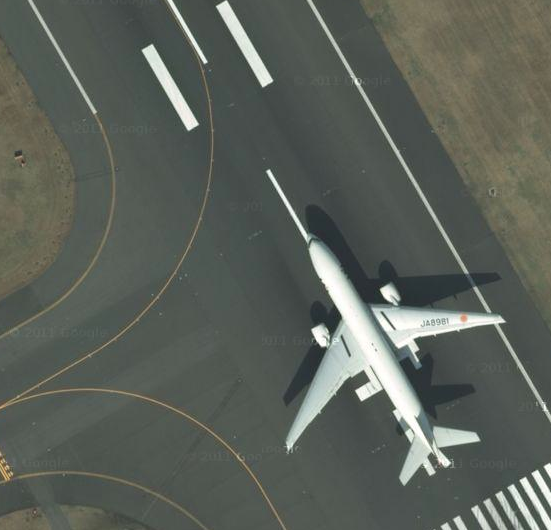
Next, let me introduce the precautions when an aircraft turns from the Taxiway onto the Runway. As shown in the figure below (taken by the author at Kansai International Airport), there is a yellow curved line painted on the ground indicating the aircraft’s taxiing path, which connects to the center line of the Runway.
 If you think it is the same as taxiing in a straight line—just letting the nose wheel follow the curve to turn onto the Runway center—you are greatly mistaken.
This is because this yellow curve indicates that if the center of the fuselage is kept moving on the yellow line, it ensures a safe distance between the wings and various ground facilities. If you were to actually take off along this line, the aircraft would lose several tens of meters of takeoff roll distance.

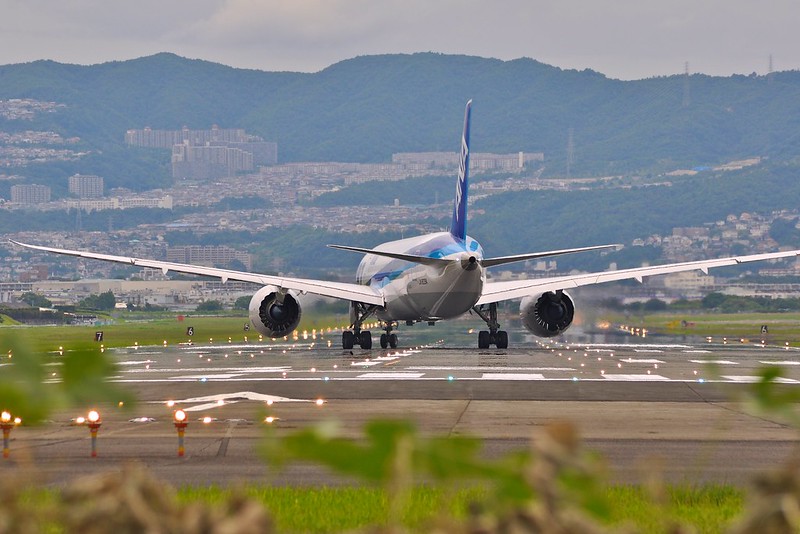 You can see in the photo above that the Boeing 787, when turning onto the **Runway**, allows the nose wheel to cross the center line before adjusting direction during the **Turn**.
Photo taken by the author outside the threshold of **Runway** 32L at Osaka International Airport (Itami).
You can see in the photo above that the Boeing 787, when turning onto the **Runway**, allows the nose wheel to cross the center line before adjusting direction during the **Turn**.
Photo taken by the author outside the threshold of **Runway** 32L at Osaka International Airport (Itami).
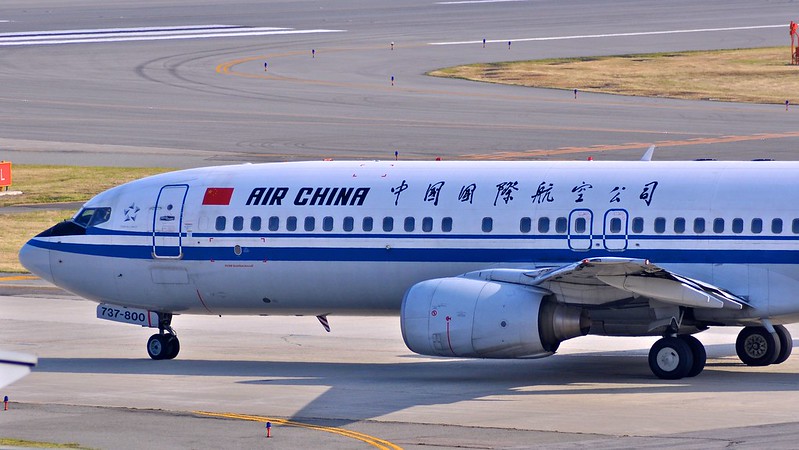
During the takeoff process, if an accident occurs before the aircraft reaches speed V1, the flight must be aborted. Executing an emergency brake on a high-speed aircraft without overshooting the Runway makes every 100 meters of distance extremely precious. When turning onto the Runway, pilots carefully try to get as close to the very end of the Runway as possible to maximize the distance available for the takeoff roll. Therefore, when turning, pilots generally do so at speeds below 10 knots, ignoring the yellow curve on the ground, and try to complete a 90-degree Turn. Taking the Boeing 737 as an example, when pilots operate the tiller to Turn, they generally start turning when passing about 5 meters past the Runway center line, and firmly hold the handwheel to prevent the nose wheel from weaving left and right. Additionally, since the Captain is seated on the left side of the fuselage, from the Captain’s line of sight, aligning slightly to the left of the Runway center basically aligns the aircraft with the Runway center.
Prev: Takeoff Clearance TOC: Table of Contents Next: Takeoff Operation
End