Title: Secrets of Airliner Flying 2.7 Takeoff Clearance
While the aircraft is taxiing, the First Officer tunes the communication frequency to the Tower band and contacts the Tower Controller: “Tokyo Tower, Air System 115, with you”
This means: “Tokyo Haneda Tower, this is Air System 115.”
The Tower Controller replies: “Air System 115, Tokyo Tower, Number 2”
Which means: “Air System 115, Tokyo Haneda Tower, you are number two for takeoff.”
Consequently, the First Officer reads back: “Number 2.”
In the cabin, the flight attendants confirm that all passengers are ready for takeoff and notify the flight crew via the internal system. A “ping” chime can be heard in the cockpit, and the CALL light on the overhead panel illuminates.
As the aircraft gradually approaches the Runway entrance, the Controller will issue an instruction: “Air System 115, Taxi to Holding Position, Runway 16R”
This means: “Air System 115, please taxi to the holding point for Runway 16R and wait (which means absolutely do not enter the Runway without clearance).”
Thus, the First Officer reads back: “Taxi to Holding Position, Runway 16R, Air System 115”
Which means: “Taxi to the hold short point of Runway 16R, Air System 115.”
The Captain taxis the aircraft to the hold short point of the departure Runway and stops. If the aircraft ahead has taken off and there are no other aircraft intending to land on the same Runway, the Tower will send the takeoff clearance: “Air System 115, Fly Runway Heading, Wind 190 at 19, Cleared for Takeoff, Runway 16R”
This means: “Tower here, Air System 115, fly Runway Heading, wind 190 degrees at 19 knots, Cleared for Takeoff, Runway 16R.”
The First Officer reads back: “Fly Runway, Cleared for Takeoff, Runway 16R, Air System 115”
Which means: “This is Air System 115, Runway Heading, wind 190 at 19, Cleared for Takeoff, Runway 16R.”
Now, the most tense moment before takeoff has finally arrived.
 (The photo above was taken at Hiroshima International Airport)
First, the First Officer flips the seatbelt sign switch on the overhead panel up and down twice. Two electronic “ding, ding” chimes can be heard in the cabin, and the seatbelt sign above the passengers’ heads illuminates. Experienced passengers know that the aircraft is about to take off immediately. The flight attendants begin the cabin announcement again, reminding passengers to check their seatbelts.
In the cockpit, the First Officer turns on the inboard landing lights. These are large lights located under the left and right wings to prevent collisions; regulations require these lights to be on from takeoff until the aircraft reaches 10,000 feet.
Next, the continuous ignition switch is turned on. This is set to prevent engine flameout in mid-air. For example, on a household gas stove, you only need to ignite the burner once to start cooking, but on an aircraft, for safety, continuous ignition is necessary to prevent accidents.
The next step is to turn on the position lights and strobe lights. Position lights are three-colored indicator lights located at the wingtips and tail, with the colors red on the left, green on the right, and white at the tail. Anti-collision strobe lights, all white, total 5 in number; 2 are located on the back and belly of the fuselage, and the other 3 are located at the two main wingtips and the tail.
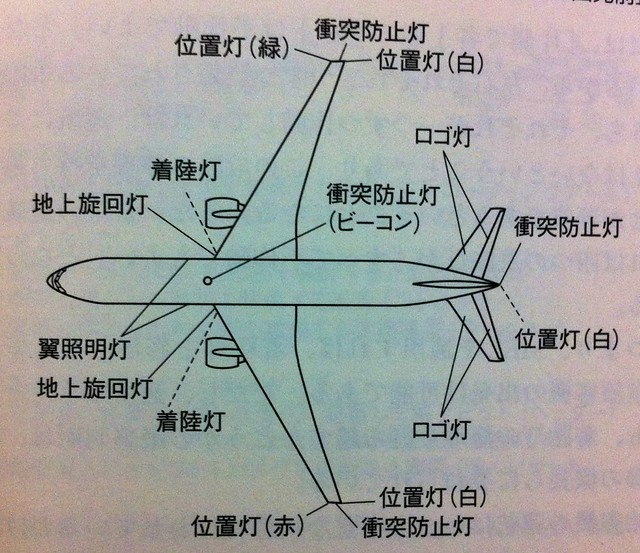 When the aircraft is in flight, even though the sky is vast, due to the high speed and the heavy traffic near airports, collision accidents can still happen. To avoid this danger, aircraft must have their position lights on during night flight. If a pilot can see all three lights at a distance, it indicates there is an aircraft flying above or below them, which is not dangerous. If only the red and green navigation lights are visible, it indicates an aircraft is flying head-on, posing a risk of collision, and evasive action must be taken. If only a single red or green light is visible, it indicates an aircraft is flying to the left or right; as long as one does not deviate from the route, a collision will not occur.
Before takeoff, the automatic Transponder switch must also be turned on. Modern airliners are equipped with the airborne Traffic Alert and Collision Avoidance System (TCAS). This collision avoidance system displays the situation around the aircraft, provides voice warnings when necessary, and helps pilots maneuver appropriately to avoid danger, all of which help prevent catastrophic accidents. The TCAS system requires aircraft to be equipped with Transponders to function.
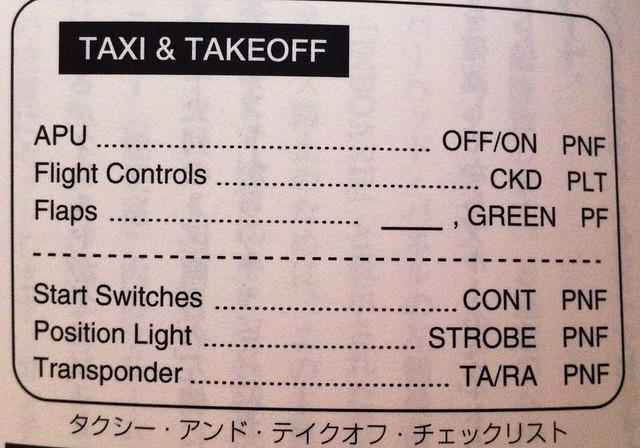
After a series of preparations is complete, the Captain and First Officer execute the Before Takeoff Checklist together, as shown in the image below (Boeing 737-500, the section below the dotted line).
 After confirming everything is correct and checking that there are no aircraft or vehicles on either side, the Captain steers the aircraft onto the Runway,
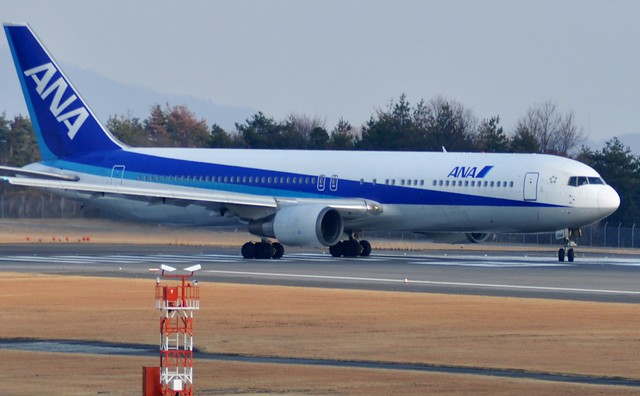 aligns the nose landing gear with the centerline, and advances the engine Thrust.
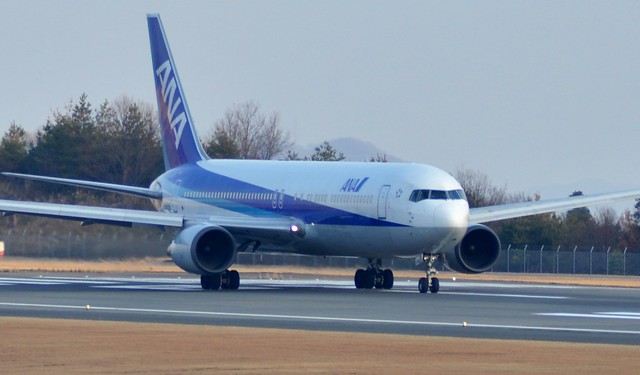 The aircraft is finally ready for takeoff.
(The two photos above were taken at Hiroshima International Airport)
The aircraft is finally ready for takeoff.
(The two photos above were taken at Hiroshima International Airport)
Prev: About Flaps TOC: Table of Contents Next: Three Types of Takeoff
End