Aviation News
-
'Airport Department of CAAC Solicits Opinions on "Guide to Planning and Construction of Aviation Viewing Facilities at Civil Airports'
Two years ago, this site introduced the idea of building airport observation platforms, mentioning that
Currently, the Civil Aviation Administration is working on learning from the successful experiences of airport observation platforms in developed countries abroad, striving to take the lead in planning, designing, and building a batch of observation facilities at major hub airports nationwide. On one hand, this can reasonably satisfy the demands of the vast number of tourists, allowing them to visit easily and pleasantly at major hub airports; on the other hand, it must also ensure the safe and efficient travel of passengers, balancing both aspects so that each gets what they need.
Recently, I saw the news item below; it looks like the airport observation facility project is about to kick off! Civil Aviation Administration Airport Division solicits opinions on the “Guidelines for Planning and Construction of Civil Airport Aviation Observation Facilities”
-
Airbus's ATTOL Autonomous Taxi, Take-Off and Landing Project
There was a lot of negative news during the pandemic, and it was impossible to go out for shooting, so the blog naturally didn’t get updated. However, there is also positive news, such as Airbus’s ATTOL autonomous taxi, take-off, and landing project: Airbus concludes ATTOL with fully autonomous flight tests.

Chinese media has also covered this extensively; here are a few excerpts.
China Aviation News Airbus completes autonomous taxi, take-off and landing project flight tests,
-
China's Civil Aviation Undergoes Largest Airspace Adjustment in History, Viewed from Air Routes near Beijing
Seeing yesterday’s news “Chinese civil aviation welcomes the largest airspace adjustment in history”, this is truly a major event, so I have transcribed the details below:
Yesterday morning, China adjusted over 4,000 flight routes, marking the largest airspace adjustment in the history of Chinese civil aviation. Moving forward, the "sky roads" over Beijing have undergone a major update, making the "paths" for air travel "wider and smoother."
At 02:00 yesterday morning, it was established as the effective date for the operational Aeronautical Information Services (AIS) for China’s newly built airport—Daxing International Airport. Consequently, the adjustments involving the new airport Runway, major flight procedure changes, major airspace adjustments, and Airway/route alignment adjustments all came into effect. Nationwide, over 200 Airways and routes were adjusted, and the alignment of over 4,000 flight routes was changed, forming a completely new airspace operational environment. Chinese civil aviation has welcomed the largest airspace adjustment in its history.
-
China Civil Aviation General Aviation Information Service Platform Launch
Upon seeing the news “First Visual Flight Chart Released in China: CAAC General Aviation Information Service Platform Online”, I immediately went online to test it and found it quite practical.
The website for the General Aviation Information Service Platform is here. You can log in using the test account “xinanceshi”.
 As seen in the screenshot above,
detailed data such as Airports, Airway segments, Waypoints, Navigation aids, Control areas, Control area sectors, Approach areas, Approach sectors,
Restricted areas, General aviation airports, Operation areas, Obstacles, and Landmarks can all be displayed.
It is truly very professional.
As seen in the screenshot above,
detailed data such as Airports, Airway segments, Waypoints, Navigation aids, Control areas, Control area sectors, Approach areas, Approach sectors,
Restricted areas, General aviation airports, Operation areas, Obstacles, and Landmarks can all be displayed.
It is truly very professional. -
The Future of Autonomous Air Taxi: Cora Unveiled
According to a report on the New York Times website, Larry Page’s Flying Taxis, Now Exiting Stealth Mode Need a Lift? Check Out This Flying Taxi This is truly the latest revolution in the history of aviation, too cool.
This futuristic autonomous aircraft with tail number N301XZ belongs to the company KITTY HAWK, which is the investment company of Google founder Larry Page.

From the Federal Aviation Administration (FAA) and the aviationdb website, its data can be found, For example: Engine Type Electric Number Engines 13 Aircraft Weight CLASS 1 Aircraft Type Rotorcraft Manufacturer_Name ZEE AERO etc. From regosearch, it is seen that there is another prototype, N303XZ.
-
Low Visibility Takeoff and Landing Using HUD
Just taking a note, I didn’t realize the HUD was this useful. Learned something new.
Facing this heavy fog and low visibility, with the strong support of the Shandong ATMB and Jinan Airport, Shandong Airlines enabled HUD to achieve a safe takeoff under 150-meter visibility conditions. This is the first commercial flight in the history of Chinese civil aviation to achieve takeoff with an RVR (Runway Visual Range) of 150 meters.
Shandong Airlines took the lead in completing the HUD RVR 150-meter takeoff validation test flight in Beijing on September 8, subsequently successfully completing HUD RVR 150-meter takeoff validation test flights at airports in Jinan, Qingdao, Kunming, Urumqi, and Shijiazhuang.
-
Successful First Flight of C919 Large Passenger Airliner
Located in Shanghai, the Commercial Aircraft Corporation of China (COMAC) independently developed the C919 large passenger aircraft, which successfully completed its first flight on May 5, 2017. This is a major event in the aviation industry! It marks the emergence of a strong competitor to the Boeing 737 and A320, the world’s best-selling models that have monopolized the market for decades, making it a pride of the Chinese aviation industry.
-
Temporary Prohibited Flight Zone Established for Incoming President
With real estate tycoon Trump winning the US presidential election held on November 9, the Federal Aviation Administration has established a temporary flight restriction zone for him. See this NOTAM.
From November 10 until January 21 next year, the area is centered on the new president’s residence in New York, within a radius of two nautical miles, and at altitudes from the surface up to 3000 feet. The red circle in the center of the image below shows the area.
-
C-47 Commemorating The Hump Flight Needs Help
A commemorative flight organized by civilians is currently underway. They are piloting a C-47 named “Buzz Buggy” from Australia to China, planning to fly over the Himalayas to commemorate the famous air route from World War II—The Hump. The homepage for this commemorative event is FLYING THE HUMP, and their Facebook page is here.
However, they encountered engine failure in Malaysia and are facing a severe funding shortage. As a result, they have launched a fundraising campaign online: Commemorative HUMP Flight to China. I donated a few dozen dollars a while back; although it’s just a drop in the bucket, it was a gesture of support. I just saw that they arrived at Seletar Airport in Singapore a few hours ago, but the funding issue remains unresolved.
-
ANA Replaces Rolls-Royce Engine Turbine Blades on Boeing 787
I knew that ANA had started replacing the Rolls-Royce Trent 1000 engine turbine blades on its Boeing 787 aircraft, but I hadn’t gone to the airport to see them. On this day, I went to shoot the STAR WARS Jet No.3, and I accidentally discovered a few parked in the cargo Apron area. Upon closer observation, I found that there were indeed no engines under the wings. These should be 787s currently undergoing maintenance and upgrades, so I took some photos to record the occasion.
-
In Commemoration of the Father of the Boeing 747, Joe Sutter
Joe Sutter, the father of the Boeing 747 (Joe Sutter), passed away last week. Fellow netizen Mr. Wu Yong (also a 747 enthusiast) timely produced a commemorative program on the radio. Below, I have excerpted a portion to share with you.
The original article is here – The Forever “Queen of the Skies” Boeing 747 2016-09-06 Let’s Have Lunch Together.
The audio recording is available here, starting from around the 5-minute mark.
-
Shoddy Construction Work During Runway Reinforcement at Tokyo International Airport
Most people’s impression of Japanese architecture is that it is very meticulous and sturdy, with high earthquake resistance. However, this does not mean that all construction is flawless. For example, last Friday, NHK reported on corner-cutting in the Runway construction work at Haneda Airport.
The purpose of this project was to prevent soil liquefaction of the Runway during an earthquake, and was contracted to Toa Construction Corporation.
Soil liquefaction mainly occurs in water-saturated sandy or clayey soils distributed at shallow depths. During liquefaction, sand and water mix into a slurry-like liquid, causing the soil to lose its bearing capacity. This results in tilting houses, land subsidence, and rupture or floating of underground pipelines. Historically, soil liquefaction occurred during the 1906 San Francisco earthquake, the 2011 Great East Japan Earthquake, and the February 2016 earthquake in southern Taiwan.
-
LFPO Closure Due to Windows 3.1 Failure
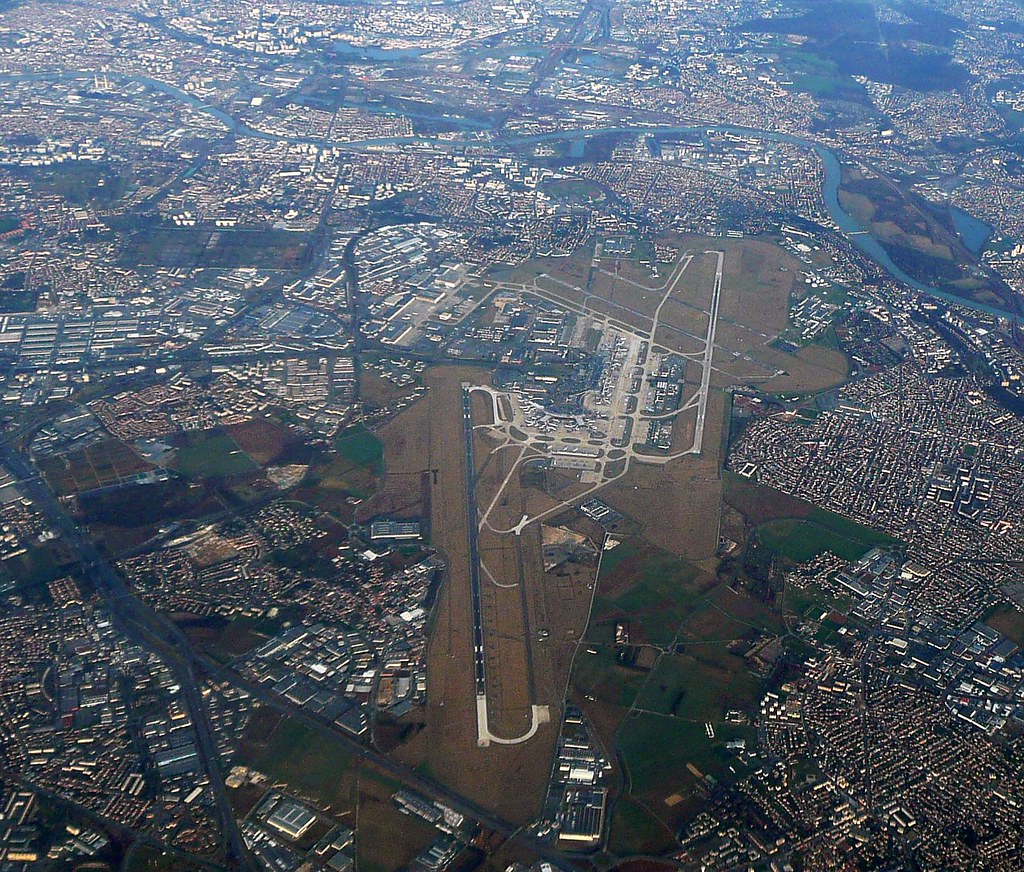
Located in the Paris suburbs, Paris Orly Airport (LFPO) is the second busiest airport in France. Surprisingly, its weather system is still running on Windows 3.1, software from over 20 years ago!
Orly Airport’s weather reporting system is called DECOR. On November 7th last month at 09:30, this system malfunctioned, preventing controllers from obtaining Runway Visual Range (RVR) data for pilots. At the time, there was dense fog surrounding the airport. Without RVR data, it is impossible to determine if takeoffs and landings are safe. Consequently, from 09:30 to 10:30, the airport was forced to close its runways, and 10 flights had to divert to Charles de Gaulle International Airport.
-
The Most Beautiful Small Piston Aircraft: Cobalt Co50 Valkyrie
I couldn’t believe my eyes when I saw the photo of this little plane. Is this really a civilian propeller plane? Looking at the exterior, it looks just like a stealth fighter!
Canard foreplane, twin vertical stabilizers, rear single-engine propeller, teardrop streamlined canopy, glass cockpit, side stick… It’s all too cool; I really can’t find more adjectives to express my feelings.
Please check out the 3D view of the Co50 on Cobalt’s official website here.

-
Global Flight Tracking (GFT)
The World Radiocommunication Conference (WRC), convened by the United Nations International Telecommunication Union (ITU), made a decision to set aside a dedicated radio frequency for satellite systems tracking aircraft flight paths.
The new regulations require civil aviation aircraft to emit a signal reporting their position at least once every 15 minutes, to be implemented by November 2016.
Influenced by the disappearance of Malaysia Airlines Flight MH370 last year, representatives from over 160 countries worldwide made the above decision at a meeting held in Geneva on November 11.
-
Mitsubishi Heavy Industries MRJ-200 Test Flight Successful
At 09:35 this morning, the MRJ-200 prototype, developed by Mitsubishi Heavy Industries and bearing registration number JA21MJ, successfully completed its maiden flight at Nagoya Airport. The aircraft obtained flight test permit from the government on October 29.
The flight test site was live-streamed on UStream. I happened to be on the subway using my iPhone to catch the moment of taxiing and takeoff, so I took screenshots as a memento. Since this was the maiden flight, the test objectives primarily focused on basic flight performance such as Climb, Descent, and left and right Turns. Therefore, the landing gear and Flaps remained in the extended position throughout the one-and-a-half-hour test flight. The maximum altitude reached during this flight was 15,000 feet, with a maximum speed of 150 knots.
-
Reopening of Hiroshima Airport RWY10 Category III ILS
The Category IIIB Instrument Landing System (CAT IIIB) for Runway 10 (RWY10) at Hiroshima Airport, which was damaged due to the landing accident of flight OZ162 on April 14, has been fully recommissioned starting today after 5 months of repair work.
The airport reopened on April 17 following the accident, but the ILS remained unusable. After the aircraft was removed on April 25, the operating conditions for the runway required an RVR of 1600 meters or more, which affected many flights during adverse weather conditions.
-
First Boeing 747-400 Retired
The Boeing 747-400 with tail number N661US, operated by Delta Air Lines, was officially retired today.
As it was the world's first 747-400, to commemorate its service, it will be preserved at the Delta Flight Museum located in Atlanta after its retirement.N661US will fly its last revenue flight tonight. Check out our story on the iconic bird: https://t.co/CGw3oT9Yub pic.twitter.com/RoppHIJtTG
— AirlineGeeks.com (@AirlineGeeks) September 8, 2015N661US previously bore the number N401PW. As a Boeing test aircraft, it completed the first flight of the 747-400 on April 29, 1988.
Following this, N401PW underwent various tests for a period of 8 months,
and was delivered to the 747-400's launch customer, Northwest Airlines, on January 26, 1989, at which point its registration number was changed to N661US. -
China Civil Aviation's New NOTAM International Series Classification
Current NOTAMs are categorized into three series: A, E, and F. Starting from 08:00 on August 29, 2015, five new series—G, L, U, W, and Y—will be added, effectively subdividing the airspace into more detailed segments. Specific details are provided in the new AIP PART 1 GEN 3.1, transcribed as follows:
Series A: Contents include regulations, standards, services, and procedures; Airways/Airways; Airspace, navigation aids, and aviation warnings related exclusively to en-route flight; And other aeronautical information not included in Series E, F, G, L, U, W, and Y NOTAMs.
-
Japanese Aviation Law Regulations for Drones
This week, the Japanese government amended the Aviation Law to add regulations for drones. Although the content is brief—only a few hundred words—a new chapter, “Chapter 9 Unmanned Aircraft,” was specifically created, showing the importance placed on this emerging technology.
Here is a brief introduction to its contents.
The first part concerns flight airspace regulations; aside from the following conditions, you must apply to the relevant authorities:
- Flight time is limited to after sunrise and before sunset.
- The drone and its surrounding conditions must be constantly monitored via Visual Line of Sight (VLOS).
- A certain distance from people and buildings must be maintained.
- Entry into venues where crowds gather, such as holidays, public events, or exhibitions, is prohibited.
- Carrying flammable or explosive items, or other objects that could easily harm people or ground structures, is prohibited.
- Dropping objects that could easily harm people or ground structures is prohibited.
Additionally, anyone who violates the above regulations will be subject to a fine of up to 500,000 yen.