ANA Flight NH37 Rapid Decompression Emergency Landing Captain ATC Recording
Yesterday, August 12th, marked the 32nd anniversary of the Japan Airlines JAL123 crash. However, on this very day (same month, same day) at roughly the same time (takeoff at 18:24), ANA Flight NH37, also flying from Tokyo to Osaka, experienced a terrifying moment that made everyone hold their breath. The aircraft type is Boeing 777-200, registration JA703A, manufactured in 1997.
However, the facts are not as severe as depicted by some media outlets. There was no loud bang in the air, no forced landing, and no emergency descent.
(On August 12, 1958, the ANA Shimoda Crash also occurred. A DC-3 flying from Haneda to Nagoya crashed into the sea near Izu Shimoda, killing all 33 people on board. The crash site is not far from the locations of the JAL123 and NH37 incidents mentioned above.
“August 12th”, “Departing from Haneda”, and “Evening” are common points among these three accidents. So, in the future, flights from Tokyo Haneda to Osaka after dusk on August 12th will require extra attention, hehe.)
All Nippon Airways aircraft makes emergency landing due to cabin decompression; Passengers: “It was scary” Asahi Shimbun’s news release last night (August 12, 2017, 22:19):
Around 6:30 PM, ANA Flight 37 from Tokyo Haneda Airport to Osaka returned to Haneda Airport due to cabin depressurization and made an emergency landing 20 minutes later. The flight was operated by a Boeing 777-200 (JA703A) with 262 passengers and 11 crew members. ANA stated that during the Climb, the captain noticed an anomaly and deployed the oxygen masks in the cabin, then returned to Haneda Airport. It is highly likely that a malfunction occurred in the cabin pressurization system, which is currently under investigation.
The webpage above released a video filmed by a passenger inside the cabin, showing the deployment of oxygen masks and the cabin announcement. Both the passengers and cabin attendants (CA) inside were relatively calm, and there was no panic.
Since the captain deployed the oxygen masks manually rather than the system deploying them automatically, it might suggest that the rate of cabin pressure drop was not extremely high.
ANA Aircraft: Suspected Abnormality in Cabin Pressurization System, Returns to Haneda NHK’s website captured footage of NH37 (JA703A) landing (18:51) and returning to the Jet Bridge. I truly admire their rapid response capability.
Looking at media reports, the content is largely similar and offers limited reference value. Fortunately, online information is abundant, so I have collected some below.
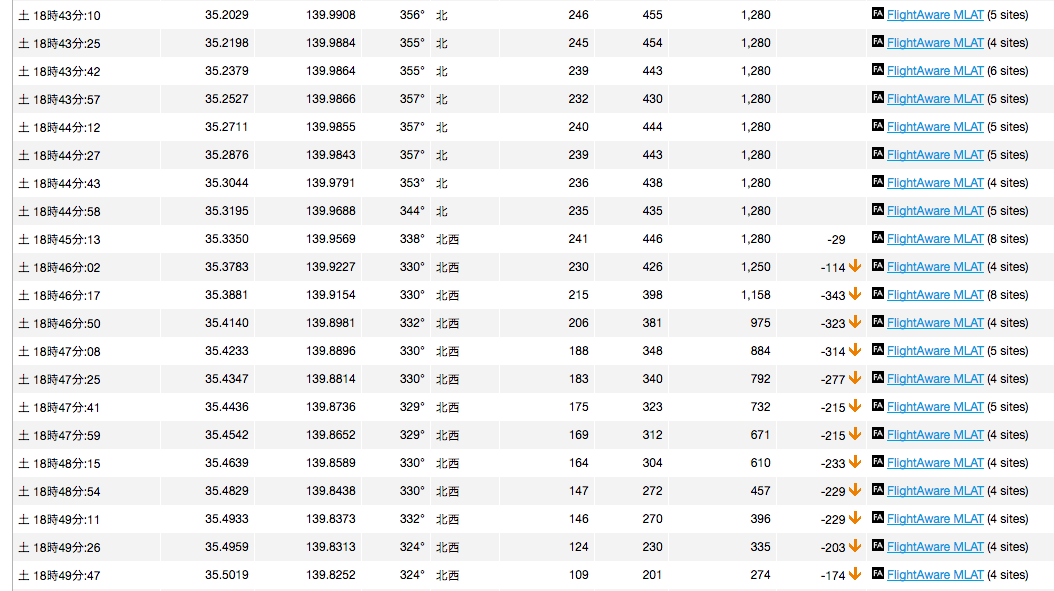
Flight data recording on flightradar24
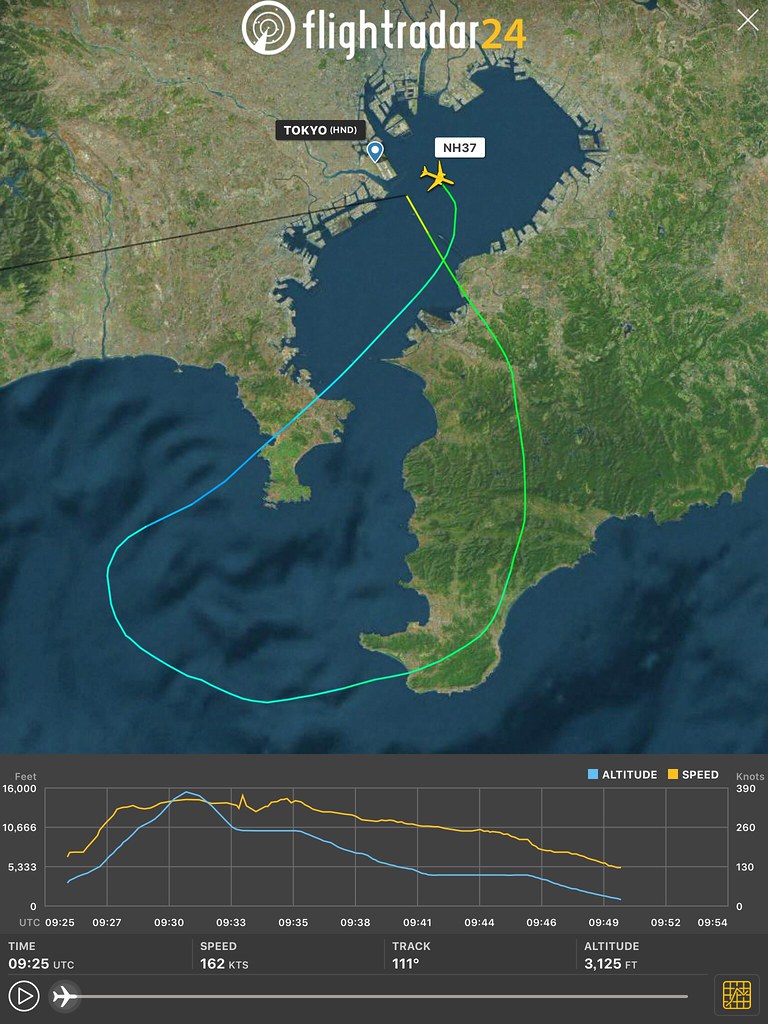
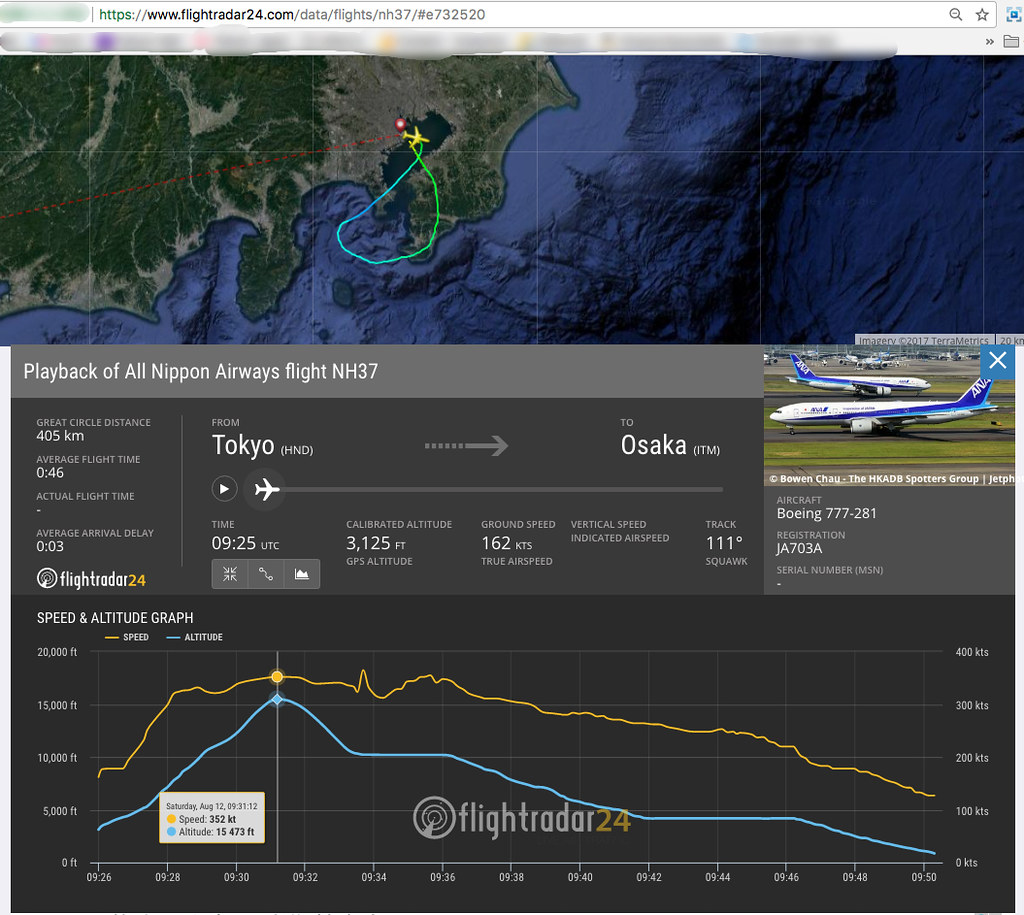 You can see the aircraft taking off from Runway 05, crossing the Miura Peninsula,
over Sagami Bay, approximately directly south of Enoshima, when the captain noticed the cabin depressurization issue.
The aircraft turned around over Sagami Bay and finally landed safely on Runway 34R at Haneda.
The aircraft’s Climb and Descent rates were relatively stable, so there likely weren’t other issues during the flight.
You can see the aircraft taking off from Runway 05, crossing the Miura Peninsula,
over Sagami Bay, approximately directly south of Enoshima, when the captain noticed the cabin depressurization issue.
The aircraft turned around over Sagami Bay and finally landed safely on Runway 34R at Haneda.
The aircraft’s Climb and Descent rates were relatively stable, so there likely weren’t other issues during the flight.
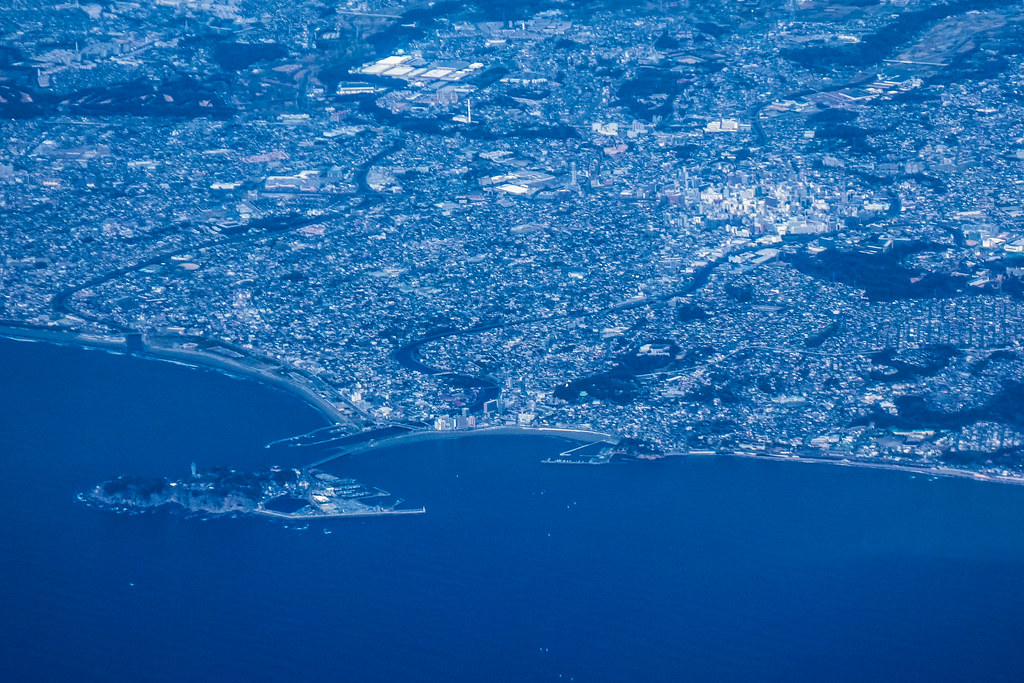
For reference, here is a photo I took from the air this year when departing Haneda Airport,
on basically the same flight path as NH37.
The altitude (15,000 feet, approximately 4,500 meters) and position near Enoshima look something like this.
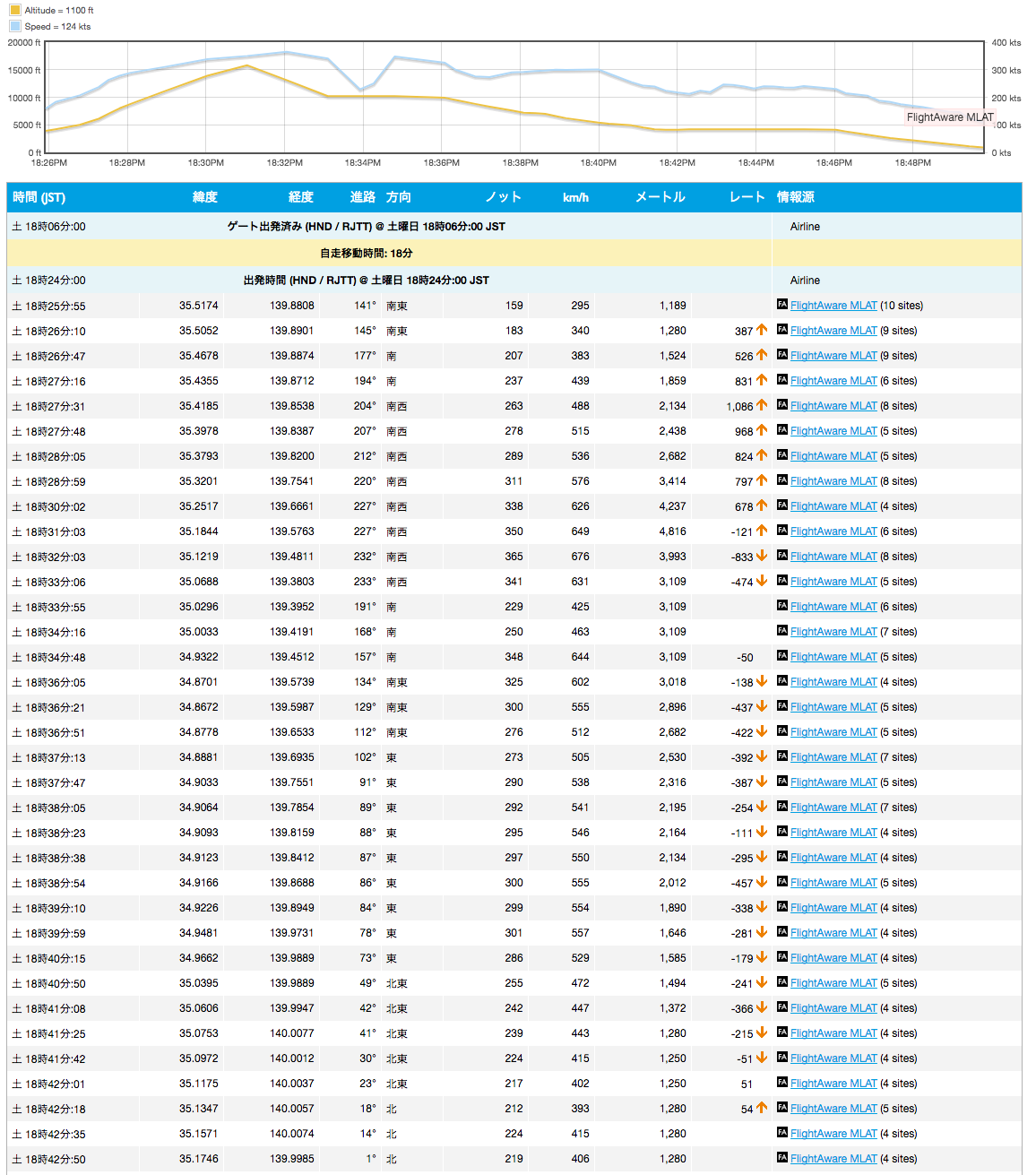
[Local Situation] ANA Flight NH37 squawks 7700 and makes emergency landing… Haneda departure to Osaka Itami [Emergency State] There are some ATC communication recordings on liveatc.net, http://archive-server.liveatc.net/rjtt/RJTT-Control-Aug-12-2017-0930Z.mp3 Starting around 1 minute 5 seconds, you can hear the dialogue between the captain and the air traffic controller. Combined with the flightradar24 data above, the conversation should have started after 18:31.
Below is my summary of this communication recording.
NH37: 37, we have cabin issue, request Descend to 10000 now, emergency, emergency! ATC: All Nippon37, roger. Descend and maintain 10000. NH37: Descend to 10000. Return to Haneda airport. ATC: Roger. Flight Heading 250, 250. NH37: Heading 250. ATC: All Nippon37,余裕あるときに原因を教えてください (Please report on the cause when able) NH37: キャビンのプレッシャーレイシォが上がって今ディセント10000になってます (Cabin pressure ratio above normal, descent command (Note: probably automatic) to 10000ft) ATC: 分かりました (Roger)
About 30 seconds later ATC: All Nippon37, turn left Heading 180 NH37: left Heading 180, All Nippon37 ATC: All Nippon37, resume normal speed, request … oh… disregard … Heading 180 NH37: Normal speed, All Nippon37 ATC: All Nippon37, xxxxxでよろしいですか? (This word was not heard clearly) NH37: xxxxxです。はい、今Descend to 10000 ATC: 分かりました。passenger on boardとfuleを教えて頂けますか?余裕のあるときで結構です。どうぞ (please report passenger on board and fule in time) NH37: すみません、もう一度お願いします。(sorry say again) ATC: えっと、passenger on boardとfule in timeでお願いします (please report passenger on board and fule in time) NH37: 了解。on board passenger 258, fule 3.0 ATC: 258と。。。すみません、もう一回お願いします。(258… sorry say again) NH37: fuleは32000 ATC: 了解しました。
About 30 seconds later ATC: All Nippon37, turn left Heading 130 NH37: Heading 130, All Nippon37 ATC: All Nippon37, contact Tokyo 133.7 NH37: 1337, All Nippon37
About 30 seconds later NH37: Tokyo Control, All Nippon37, 10000, now Heading 130 ATC: All Nippon37, Tokyo Control, direct to Arlon NH37: direct to Arlon, All Nippon37 Location of ARLON
About 30 seconds later NH37: (noise)request priority landing, xxxxx ATC: (noise)All Nippon37, xxxxx
ATC specifically asked the captain about fuel weight, presumably to determine if fuel dumping was needed. We know that if a plane has just taken off and not much fuel has been consumed, or in cases like long-haul international flights, it cannot land immediately if it is above the maximum landing weight.
This site previously wrote about how much fuel is prepared for a one-hour flight? We know that flying from Tokyo to Osaka takes only one hour. Although the aircraft type differs, very little fuel is required. The maximum fuel capacity of a Boeing 777-200 is 117,000 liters, while there were 32,000 liters on board at the time, Therefore, NH73 did not need to dump fuel and could land directly.