Visiting the Techno Bird Simulator in Kobe
I found out online that a new flight simulation company has opened in Kobe, named Techno Bird Flight Simulator Center. They have a total of two simulators, a Boeing 737NG and a Cessna C172, claiming to be the only simulator shop in Western Japan. I happened to be on a business trip to Osaka, so I checked the reservation schedule and saw the C172 had an opening, so I booked it immediately and rushed over after work.
From Osaka, take the JR Kobe Line for over 30 minutes to Shin-Nagata Station,
get off at the North Exit, walk east along the railway for 10 minutes, and you’ll reach Techno Bird.
The company is located on the 5th floor of the Toyo Building, on the east side.
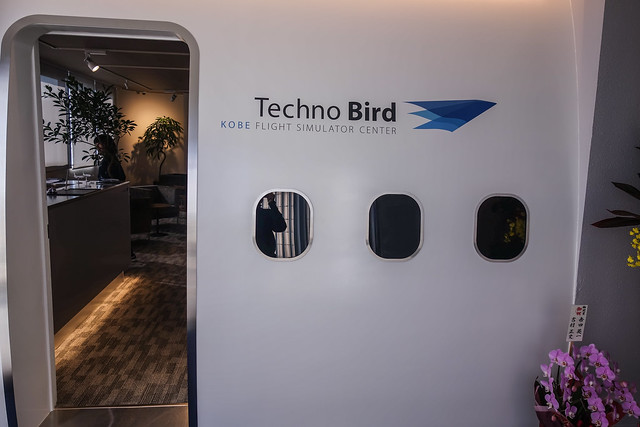
The entrance is designed to look like an airliner cabin door, very exquisite; it looks like the owner put a lot of effort into the design.
The interior of the shop is also very clean.
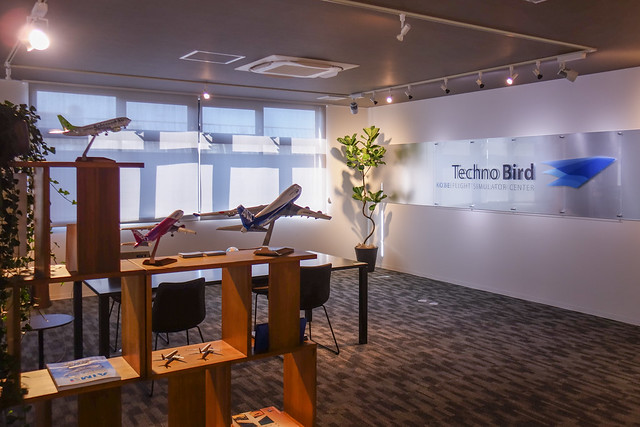 Right at the entrance is the front desk, with two young people responsible for registration and payment.
I chatted with one of the young men, and it turns out he is a student learning to get his pilot’s license at Yao Airport.
Right at the entrance is the front desk, with two young people responsible for registration and payment.
I chatted with one of the young men, and it turns out he is a student learning to get his pilot’s license at Yao Airport.
The day I went to Techno Bird was the second day after their opening, so there weren’t many people,
so I started by looking at their equipment.
This is the C172,
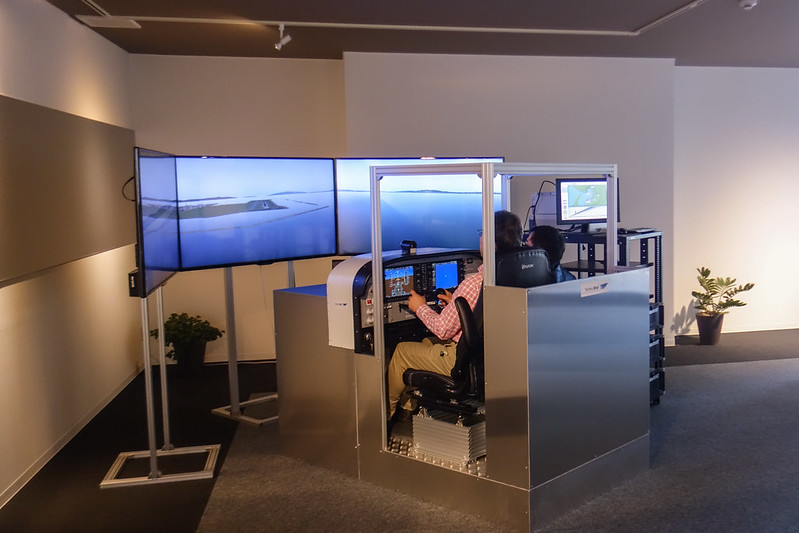 It uses a brand new TRC 472G Flight Deck,
Garmin 1000 avionics, X-Plane software, plus three monitors, making it just like the training equipment at a regular flight school.
Looking at the price list on TRC’s official website, the basic equipment costs 25,000 Euros.
It uses a brand new TRC 472G Flight Deck,
Garmin 1000 avionics, X-Plane software, plus three monitors, making it just like the training equipment at a regular flight school.
Looking at the price list on TRC’s official website, the basic equipment costs 25,000 Euros.
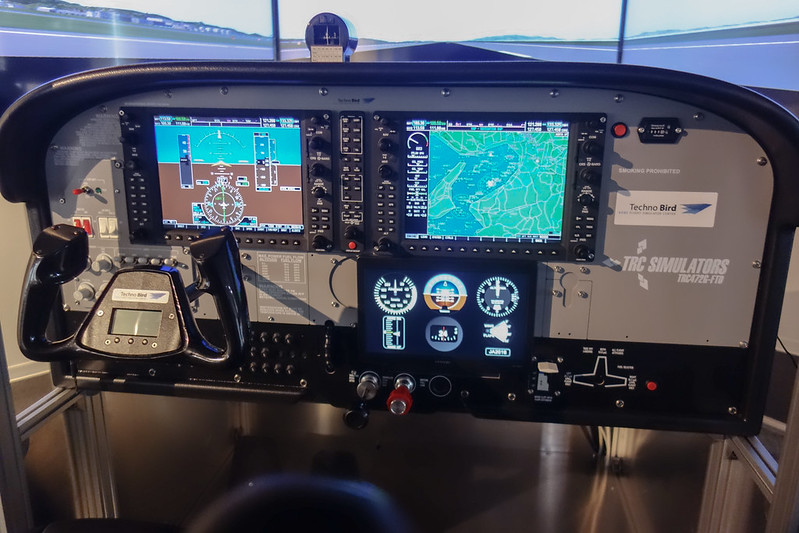 TRC 472G Panel Section
Then let’s look at the Boeing 737NG,
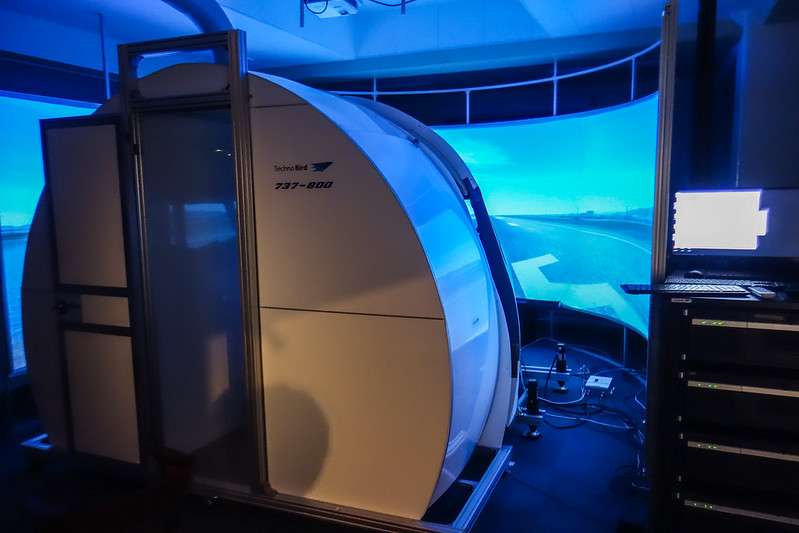 Cool cockpit, isn’t it.
For the display section, a 180-degree curved screen is used,
Cool cockpit, isn’t it.
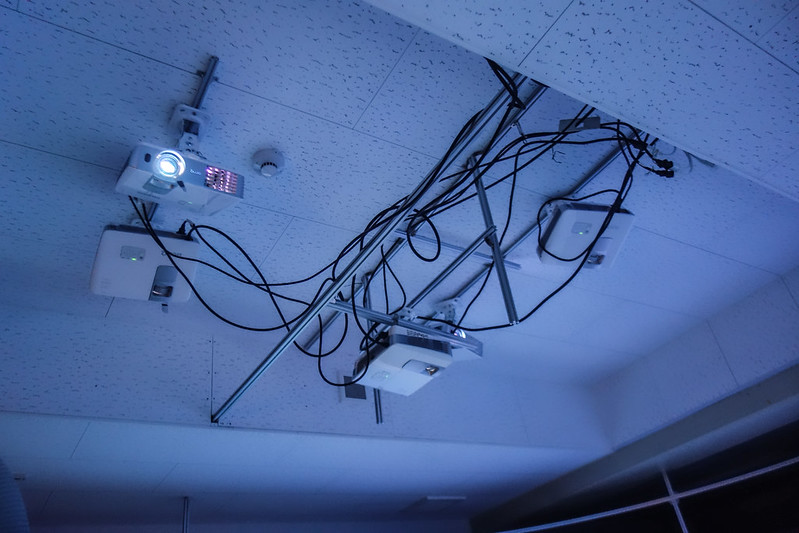
For the display section, a 180-degree curved screen is used,
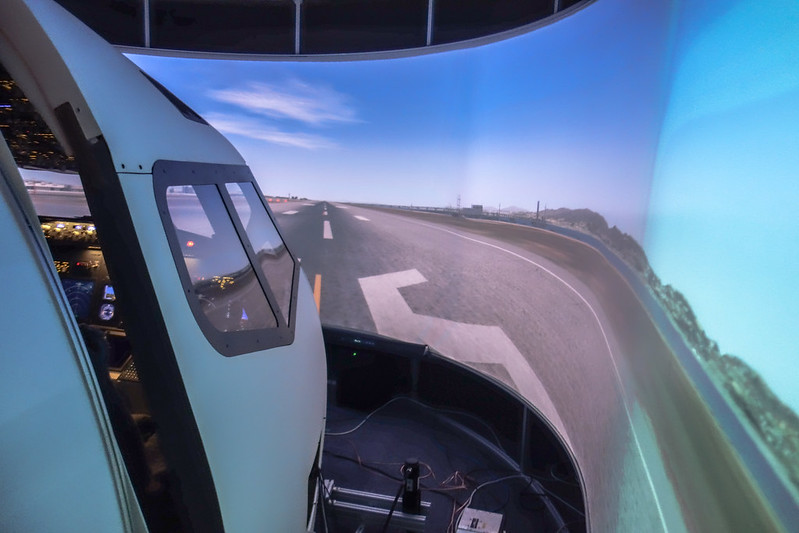 using a total of 5 projectors.
 The most distinctive feature of this simulator is the use of the D-Box motion module below,
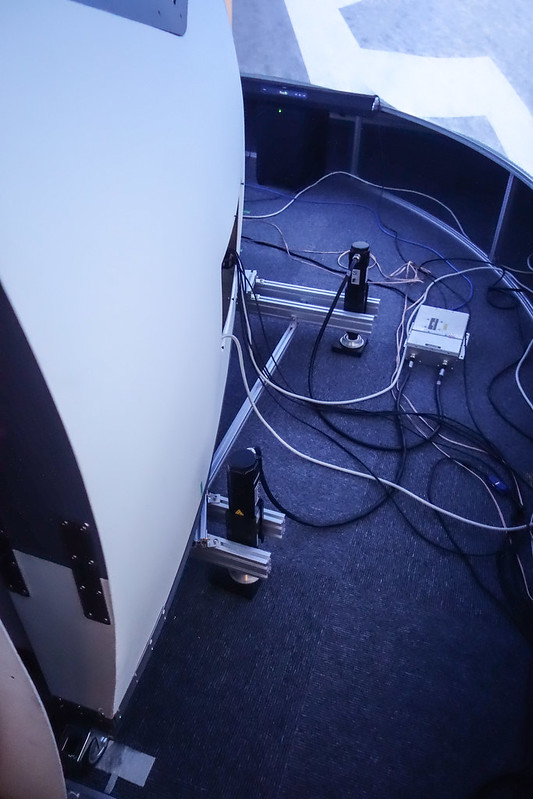 It can not only simulate turbulence in the wind but also provide vibration upon landing, which is very tempting.
I went in to take a quick look,
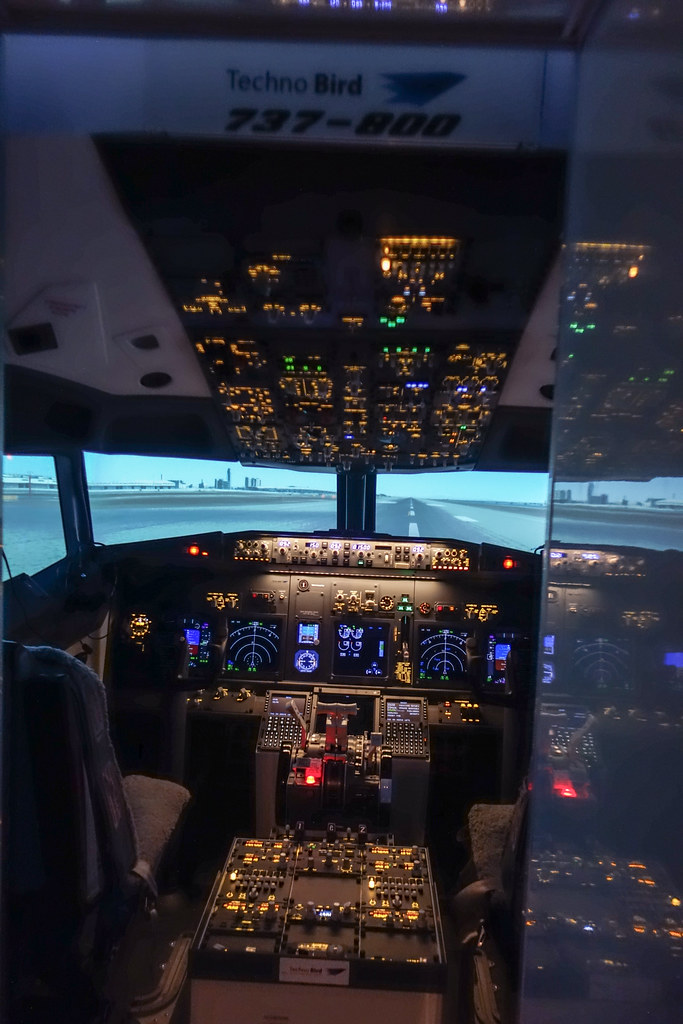 The equipment is all brand new.
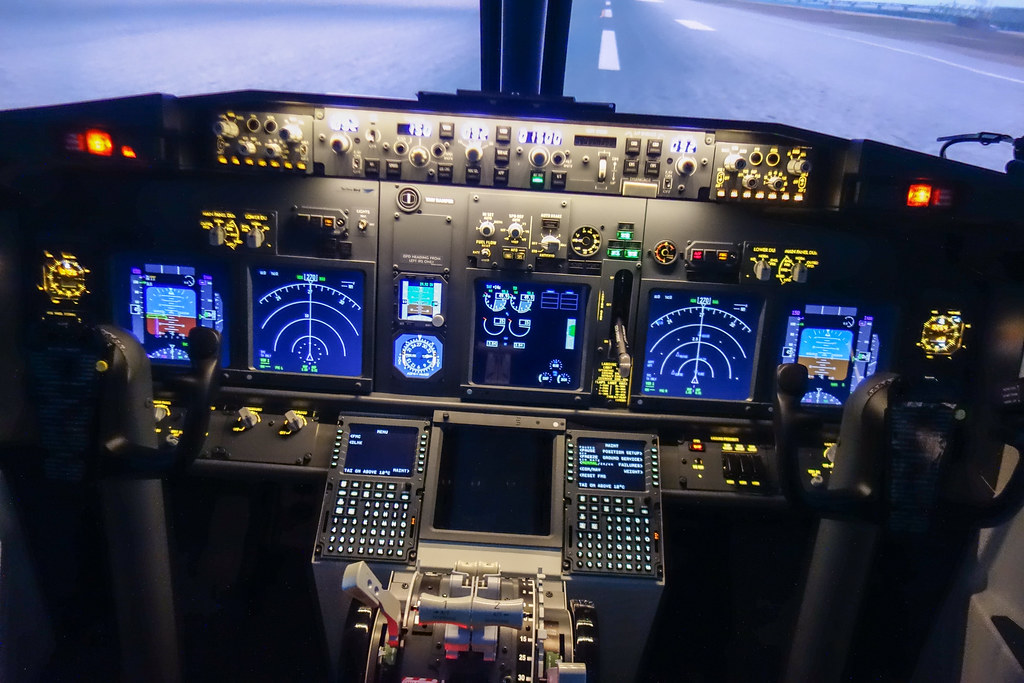 I also asked the 737NG instructor, and he told me the software uses the professional version of PMDG.
Since I didn’t book the 737 this time, I flew on the C172 for an hour. The instructor was a young pilot who holds a Commercial Pilot License and is currently looking for a job. We chatted while flying, and we got along very well; as a result, I even forgot to take photos during the flight.
Since I am more accustomed to old-style analog instruments,
the main purpose of this flight was to understand the Garmin 1000 avionics,
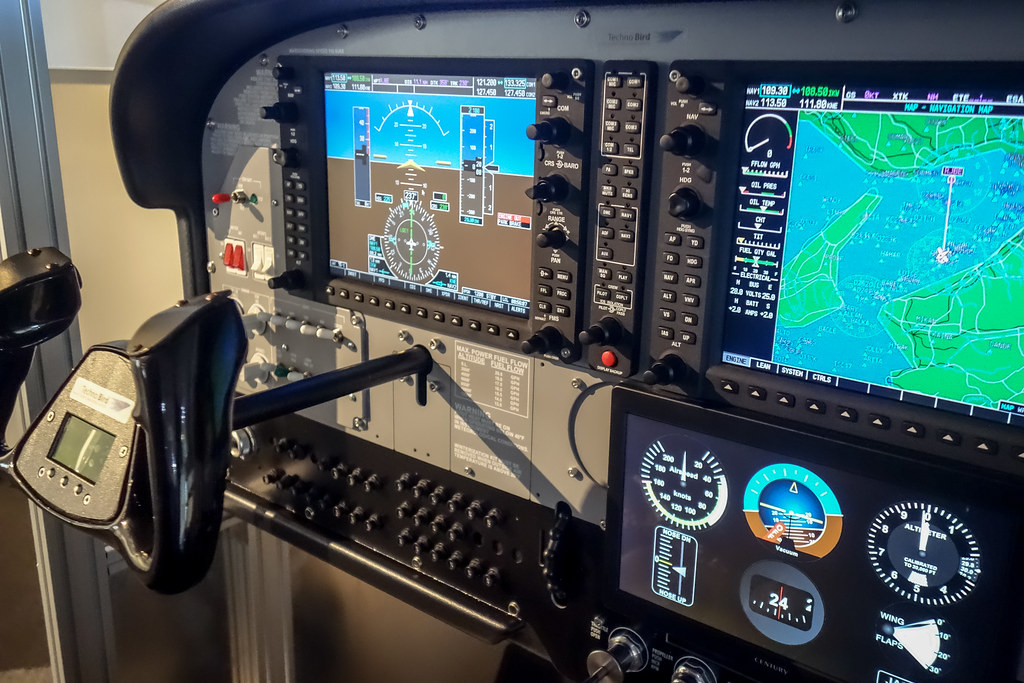 Take off from Kansai Airport, first fly north over Osaka Bay,
then fly west towards Kobe Airport, do a touch and go, then practice an ILS approach and landing,
finally flew a traffic pattern, the overall flight route is as follows.
Take off from Kansai Airport, first fly north over Osaka Bay,
then fly west towards Kobe Airport, do a touch and go, then practice an ILS approach and landing,
finally flew a traffic pattern, the overall flight route is as follows.
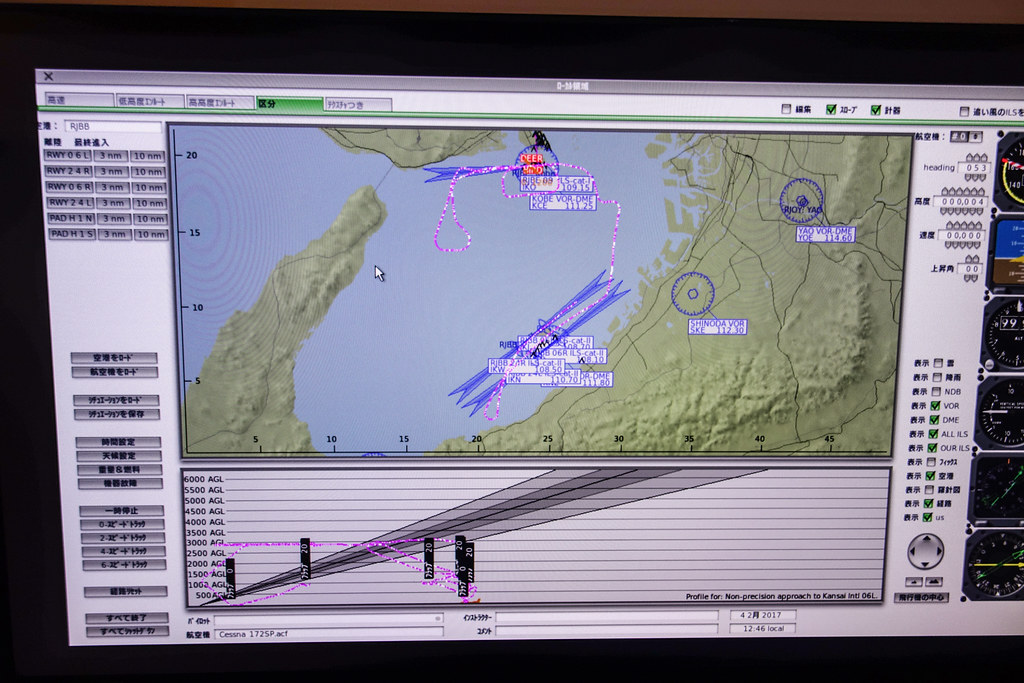 Since I didn’t set up weather conditions like wind and rain, and I am very skilled with X-Plane,
the flight was smooth, and it looked decent.
Since I didn’t set up weather conditions like wind and rain, and I am very skilled with X-Plane,
the flight was smooth, and it looked decent.
The main gain from this trip was a comprehensive understanding of the use of the Garmin 1000, such as where the ball is, how to adjust navigation equipment frequencies, etc. Also, I heard a lot from the pilot about the test subjects during their Commercial Pilot License exams. Although I won’t use them in the future, it verified the scope of knowledge in the books I have on hand. Also, he mentioned that when looking at the PAPI, large aircraft see white-white-red-red, but small aircraft should actually fly white-red-red-red when 1 mile from the Runway threshold, meaning it’s better to be a bit lower. I need to practice observing this more in the future.
The one-hour flight ended quickly, and I am very satisfied with Techno Bird. If I have the chance to go in the future, I must try the 737.