Visiting 2016 Tokyo International Aerospace Exhibition
The 2016 International Aerospace Exhibition was held at the Tokyo Big Sight convention center. Although this is an aerospace industry trade show, the final day is open to the general public, so it often attracts many aviation enthusiasts. I went to check it out on Saturday, October 15th. Here are a few photos to set the mood.
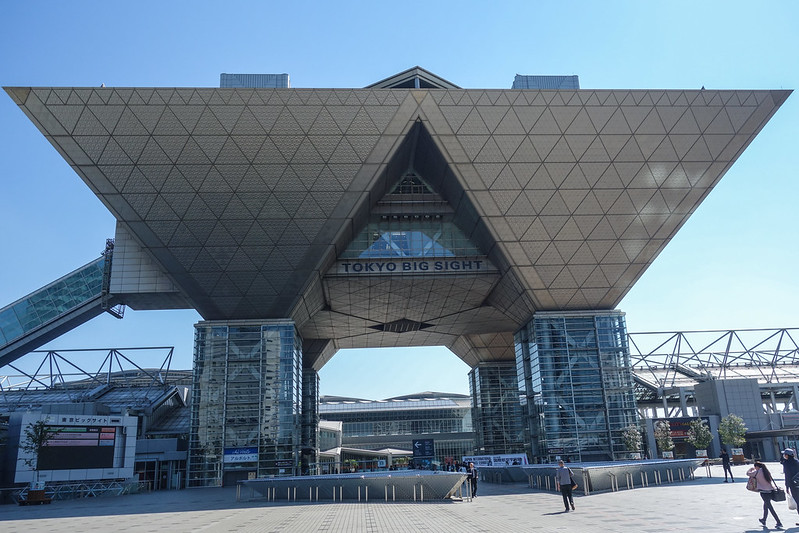
The iconic gate of the Tokyo Big Sight convention center
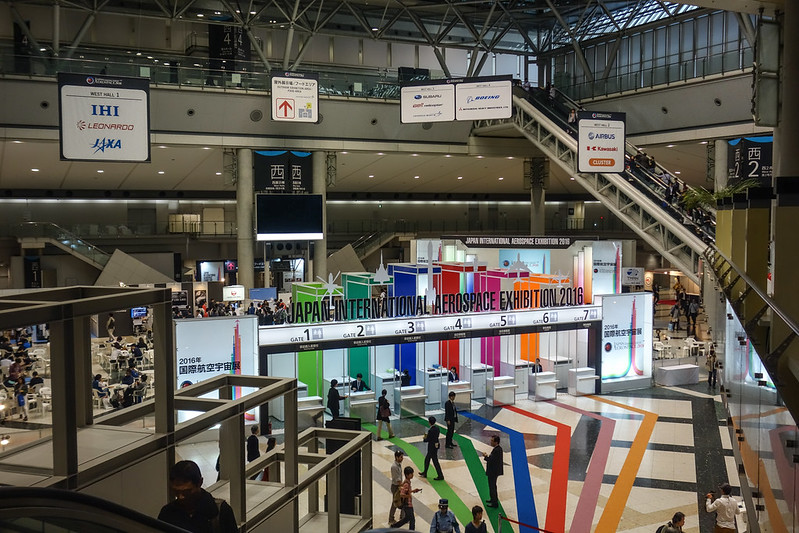
 The big signboard of this airshow

Main venue entrance
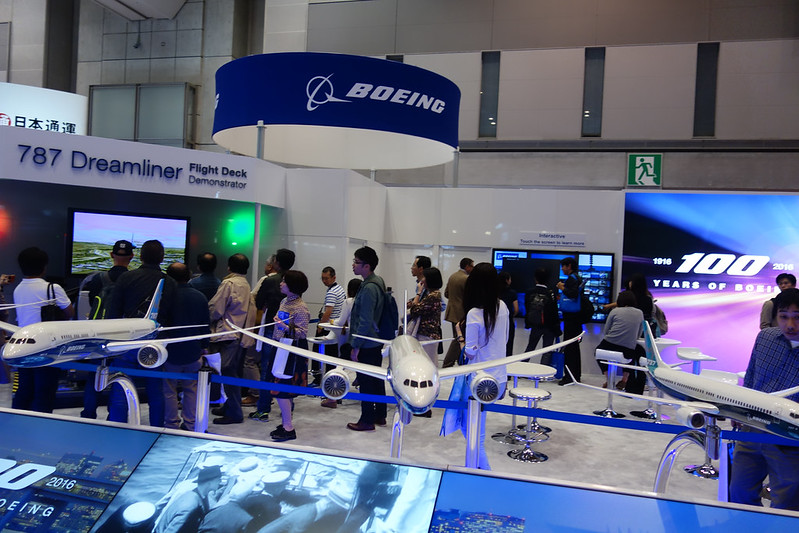
 The Boeing booth. The 787 simulator was the biggest draw, but seeing the long queue, I gave up.
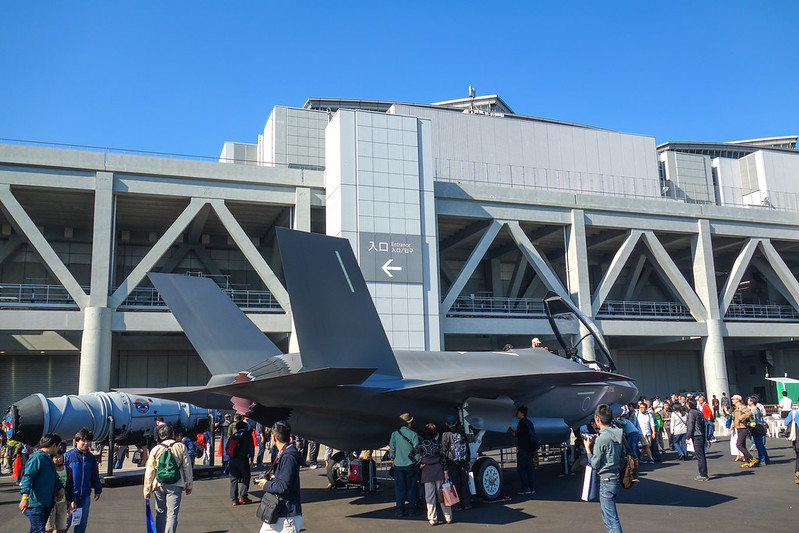
 A 1:1 scale model of an F-35 fighter was placed in the outdoor display area, and you could even sit in the cockpit for a photo. Seeing the long line again, I passed…
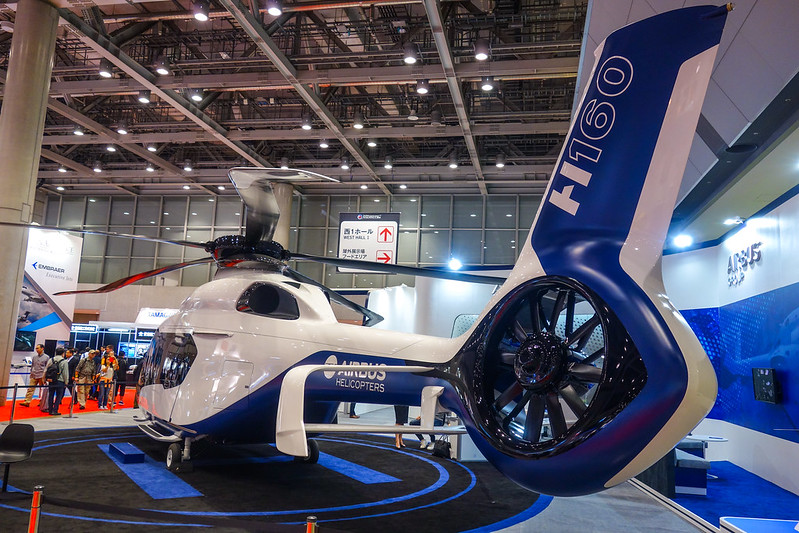
 Airbus’s H160 helicopter had an extremely eye-catching shape, especially the hook-shaped rotors which looked super cool.
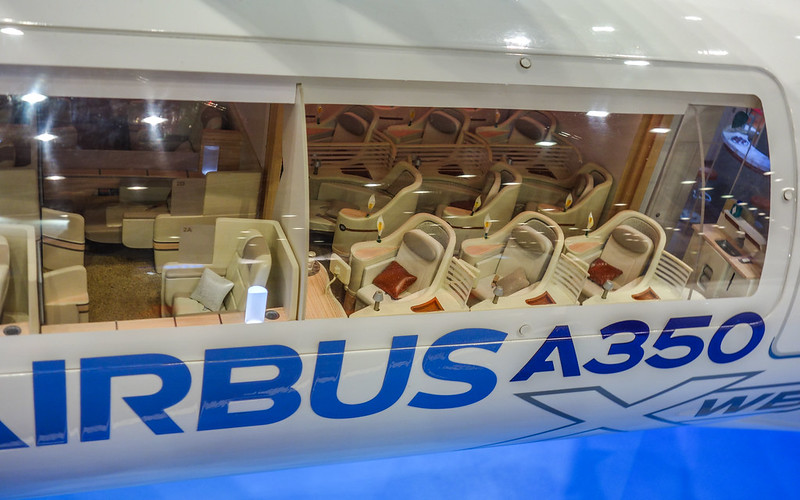
 The details inside the cabin of the A350 model were so precise; it was simply an exquisite piece of craftsmanship.
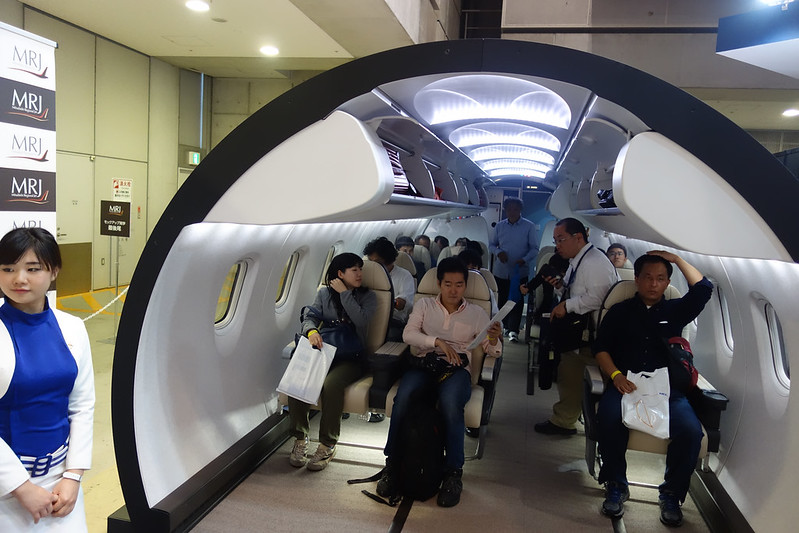
 There weren’t many people experiencing the MRJ’s 1:1 fuselage cabin model. I sat down and found it fairly comfortable, though the headroom seemed a bit low.
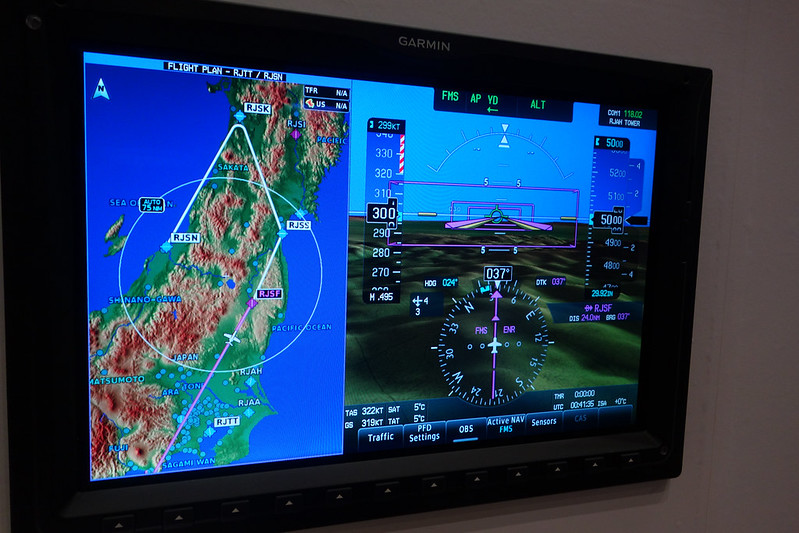
Below I will introduce a few topics I was particularly interested in, starting with Garmin’s G3000.
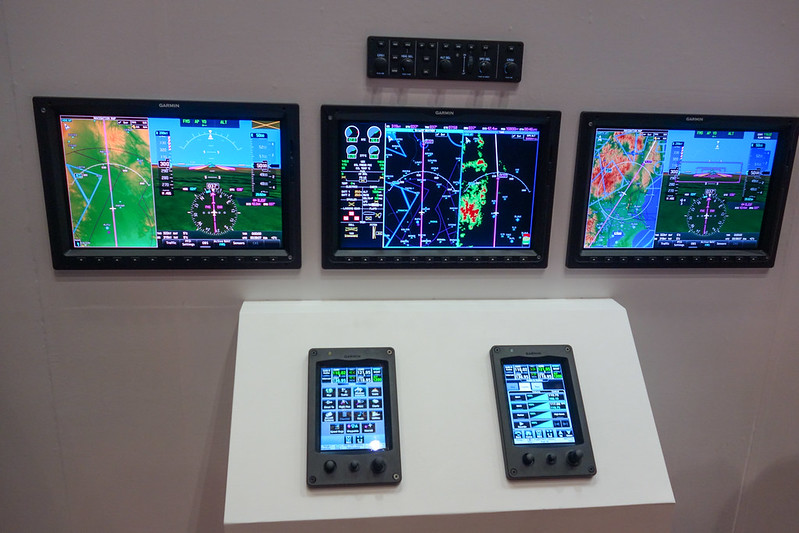 This system has already been installed on aircraft like the HondaJet and Phenom 300.
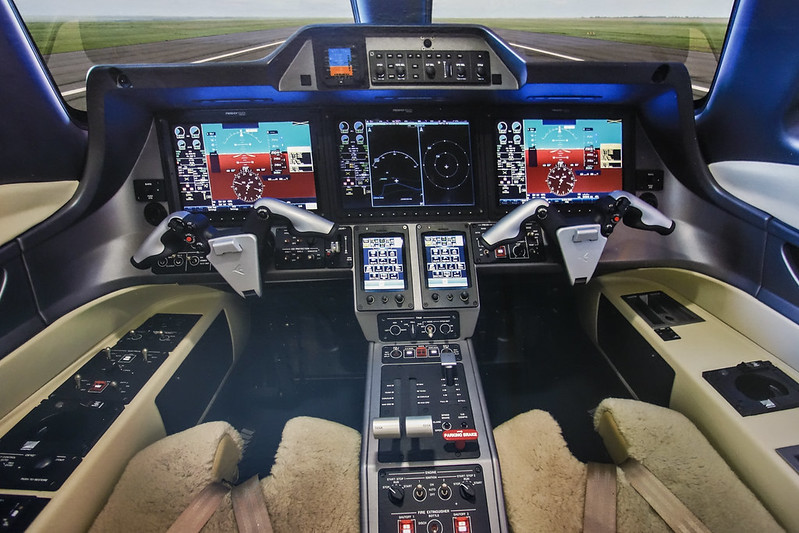 You can see that 3 display screens, 2 input touchscreens, and 1 mode controller completely cover all instruments/flight computers and autopilot.
Moreover, there’s no hardware keyboard. As demonstrated by the staff member below,
You can see that 3 display screens, 2 input touchscreens, and 1 mode controller completely cover all instruments/flight computers and autopilot.
Moreover, there’s no hardware keyboard. As demonstrated by the staff member below,
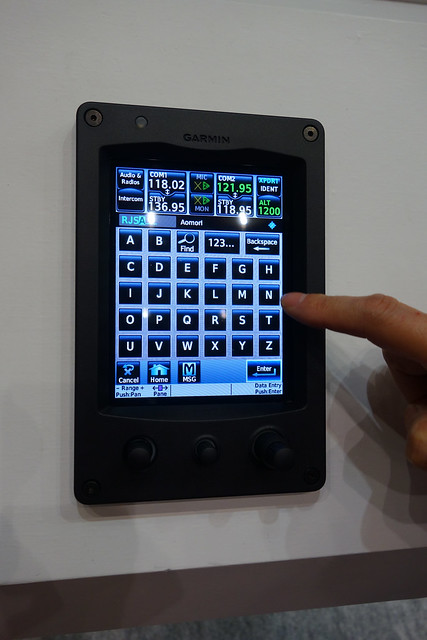
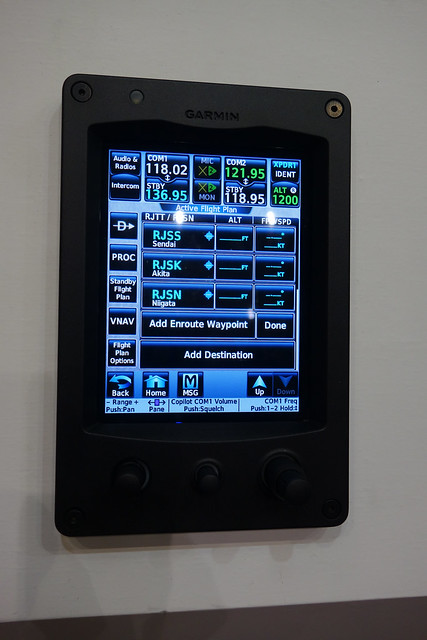 the soft keyboard makes entering a flight plan very simple.
I stopped by the Electronic Navigation Research Institute (ENRI) booth for 30 minutes and listened in detail as the researchers introduced their systems. It was very interesting.
For example, regarding Ground-Based Augmentation System (GBAS) and GNSS Landing System (GLS), which I have previously introduced on this site,
I asked a few extra questions. A staff member there who has been engaged in GBAS research and development for nearly 20 years answered me very seriously. I am very grateful.
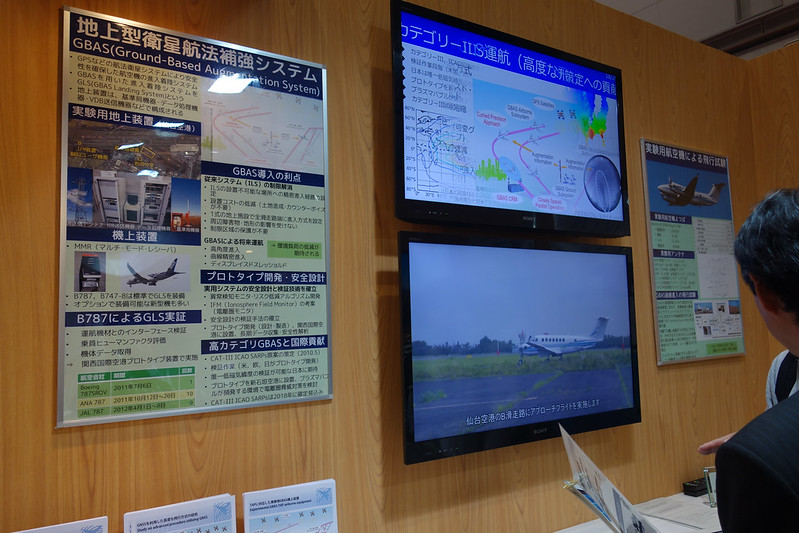
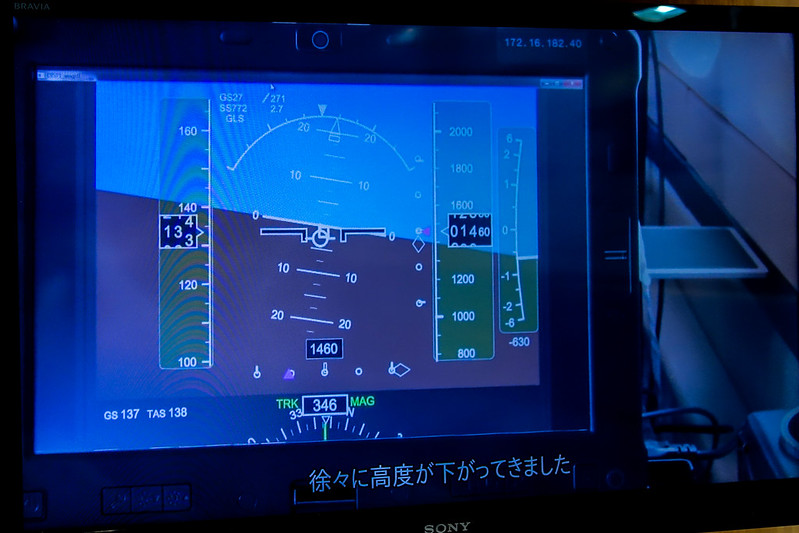 For instance, regarding the proliferation of GBAS, the adoption rate of onboard equipment is still the biggest issue.
It is estimated that ILS and GLS will need to operate concurrently for decades to complete all GLS upgrades.
Full operational GBAS at Haneda Airport is also still 5 years away.
When developing their GBAS system, they established 4 ground stations at Kansai Airport to calculate the bias model.
They had to collect several terabytes of data every day, and through calculation, they finally solved the error problem.
Additionally, like ILS, GLS is divided into CAT-I and CAT-III.
In CAT-III, Japan is affected by ionospheric interference more severely than Europe or America, so GPS signals are more susceptible to interference compared to the West.
Therefore, they specifically built a station on Ishigaki Island in Okinawa, and spent a lot of time solving this accuracy problem.
For instance, regarding the proliferation of GBAS, the adoption rate of onboard equipment is still the biggest issue.
It is estimated that ILS and GLS will need to operate concurrently for decades to complete all GLS upgrades.
Full operational GBAS at Haneda Airport is also still 5 years away.
When developing their GBAS system, they established 4 ground stations at Kansai Airport to calculate the bias model.
They had to collect several terabytes of data every day, and through calculation, they finally solved the error problem.
Additionally, like ILS, GLS is divided into CAT-I and CAT-III.
In CAT-III, Japan is affected by ionospheric interference more severely than Europe or America, so GPS signals are more susceptible to interference compared to the West.
Therefore, they specifically built a station on Ishigaki Island in Okinawa, and spent a lot of time solving this accuracy problem.
There was also a very interesting demonstration of an airport surveillance system using MLAT (Multi-Lateration).
Multi-Lateration works based on signals emitted by an aircraft’s Mode S Transponder.
More than 3 receiving antennas on the ground convert the signals into digital data and transmit it via fiber optic cables to a computer system.
By calculating the time difference of the received signals, the system can calculate the aircraft’s position,
completely unaffected by bad weather.
This system was connected to real-time data from Sendai Airport, allowing the position of aircraft within the airport to be displayed on the left screen.
You can also select a specific aircraft via the bottom right screen,
and the camera on the top right screen can automatically track the aircraft’s movement.
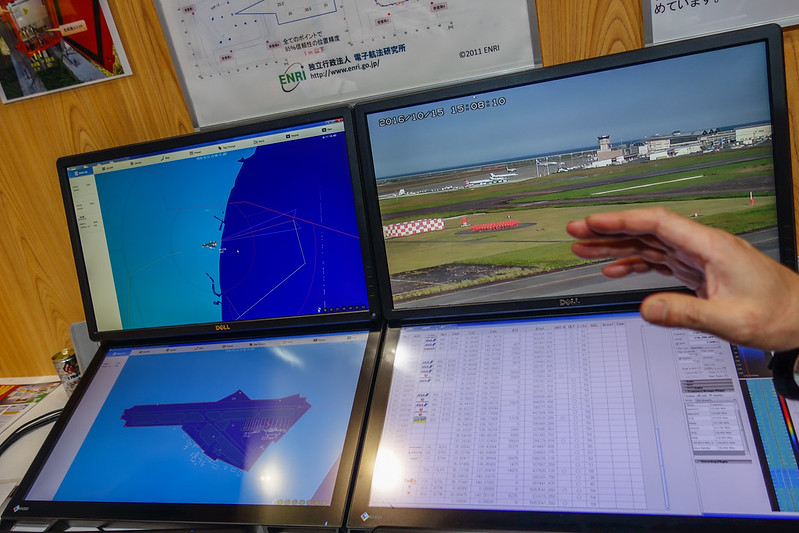 In the photo below, you can see JA60AN accelerating down the Runway.
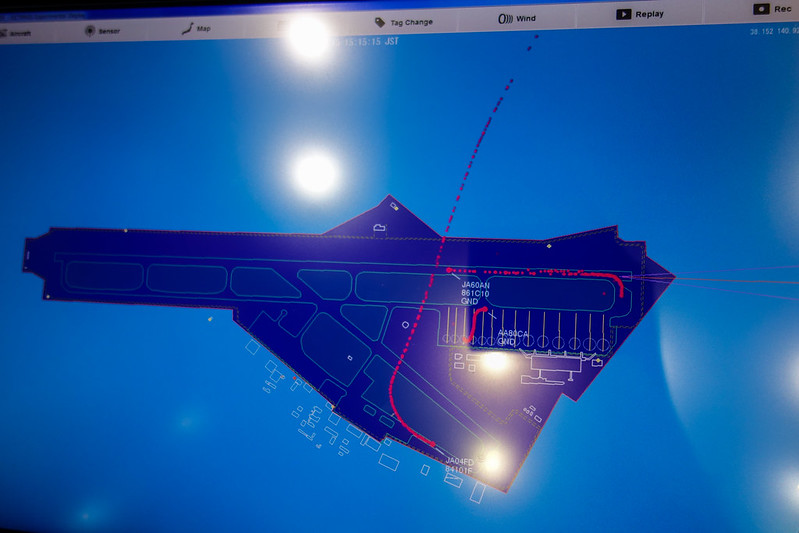
It reminded me of the incident last week at Shanghai Hongqiao Airport where two China Eastern aircraft narrowly collided. If Air Traffic Control could utilize such systems, the likelihood of such accidents in the future would likely decrease significantly.
By the way, there are many valuable documents on the Electronic Navigation Research Institute website, so I will need to study more in the future.
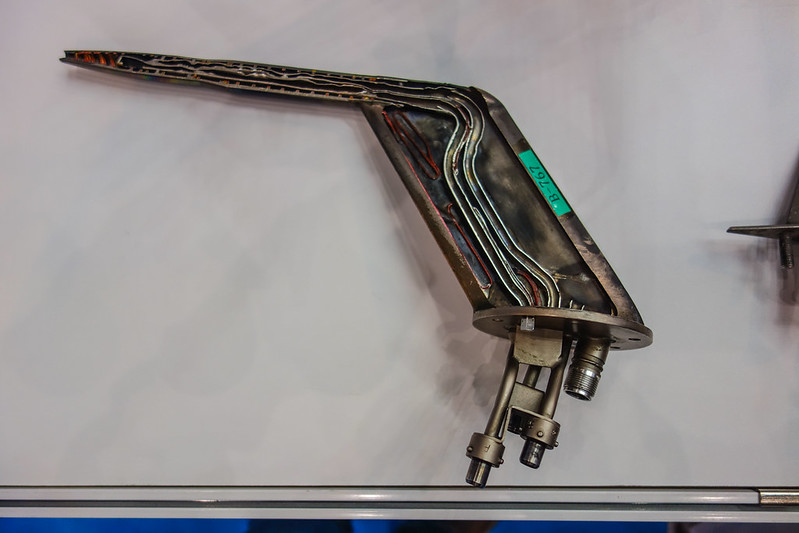
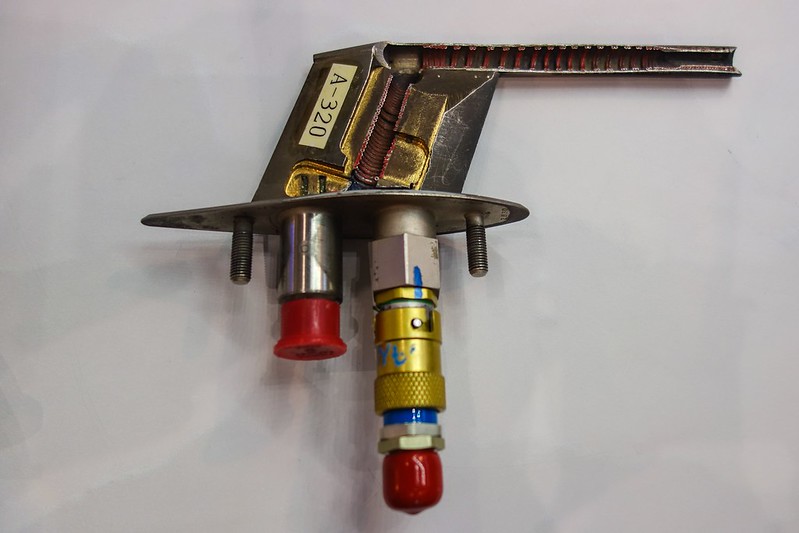
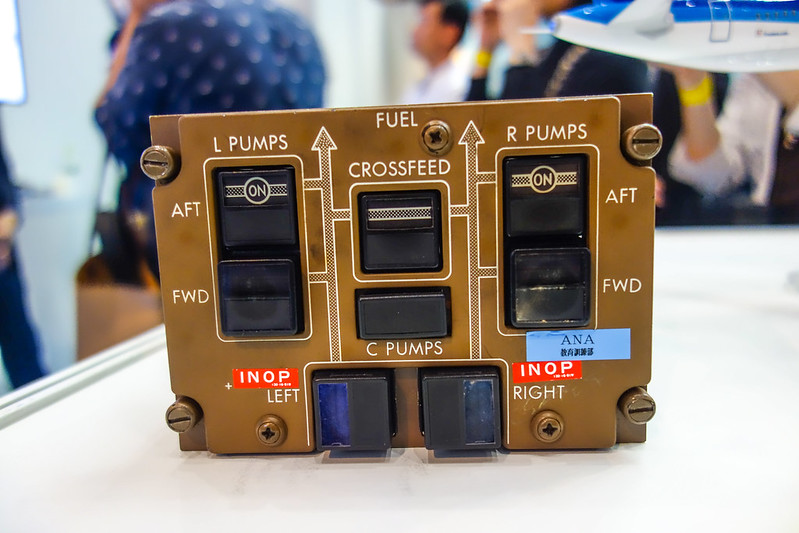
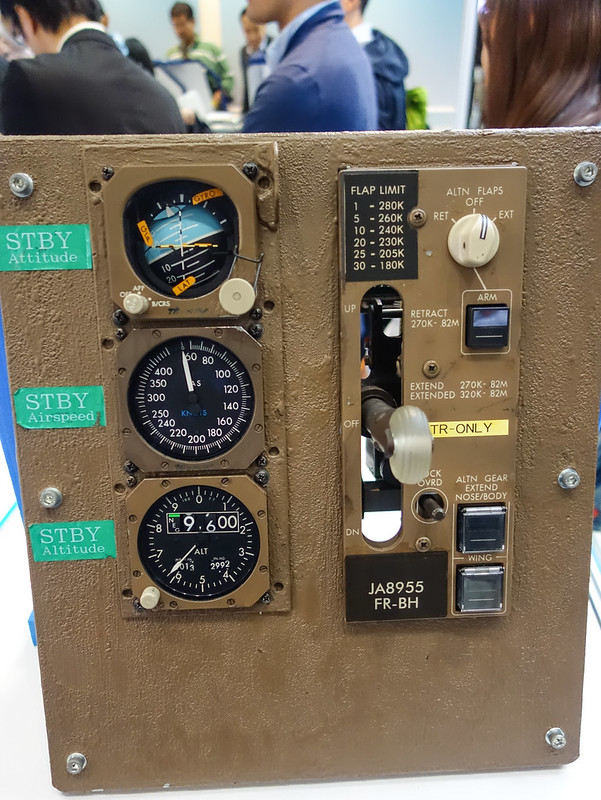
Finally, I saw some good stuff at the All Nippon Airways (ANA) booth and spent quite a bit of time examining them.
An actual Pitot tube from a Boeing 767
 An actual Pitot tube from an Airbus A320
 A Fuel Control panel from a certain Boeing model’s overhead panel. The “ON” display is simulated, giving it a real sense of age.
 Standby instruments and Landing Gear control lever from a Boeing 747-400D. It takes a lot of force to pull that Landing Gear lever out.
The International Aerospace Exhibition only happens once every 4 years. The next one will be in the year of the Tokyo Olympics. Looking forward to 2020.