APU Air Inlet Door Comparison
Following up on the previous post Observing the details of various intake and exhaust ports on the Boeing 737-800 tail, I thought the shape of the 737’s APU intake was quite unique, so I checked the photos I had on hand to see the shapes of other models.
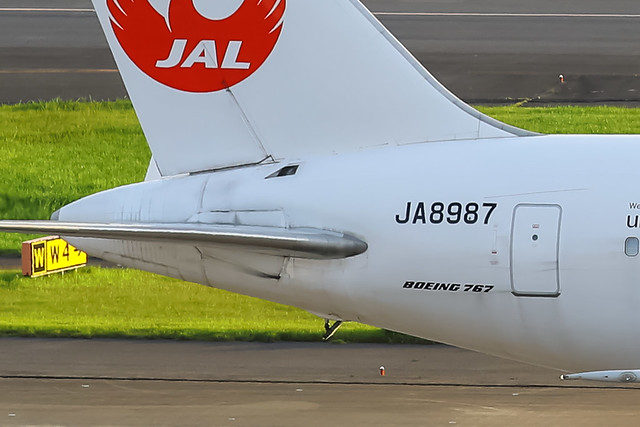
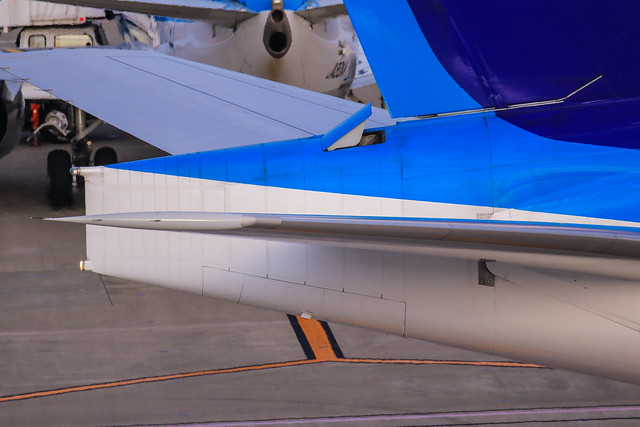
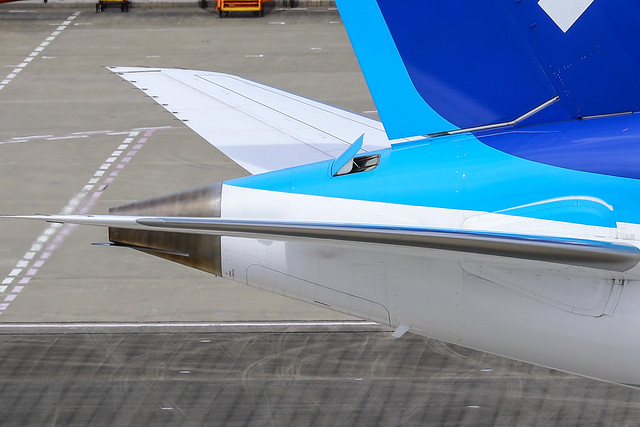
The APU intakes of the Boeing 767, 777, and 787 are all located at the bottom of the vertical stabilizer (tail fin), above the right side of the tail cone, but there are slight differences.
The 767’s position is slightly forward,
 while the 777 and 787 are positioned towards the rear of the vertical stabilizer.
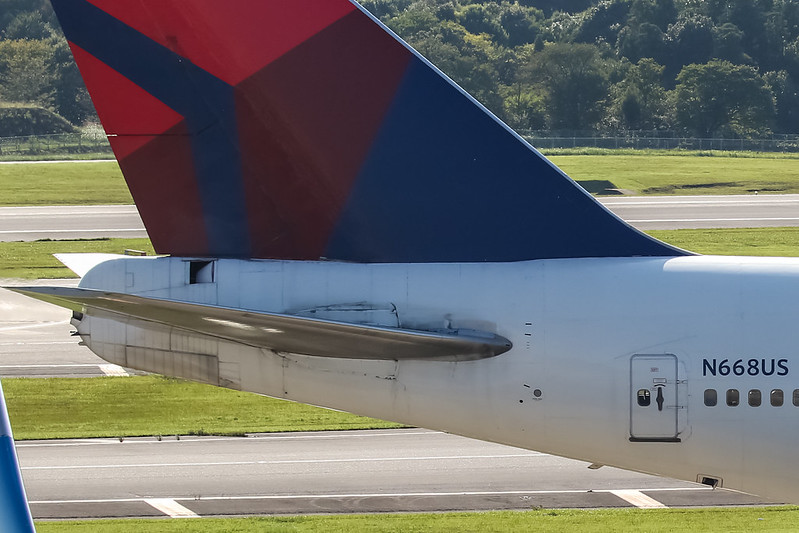
 The position of the Boeing 747’s APU intake is roughly the same, but the difference is that the opening faces inward into the fuselage, rather than opening outwards.
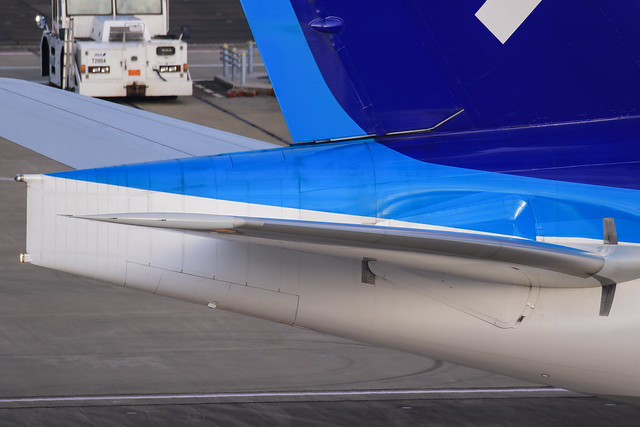
Below, let’s look at the Boeing 777. After engine start is complete and it begins taxiing, the APU is shut down. Here are a few photos taken when the intake door was closing. The whole process took no more than ten seconds.
(I have photos of the 747/787 etc. too, but they are quite similar, so I won’t post them.)
When opening
Closing
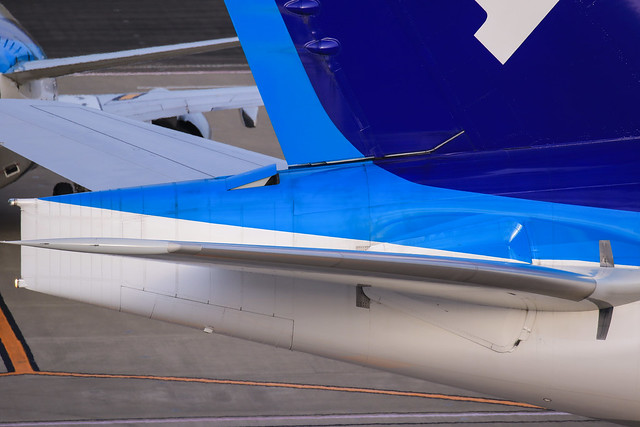
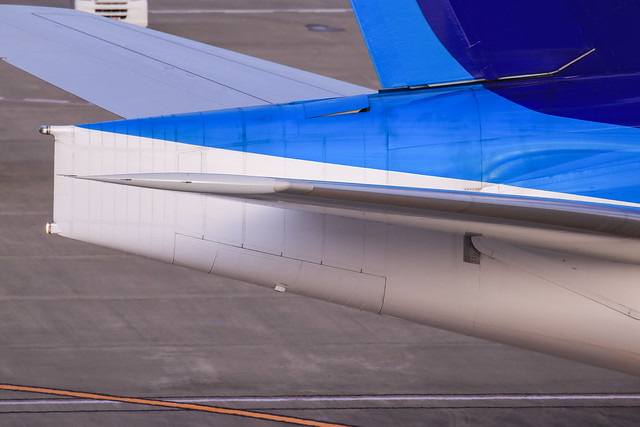 After closing
Let’s look at it from a few different angles.
This is the APU intake door viewed from the front side of the tail,
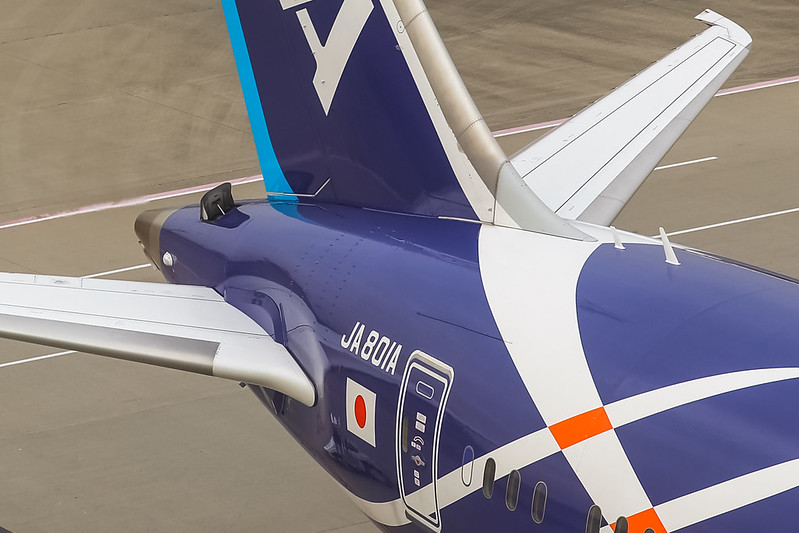 Please note that this aircraft’s registration number is JA801A. It belongs to ANA (All Nippon Airways) and was the first Boeing 787 in the world to enter commercial service.
Also JA801A, viewed from directly behind.
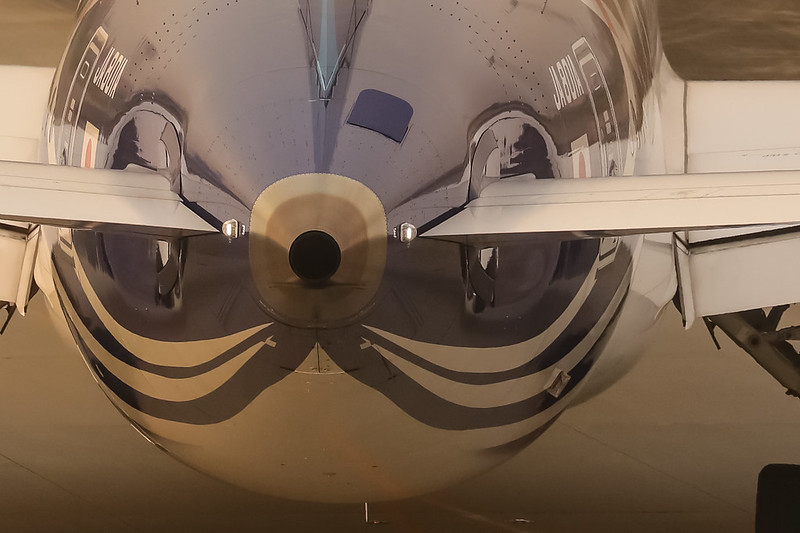
Another 787, viewed from directly front.
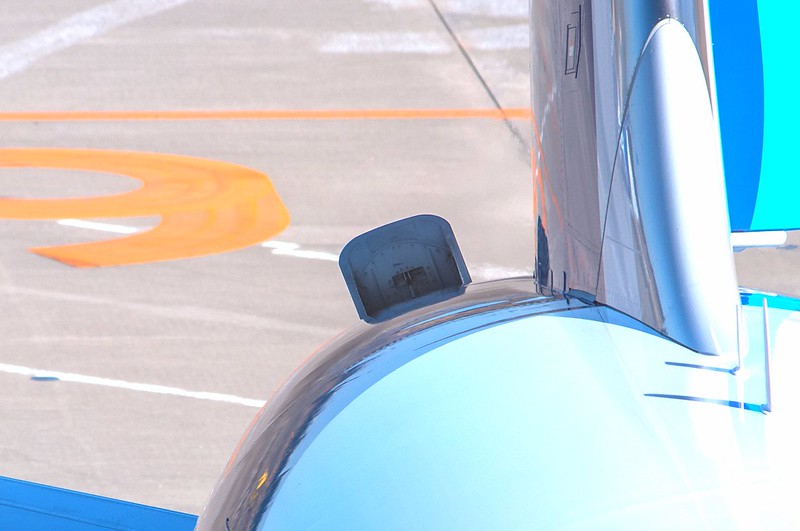
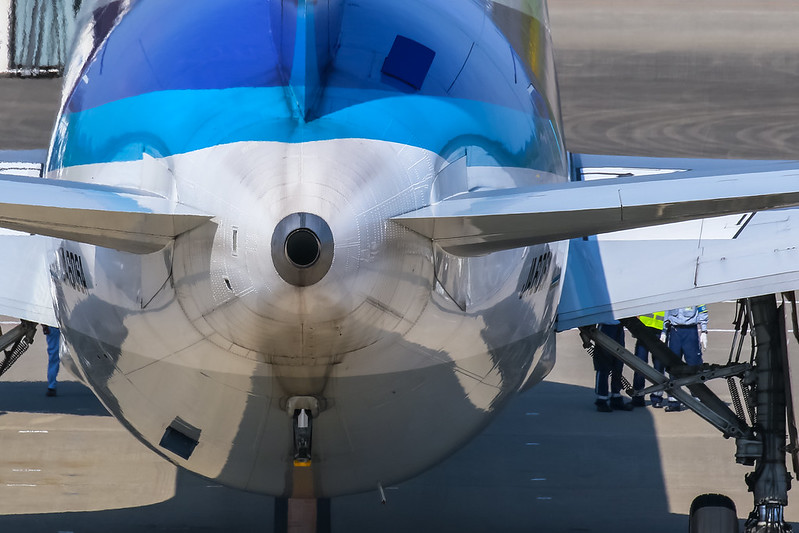
Viewing the Boeing 767’s APU intake door from directly behind.
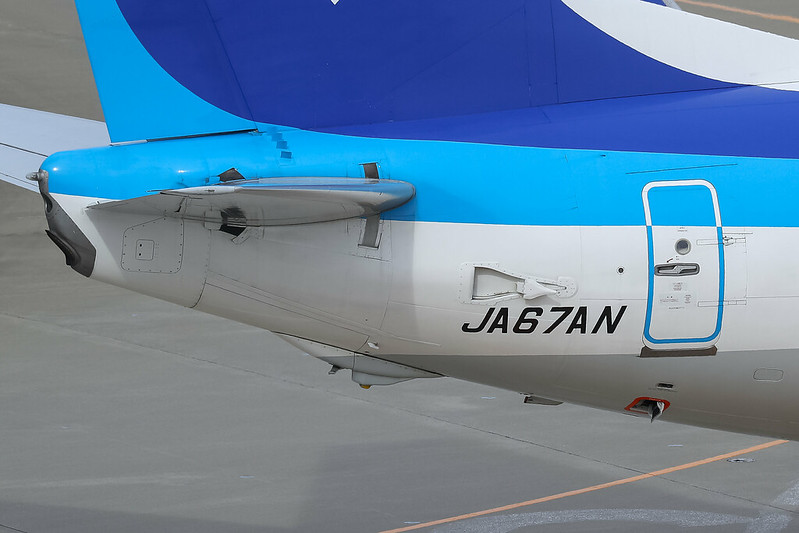
Now looking back at the Boeing 737’s APU intake, it feels quite unique, doesn’t it? It is located on the right side of the fuselage,
below the leading edge of the vertical stabilizer, right in the center of the fuselage; the triangular section above the text “JA67AN” is it.
 It seems that because the Boeing 737 fuselage is small, placing the intake here was a choice of necessity.
According to Mr. @dreamliner, when working on the ground, to prevent damage to the equipment by hitting the intake,
they generally do not open the access panel next to it.
It seems that because the Boeing 737 fuselage is small, placing the intake here was a choice of necessity.
According to Mr. @dreamliner, when working on the ground, to prevent damage to the equipment by hitting the intake,
they generally do not open the access panel next to it.
A photo of the 737’s APU intake when opened, viewed from the front side:
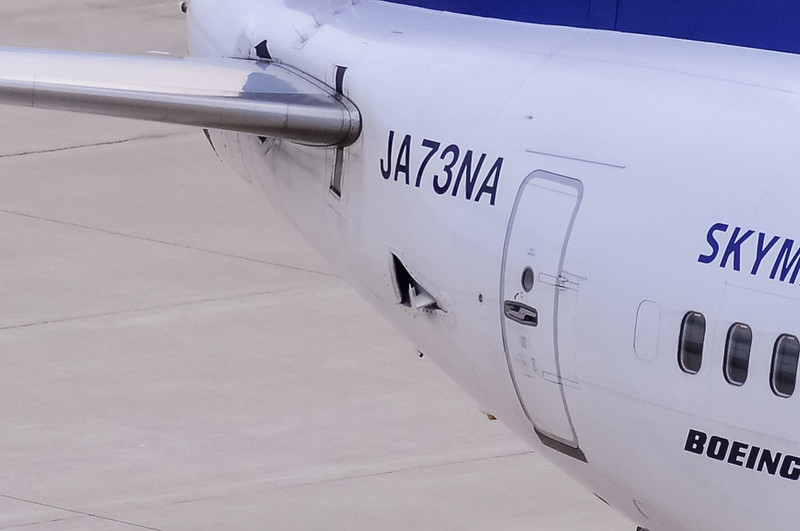
The A350’s position is also quite similar to the 777 and 787,
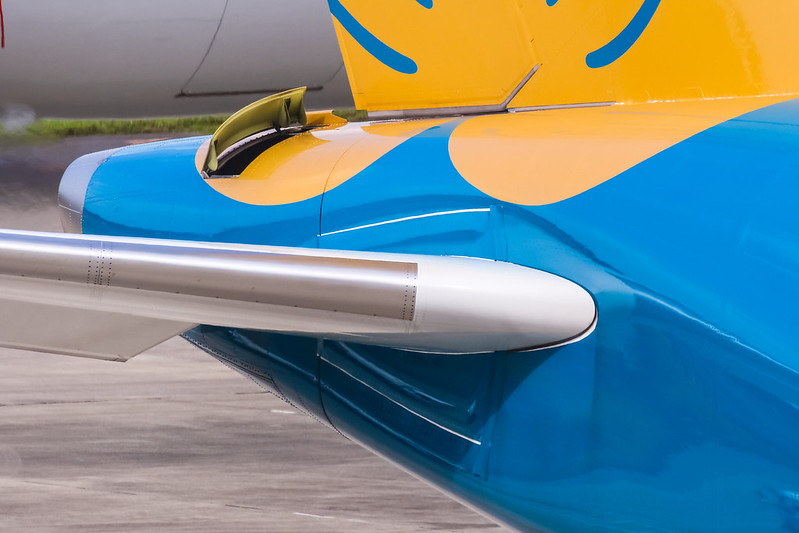 but the A320/330/340 series opening is at the bottom rear of the tail cone.
I didn’t have a clear photo on hand, so I had to use one from someone else on Flickr.
but the A320/330/340 series opening is at the bottom rear of the tail cone.
I didn’t have a clear photo on hand, so I had to use one from someone else on Flickr.
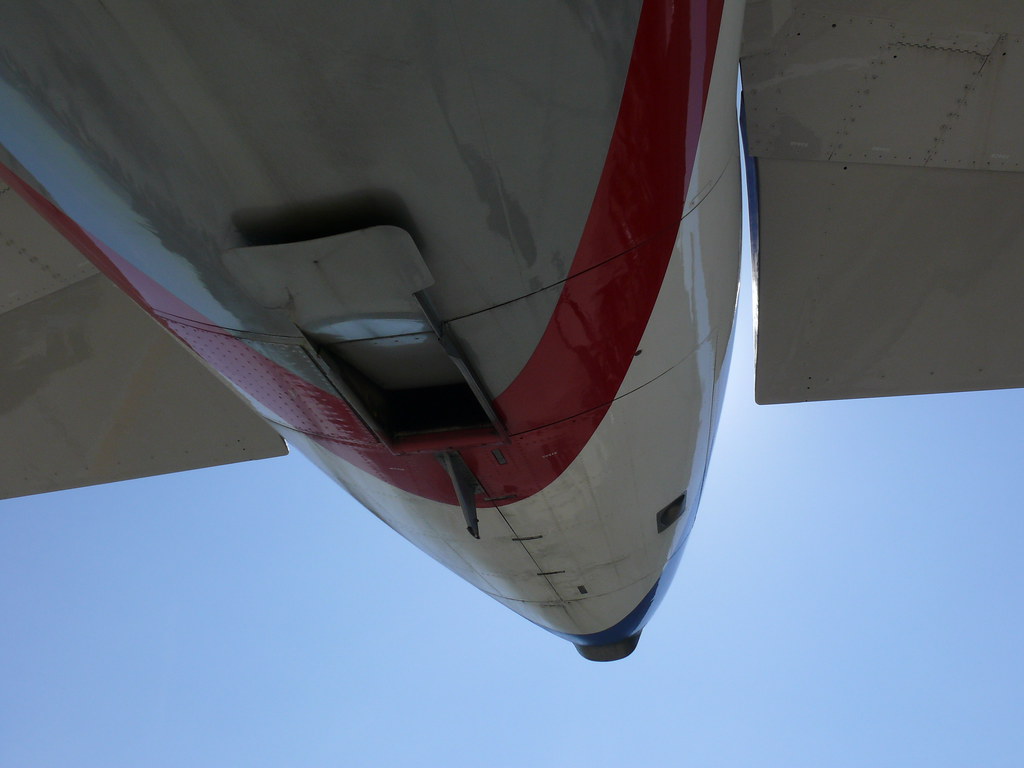
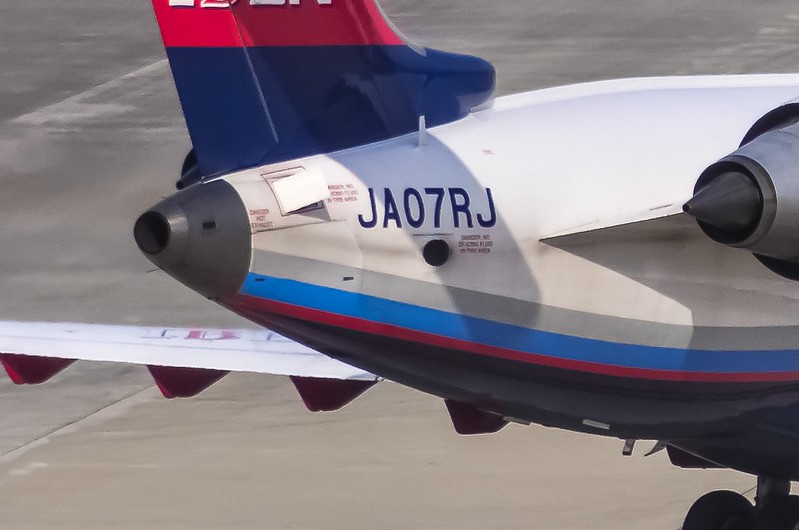
I also have a photo of a Bombardier CL-600-2C10; looking at its position, it’s about the same,
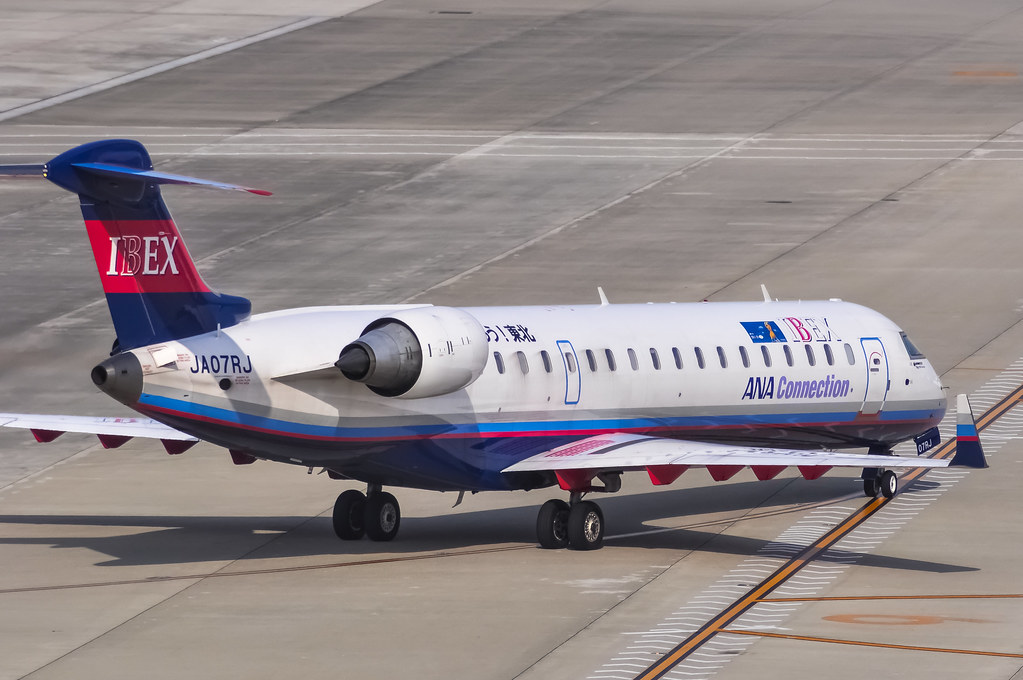 Zooming in a bit:
End
2016/07/27 Update
Seeing the press release from Shimadzu Corporation in Kyoto,
Following the 747/747-8/757/767/787,
They have also received orders for the APU intake door actuators (APU Air Inlet Door Actuator) for the 737 MAX and 777.
 You can see that it is this small part that supports the intake door.
2016/07/31 Update
Yesterday, I went to the observation deck at Haneda Airport International Terminal and photographed the open and closed status of a Lufthansa A340’s APU intake door. Due to the high temperature of over 30 degrees, heat haze made the photos not very clear, but some details are still visible.
Lufthansa Airbus A340-600 D-AIHE Leverkunsen has pushed back, and engine start has begun
1 Its forward fuselage section
 2 Its tail section
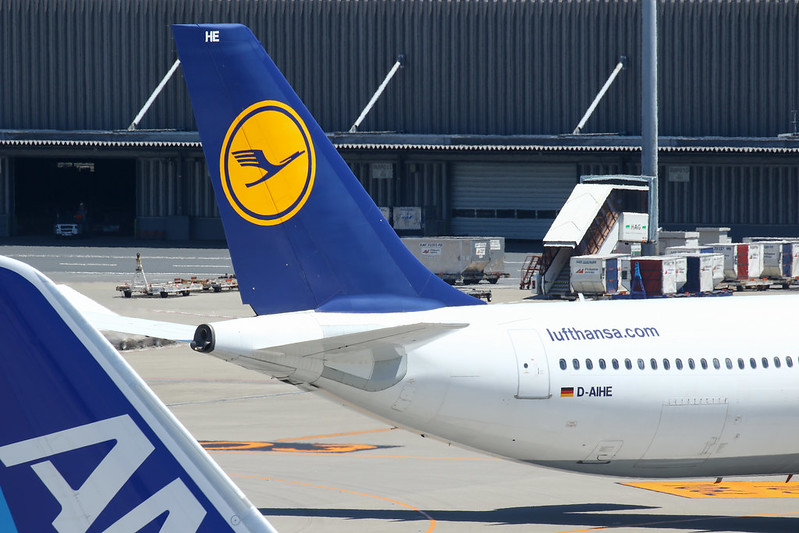 3 Zooming in on the tail, seeing its APU intake in the open state
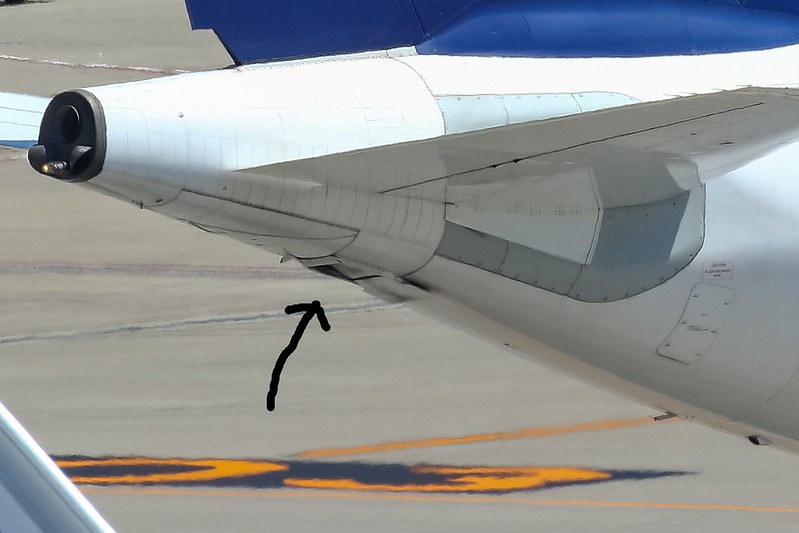 4 A moment later, shooting again, the APU intake is already closed
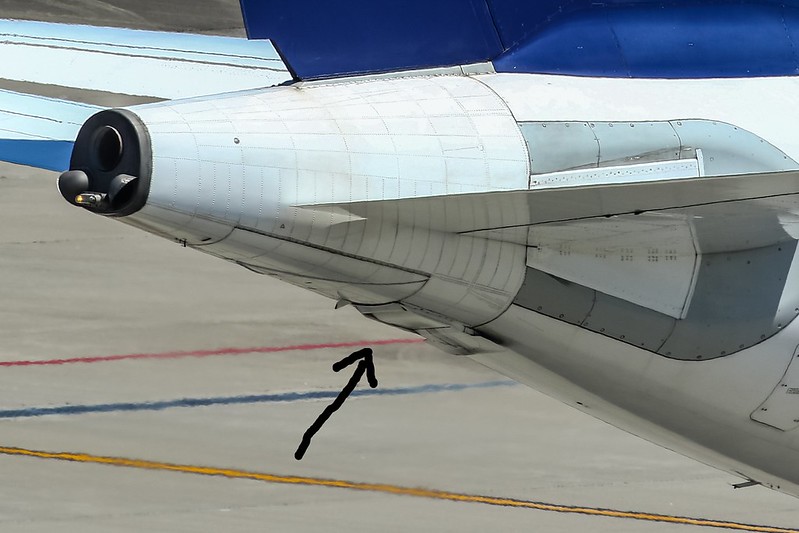
An Air China A330-300 with registration number B-5947; the angle isn’t great,
but the open state is faintly visible, so I’m posting it for reference.
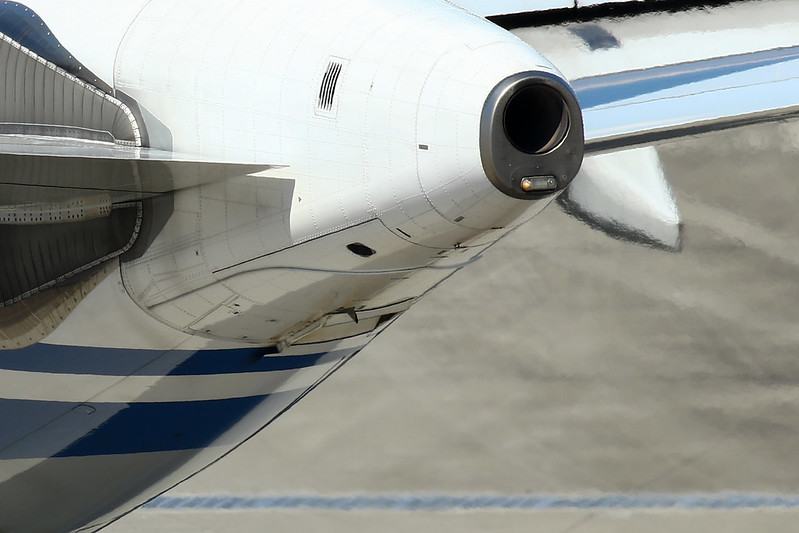
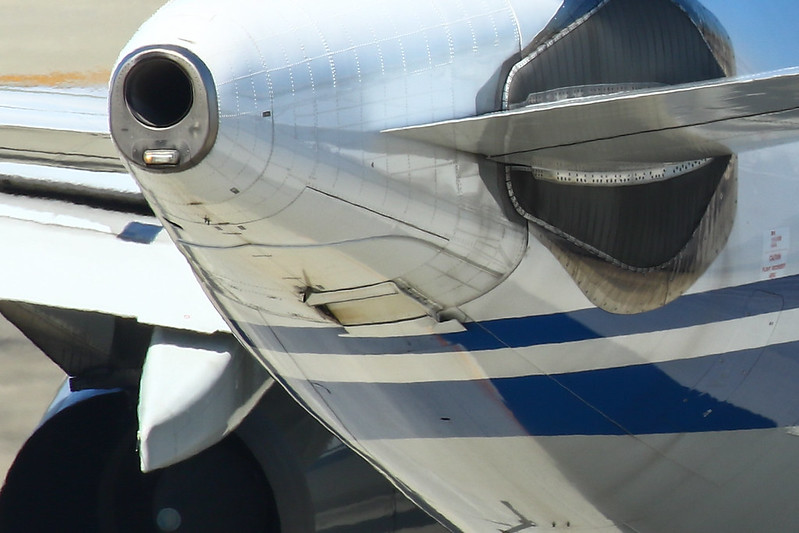
A China Eastern Airlines A330-300 with registration number B-6085, similar angle to the one above.
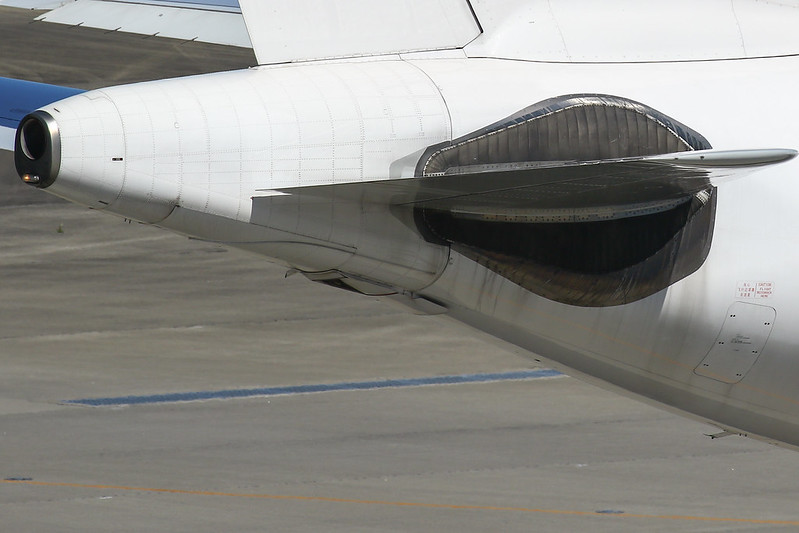
I have always felt that the APU intake doors of the 320/330/340 create less Drag during flight, making the design more reasonable. However, the A350 uses a method similar to the 787; I wonder what the reason is?