Title: Exploring the Airliner Cockpit 2.6 About Flaps
In the previous section, it was mentioned that flaps should be preset to the takeoff position before taxiing. Why is this?
First of all, flaps are devices mounted on the trailing edge or leading edge of the wing that can deflect downward or (and) slide backward (forward), used to increase Lift. Depending on the installation location and specific function, flaps are divided into trailing edge flaps and leading edge flaps.
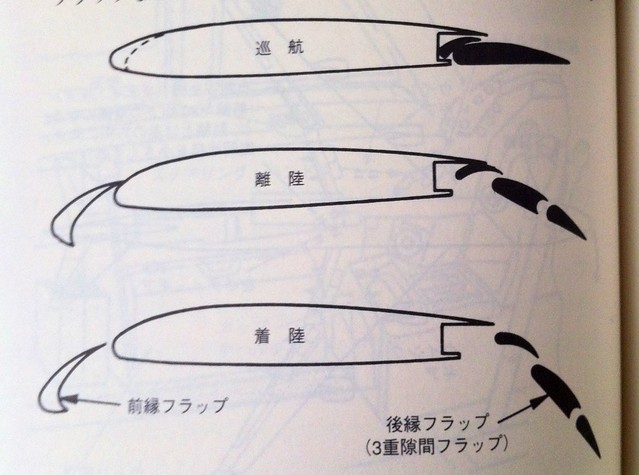
Generally speaking, trailing edge flaps have a disadvantage: when they deflect downward, although they can increase the airflow velocity over the upper wing surface, thereby increasing the lift coefficient, they also cause the local angle of attack of the airflow at the leading edge to increase. When the aircraft is flying at a high angle of attack, this easily leads to local airflow separation on the upper part of the wing’s leading edge, degrading the aircraft’s performance. If leading edge flaps are used at this time, they can not only eliminate the local airflow separation on the upper part of the wing’s leading edge and improve the lift-enhancing effect of the trailing edge flaps, but they also provide a lift-enhancing effect themselves.
It is said that in the past, flaps were set during taxiing, but during taxiing, the pilot has to communicate with ATC while watching for traffic in all directions. Being extremely busy, they would often forget to set the flaps. Therefore, current flight manuals stipulate that flaps must be set before starting to taxi.
The use of flaps is primarily during takeoff and landing. When flying as a passenger, you often notice a mechanical “whir-” sound. Generally speaking, this is the sound of the flaps extending from the wings. As shown in the picture above, during normal Level Flight and when stationary on the ground, the flaps are retracted into the wings; they are only extended when needed for takeoff and landing. Since the aircraft speed is slower during takeoff and landing, more Lift is required, so the flap extension angle is also deeper.
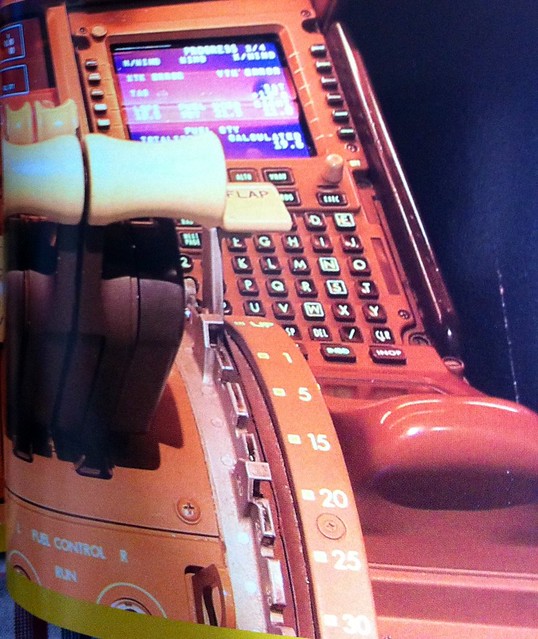
Flap settings vary by model. For example, the Airbus A330 has 5 settings (0, 1, 2, 3, FULL), while the Boeing 777 has 6 settings (1, 5, 15, 20, 25, 30 degrees). The flap device is very heavy and bulky, so it is impossible to extend it fully and quickly all at once. Therefore, in actual operation, you must set the required setting based on the aircraft’s overall weight and the Runway length to complete the takeoff and landing actions quickly and economically. Generally speaking, settings 1, 2, and 3 on the Airbus A330 are used for takeoff, while 3 and FULL are used for landing; on the Boeing 777, settings 15 and 20 are used for takeoff, and 25 and 30 are used for landing.
The image below shows the FLAP setting lever of a Boeing 777, located to the right of the engine Thrust lever, with 6 settings indicating the angle values:
Let’s look at the actual shape of the flaps.
The photo below was taken at Kansai Airport. You can see this China Eastern Airbus A330-200 during ground taxiing in preparation for takeoff; the front and rear flaps have already been deployed, and the deployed angle is relatively shallow, probably around 10 degrees.
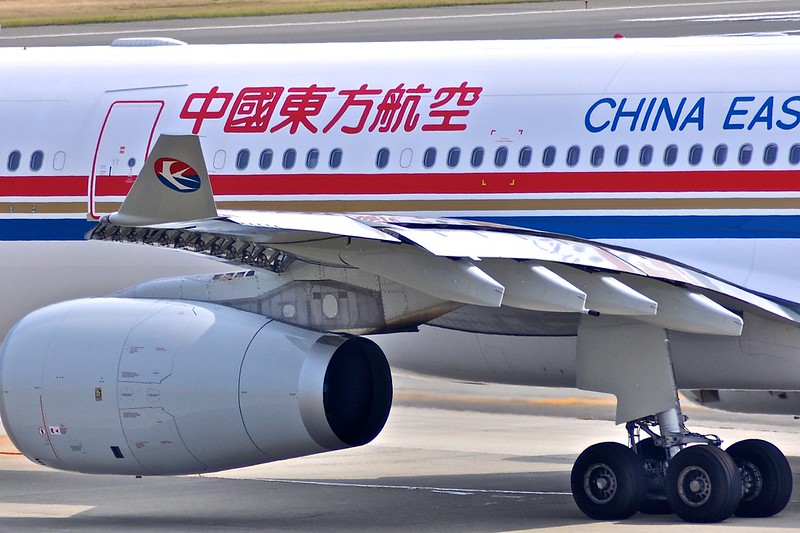
The appearance of the deployed leading edge flaps is easier to identify from the angle of the photo below.
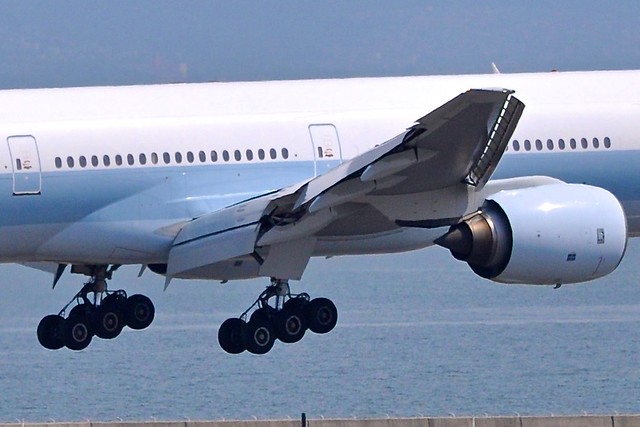 This is a Cathay Pacific Boeing 777, also photographed at Kansai International Airport.
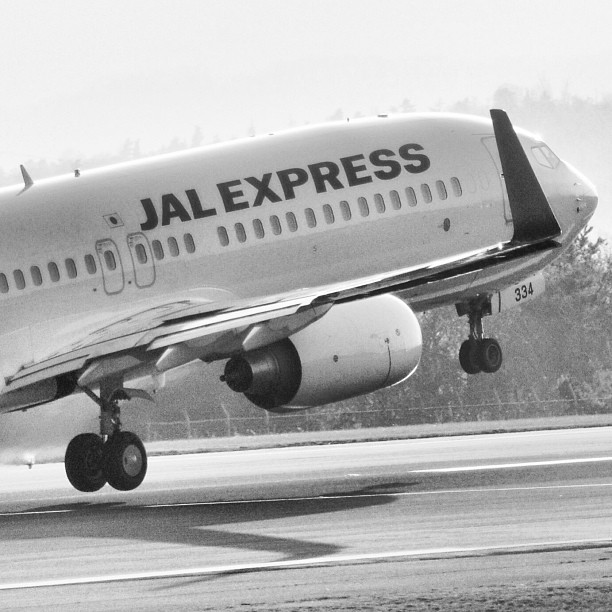
Below is a Boeing 737-800 photographed at Hiroshima Airport. At the moment the landing gear just left the ground during takeoff, you can see the flaps extended slightly in two sections.
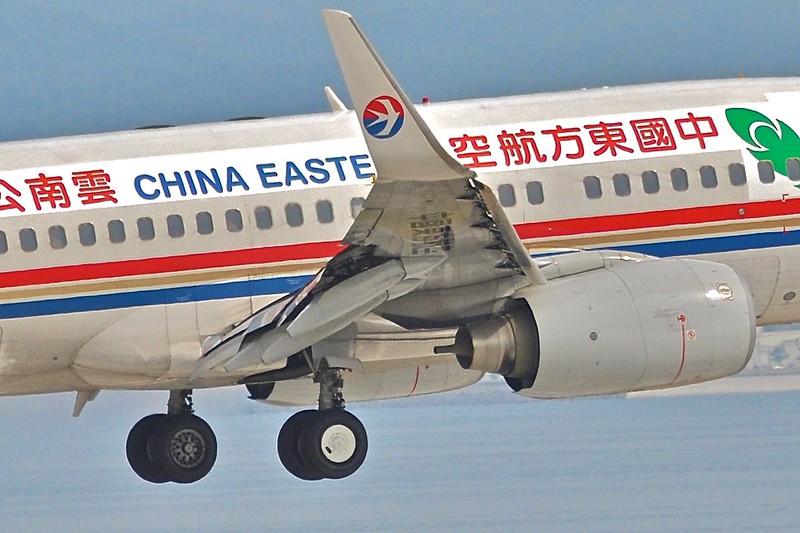
Compare this to another aircraft landing at Kansai Airport on the same day, a China Eastern Boeing 737-700. Its flap deployment angle is significantly deeper than the aircraft above, probably around 30 degrees.
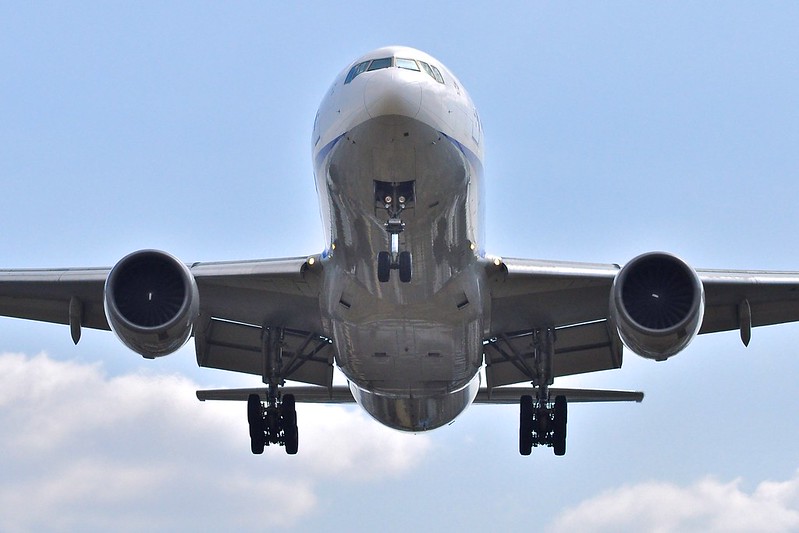
The two photos above show the flaps from the side. Let’s change the angle. Below is an ANA Boeing 777-200 I photographed at Itami Airport, about to land.
Looking from directly front, the area added by the extended trailing edge flaps is very large, ensuring the aircraft has sufficient Lift to continue flying at low speeds.
 Below is a view of the flaps from directly behind. You can clearly see how deep the extension angle is; it feels almost vertical.

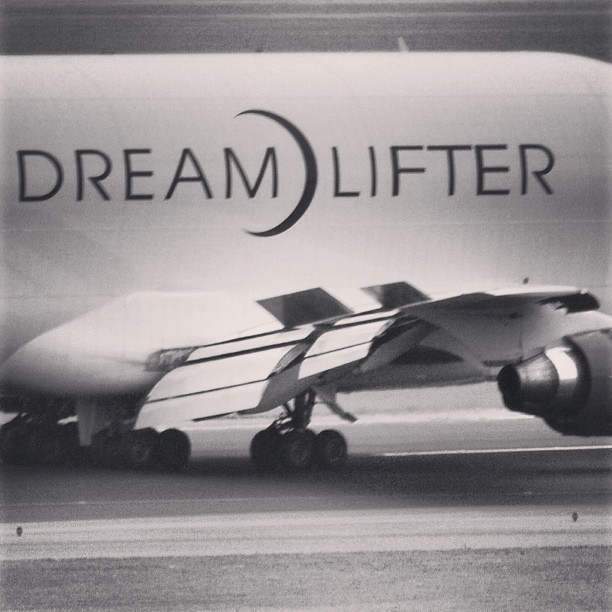
The Boeing 747’s flaps have 3 sections, making them one section longer than the 777. This is a photo of a DreamLifter just after landing. You can see the huge area it can extend. This photo was taken at Chubu Centrair International Airport.
Prev: Operations during Ground Taxi TOC: Table of Contents Next: Takeoff Clearance
End