A Flight Sim Enthusiast's Notebook
-
The Aviator's Apple Pie CARNOC Live Show
This site has previously recommended A Dispatcher’s Blog — Flying Apple Pie. Many of his blog posts are highly professional and offer excellent reference value.
Today, I stumbled upon a real photo of him. It turns out his story was featured by CARNOC (Civil Aviation Resource Net). The article is titled Flying Apple Pie — A Profile on Shanghai Airlines Duty Dispatcher Cheng Xu. Congratulations
-
X-Assign: Per-Aircraft Hardware Configuration Plugin
The default hardware configuration in X-Plane is singular. When you have multiple Joysticks or Control Panels, and need to change configurations based on flight conditions—for instance, when flying a helicopter, you must use a Collective to control pitch and roll with the joystick,
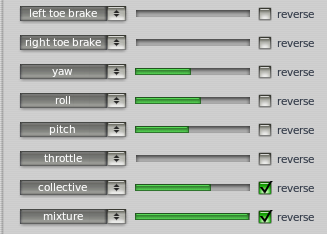 but when flying a Cessna, you need to reassign the same hardware to Prop Pitch and use a Yoke to control pitch and roll. This makes it very inconvenient as you have to reconfigure everything every time you switch aircraft.
Today, the X-Assign plugin I’m introducing can solve this problem perfectly because it allows you to set up to 3 hardware profiles for each aircraft.
-
AIP China Updated to amd201403
The China Aeronautical Information Publication (AIP China) I previously compiled hadn’t been updated for a year. Today, I finally gathered all the amendment files from the past year and merged them to upgrade to the latest version amd201403. You are welcome to use it: China Aeronautical Information Publication AIP China version amd201403
-
A Glance at Nagasaki Airport RJFU
I recently traveled to Kyushu and returned home via Nagasaki Airport. Since I was quite tired from the journey, I didn’t gather much information, only hastily snapping a few photos at the airport observation deck as mementos. Let me share them with you all below.
Nagasaki Airport is also an airport located on the sea. Its Runway orientation is 14/32, with a length of 3,000 meters and a width of 60 meters. It is quite famous for being the world’s first offshore airport, completed in 1975, with part of its foundation utilizing a natural island and part created by land reclamation.
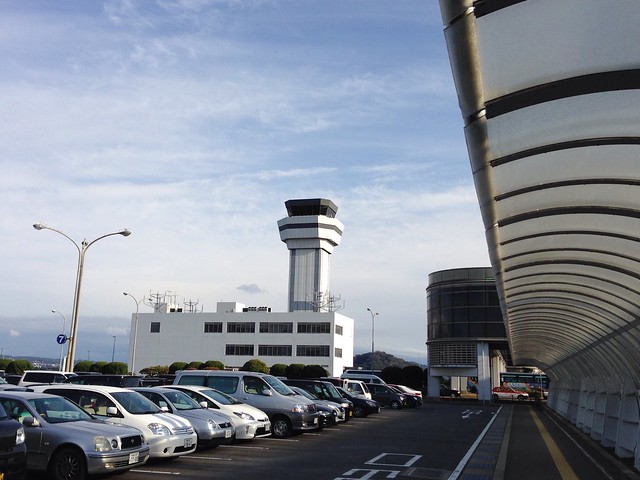 Similar to Hiroshima Airport, there are very few flights here, about one or two per hour, making it quite deserted.
 -
Listening to Software Defined Radio (SDR) on a Mac using a Digital TV Dongle and Gqrx -- Listening to the Aviation Band for just a few tens of Yuan
I bought a Mini DVB-T Stick (digital TV stick),
 plugged it into the USB port on my Mac, planning to play with Software Defined Radio (SDR),
The installation process is briefly recorded below.
plugged it into the USB port on my Mac, planning to play with Software Defined Radio (SDR),
The installation process is briefly recorded below.Today I used the open-source software Gqrx on Mac OS, “Gqrx is a software defined radio receiver powered by the GNU Radio SDR framework and the Qt graphical toolkit.” The download address is http://gqrx.dk/download. The latest version of the software is now 2.2.0, so I got the package gqrx-2.2.0.dmg, After decompressing, I got Gqrx.app, and just copied it to the Applications directory.
-
X-Plane Kansai International Airport RJBB Scenery and Charts
Seeing that VATSIM China (VATPRC) and VATSIM Japan (VATJPN) have decided to jointly hold the “City Express: Shanghai Pudong - Osaka Kansai” event on March 8th, netizens are looking for Scenery for Kansai Airport. Here is a brief introduction to the relevant information.
- Scenery Scenery 1 Download the Japan (Tokyo, Kansai, Nagoya) Scenery Pack Japan.zip file from Ted’s X-Plane Scenery Download Page.
This Scenery pack requires the OpenSceneryX Object Library. For installation instructions, please refer to this article on our site.
-
Total Air Temperature TAT Static Air Temperature SAT Outside Air Temperature OAT
There was a discussion on Baidu Tieba regarding this topic, so I looked up some information. The original question was: “Why does the engine information panel display the converted TAT instead of OAT? What exactly are they used for respectively?”
1. Definitions TAT (Total Temperature): Total Air Temperature SAT (Static Air Temperature): Static Air Temperature OAT (Outside Air Temperature): Outside Air Temperature
2. The relationship between TAT and Pressure According to the introduction in Wikipedia, Total Temperature (also known as stagnation temperature or total temperature) is a term related to aerodynamics. A fluid in motion possesses pressure, temperature, density, velocity, and Mach number. If a fluid can be brought to a complete standstill via an adiabatic process, its kinetic energy is converted into internal energy, manifesting as changes in pressure, temperature, and density. The temperature at this moment is the total temperature. A practical example is the aircraft’s pitot tube measuring total temperature and total pressure at its front end.
-
Airliner Cockpit Secrets 6.9 Docking at Jet Bridge
It has been over half a year since this series was last updated; I must apologize. Recently, I took a few photos of a marshaller guiding an aircraft to a Jet Bridge. Although they were taken with an iPhone before boarding, the results are quite satisfactory, so I can finally continue the updates.
First, let’s look at some common hand signals used by the marshaller while holding up signal bats,
-
Houston Beijing Route KIAH - ZBAA Flight Plan
For reference, here is the flight plan information from George Bush Intercontinental Airport (ICAO code KIAH) in Houston to ZBAA in Beijing. The flight time is nearly 15 hours.
KIAH LOA8 FUZ J58 SPS J168 LAA J20 FQF J17 CYS J13 COUTS J516 YQL J510 YYC J485 YXJ BINGA GABUL YXY NCA13 YESKA TED J111 OME FDV G212 ARNAP R213 JMU G212 DABMA W74 SABEM G332 GITUM GIT01A ZBAA
End
-
Study Notes on Ground Effect
Content excerpt from FAA-H-8083-25A Pilot’s Handbook
When an aircraft is just leaving the ground or water, compared to a state of level flight at a certain altitude, it can obtain sufficient Lift at a slightly slower speed. This phenomenon is Ground Effect.
When the aircraft is flying at an altitude of several feet from the ground, the airflow patterns in all three axes of the aircraft change because the vertical airflow near the wings is restricted by the ground. Consequently, the upwash, downwash, and wingtip vortices all change. The ground surface obstructs and alters the airflow pattern during flight, which creates Ground Effect.
-
LFPG - ZSPD Flight Plan: Paris to Shanghai Route
Just a simple note recording the route information from Paris Charles de Gaulle Airport to Shanghai Pudong Airport. Thanks to the senior working at [airline name omitted] for providing this information. Wishing you a prosperous Year of the Horse!
(Actual flight plan, the route below is not classified information, confirmed.)LFPG RANU3E RANUX UN858 MASEK UN851 MAKEL N851 GESKA P605 MALIV P862 LIMAK R822 METAT R30 KTL R22 UNISO A819 LITUN B228 XV R348 BA R104 ABK A308 TR P982 DARNO A575 MU B208 NIXAL G343 TMR X1 JB W159 IDKUP W40 YQG W142 DALIM A593 PIX A470 DALNU W166 ZJ VMB11A ZSPD
-
Learning Python X-Plane Plugin Programming -- PythonInterface Hello World Program
I am not a programmer, nor do I know the Python development language. I purely looked into these materials out of interest, and wrote this simple introductory guide, hoping to cast a brick to attract jade, and look forward to the continuous emergence of more excellent Python plugins in the future.
Resources:
-
The official development documentation is excellent for getting started. This article is based on this document. http://www.xpluginsdk.org/downloads/Using%20Python%20with%20the%20PythonInterface%20Plugin.pdf
-
The sample programs provided by the official source; ultimately, it all comes down to reading the code. This is the best way to learn. http://www.xpluginsdk.org/downloads/PythonScripts.zip
-
-
Lift Notes
Aerodynamics of Flight
Thrust—the forward force produced by the powerplant/propeller or rotor. It opposes or overcomes the force of drag. As a general rule, it acts parallel to the longitudinal axis. However, this is not always the case, as explained later.
Drag—a rearward, retarding force caused by disruption of airflow by the wing, rotor, fuselage, and other protruding objects. Drag opposes Thrust, and acts rearward parallel to the relative wind.
-
Comparison of 777-200LR and 777-300ER
The 777-200LR Worldliner is hailed as the world’s longest-range airliner. So, compared to the 300ER, just how much farther can it actually fly? The Boeing official website features a performance comparison of these two models. For instance, the 200LR has a range of 17,395 km, while the 300ER has 14,490 km. The 200LR wins by 2,900 km—truly impressive.
Consequently, the 200LR can operate routes lasting up to 19 hours, such as: New York-Singapore Perth - London New York - Auckland Chicago - Sydney Miami - Taipei It is capable of directly connecting the cities listed above.
-
What is Primer?
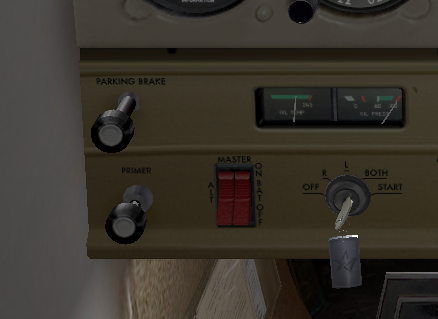
A friend on Baidu Tieba asked what a Primer is? After answering, I felt this might be a common question, so I decided to write a short note.
Translating “Primer” into Chinese literally means to inject or add. On small propeller aircraft, the Primer refers to the priming pump for engines with a carburetor fuel supply system (also known as a priming pump, primer valve, primer switch, etc.).
-
Manually Add Navigation Information
I see many friends online struggling to find the latest navigation database, because the data included with X-Plane 10 itself is quite limited. Often, much of the route information found online cannot be entered into the FMC, so everyone feels the need to constantly update this data.
Actually, X-Plane 10 itself allows for very simple manual addition of navigation information. As long as you find Waypoint or navigation station information from an Aeronautical Information Publication (AIP) or websites like OpenNav, you can input it into the system in just a few seconds, so generally, there is no need to go through the trouble of regularly searching for and downloading the latest navigation data.
-
Regarding X-Plane's New Features -- An Interview with Ben Supnik on flightsim.com
Today, an interview with X-Plane developer Ben was published on flightsim.com. Ben is the engineer responsible for graphics, with over 10 years of X-Plane development experience, having participated in the programming of the terrain engine for versions 8, 9, and 10. Below, I will introduce a few topics that I personally found interesting.
Regarding Autogen It seems that the automatic terrain generation system, Autogen, is Ben’s favorite. This is because in X-Plane 10, this system does not merely display a 3D model; instead, it projects elements like roads and houses onto the terrain in real-time, so the realism brought by this system is very powerful. The development team is currently developing a new generation of buildings; many things are being redone, and they are committed to performance testing and fixing bugs.
-
Propeller Metrics: Pitch and Blade Angle
In the FAA-H-8083-25A Pilot’s Handbook of Aeronautical Knowledge, there is the following explanation:
Propeller Pitch The pitch is defined as the distance a propeller would travel in one revolution if it were turning in a solid.
Blade Angle The angle of a propeller blade, as measured against the hub of the propeller, keeps the angle of attack relatively constant along the span of the propeller blade, reducing or eliminating the possibility of a stall. Blade angle, usually measured in degrees, is the angle between the chord of the blade and the plane of rotation and is measured at a specific point along the length of the blade.
-
Carenado's 2013 Christmas 50% Off Sale is Here
Great news, Carenado’s Christmas sale is back! X-Plane products, except for a few new releases, are mostly half price, including: V35 Bonanza, C185F Skywagon, F33A Bonanza, C172N Skyhawk II, C152 II, B58 Baron, C208B Grand Caravan, PA34 200T Seneca II, etc. Prices range from $12.50 to $14. Hurry up and grab these deals.
Don’t forget the sale ends on December 22nd.
End
-
The Ultimate Route Planning Tool: simbrief.com
Last week, I registered for a free account on the http://simbrief.com website. After giving it a try, I found that this site can easily be called the most powerful route query tool and dispatch tool in history. I hope everyone will give it a try; the features are truly overwhelmingly powerful.
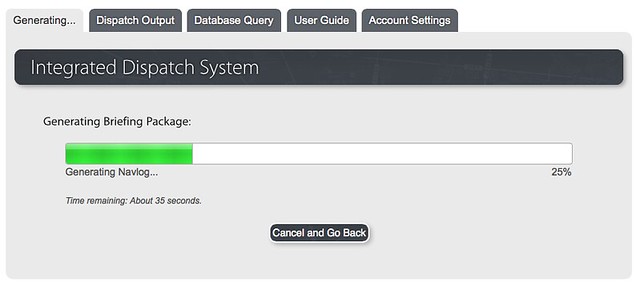
For example, let’s look at the route query first. After entering a few simple data points like date, aircraft type, airport name, etc., (I didn’t input fuel, so the data is abnormal, please ignore)
 Wait for about a minute,
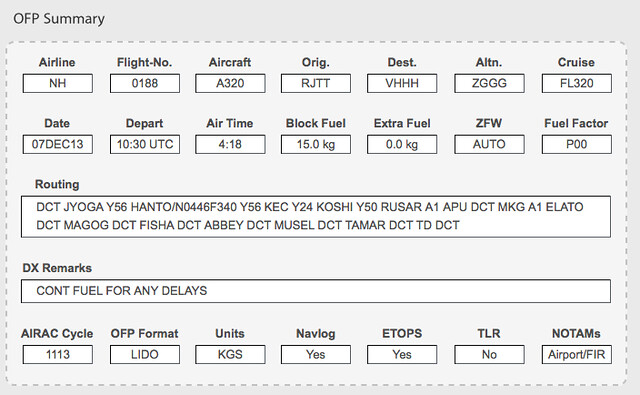 and the Waypoints, alternate airports, and all this information comes out.