A Flight Sim Enthusiast's Notebook
-
Japan's Unique Shinto Beliefs and Aviation
I have always found Japan’s unique Shinto beliefs fascinating. Japanese people do not seem to have the same kind of devout religious faith as seen in Islam; their activities are often quite secular. For example, the average Japanese person’s religious activities might consist of visiting a shrine at the beginning of the year to pray, buying an omamori (charm) to put in their bag for safety, or perhaps holding a wedding ceremony at a shrine.
-
Photo of the Week (Weekly Photos 2014/8/19)
1 Photos on Weibo – Viewing the Milky Way on a Late Night Flight. Lens 14-24, aperture f/2.8, ISO 12800, handheld 4-second shutter. The mysterious universe is truly beautiful.

2 Cathay Pacific’s 747s are about to be gradually phased out; they will operate their last San Francisco to Hong Kong flight in the middle of this month.
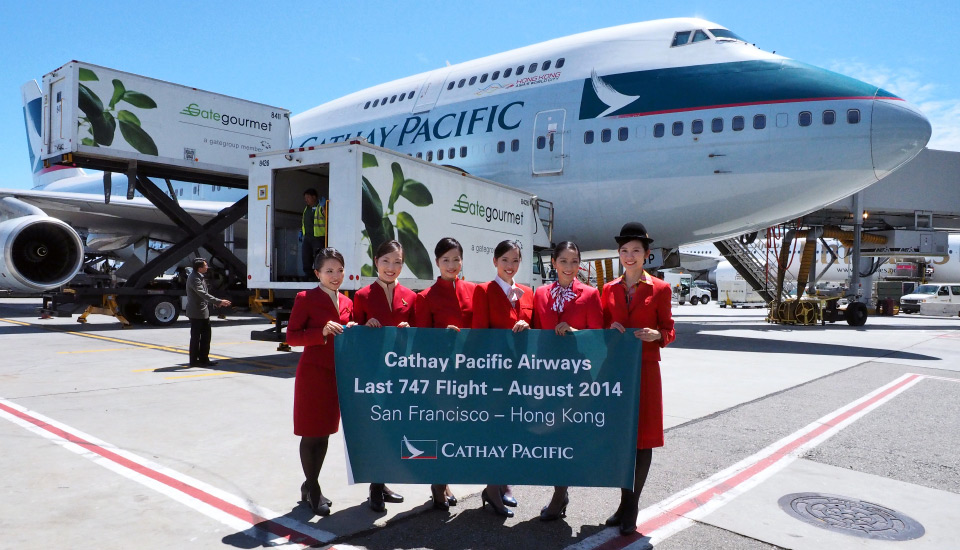 You can check out this article The death of the original jumbo jet, Boeing’s 747-400 to learn about the fate of the 747 after retirement.
 -
Go Around Over Tokyo City Center
While walking near Ginza the other day, I suddenly saw a passenger jet flying at low altitude. I immediately realized it was a plane performing a Go-Around (missed approach) during landing at Haneda Airport. So I opened flightradar24 to check, and sure enough,
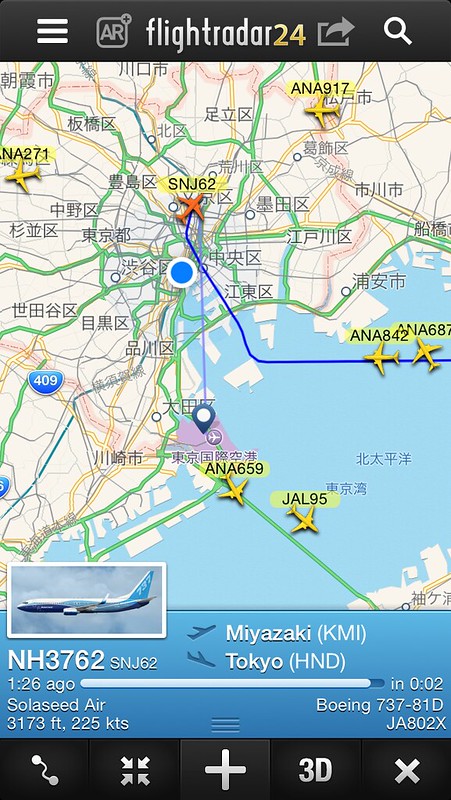
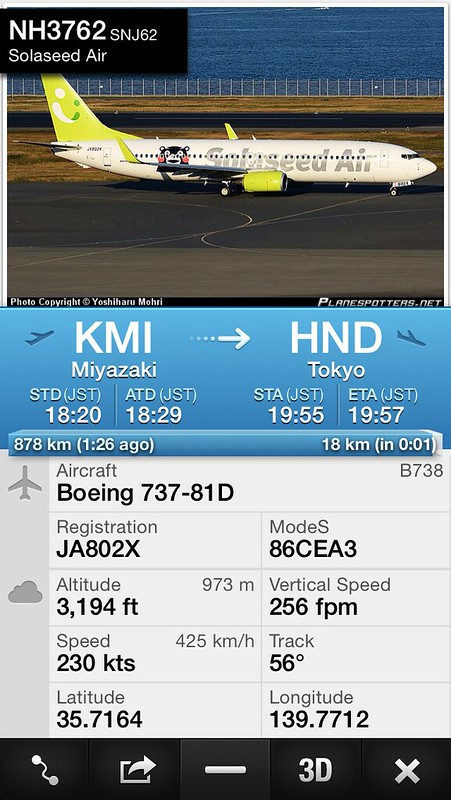
It was a Solaseed Air Boeing 737-800, registration JA802X. It looked like it encountered something during its approach to Runway 22 and had to go around. When I saw it, the Altitude was probably only around 3000 feet.
-
FPA PA AOA
FPA: flight path angle PA: pitch angle
Pitch angle is the angle between a line through the aircraft’s nose and the horizontal. By convention we call this THETA. This is what we see on the ADI. Flight path angle is the angle between the aircraft’s velocity vector and the horizontal. By convention we call this GAMMA. In the climb pitch attitude is equal to the angle of climb plus angle of attack.
-
'Educational Audio on Airway Knowledge — "Elective Course'
I came across this post on Weibo and gave it a listen—the content is excellent. It features a professional explaining how flight routes are established. The topic of this episode is:
“Where is the Plane Going?"—Let’s chat about how the flight routes we frequently take are established.
Do you love flying? Do you know how the flight routes for those “Big Grey Planes” are set up?
The program’s website is here. It is hosted on the Lizhi FM website. I trust you won’t be disappointed.
-
Follow-up on the Amazing 787-9 Video Topic
Previously, I shared a video of the 787-9 unveiled at the Farnborough Airshow, praising it for being "powerful—climbing nearly vertically like a fighter jet, yet sometimes light and agile like a general aviation aircraft. It was absolutely stunning."
Later, I came across some related information mentioning that the pilots flying the aircraft at the time—Randall Lee Neville, Chief Pilot of the 787 Program, and Mike Bryan, Chief Pilot of the 787-9—practiced multiple times in the simulator and also trained in the actual aircraft to prepare for this flight.
-
Photo of the Week (weekly photos 2014/8/12)
1 A photo of an aircraft with the Moon in the background. The craters on the Moon are clearly visible, but the aircraft is too small to see clearly; it might be an easyJet A320.
PHOTO easyJet over the moon. Credit: sebastien lebrigand pic.twitter.com/SYMnM9KYZE
— AirLiveNet (@airlivenet) August 4, 20142 Inside the flight deck of a Frankfurt cargo McDonnell Douglas MD-11. This McDonnell Douglas MD-11F is flying over Cairo.
3 Qatar Airways flight QR23 (Dubai to Manchester, aircraft type A330-302) was intercepted by Royal Air Force fighter jets. The aircraft landed at Manchester, but the airport was simultaneously closed, and other flights were diverted to Leeds Airport. The fighter jet is a Eurofighter Typhoon; I recall we called it the EF-2000 back in the 80s.
-
Dornier Do-228 Caught in a Thunderstorm
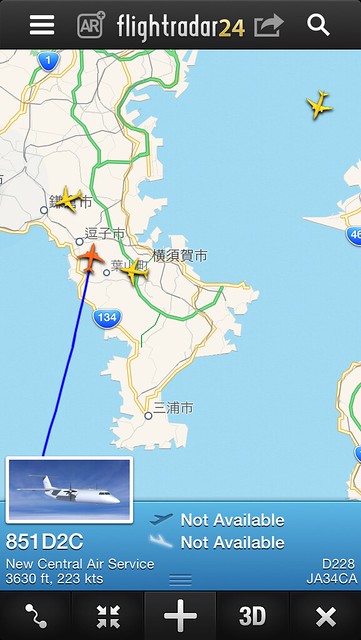
Yesterday, Typhoon No. 11 hit Japan. Although the Tokyo area was not severely affected, the sudden storm still brought significant difficulties to various modes of transportation. I witnessed a Dornier Do-228 (JA34CA) getting stranded right on Flightradar24. Here are a few screenshots. I have previously introduced this New Central Airways’ Do-228 and its route in my Tokyo Chofu Airport Shooting Notes, so I won’t go into details here.
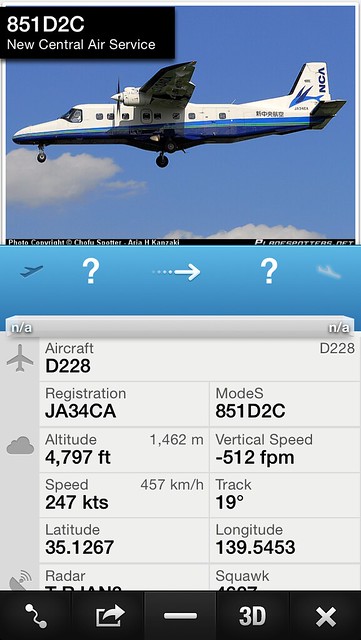
At first, I noticed its Track was further east than usual, and at a higher altitude, presumably trying to circumvent the cloud layers.
-
Some New Features of the Boeing 787-9
Based on this interview article about the ANA 787-9, some more information about the 787-9 has been obtained. Here are the excerpts.
First, quite surprisingly, the 787-9 has more Flaps positions than the 787-8. The 787-8 has positions 0, 1, 5, 15, 20, 25, and 30, while the 787-9 has added three settings: 10, 17, and 18.
 I really wonder why so many settings are needed?
Also, the leading edge of the 787-9’s horizontal tail is equipped with HyBrid Laminar Flow Control (HLFC), which can reduce air Drag by 0.5%, saving 22 tons of fuel per year.

-
X-Plane 10.30 Beta 8
X-Plane 10.30 Beta 8 was released just an hour ago. I happened to see the official blog at home and immediately upgraded to give it a try. This update seems to bring significant changes, requiring a download of over 500 MB. After some brief testing, I found it to be quite stable. I flew the C152 and C172 for 10-20 minutes respectively, and didn’t notice any performance degradation or instability issues like the app crashing midway. You can use it with confidence. Additionally, according to the official notes, Beta 8 will be the last test version for 10.30, so the next update should be the official release.
-
Follow-up Report on Lifting the Ban on Electronic Device Use on Aircraft in Japan
A few days ago, I wrote about the decision by the Japanese Ministry of Land, Infrastructure, Transport and Tourism to lift the ban on the use of electronic products during takeoff and landing. At that time, it was still a rumor, but yesterday I saw official materials, which are even more detailed. Here is a brief introduction.
First, you need to know that mobile phones cannot be used on all aircraft. They have categorized aircraft into four classes, and smartphones and similar products can only be used on Class 1 and Class 2 aircraft. Let's look at the table below, which is based on the aircraft's tolerance to radio waves.
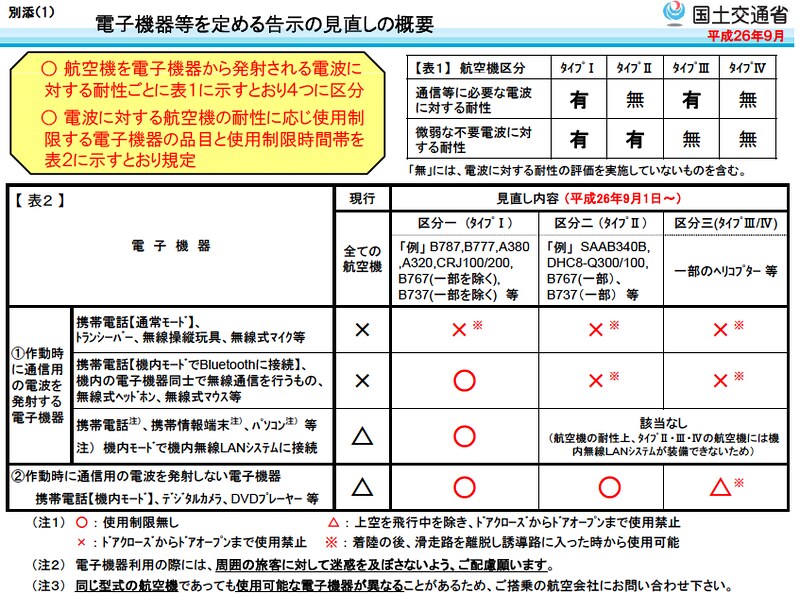
Class 1, which has the strongest tolerance, includes modern passenger jets such as the B787, B777, A380, A320, CRJ100, 200, and some B737s and B767s; I estimate that older 737s like the 737-500 would only fall into Class 2. Class 2 includes the Saab 340, Bombardier Q300/100, and some 757s and 767s; Class 3 includes some helicopters, but the specific classification depends on the regulations of each individual airline. -
Verification and Inspection of Kansai Airport Equipment
The Osaka Aviation Bureau released a notice regarding the verification of navigation aids at Kansai Airport (RJBB). From August 1st to 4th of this month, a Saab 2000 aircraft was used to conduct routine and special inspections of the ILS on Runway 04L/26R. Additionally, from August 12th to 15th, the same type of aircraft will be used to inspect the PAPI, Tower, and ATIS. Friends who have the chance to visit Kansai Airport should definitely not miss this opportunity to spot planes.
-
Aircraft Photo Highlights of the Week
It looks like there is plenty of material on this topic, so let’s keep going.
1 A visit to the A350 in Hong Kong. Notice the Cathay Pacific and JAL aircraft in the background; they are two major buyers of the A350, you know. Please click to view the full image.
2 What would it look like if giant Sumo wrestlers were squeezed into a narrow Bombardier DHC-8-400? Find out below. Flight attendants probably have the biggest headache; the meal cart definitely won’t fit through the aisle.
-
Japanese Ministry of Land, Infrastructure, Transport and Tourism Decides to Lift Ban on Electronic Device Use During Takeoff and Landing
Finally, the news is out. Starting September 1st this year, Japan’s Ministry of Land, Infrastructure, Transport and Tourism (MLIT) will relax existing regulations, allowing the use of smartphones and digital cameras on aircraft.
According to reports, the MLIT has conducted safety verification and confirmed that these electronic devices can be used during takeoff and landing. The new regulations will still require devices such as smartphones and tablets to be in Airplane Mode, but they will not need to be turned off. In fact, the FAA announced a similar policy last October, and 10 months later, the Japanese government has officially followed the US in lifting this ban.
-
X-Reloaded Plugin
X-Reloaded is a very simple Plugin with a straightforward function: it allows you to reload various Plugins while X-Plane is running, including Scenery, aircraft, and various other Plugins. Without this Plugin, we would need to restart X-Plane every time we install a new Plugin, and each startup requires waiting 2-3 minutes, which is truly a waste of time. With this Plugin, you can reload all Plugins, including any newly installed ones, without restarting X-Plane, significantly shortening the waiting time.
-
Add-on Management xaddonmanager
When using X-Plane 10, you will certainly make extensive use of Addons, such as aircraft, Scenery, airports, and so on. However, managing them can become troublesome once the number of Addons increases. For example, I might have several versions of the new Hong Kong airport; sometimes I want to use A, sometimes B, and switching between them is inconvenient. Today, I recommend a small utility for managing Addons called xaddonmanager, which allows you to easily select which Addon to use.
-
Introducing Another Dispatcher's Blog
I’m still not very familiar with RNAV and RNP, so I am currently studying the International Civil Aviation Organization’s Doc 9905 manual: Required Navigation Performance Authorization Required (RNP AR) Procedure Design Manual Doc 9905 AN/471.
While looking up vocabulary, I stumbled upon a blog by a dispatcher online which is also quite a valuable reference. I’ll bookmark it here for gradual study. WHISTLEBLOGGER A Blog by a Chinese Civil Aviation Dispatcher
-
Aircraft Photo of the Week (Weekly Photos 2014/7/29)
I always want to share some exquisite photos I find online with everyone; I wonder if this will turn into a series.
1 This is a photo taken inside the cockpit during flight, showing lightning in a storm. The aircraft was flying near Barcelona at the time. British pilot Julian Hall often posts flight-related photos on Twitter; he used to fly the Boeing 747 but has now switched to Airbus.
-
Passenger Injury Incident on Asiana Airlines Flight OZ231
On August 21, two years ago in 2012, Asiana Airlines flight OZ231 encountered an incident resulting in injuries to three passengers while cruising at an altitude of 40,000 feet over Matsue City, Shimane Prefecture, Japan. The flight was operating the route from Honolulu to Incheon, utilizing an Airbus A330-300 (registration HL8258). There were 206 passengers and 14 crew members on board. At 3:17 PM, the aircraft experienced severe Turbulence, causing two passengers to suffer serious injuries and one to suffer minor injuries; however, the aircraft itself sustained no damage.
-
alpilotx.net Releases Japan Scenery
A few months ago, I recommended the AlpilotX.net terrain mesh addon. Yesterday, I noticed they released Japan HD Scenery. This is a must-have! The file date is July 23, 2014, offering a brand-new scenery.
Here are the installation steps. First, download all the files from the URL above. Note that the total file size is nearly 2GB, so it will take some time.
Next, install the Treelines files. Unzip
Treelines_Japan_v2.zipand copy the entirezzz_Treelines_Japan_v2directory to the “Custom Scenery” folder.