Aviation Around Us
-
New RNP AR Approach Procedure at Toyama Airport RJNT
According to the eAIP Japan AIP published on 13 NOV 2014, Toyama Airport will commence the use of RNP AR approach procedures starting in December. Let’s take a detailed look below.
First, let’s look at the simpler RNAV (RNP) Y RWY20. As shown in the figure below, the large “RNP AR” text and “Special Authorization Required” in the lower right corner indicate that this is a procedure requiring special authorization, specifically an RNP AR APCH. Performance Based Navigation (PBN) and RNP AR APCH were introduced in this site’s article PBN (Performance Based Navigation).
-
Check Star 6
I previously wrote an article about inspecting and verifying equipment at Kansai Airport, which covered how Japan’s Ministry of Land, Infrastructure, Transport and Tourism (MLIT) uses a Saab 2000 to check ground navigation aids.
Today, I came across another video on YouTube. This time, it features a different inspection aircraft from the MLIT: a Bombardier BD-700, registration number JA006G, affectionately nicknamed “Check Star 6”.
Since it is a jet aircraft, it flies at a higher altitude and faster speed compared to the Saab 2000 from the last time, so everyone can compare the two.
-
Listening to ATC at Chofu Airport RJTF from Home
Quite a bit of traffic from Facebook in the last couple of days, wonder which expert recommended it?
After returning from Chofu Airport, I wanted to see if I could hear the Tower ATC from home. So I set up the antenna and listened for a while, only to find the signal was very poor. I couldn’t hear the Tower voice at all. I could hear the aircraft voices, but the noise was quite loud; slightly disappointed.
-
The Perfect Landing / What Does a Genius Pilot Look Like? -- Recent Reading Notes 201410
Found another great book at a second-hand bookstore: 機長の一万日 コックピットの恐さと快感!
 It is an autobiographical aviation popular science book written by JAL’s senior captain “Mikio Taguchi”.
Captain Taguchi has carried out numerous flight missions for government dignitaries, such as the Southeast Asian visit of the Emperor and Empress, the European visit of Prime Minister Kaifu, and the European visit of the Crown Prince. It is evident that he is an exceptionally excellent pilot. In this book, he introduces some aviation knowledge, his own flight experiences, and some successful and failed flight cases. For instance, his explanation regarding his airliner accidentally straying into cumulonimbus clouds and lenticular clouds was very beneficial.
-
PIBOT: The First Humanoid Robot Pilot in X-Plane
There is a video on YouTube featuring a robotic pilot developed in Korea. Using Saitek peripherals, it successfully completed takeoff, turns, and landing while flying a PA-24 in X-Plane 9.
The robot uses a Point Grey Firefly camera to monitor the X-Plane display. After reading the data, it controls the Saitek hardware to fly. It’s really cool.
-
Complex RJFS Saga Approach
Found another fantastic cockpit video, from Narita to Saga Airport, totaling 1 hour and 20 minutes. The flight is LCC Spring Airlines’ IJ/SJO 601.
The aircraft registration is JA01GR, and the model is a 737-81D (B738).
The most exciting part is the final Arrival phase. How many orbits did they make? It was thoroughly satisfying to watch. So, I checked the Saga Airport charts hosted on this site and summarized the process. Please correct me if there are any errors.
-
Recommending In-Flight Video Again, Full 64-Minute Flight
Found another video documenting the full flight process of ANA Flight 34 from Osaka Itami Airport to Tokyo Haneda Airport. It’s 64 minutes in total, starting from the pushback. Watch the aircraft extend its Flaps, then taxi east to Runway 32, take off, rotate, and more—it is thoroughly enjoyable. (I guess normal people don’t watch this carefully though…)
There are a few other highlights: During taxiing, the crew announcement specifically mentioned that electronic devices in Flight Mode are allowed. This is a new change effective from September; The cabin was very quiet, no one was speaking loudly, and the order was excellent; Also, around the 51-minute mark, the airplane Circling and Descending under the setting sun, the Spoiler rising, the Aileron movements, the colorful clouds, and then diving into the clouds—flying through the clouds is a beautiful segment; The Landing segment on Haneda’s Runway 34L is also very good. Watching the movements of the various control surfaces is very helpful for understanding aircraft control.
-
Senior Featured in Magazine! China Eastern's Liu Zhimin: The Five-Star Captain with Grit
My senior at university, Lengwa Yige, made it to the magazine cover! Sharing this with everyone!
This article from the July 2014 issue of Global Flight Magazine —— “China Eastern Liu Zhimin: A Five-Star Captain with ‘Stubborn’ Energy” has been published in full on Carnoc, so friends who haven’t bought the magazine yet can read it first.

This photo is just too cool.
-
Aero Museum Scavenging Near Narita Airport
Near Narita Airport, there is an Aviation Science Museum that is generally not well known. I hadn’t had a chance to visit until now, but I was interested in their “Aero Junk Market” (basically a flea market for retired aviation parts), so I took a weekend trip to check it out.
The museum is located on high ground just outside the 34L Runway at Narita Airport, offering a panoramic view of the airport interior and the runway itself.
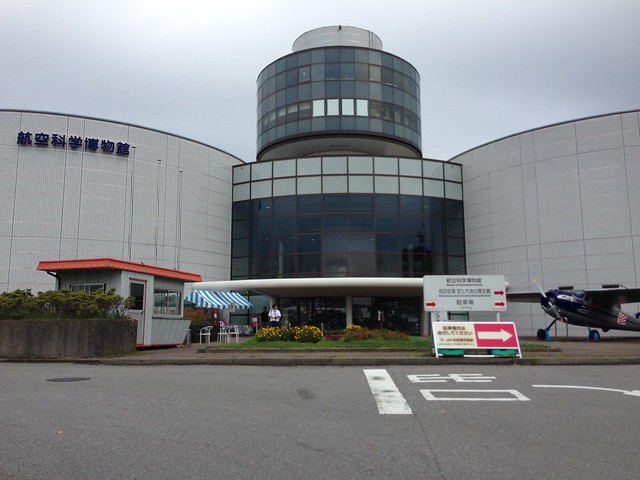 It takes only 15 minutes by bus from the airport. The bus stops at Bus Stop 30 at Terminal 1 and Bus Stop 5 on the 3rd floor of Terminal 2, with a fare of 250 yen. However, since the bus service is infrequent, you must check the schedule in advance if you plan to go.

-
Recommended Takeoff and Landing Videos
As previously introduced, starting from yesterday, September 1, 2014, regarding the Ministry of Land, Infrastructure, Transport and Tourism (MLIT) of Japan’s decision to lift the ban on the use of electronic products during takeoff and landing and the follow-up report on Japan lifting the ban on electronic product usage on aircraft, it turned out that the very same evening, a seasoned netizen had already uploaded high-definition footage taken during takeoff and landing. One can’t help but marvel at the immense skill and deep passion of Japanese aviation enthusiasts.
-
Recent Reading Memo 201408
I haven’t bought many books recently, so I’ll just write a simple note.
1 空中航法入門
 This is a textbook from the Japanese Aviation University, equivalent to the Chinese “Air Navigation”. I seem to have already bought 4 books on this subject, and the content is almost identical in each, with few new points of knowledge. However, the previous ones I bought are quite old, from the 80s and 90s, while this is a revised edition from 2009, fitting the times. After all, GPS is so prevalent now that content like Dead Reckoning has been reduced significantly. Buying such books is almost like collecting now.
 -
''Popular Science Audio on ATC Air Traffic Control Knowledge -- "Elective Course'
Thanks to Wu Yong for presenting new aviation knowledge in the “Elective Course” again. This time, Yan Xiaodong, Chief Engineer of the North China Air Traffic Control Bureau, was invited to introduce air traffic control knowledge. The content of this episode is:
“Directing the Traffic in the Sky”—Air Traffic Controllers: Unseen, but Flying with Us
The website is here, and I highly recommend it.
-
Japan's Unique Shinto Beliefs and Aviation
I have always found Japan’s unique Shinto beliefs fascinating. Japanese people do not seem to have the same kind of devout religious faith as seen in Islam; their activities are often quite secular. For example, the average Japanese person’s religious activities might consist of visiting a shrine at the beginning of the year to pray, buying an omamori (charm) to put in their bag for safety, or perhaps holding a wedding ceremony at a shrine.
-
Go Around Over Tokyo City Center
While walking near Ginza the other day, I suddenly saw a passenger jet flying at low altitude. I immediately realized it was a plane performing a Go-Around (missed approach) during landing at Haneda Airport. So I opened flightradar24 to check, and sure enough,
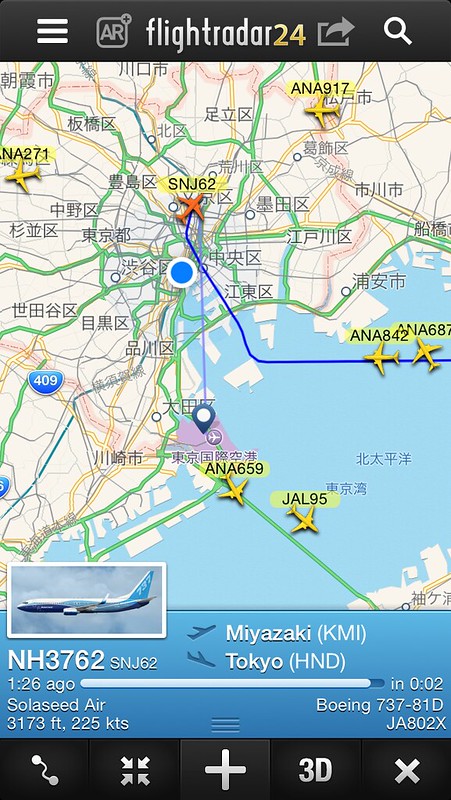
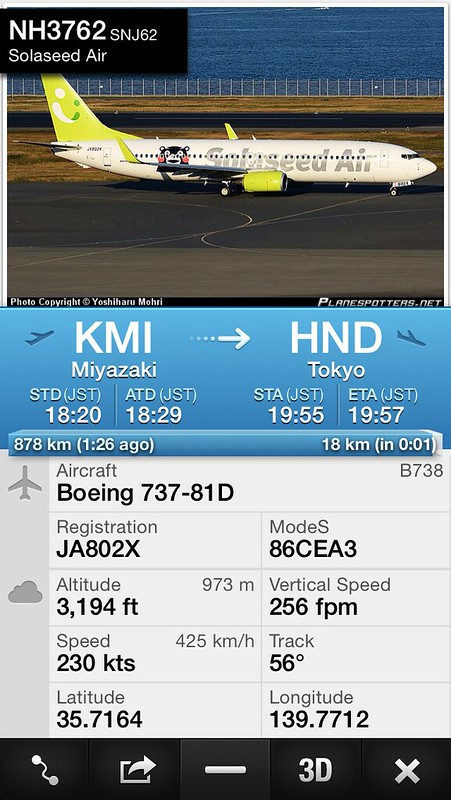
It was a Solaseed Air Boeing 737-800, registration JA802X. It looked like it encountered something during its approach to Runway 22 and had to go around. When I saw it, the Altitude was probably only around 3000 feet.
-
'Educational Audio on Airway Knowledge — "Elective Course'
I came across this post on Weibo and gave it a listen—the content is excellent. It features a professional explaining how flight routes are established. The topic of this episode is:
“Where is the Plane Going?"—Let’s chat about how the flight routes we frequently take are established.
Do you love flying? Do you know how the flight routes for those “Big Grey Planes” are set up?
The program’s website is here. It is hosted on the Lizhi FM website. I trust you won’t be disappointed.
-
Follow-up on the Amazing 787-9 Video Topic
Previously, I shared a video of the 787-9 unveiled at the Farnborough Airshow, praising it for being "powerful—climbing nearly vertically like a fighter jet, yet sometimes light and agile like a general aviation aircraft. It was absolutely stunning."
Later, I came across some related information mentioning that the pilots flying the aircraft at the time—Randall Lee Neville, Chief Pilot of the 787 Program, and Mike Bryan, Chief Pilot of the 787-9—practiced multiple times in the simulator and also trained in the actual aircraft to prepare for this flight.
-
Dornier Do-228 Caught in a Thunderstorm
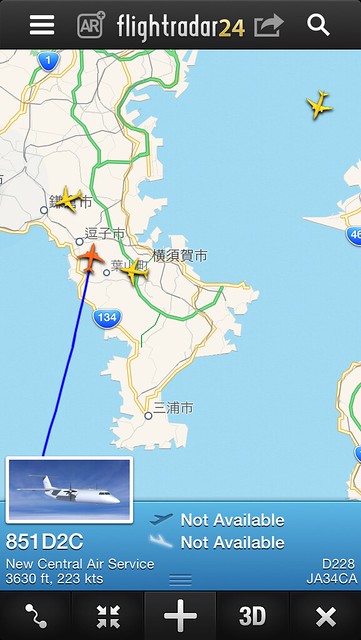
Yesterday, Typhoon No. 11 hit Japan. Although the Tokyo area was not severely affected, the sudden storm still brought significant difficulties to various modes of transportation. I witnessed a Dornier Do-228 (JA34CA) getting stranded right on Flightradar24. Here are a few screenshots. I have previously introduced this New Central Airways’ Do-228 and its route in my Tokyo Chofu Airport Shooting Notes, so I won’t go into details here.
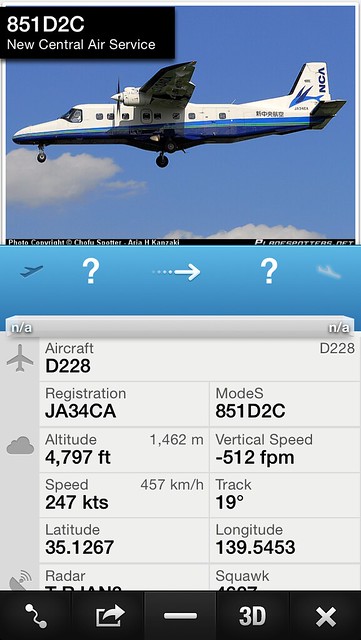
At first, I noticed its Track was further east than usual, and at a higher altitude, presumably trying to circumvent the cloud layers.
-
Some New Features of the Boeing 787-9
Based on this interview article about the ANA 787-9, some more information about the 787-9 has been obtained. Here are the excerpts.
First, quite surprisingly, the 787-9 has more Flaps positions than the 787-8. The 787-8 has positions 0, 1, 5, 15, 20, 25, and 30, while the 787-9 has added three settings: 10, 17, and 18.
 I really wonder why so many settings are needed?
Also, the leading edge of the 787-9’s horizontal tail is equipped with HyBrid Laminar Flow Control (HLFC), which can reduce air Drag by 0.5%, saving 22 tons of fuel per year.

-
Introducing Another Dispatcher's Blog
I’m still not very familiar with RNAV and RNP, so I am currently studying the International Civil Aviation Organization’s Doc 9905 manual: Required Navigation Performance Authorization Required (RNP AR) Procedure Design Manual Doc 9905 AN/471.
While looking up vocabulary, I stumbled upon a blog by a dispatcher online which is also quite a valuable reference. I’ll bookmark it here for gradual study. WHISTLEBLOGGER A Blog by a Chinese Civil Aviation Dispatcher
-
Passenger Injury Incident on Asiana Airlines Flight OZ231
On August 21, two years ago in 2012, Asiana Airlines flight OZ231 encountered an incident resulting in injuries to three passengers while cruising at an altitude of 40,000 feet over Matsue City, Shimane Prefecture, Japan. The flight was operating the route from Honolulu to Incheon, utilizing an Airbus A330-300 (registration HL8258). There were 206 passengers and 14 crew members on board. At 3:17 PM, the aircraft experienced severe Turbulence, causing two passengers to suffer serious injuries and one to suffer minor injuries; however, the aircraft itself sustained no damage.