Aviation Around Us
-
Visual Approach Procedures for Beijing
Reading updates in the AIP can be quite a pastime.
I noticed that Beijing Capital International Airport (ZBAA) will implement a Visual Approach Procedure starting August 1st. It ends at 24:00 on September 3rd; I am not sure what event it is intended for. Regardless, it is a new learning point, so here is a simple note.
Looking at the chart, the Visual Approach uses RWY01. The conditions are: PAPI operating normally ILS operating Radar operating normally Huairou VOR/DME (HUR), Guanzhuang VOR (PEK), Beijing/Capital DME (INJ) operating normally Ceiling 900 meters, Visibility 10km or more
-
Interference with ILS Signals
I was reading the Aviation Safety Newsletter from Taiwan’s Aviation Confidential Reporting System and saw a report about signal interference affecting the ILS, causing an aircraft on autoland to land deviated from the runway.
I had heard about this kind of thing from a senior pilot before, but I didn’t realize it could be this serious, so I have copied it down here.
------Start of Original Text------- A certain flight was cleared by ATC to use the Runway 23R ILS (Instrument Landing System) at Taoyuan Airport for arrival. The flight crew used autoland in good weather conditions but did not notify the Tower in advance. During the approach, about 4 nautical miles from the airport, the Tower cleared another A320 aircraft for takeoff on the same runway. This caused the accident aircraft to experience navigation signal interference during landing because the departing aircraft flew over the sensitive area of that runway’s Instrument Landing System.
-
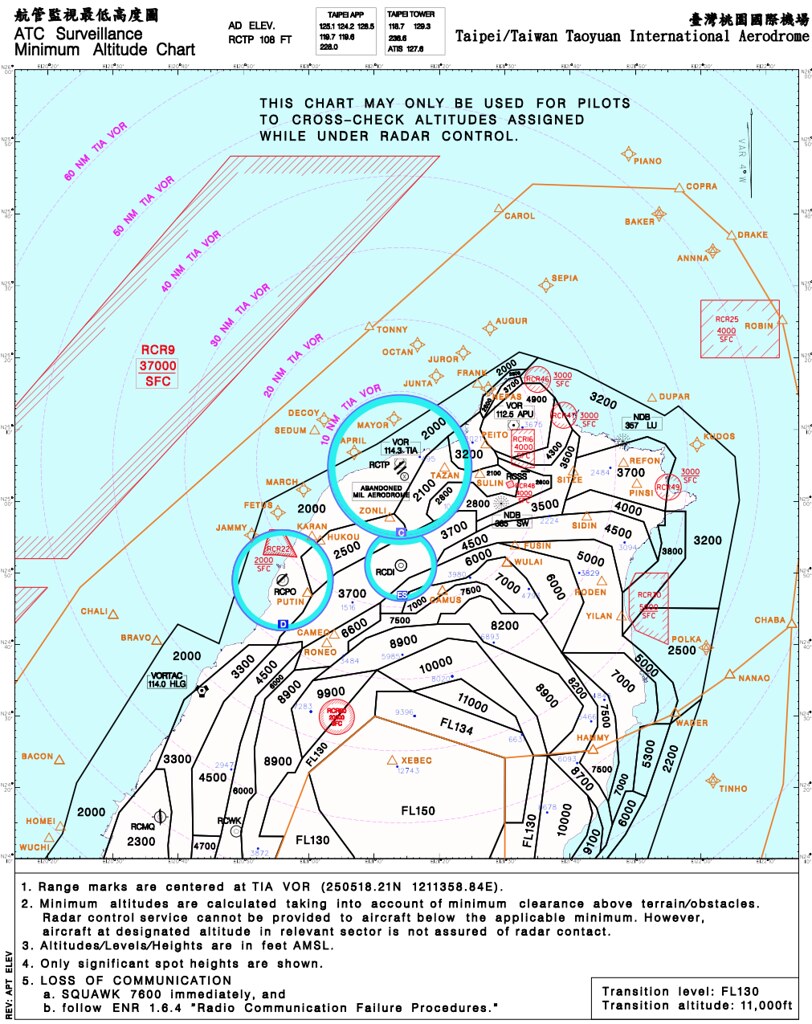
Taiwan ATC Surveillance Minimum Altitude Chart
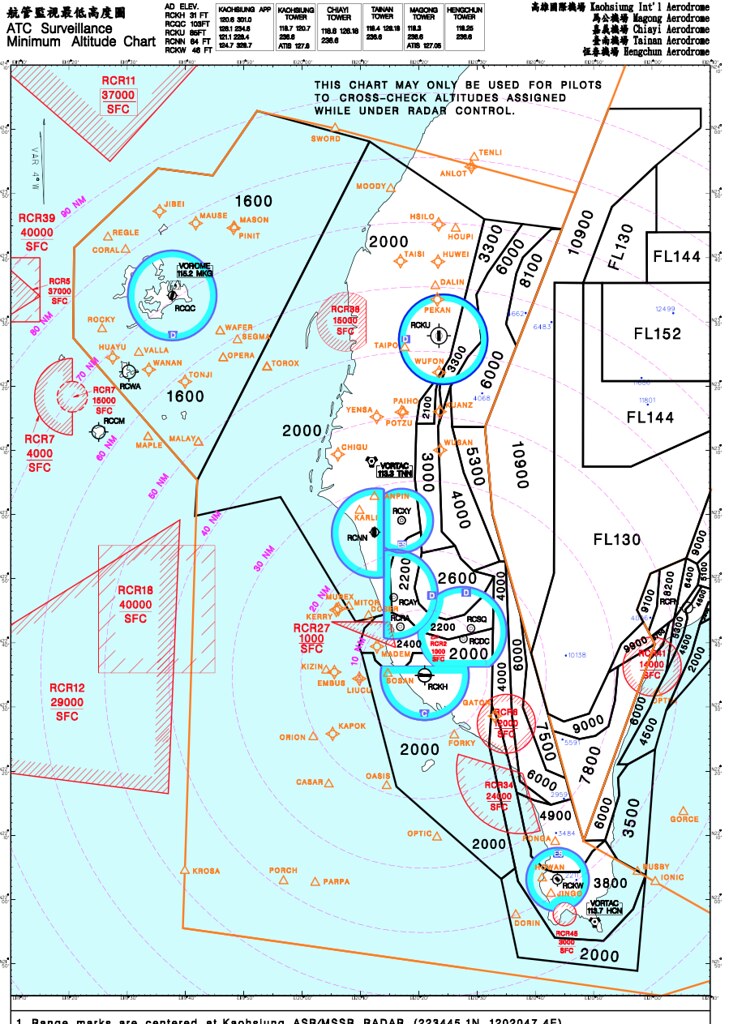
I was quite ignorant; today, while browsing Taiwan’s AIP Electronic Flight Guide, I discovered that many airport charts include an ATC Surveillance Minimum Altitude Chart, translated as “航管监视最低高度图” (ATC Surveillance Minimum Altitude Chart). Learned something new.
For example, Taoyuan Airport
Kaohsiung Airport
 Songshan Airport
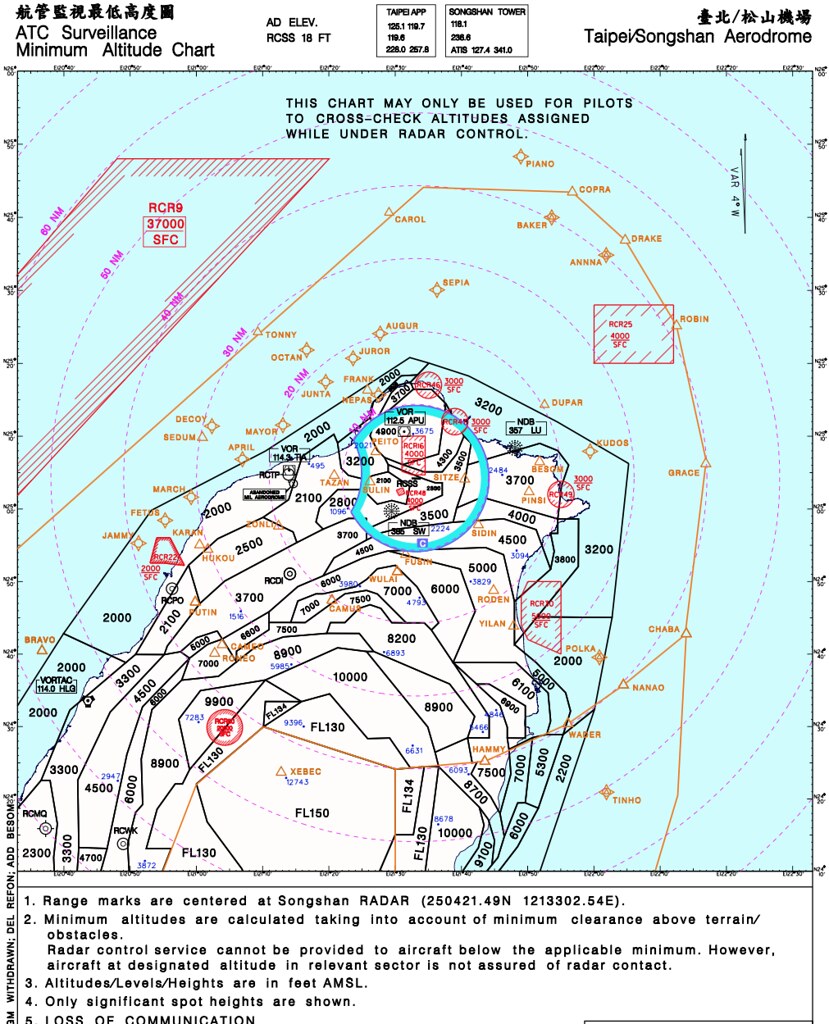
These three charts are densely packed with marked sectors; they look quite strenuous. I wonder if they are divided so finely, do pilots have enough time to monitor them effectively? I am genuinely a bit confused.
-
The Bible of Small Aircraft Flying and 8 Other Books – Recent Reading Notes 20150512
Here is a chronological record of the books I’ve read recently. Quite a few of them this time are older, out-of-print books acquired for collection purposes.
First, a few photo collections by Mitsuo Shibata, who sadly passed away earlier this year. I introduced the author in these previous posts: Mitsuo Shibata: The Chinese Navy Intercepting the Soviet Nuclear-Powered Heavy Missile Cruiser – Part 1 and Part 2.
Drift Front
 This is a photo collection shot by Shibata when he traveled to the Soviet Union and the US for military exercises during the Cold War.
It focuses on weaponry largely unknown at the time—fighters, warships, tanks, and armored vehicles.
Actually, my main purpose in buying this was to collect the specific photos he took of the Chinese Navy intercepting the Frunze.
This is a photo collection shot by Shibata when he traveled to the Soviet Union and the US for military exercises during the Cold War.
It focuses on weaponry largely unknown at the time—fighters, warships, tanks, and armored vehicles.
Actually, my main purpose in buying this was to collect the specific photos he took of the Chinese Navy intercepting the Frunze. -
Shanghai Airlines B-6096 A330 Rejected Takeoff
Rejected Takeoff RTO
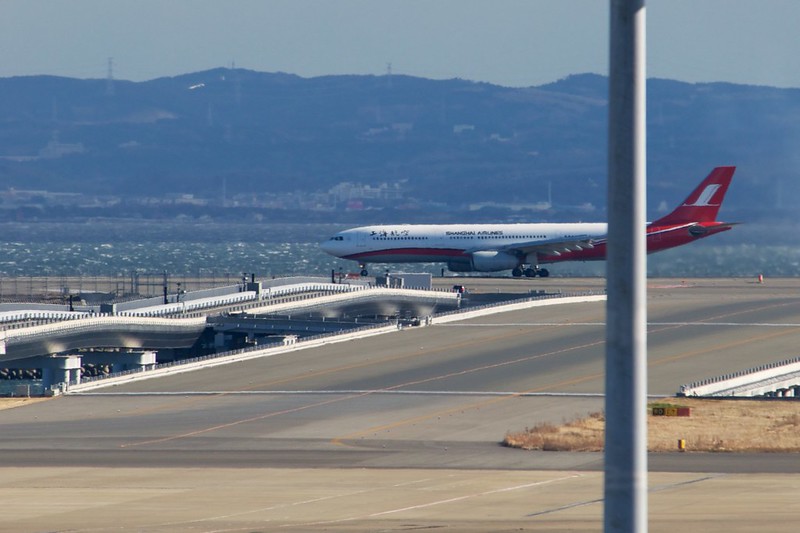
That day while spotting at Haneda Airport, I witnessed this unexpected incident (Shanghai Airlines A330-300, registration B-6096). The following is a chronological record of the event.
January 31, 2014
13:58:32 B-6096 moved along Taxiway W towards the southern RWY05
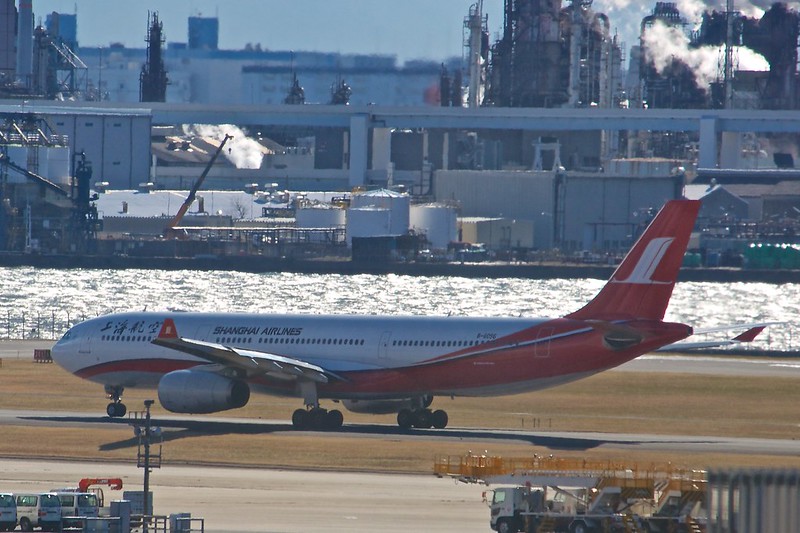
14:01:21 Arrived at the intersection of Taxiway A and Taxiway R
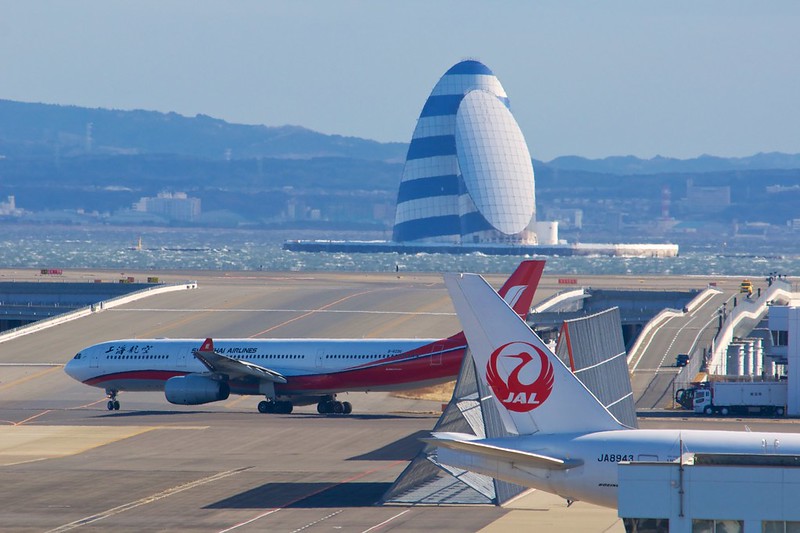
14:03:31 Entered Taxiway S, preparing to queue for takeoff
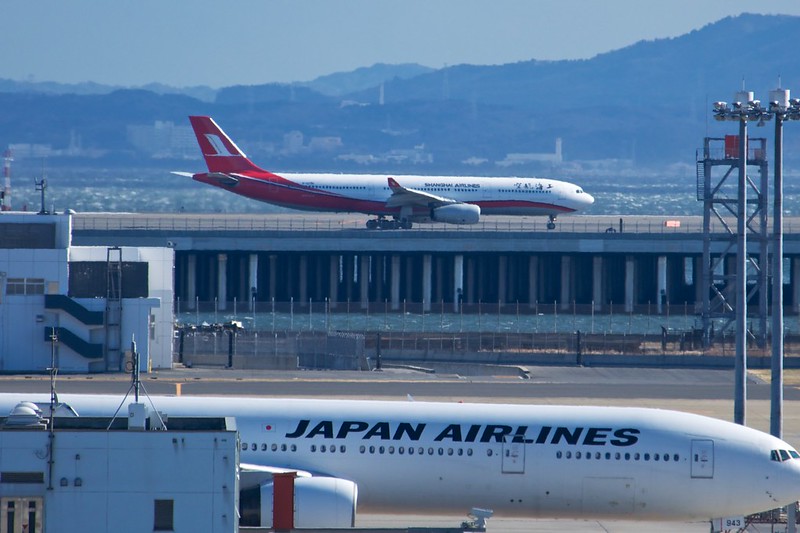
14:08:36 Saw B-6096 suddenly decelerate during the takeoff roll, a cloud of blue smoke near the landing gear
-
The Chase, Ken Takakura, Ryoko Nakano, Odaiba, and Cessna 177RG
The film star Ken Takakura passed away at the end of last year. To commemorate this symbolic figure of the Showa era, many places have recently been showing the old movies he starred in.
That day, I picked up two complimentary tickets from the company and went to a small cinema in Odaiba to watch: Pursuit / Kimi yo Fundo no Kawa o Watare / You Are the
 and
The Proof of the Wild / Yasei no Shoumei
and
The Proof of the Wild / Yasei no Shoumei

-
Thoughts on the Illegal Opening of the Emergency Exit on Flight MU2036
Yesterday morning, I saw various messages about MU2036 on WeChat and Weibo. This morning, I saw updated news reports, such as the official report on the authoritative China News Service website — Passengers who illegally opened emergency doors at Kunming Airport detained for 15 days.
Here is a summary of the incident:
Flight MU2036 departed from Dhaka with a stopover in Kunming to reach Beijing. The flight landed at Kunming Changshui International Airport at 21:20 on January 9. Due to snow and rain at the airport, boarding did not begin until 0:00 on January 10. After the boarding of 153 passengers was completed in the early morning of January 10, the aircraft queued waiting for deicing.
At 3:45 AM, MU2036 began fuselage deicing work. Due to deicing requirements, the air conditioning inside the aircraft was turned off for about 30 minutes. Due to poor air circulation inside the cabin, an elderly female passenger felt unwell. At this point, most passengers on board were concerned about her condition and demanded the captain come out to explain. The co-pilot of MU2036 came out to explain, but his response did not satisfy the passengers, causing their emotions to run high and leading to a dispute with the crew.
-
MLIT ATS Committee Website
The Japan Ministry of Land, Infrastructure, Transport and Tourism (MLIT) ATS Committee, also known as the Air Traffic Services Committee, recently released some materials online. For instance, the 36th Analysis Seminar regarding runway incursion prevention, features 1 hour and 20 minutes of content available for free on YouTube. Case studies are accompanied by specialized animations, and the detailed incident analysis makes the content extremely impressive.
Take the example of Kansai Airport, where Hawaiian Airlines Flight HAL 450 experienced a runway incursion, causing an All Nippon Airways flight on final approach to execute a go-around. The commentary is provided by two retired senior pilots and a controller. They delve into the deep psychology of both the controllers and the pilots, and analyze exactly how misunderstandings regarding “hold position” and “position and hold” arose between ATC and the flight crew. The expert analysis is profound and highly persuasive.
-
Recent Reading Notes: A Few Books by Hiroshi Sugi
The Captain’s Confession

The author of this book, Hiroshi Sugie, is a senior captain at Japan Airlines (JAL) and has long been involved in promoting flight safety within the company.
Based on his own flight experience, Captain Sugie classifies aviation accidents. He not only analyzes the causes of accidents from a pilot’s perspective but also proposes solutions to avoid various types of accidents. The content is extremely detailed.
The author seems to be a celebrity; I have occasionally seen him explaining aviation accidents on TV news programs. He has over 20,000 hours of flight experience in the Boeing 747 and is known as the pilot with the most flight hours on the 747 in the world.
-
Revisiting Airport Weather Information in Adverse Conditions (Continued)
Following the previous post, I checked the weather at several airports again this morning. Although the pressure wasn’t as low as I had imagined, it was still windy and snowy, so let’s record it.
First, I have to mention the news about an American Airlines flight AA280 (from South Korea to Dallas, USA) encountering Turbulence over Japan last night and having to Divert to Narita in the middle of the night. Apparently, over a dozen passengers and crew were injured.
-
Revisiting Airport Weather Information in Severe Weather
Here is the weather map for tomorrow morning (December 17) at 9:00 AM.
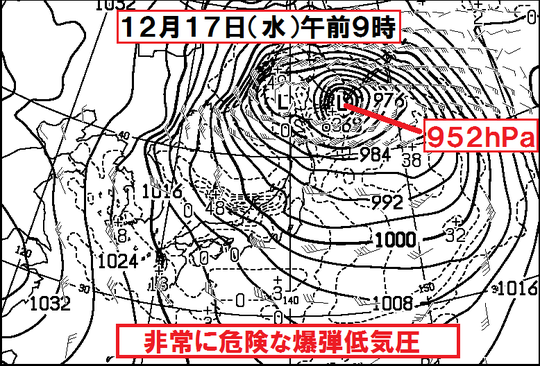
You can see that the low-pressure system near Hokkaido has reached 952 hPa; that is equivalent to a super-sized typhoon.
This low-pressure system and cold air aloft will bring stormy weather, high waves, and heavy snow. The airport weather for tomorrow is a major concern. I just saw a report from ANA (All Nippon Airways): due to snow at Sapporo New Chitose Airport, low visibility at Fukushima Airport, and strong winds at Nagoya Chubu Centrair Airport, some flights have already been affected today. So, I checked the METARs and TAFs for a few major airports to record the data, as these conditions are quite rare.
-
Recent Reading Notes 201412
Here is a record of the 4 books I finished reading recently, all purchased from the used bookstore Bookoff.
Concorde Project (Concorde: The Inside Story)

This book covers the development history of the supersonic passenger jet Concorde. Published in 2001, it is the Japanese edition of “Concorde: The Inside Story”. The author, Brian Trubshaw, was the Chief Test Pilot for British Aerospace’s Concorde.
Brian participated in the Concorde project from the design phase. The book starts with design concepts and details the joint development by the UK and France, through to airworthiness certification, flight testing, and commercial operation phases. Additionally, the book provides many photographs and design diagrams. As expected from an insider, this first-hand material is very precious! Here are a few details that left a deep impression.
-
This Month's Airline Magazine
The content in Airline magazine is excellent, featuring professional aviation knowledge, popular science, and industry news. The high print quality gives it significant collectible value. I took a look at the issue released today, and the cover features the A350, which has been a hot topic recently:
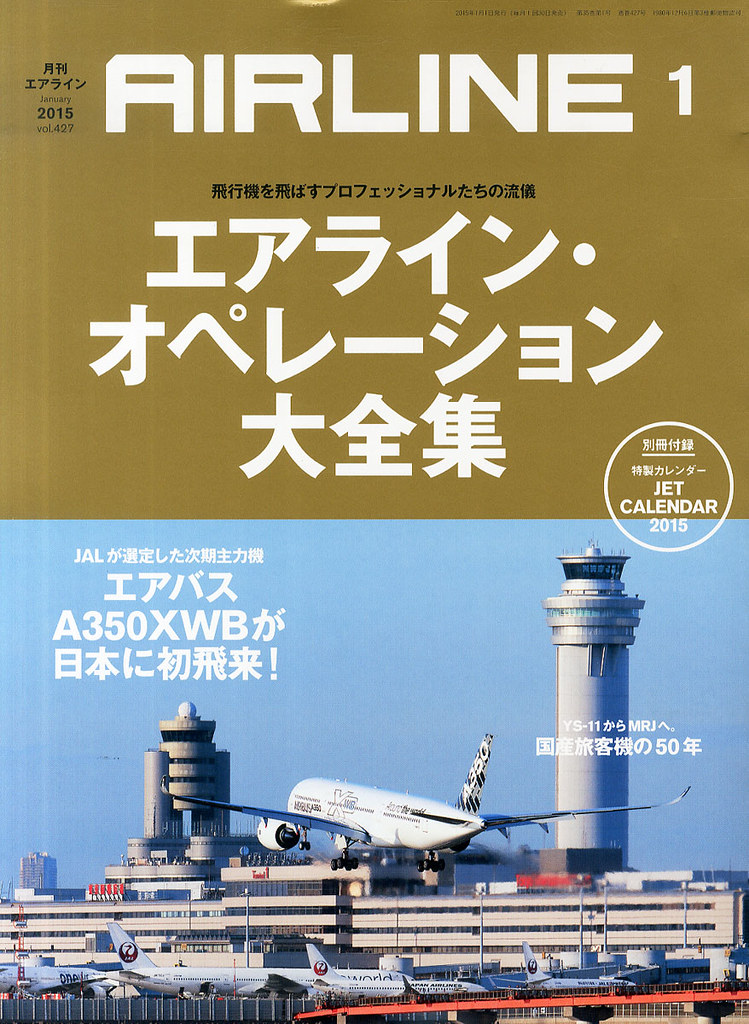
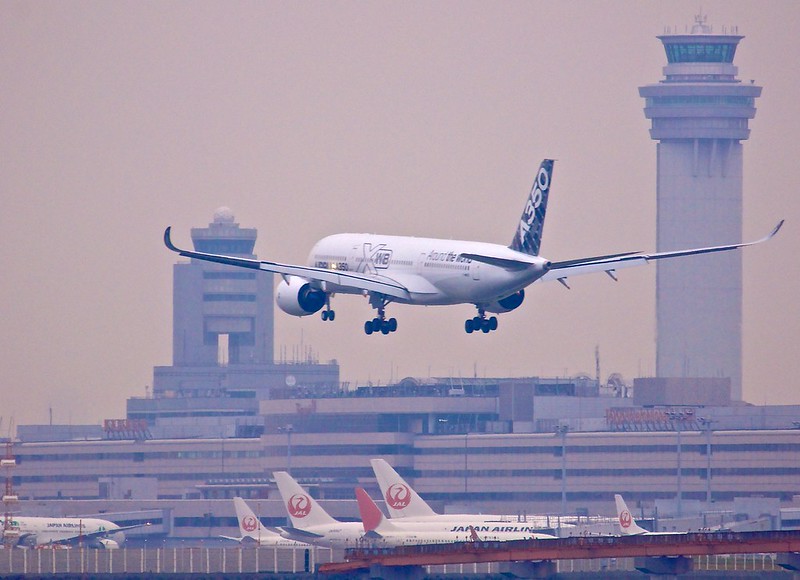
Comparing it with the photo I took below, it looks like the photo above was taken at the <a href=“yinlei.org/x-plane10/en/2014/11/a350-xwb.html” target="_self" title=““Rain Man” meets the A350 XWB for the first time”>same location. However, I had terrible luck and ran into rainy weather—a regret for eternity.
-
A350 First Flight to Haneda RJTT
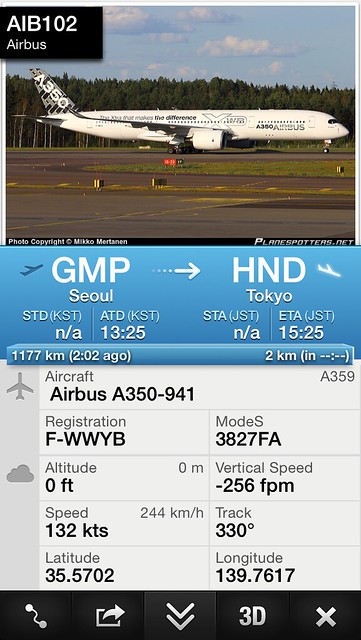
On the afternoon of November 19 at 3:25 PM, the A350 visited Haneda Airport for the first time. I didn’t have time to go to the airport to see it in person, but with the abundance of resources online, receiving a massive amount of information instantly made for a very fulfilling experience.
On flightradar24, as soon as the A350 took off from Korea, the entire route was tracked via flightradar24.com/AIB102/. The final landing was also expected on 34L; the weather was clear, and the aviation enthusiasts who went to the airport to photograph it all returned with a bountiful harvest.
-
Highways in the Sky -- Popular Science Video on PBN RNAV RNP
I previously wrote a note on PBN (Performance Based Navigation); it was purely text-based and quite tiring to read.
Today, I came across an excellent educational video on Youku. It was translated and produced using materials from the U.S. Federal Aviation Administration (FAA). It is easy to understand and highly recommended.
-
Air Canada Introduction to 787 Maintenance
Found a great piece of knowledge on Twitter, introducing Air Canada Boeing 787 maintenance new technology, simple and easy to understand, so I will introduce it here.

- Maintenance Laptop
In the past, thick paper manuals were required, but now, by using just one laptop computer on the observer seat in the cockpit, all maintenance manuals can be queried, and they are updated monthly.
- Instant Response
Notification messages in the cockpit, such as when a certain system or part needs inspection, can be immediately sent to a ground management station and then to the maintenance personnel’s mobile phones. Therefore, parts that need replacement can be prepared in advance, and work can start immediately after the 787 lands. Even on rest days, various statistical information from the aircraft is provided to maintenance personnel.
-
Airbus A350 WXB Planned Visit to Haneda Airport
Finally have a chance to see an A350 in Tokyo. According to this report, as part of an Asian tour, the A350 will be staying at Haneda Airport for 2 days. The specific details are: Wednesday, November 19, around 15:30 Arriving at Haneda Airport from Seoul Gimpo, entering the JAL maintenance hangar for internal viewing Thursday, November 20 Demonstration and tour flight 12:45-13:55 Friday, November 21, around 13:00 Departing Haneda Airport, Destination is Hanoi, Vietnam
-
ADS-B Decoding Software for Mac OS X
After installing MacPorts and Gqrx 2.3.1, it seems many driver libraries were automatically installed in the system. So, can I receive ADS-B signals as well? I searched online and found a decoding software called Cocoa1090 that works. I installed and tried it, and it succeeded easily.
The specific method is as follows: Download Cocoa1090 from <a href=“http://www.blackcatsystems.com/download/Cocoa1090.zip"" target="_blank”>http://www.blackcatsystems.com/download/Cocoa1090.zip and unzip it.
Execute
rtl_tcpincluded in Cocoa1090 from the Terminal, and run the following command: $ rtl_tcp -g 9999 Found 1 device(s): 0: Realtek, RTL2838UHIDIR, SN: 00000001 Using device 0: Generic RTL2832U OEM Found Rafael Micro R820T tuner Tuned to 100000000 Hz. Tuner gain set to 9999.000000 dB. listening… Use the device argument ‘rtl_tcp=127.0.0.1:1234’ in OsmoSDR (gr-osmosdr) source to receive samples in GRC and control rtl_tcp parameters (frequency, gain, …). client accepted! set freq 1090000000 set sample rate 2000000 Exact sample rate is: 2000000.052982 Hz -
Upgrade to Gqrx 2.3.1 to Get Squelch Functionality
I previously introduced Using a Digital TV Tuner on Mac to Listen to Software Defined Radio (SDR) – Listen to the Aviation Band for just tens of yuan, using the open-source software Gqrx. Today I discovered that Gqrx has been upgraded to 2.3.1, so I upgraded to see what new features are available.
First, I upgraded MacPorts. Since I was using MacPorts 2.2.1, I went to http://www.macports.org/install.php and downloaded MacPorts 2.3.2, which supports OS X 10.10 Yosemite. After installation, I executed the following in the terminal to verify everything was working. $ port -v MacPorts 2.3.2 Next, I followed the documentation and typed
agreeto accept the license. $ sudo xcodebuild -license -
Captain's 30,000 Feet -- Recent Reading Notes 20141102
After reading Captain Taguchi’s Memoirs and finding it quite good, I bought another book he wrote: 機長の三万フィート (Captain’s 30,000 Feet).

It took me about 4-5 days to finish it, and following convention, here is a brief book review.
The main thread of this book is Captain Taguchi’s professional career, highlighting flight school training, the era of flying the propeller airliner DC-6, the era of flying the jet airliner DC-8, the instructor era, and the era of flying the Boeing 747. While narrating his personal growth, he very naturally weaves in a lot of aviation knowledge, which I think is a unique feature of this book. I have read many books written by captains; some focus on aviation popular science, while others focus on personal biographies. Although they are all well-written, their focus is quite obvious. However, this book perfectly combines popular science with his professional career, making it an effortless read with many learning points, which is truly rare. For example, in the section about flight school, it introduces the control methods of primary aircraft, which is very helpful for flight simulation players. Regarding the phase of flying as a First Officer, it introduces how to make passengers more comfortable, covering both advanced aircraft techniques and professional ethics, which is convincing. When discussing his method for using the Autopilot, he mentioned that he generally performs manual operation first to bring the aircraft attitude to a balanced state—that is, after trimming—before engaging the Autopilot. This recalls the books by Kan-ichiro Kato on aircraft accidents, which mentioned that many accidents were caused by pilots trusting the Autopilot system too much and engaging it while the aircraft was not trimmed, leading to disasters. Therefore, I find Taguchi’s explanation quite persuasive.