Airport Photography
-
The First Prototype Boeing 777-300ER - JA732J
After photographing this JAL Boeing 777 at Narita the other day, I looked up its registration and discovered it has quite a story to tell—a glorious history!
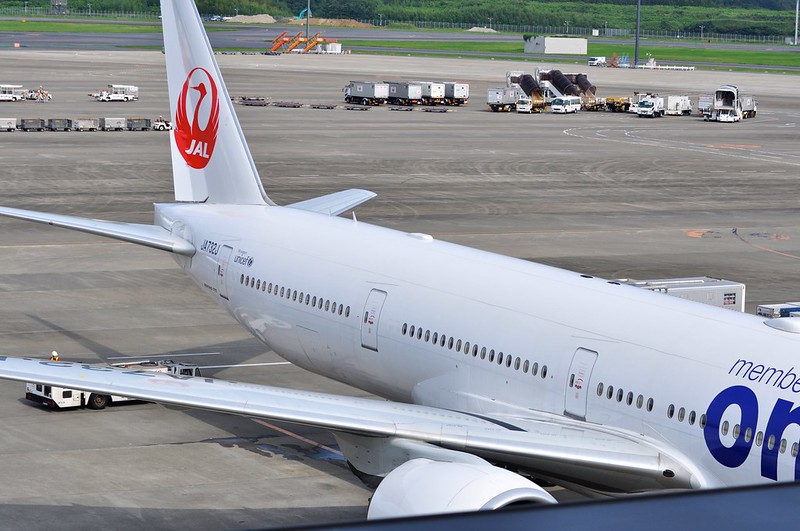
It turns out this aircraft was the first test plane for the Boeing 777-300ER, registered at the time as N5017V, with its maiden flight on February 24, 2003.
JAL was actually the first airline to decide on introducing the Boeing 777-300ER. As a result, Boeing used this aircraft and another, N5016R (now JAL’s JA731J), to fly around the world, completing numerous test flights. However, quite regrettably, the first 777-300ER to be delivered (April 29, 2004) and enter commercial operation went to Air France. You can see Boeing’s official press release here. After completing various tests, N5017V was finally delivered to JAL in July 2004. This history is documented in the Japanese version of Wikipedia.
-
Photos of the Week
1 The Bardarbunga volcano in Iceland erupted again. The Icelandair pilot specifically made an extra circle to let passengers enjoy this rare natural phenomenon.
Our pilot made an extra circle around #Bardarbunga this morning to let passengers check it out. Thanks to Erla Vinsý! pic.twitter.com/7JUerxD0tE
— Icelandair (@Icelandair) September 3, 20142 I have been to Senri River at the end of the Runway at Osaka Itami Airport many times to take photos, but I just can’t capture the same effect as this. Truly amazing.
-
Weekly Photo Selection (weekly photos 2014/09/02)
1 A Boeing 737-800 in the sunset glow, please click to see the large image. Note that the highlight of this photo is: the photographer is also the subject being photographed. Look closely and you can see the co-pilot leaning out of the cockpit to take a photo too :-)
2 An Airbus Beluga is opening its cargo door.
RT @Airbus: Open wide! #Beluga pic.twitter.com/QXz2JdaoOv < @F1isP1 @Parnelli98 @MarkRWheeler2
-- Mario. (@mario_eb) August 25, 20143 The magnificent sight of a Dream Lifter taking off. I really want to find time to go back to Nagoya to see this big fat plane again.
-
Selected Photos of the Week
1 The A350’s nose is very distinctive, looking like someone wearing a pair of black-rimmed sunglasses.
2 The Milky Way seen from the cockpit. This photo was taken using a multiple exposure technique: one exposure for the cockpit interior, and a long exposure for the starry sky. At the time, the aircraft was flying at an altitude of 36,000 feet with a speed of 846 km/h.

Photo of the Week (Weekly Photos 2014/8/19)
1 Photos on Weibo – Viewing the Milky Way on a Late Night Flight. Lens 14-24, aperture f/2.8, ISO 12800, handheld 4-second shutter. The mysterious universe is truly beautiful.

2 Cathay Pacific’s 747s are about to be gradually phased out; they will operate their last San Francisco to Hong Kong flight in the middle of this month.
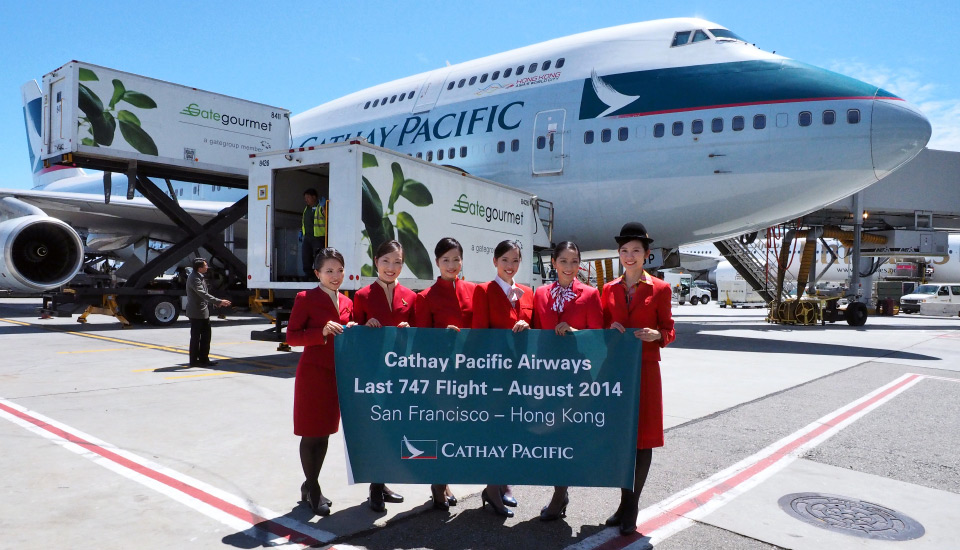 You can check out this article The death of the original jumbo jet, Boeing’s 747-400 to learn about the fate of the 747 after retirement.
Photo of the Week (weekly photos 2014/8/12)
1 A photo of an aircraft with the Moon in the background. The craters on the Moon are clearly visible, but the aircraft is too small to see clearly; it might be an easyJet A320.
PHOTO easyJet over the moon. Credit: sebastien lebrigand pic.twitter.com/SYMnM9KYZE
— AirLiveNet (@airlivenet) August 4, 20142 Inside the flight deck of a Frankfurt cargo McDonnell Douglas MD-11. This McDonnell Douglas MD-11F is flying over Cairo.
3 Qatar Airways flight QR23 (Dubai to Manchester, aircraft type A330-302) was intercepted by Royal Air Force fighter jets. The aircraft landed at Manchester, but the airport was simultaneously closed, and other flights were diverted to Leeds Airport. The fighter jet is a Eurofighter Typhoon; I recall we called it the EF-2000 back in the 80s.
Aircraft Photo Highlights of the Week
It looks like there is plenty of material on this topic, so let’s keep going.
1 A visit to the A350 in Hong Kong. Notice the Cathay Pacific and JAL aircraft in the background; they are two major buyers of the A350, you know. Please click to view the full image.
2 What would it look like if giant Sumo wrestlers were squeezed into a narrow Bombardier DHC-8-400? Find out below. Flight attendants probably have the biggest headache; the meal cart definitely won’t fit through the aisle.
Aircraft Photo of the Week (Weekly Photos 2014/7/29)
I always want to share some exquisite photos I find online with everyone; I wonder if this will turn into a series.
1 This is a photo taken inside the cockpit during flight, showing lightning in a storm. The aircraft was flying near Barcelona at the time. British pilot Julian Hall often posts flight-related photos on Twitter; he used to fly the Boeing 747 but has now switched to Airbus.
Front View of the Aircraft
A while ago, a project for a travel website at my company was征集 aircraft photos as material. I provided a head-on shot of a 787, and to my surprise, it was selected.
Thinking back, that kind of photo is indeed quite difficult to take. After all, most shooting locations only allow you to capture the side of the aircraft. There are very few spots where you can grab a shot of the “face,” and even then, it’s just for an instant. Clear, high-resolution images are genuinely rare.
A Glance at Nagasaki Airport RJFU
I recently traveled to Kyushu and returned home via Nagasaki Airport. Since I was quite tired from the journey, I didn’t gather much information, only hastily snapping a few photos at the airport observation deck as mementos. Let me share them with you all below.
Nagasaki Airport is also an airport located on the sea. Its Runway orientation is 14/32, with a length of 3,000 meters and a width of 60 meters. It is quite famous for being the world’s first offshore airport, completed in 1975, with part of its foundation utilizing a natural island and part created by land reclamation.
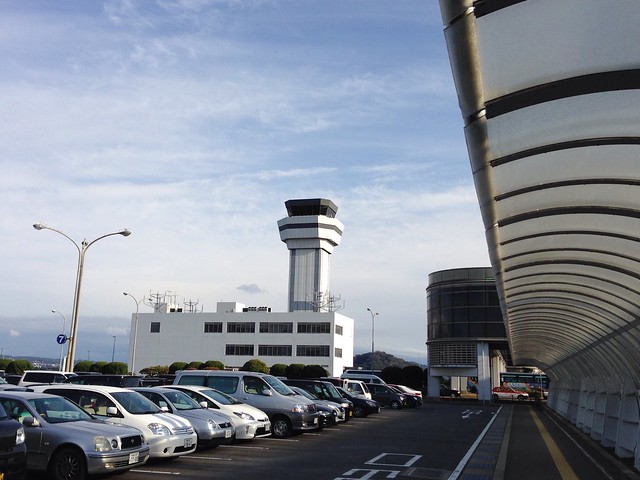 Similar to Hiroshima Airport, there are very few flights here, about one or two per hour, making it quite deserted.
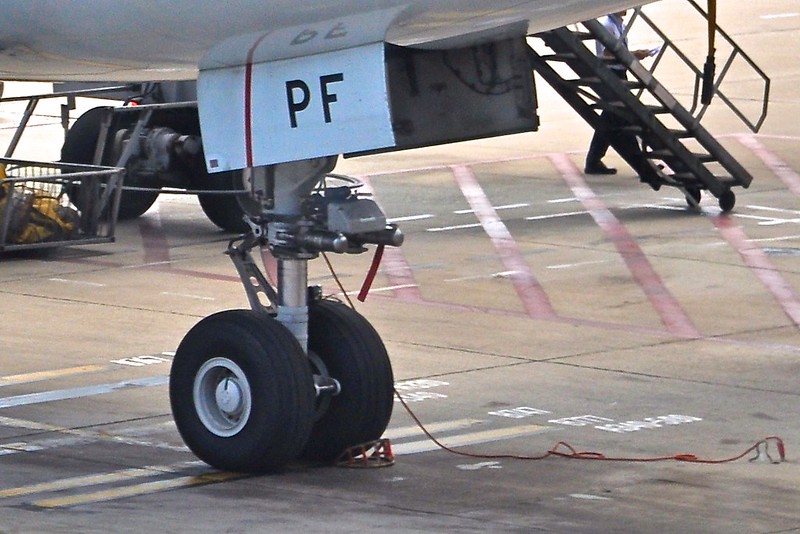
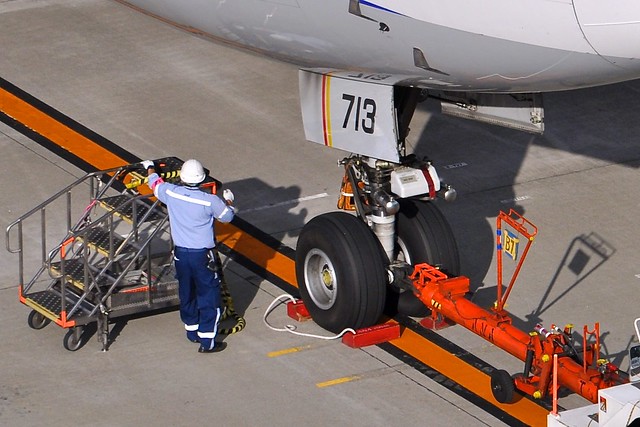
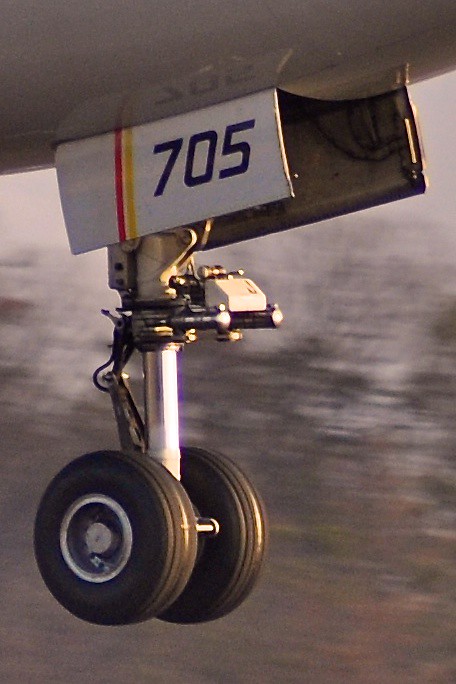
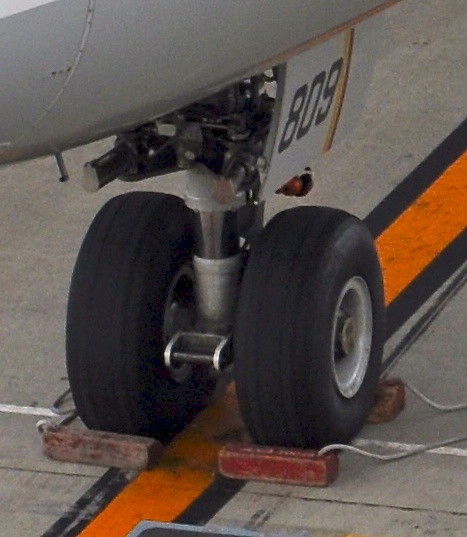
Nose Landing Gear of Several Aircraft Types
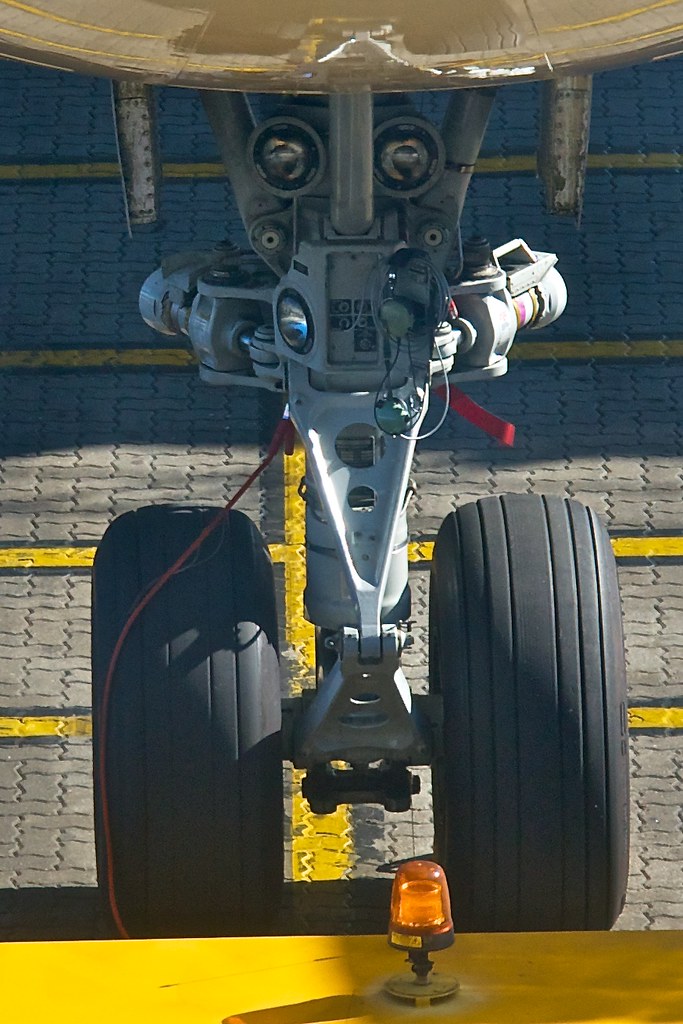
I haven’t really paid much attention to the shape of the landing gear before. Actually, looking at the nose landing gear is a good way to identify aircraft types, so here is a small summary of the shapes from various viewpoints.
1 Boeing 747-400 Front
 Right Front
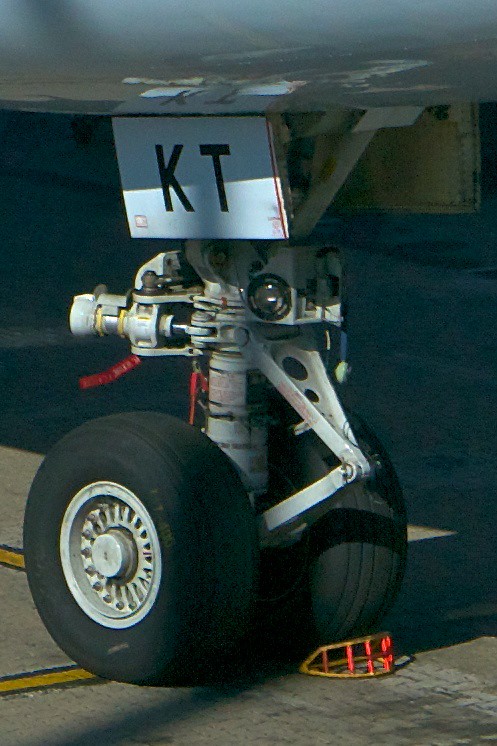 Right Rear
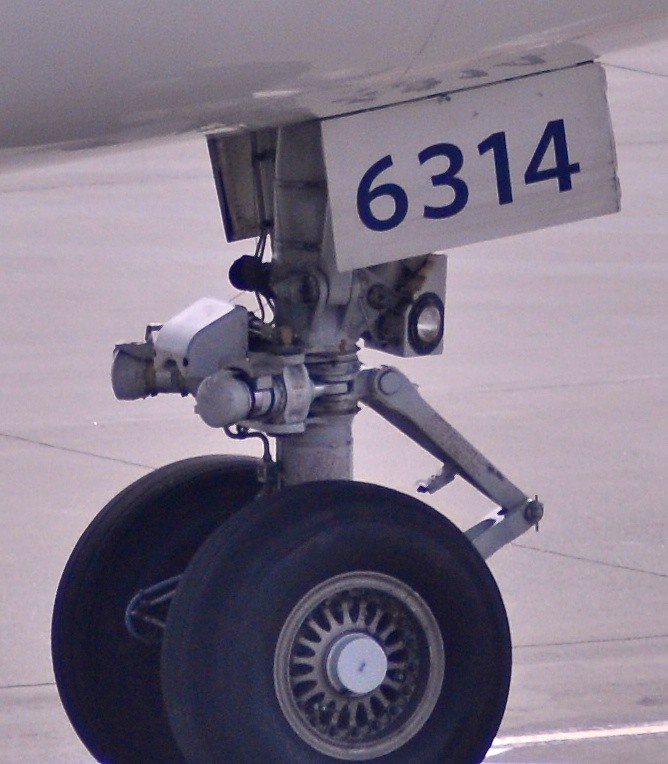
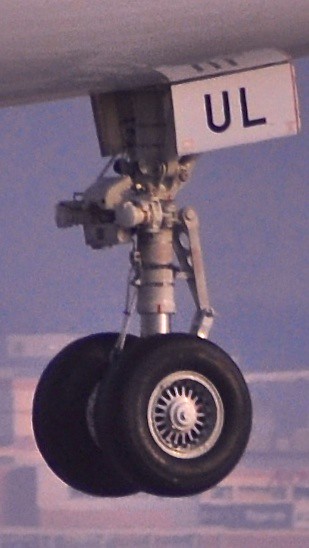 Left Side
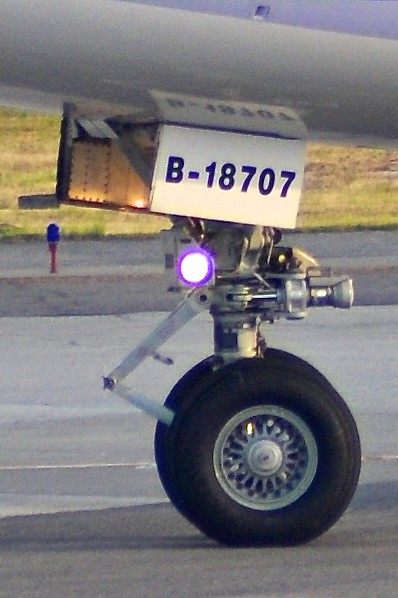 Right Side
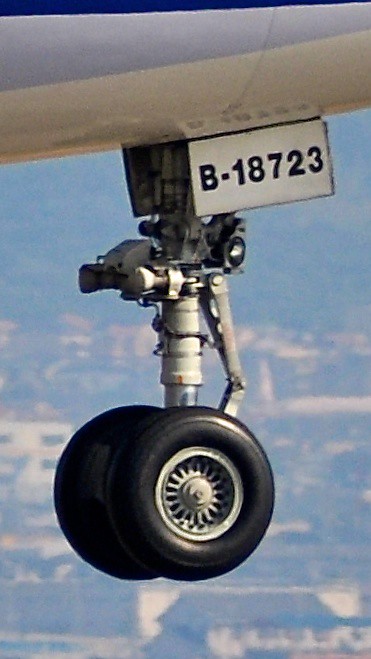
2 Boeing 777 Front
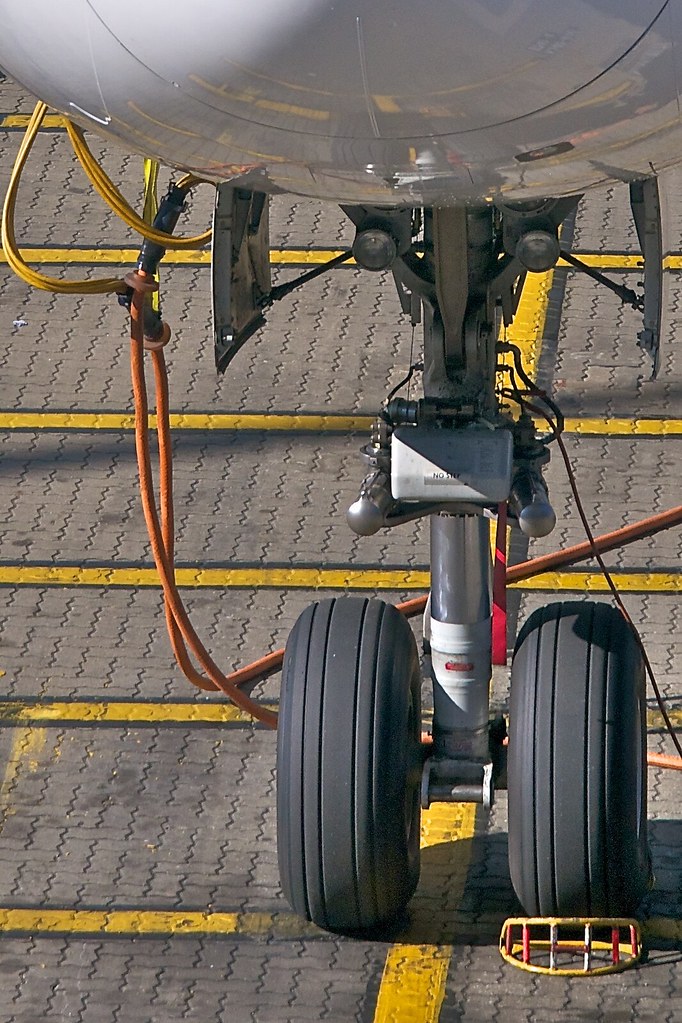
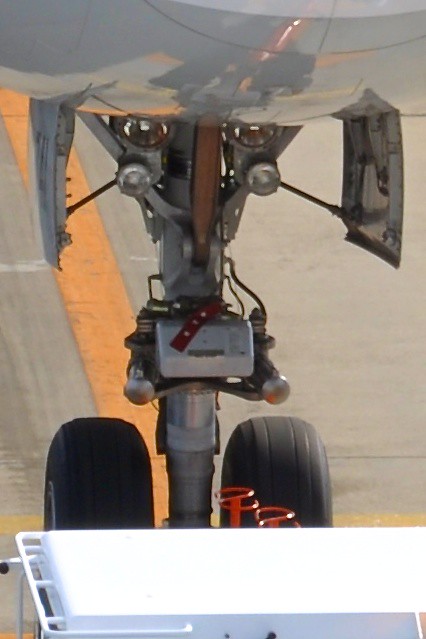 Left Front
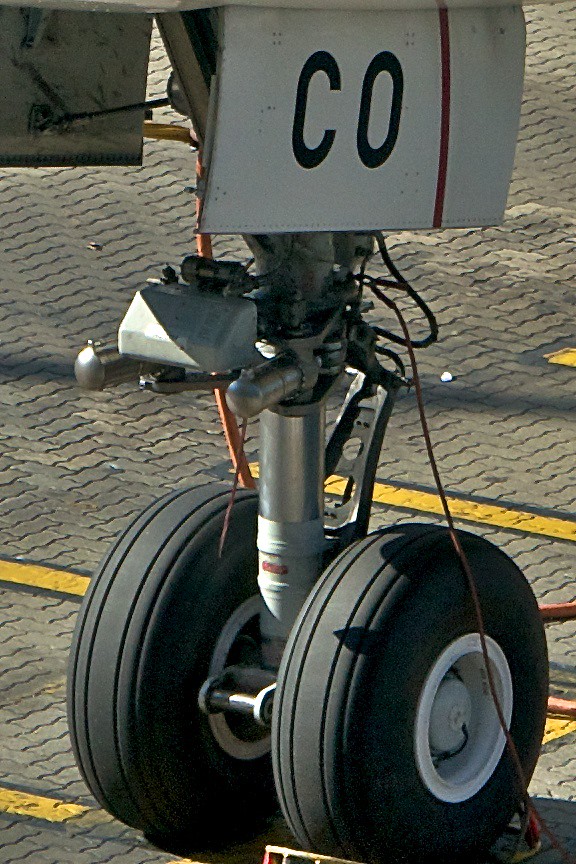 Right Front
 Right Front Lower
 Left Side
 Right Side

3 Boeing 787 Left Front
A Visit to Kansai Airport RJBB
I went to Osaka on another business trip recently. On my way home, I decided to fly back to Tokyo from Kansai Airport, taking the opportunity to wander around the airport and take some photos.
I departed from Osaka Station in the morning and took the “Kanku Rapid” train bound for the airport from Platform 1. It takes just over an hour to get there. It is important to note that some train services split at an intermediate station; the front 4 cars go to the airport, while the rear cars go elsewhere, so be sure not to board the wrong carriage. On the train, I met Mr. Dong and his family from Taiwan, who were traveling to Osaka and Kyoto. We chatted all the way and had a very pleasant conversation.
Tokyo Chofu Airport (Chofu Hikojō, Chofu Airport) Shooting Notes
Chofu Airport is the only general aviation airport within Tokyo, located in the city of Chofu in the western part of the metropolis. Its code is RJTF. It features a single 17/35 Runway measuring 800 meters in length and 30 meters in width. It lacks ILS equipment, operating under VFR (Visual Flight Rules) only, and caters exclusively to propeller aircraft.
Every year, the airport opens to the public for a day to host a small air show. There are simple flight performances and static aircraft displays on the ground. They sell aviation-related books and goods, hold aviation awareness lectures for children—such as a flight simulation class—and offer local snacks and specialties from various regions. All in all, it’s a lively event. Among the aviation items, there are some unique finds, such as old instrument panels and broken propellers—fresh curiosities that you generally can’t buy on the open market.
Kansai International Airport (KIX) Photo Diary
Recently, I took the opportunity during a business trip to visit Kansai Airport to watch airplanes.
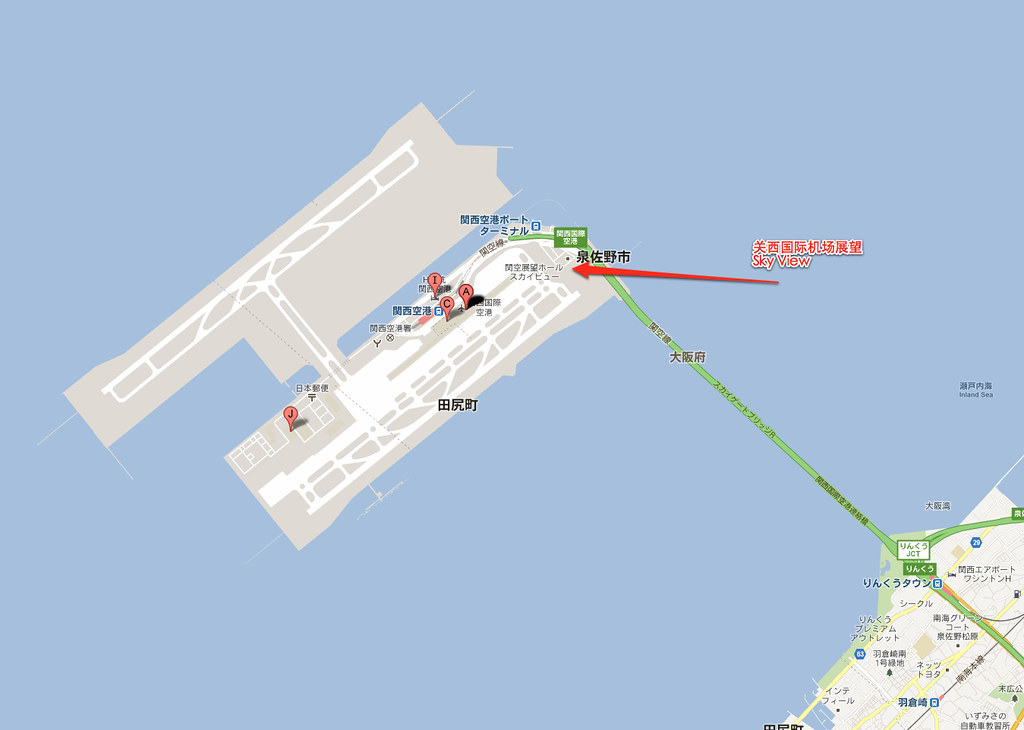
Why go to Kansai Airport? Because there is a massive observation deck specifically designed for tourists and travelers to observe takeoffs and landings. It’s called Sky View. You can watch various flights up close, and there are facilities like a museum, restaurant, and souvenir shop. It would be a shame to miss it!
Kansai International Airport is located in Izumisano City, Osaka Prefecture, Japan. It serves as the primary international gateway for the Keihanshin (Kyoto-Osaka-Kobe) metropolitan area and the Kansai region. It is situated on an artificial island in Osaka Bay, off the coast of Izumisano, approximately 5 kilometers from the mainland.
Field Report: Photography at Yao Airport (YAO) in Yao City, Osaka Prefecture
I recently went to Osaka on a business trip and took advantage of my break time to visit a nearby general aviation airport—Yao Airport (YAO Airport)—for some photography. Here is my report. Note: All photos in this article were taken by the author. Reproduction without permission is prohibited.
Yao Airport has the ICAO code RJOY and is located in Yao City, Osaka Prefecture. Yao Airport was founded in 1933 and converted to a military airport in 1939, known as Taisei Airport. In 1952, it was renamed Hanshin Airport, with a portion allocated for civilian use. In 1956, it was renamed Yao Airport, and in 1969, joint civil-military use began. Today, it is utilized by the Japan Self-Defense Forces, newspaper companies, fire departments, police agencies, private enterprises, and individual small aircraft owners. It is famous for general aviation.
Introduction to Osaka Itami Airport Photography Spot 1: Senri River
A while back, I went to Osaka on a business trip and used my spare time to visit Osaka Airport to photograph takeoffs and landings. Here is a brief record. Note: All photos in this article were taken by the author. Reproduction without permission is prohibited.
Osaka Airport (RJOO) has always been a place I’ve wanted to visit for photography. That’s because right at the approach end of Runway 32L, there is a small river called the Sengawa River, and there is a walking path along the river. Taking off and landing aircraft fly directly over the walking path. Especially the spot facing the Runway directly, it has become a paradise for aviation enthusiasts. People listening to wireless communications, taking photos, or bringing children to watch the landings—all are shocked by the airliners flying just a few dozen meters above their heads. From the Runway centerline, you can clearly see the pilots making final adjustments to the Attitude (left and right rocking) during landing, or the nose pointing to one side during crosswinds. It is a very rare and excellent place to observe aircraft.