A Look at ACARS in Satellite Communication
An old article from ten years ago, A Chat About Methods for Personally Receiving ACARS Signals, introduced receiving VHF ACARS signals. I looked up some information on what ACARS over Satellite Communication (SATCOM) looks like.
First, looking at the Wikipedia page for the Malaysia Airlines MH377 disappearance event, the information regarding satellite communication is as follows:
Flight time 01:30 The Inmarsat-3 F1 satellite received the first of seven handshake signals Flight time 07:30 Inmarsat-3 F1 satellite captured the last complete handshake signal sent by the aircraft's ACARS, indicating it was still in flight Flight time 07:38 Unscheduled, via an unexplained "partial handshake" signal sent by the aircraft, the reserve fuel required after arrival in operational procedures should be running low Flight time 08:34 Inmarsat's scheduled next handshake time received no reply from the aircraft
Inmarsat is the International Maritime Satellite Organization. Similarly, via Wikipedia, you can see satellite services provided by Inmarsat:
 The coverage of the Inmarsat-3 F1 satellite is the Indian Ocean region. It was launched on April 3, 1996, and has been operating in space for 28 years.
I found some good information online, so below I will summarize the various communication methods of ACARS.
I have created a table for reference covering communication media, modulation method, transmission speed, transmission data unit, error correction capability, access method, and protocol.
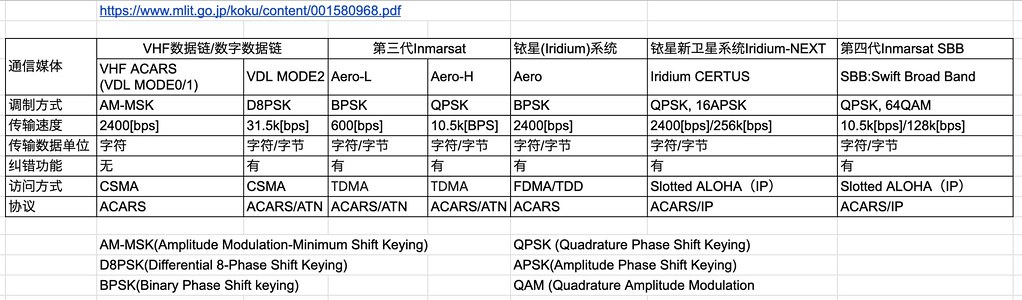 Additionally, it is estimated that IP-based Aircraft Communication Addressing and Reporting System (ACARS OVER IP) will become the mainstream in the future.
Also, according to information on satbeams.com, the third-generation Inmarsat satellite Inmarsat-3 F1, which detected the signal of the missing Malaysia Airlines passenger plane ten years ago, has been retired.
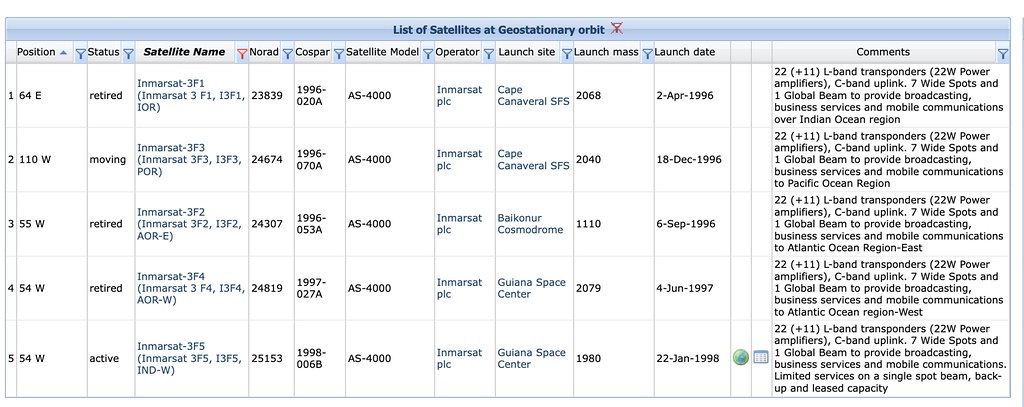 Inmarsat-3F5, Inmarsat-4F1, Inmarsat-4F2, Inmarsat-4F3, etc., are currently in service.

How can an enthusiast receive satellite signals? I don’t have a satellite antenna on hand, nor an L-band receiver, so I won’t be practicing this time, just checking the information.
Regarding frequencies, looking at information on the UFH-Satcom website,
you can find quite a bit of information here. For example, the Inmarsat-3 F1 covering the Indian Ocean is as follows:
 Here is the Inmarsat-4 F1 currently covering the Asia-Pacific region:

Inmarsat-4 F1 tracking can be found on N2YO.

There are many enthusiast introductions online for receiving satellite signals. Here are a few links. If I have time and energy in the future, I might set something up myself.
Other links