Posting old photos under the COVID-19 pandemic 8 Strong 5L
Due to the COVID-19 pandemic, I tried to stay at home as much as possible. To kill the boredom, I spent my time restoring old photos. Continuing with more posts on the Q-5 (Nanchang Q-5) attack aircraft from the Zhuhai Airshow.
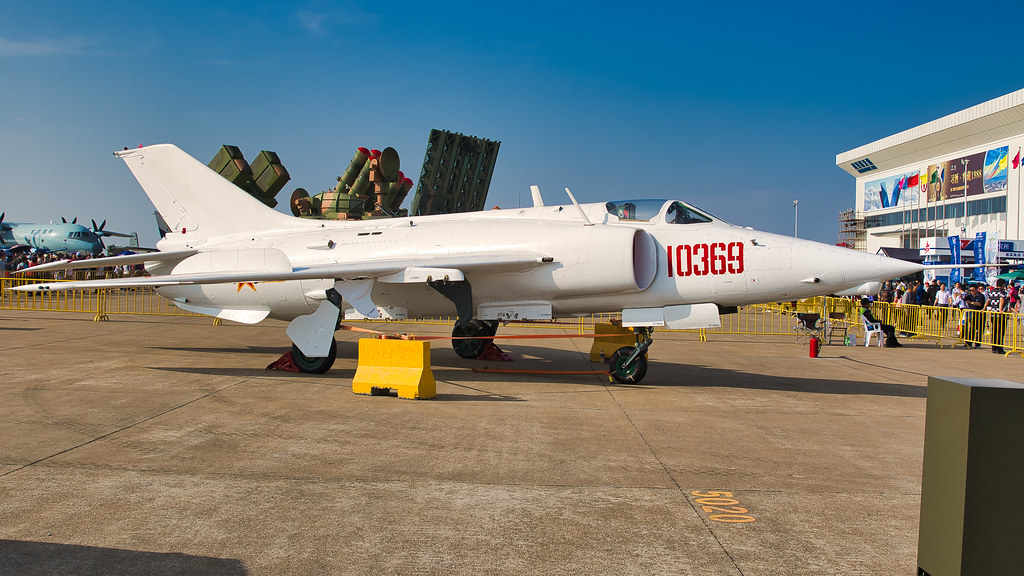

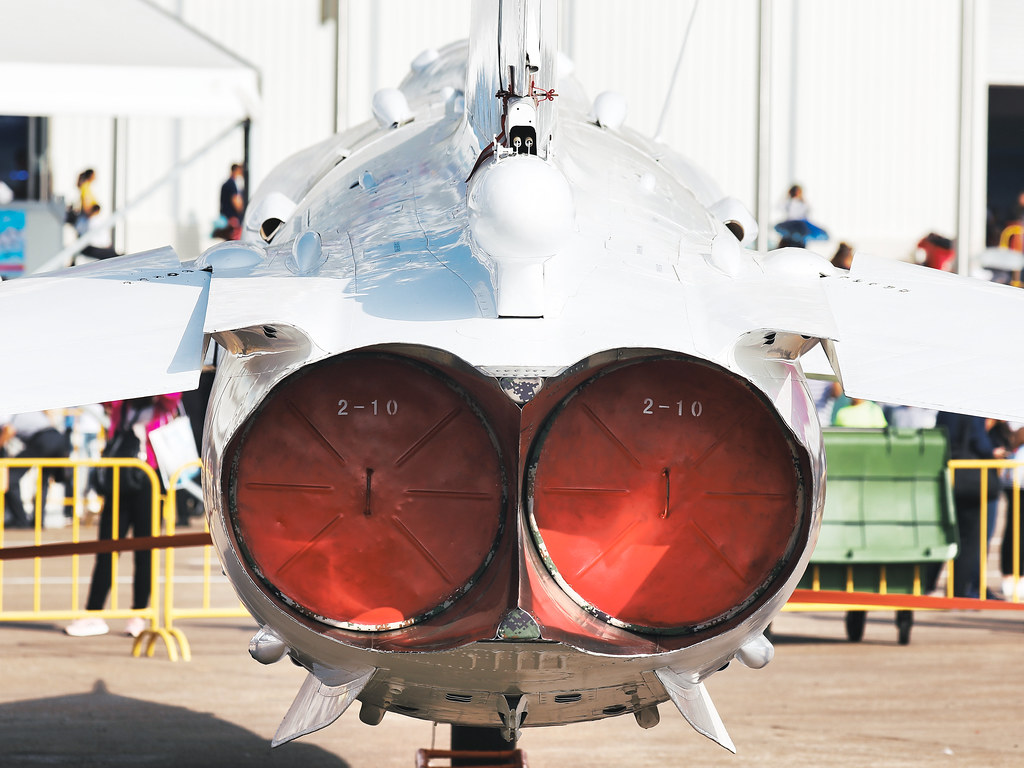
The Q-5 attack aircraft, NATO reporting name: Fantan, was designed based on Soviet MiG-19 technology, but differs almost completely from the MiG-19 in terms of aerodynamic shape and weaponry. The Q-5 is China's first-generation indigenously developed supersonic attack aircraft. It was also the only combat aircraft design to survive and enter mass production during the "Great Leap Forward" wave of indigenous aircraft manufacturing aimed at "catching up with Britain and the US."The Q-5 features an all-metal semi-monocoque fuselage. The rear fuselage is equipped with two WP-6 turbojet engines, the same engines used on the J-6 (F-6). These engines feature afterburners, with a maximum static Thrust of 25.5 kN (2600 kg) per engine and a maximum afterburning Thrust of 31.87 kN (3250 kg). The wing is a swept mid-wing design with a leading-edge sweep angle of 55°, featuring large wing fences on the upper surface. The sweep angles of the horizontal and vertical stabilizers are 55° and 57°, respectively. The horizontal stabilizer is a fully-flying tail with an inclined axis.
The aircraft structure primarily uses aluminum alloy and high-strength alloy steel. The landing gear is a retractable tricycle type. Both the nose wheel and main wheels are equipped with disc brakes and automatic brake pressure regulators. The components mentioned above were largely copied from the MiG-19.
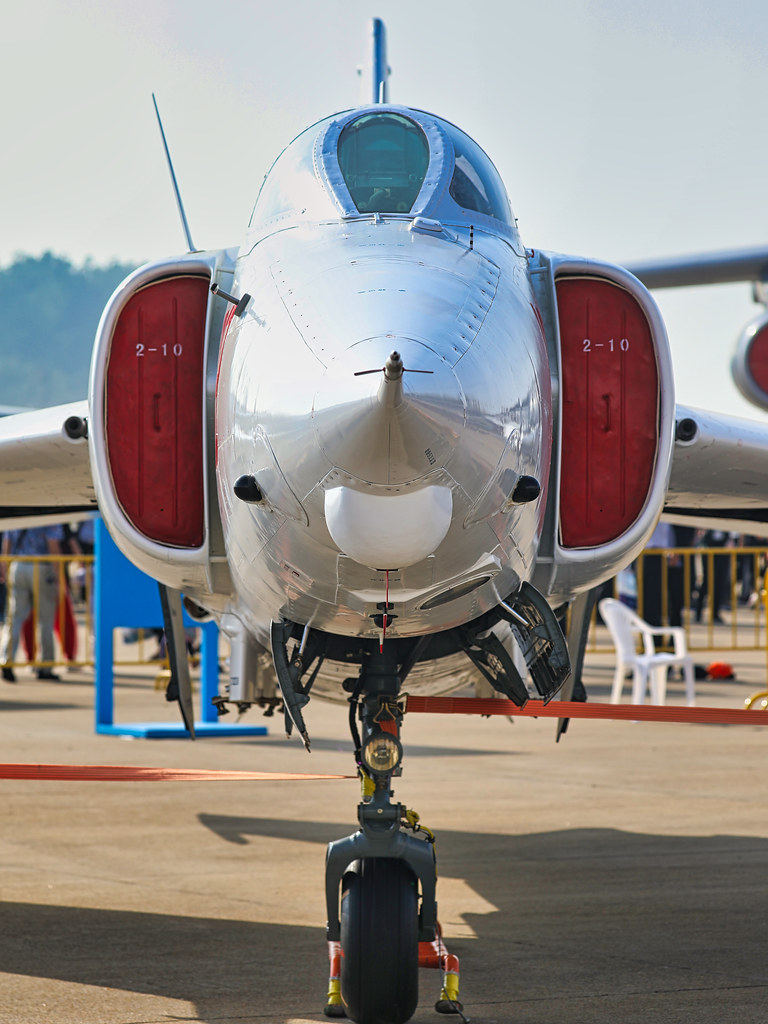

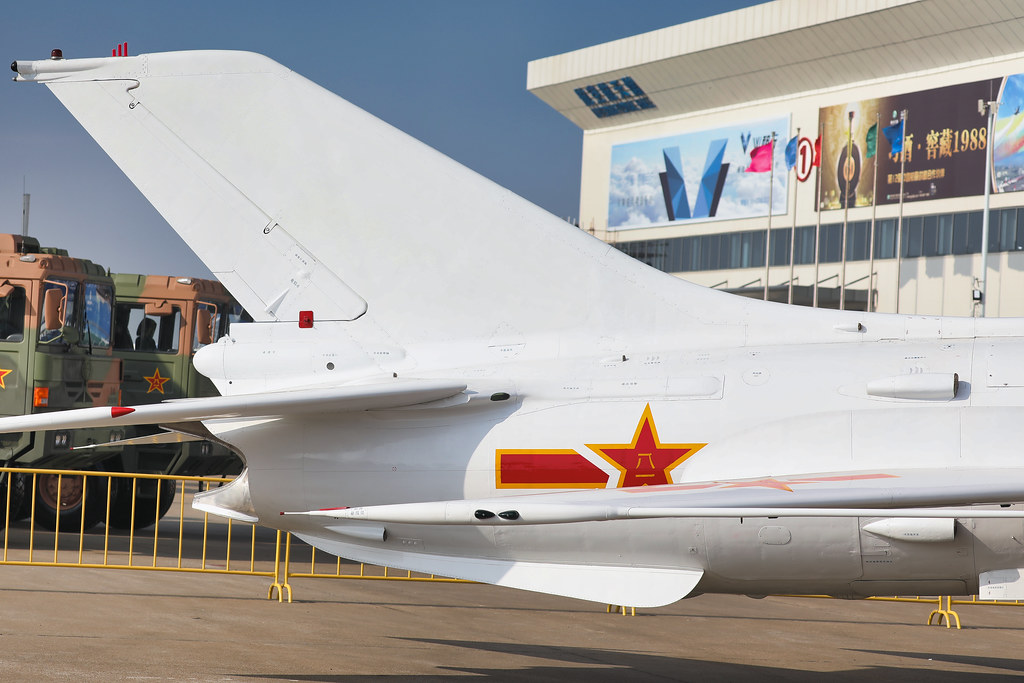
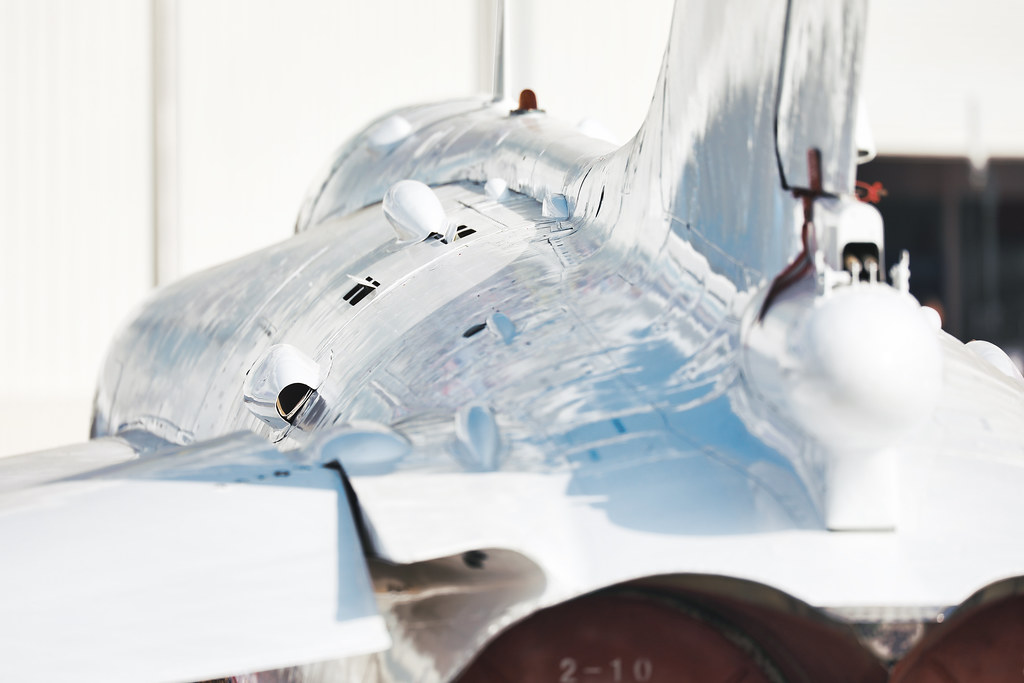
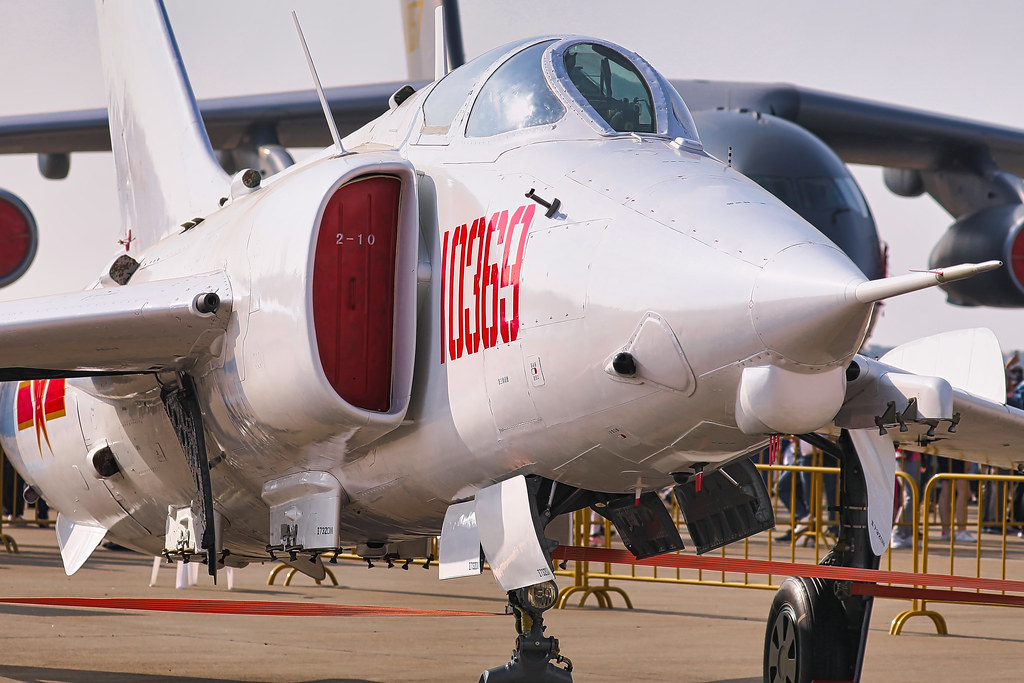
When I visited the Beijing Military Museum in the early 1980s, I don’t think there was a full-scale Q-5 on display yet. At that time, the J-8II hadn’t been unveiled, and the Q-5 was the only aircraft model with side air intakes. Even though it was just a small model back then, I felt it was very advanced.
In that sense, the 2018 Zhuhai Airshow was the first time I saw the actual aircraft with my own eyes. So, I walked around the airframe and took many photos of the details. Looking at the shape of the exhaust nozzle, you can tell that the manufacturing workmanship is relatively rough. Especially when compared to the J-10 next to it (whose skin finishing standard is comparable to the F-16), they are completely in different leagues.
Looking at the Q-5 is like seeing an old friend not seen for years. Although it is already grey-haired and travel-worn, I feel a genuine sense of cordiality.
Regarding the Q-5L, there is a detailed explanation on Baidu Baike:
The Q-5L was modified and developed by the China Nanchang Aircraft Manufacturing Corporation (now Hongdu Aviation Industry Group) based on the Q-5C. The Q-5L successfully made its maiden flight on April 8, 2005.The Q-5L features a newly installed TV/Laser dual-mode tracking system beneath the nose. This is also the main external feature for identifying the Q-5L. The system integrates target detection, laser illumination, and laser bomb guidance functions. It expands the aircraft’s bomb release envelope and provides night attack capability. Specifically, the acquired target imagery can be displayed directly on the cockpit display, allowing the pilot to detect and identify targets without visual contact. This reduces the pilot’s workload and improves the aircraft’s combat efficiency.
In terms of cockpit displays, the Q-5L is equipped with a Head-Up Display (HUD)/weapon aiming system and Multi-Function Displays (MFD). Meanwhile, the cockpit layout was adjusted, and systems such as ejection and illumination were improved. The cockpit display interface and ergonomics are superior, further reducing the pilot’s burden.

Reference: Why was the Q-5L, Asia’s No.1 Attack Aircraft in its prime, suddenly retired?