Visiting the ANA and JAL Maintenance Hangars
A long time ago, I wrote a post about visiting the JAL Maintenance Hangar at Haneda Airport. By the way, this tour has become increasingly popular recently, surprisingly ranking #1 on TripAdvisor for option tours in Tokyo among foreign visitors!
ANA Maintenance Hangar Tour Reservation Website (Japanese) JAL Maintenance Hangar Tour Reservation Website (Japanese)
Recently, an enthusiastic colleague at the company booked the schedule online well in advance. A group of aviation enthusiasts gathered to visit both the ANA and JAL maintenance hangars. So, on this day, 8 of us met at Haneda Airport’s “New Maintenance Field” (Seibijo) station.
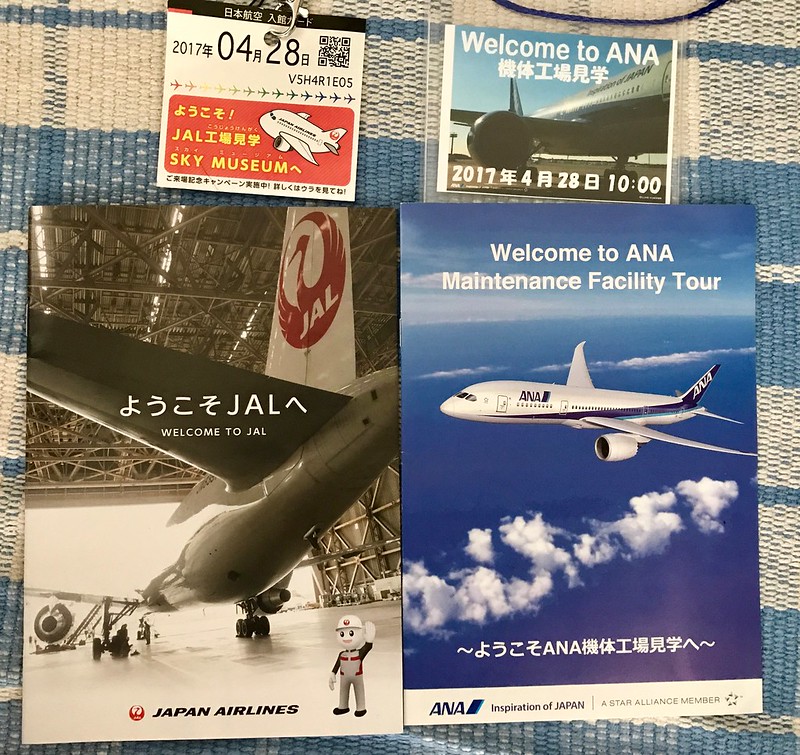 On the morning of that day, we visited ANA first, and at noon we went to visit JAL.
In the afternoon, we all went to the Haneda International Terminal to spot planes for a few hours.
It was a fulfilling day.
On the morning of that day, we visited ANA first, and at noon we went to visit JAL.
In the afternoon, we all went to the Haneda International Terminal to spot planes for a few hours.
It was a fulfilling day.
You can spot planes right as you exit “New Maintenance Field” station. While waiting for my colleagues,
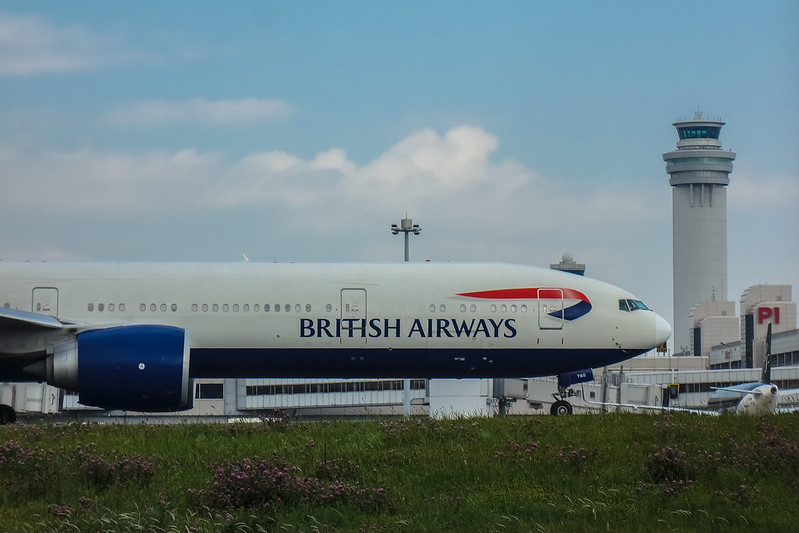 I used my RX100 to capture a photo of the British Airways 777 taxiing on the ground with the Haneda Tower in the background.
Honestly, the ANA and JAL maintenance hangars are very similar. The tour procedure is essentially 30 minutes of briefing in a meeting room, plus about 45 minutes of参观 inside the hangar. The photos I took inside were similar to those from the last time, so I won’t go into too much detail here. Today, I will mainly compare the differences between ANA and JAL.
After the tour, I felt that the corporate cultures of JAL and ANA are quite different: JAL is more decentralized, giving field staff a higher degree of freedom; ANA seems to have more institutionalized management, with more comprehensive rules and regulations.
For example, regarding photos taken inside the hangar, JAL’s requirement is that
as long as it doesn’t involve the Imperial family or other companies’ aircraft,
and doesn’t infringe on anyone’s portrait rights, photos can be freely posted to SNS and blogs;
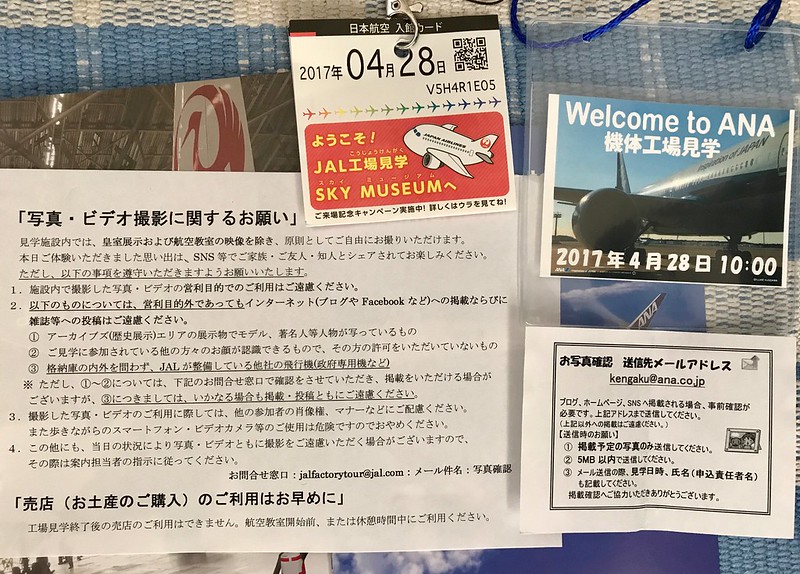 However, ANA is very strict. If you want to post photos online,
you must first email [email protected], and only after inspection by ANA personnel,
and obtaining their approval, can you post photos to personal SNS and blogs.
However, ANA is very strict. If you want to post photos online,
you must first email [email protected], and only after inspection by ANA personnel,
and obtaining their approval, can you post photos to personal SNS and blogs.
Another example is the 30-minute opening briefing. ANA’s content is very textbook, basically consistent with the pre-prepared PowerPoint. It is obvious that they prepared very thoroughly, so each person’s briefing is very similar; JAL’s briefing is more improvised, and the strength of the guides varies. Therefore, if you happen to get a retired pilot who is good at speaking, the content will be quite exciting, but if you get a retired cabin crew (usually older flight attendants…), the professional content will be less, which feels unsatisfying for us aviation enthusiasts.
During the hangar visit, participants are divided into small groups of about 10 people, led by retired pilot grandpas or retired flight attendant ladies. ANA’s grouping is prepared in advance; names are called group by group, hard hats are distributed, and then you enter the hangar; JAL’s grouping is done on the spot. The guides walk from the front of the conference room, and randomly divide people into groups when they see about 10 people. Seeing that several of us were holding DSLR cameras and looked quite professional, they casually remarked, “You guys are so professional,” and specifically put us in one group, letting Mr. Kobayashi, a retired pilot, be our guide.
Inside the ANA hangar, the flight attendant lady’s explanation was very textbook,
basically aimed at general visitors with no aviation knowledge,
so there weren’t many highlights.
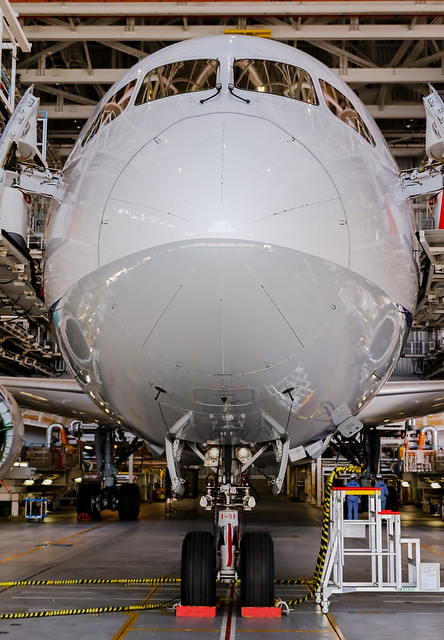
However, of the two hangars visited, one faces west and the other faces south.
I personally highly recommend the south-facing hangar.
I took many precious photos, so I’ll just post one here that has been checked by [email protected].
Both of JAL’s hangars face west.
The explanation by retired pilot Mr. Kobayashi was the highlight of the day.
He had a humorous personality and introduced a lot of knowledge that ordinary people don’t know, tailored to our interests.
For example, regarding the tail skid on the 767, he explained that it is linked to the main landing gear.
When the main landing gear is retracted, the tail skid is also retracted;
when the main landing gear is extended, the tail skid is also extended.
Another example: when he saw maintenance personnel opening the nose radome,
he explained that it contains the radar antenna, Localizer antenna, and Glide Slope antenna.
The content was very professional.
When watching planes take off at the hangar entrance,
he would humorously comment on the pilots’ operations,
saying things like “That pilot retracted the landing gear too slowly!”
which made us laugh involuntarily.
Then he would explain that to allow the landing gear to cool down, it is sometimes necessary to retract it a bit later.
In short, because of his vivid explanation, the hour-long tour felt like it ended in a flash.
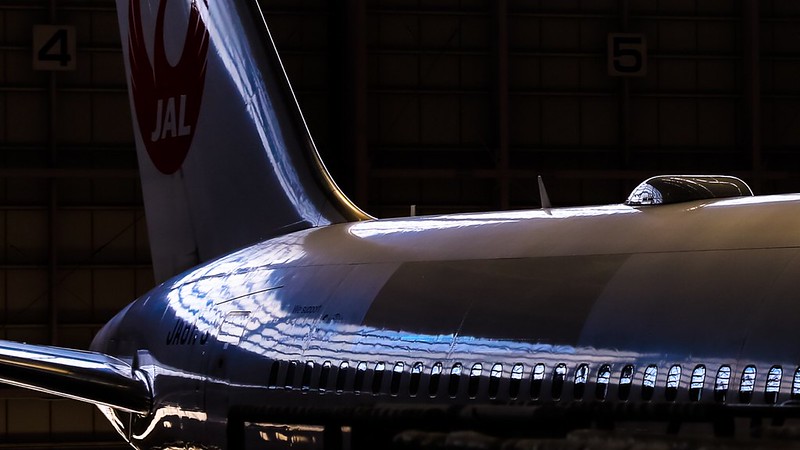
Finally, a summary. I felt that ANA and JAL have different corporate cultures, one focuses on organization, the other on the individual. From the perspective of a manager or business owner, one might prefer ANA’s approach, but as an employee, one might prefer JAL’s relaxed atmosphere.
As for the maintenance hangar tour project, regardless of the company, the content is fantastic and highly recommended. The only regret is that there seems to be no English commentary, which might be inconvenient for foreign visitors who don’t understand Japanese, so it’s best to go with a friend who speaks Japanese.