First Flight in Airbus A320neo
The Airbus A320neo (New Engine Option) began commercial operations this year. As the A320 series has been the best-selling passenger jet for nearly 30 years, its new variant, the neo, is expected to continue to hold the top two spots on the sales charts alongside the Boeing 737 series.
According to Wikipedia,
Compared to the original A320 series, the main changes in the A320neo involve the use of larger and more efficient new engines, reducing fuel consumption by 15% and operating costs by 8%, along with lower noise and nitrogen oxide emissions. A320neo customers can choose between two engine types: the CFM International LEAP-X or the Pratt & Whitney PW1000G. Additionally, the A320neo airframe has undergone changes; in addition to installing newly designed Sharklets (also known as winglets, wingtip sails, or wingtip devices), the overhead bin space and air filtration systems have been improved to enhance passenger comfort.
I hadn’t had a chance to photograph this latest 320 model until yesterday, when the first A320neo introduced by ANA, registration JA211A, flew back to Haneda. Finally, my wish to photograph it was fulfilled. It is a pity that the aircraft landed late; the sun had set some time ago, and the ISO reached 16000, so I was unable to capture high-definition details of the airframe. I will have to find another opportunity to make up for this later.
Sunday, December 17, 2016, 17:00 JA211A landed on Runway 34L at Haneda Airport
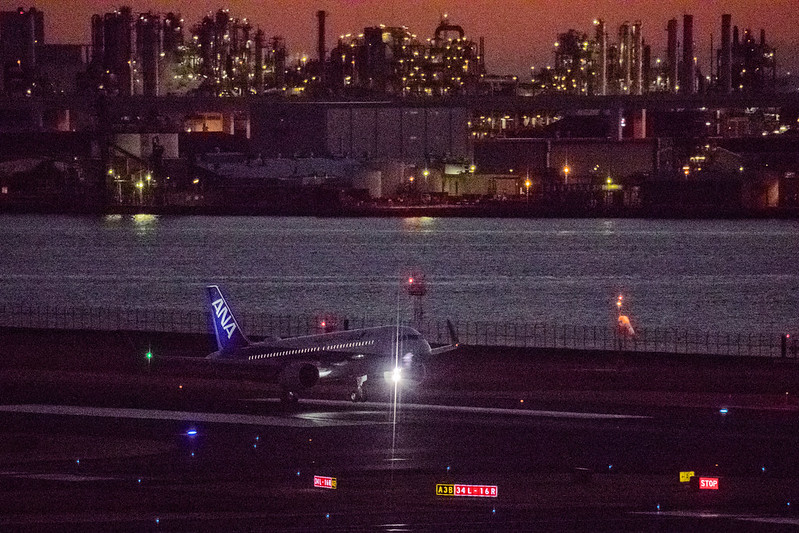 Canon EOS-1D X Mark II, EF100-400mm f/4.5-5.6L IS II USM, ƒ/5.6 1/400s ISO12800
A group photo with Mt. Fuji and the International Terminal
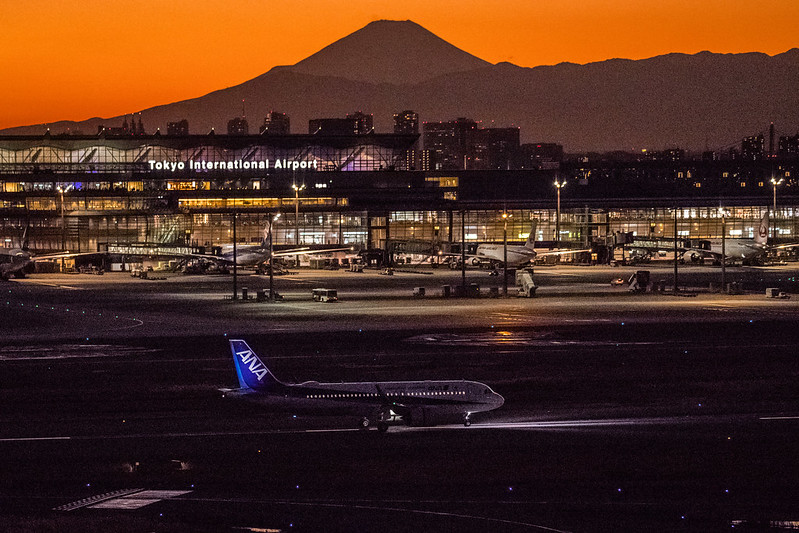 Canon EOS-1D X Mark II, EF100-400mm f/4.5-5.6L IS II USM, ƒ/5.0 1/400s ISO12800
Turning onto Taxiway A to check the airframe details,
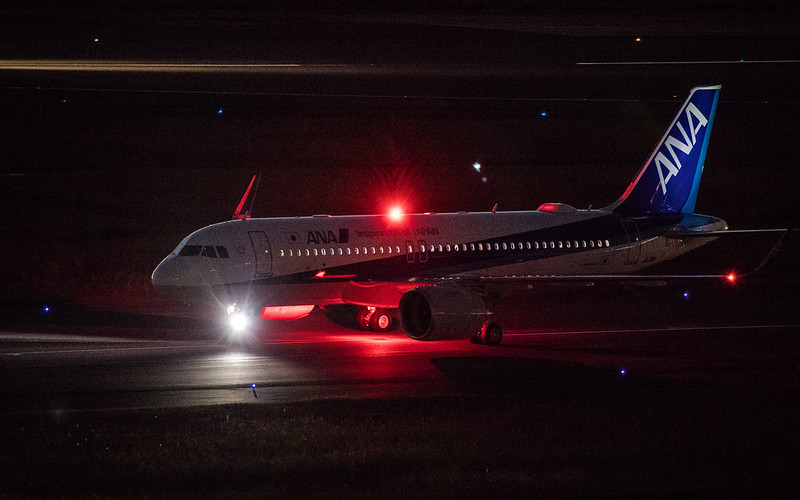 Canon EOS-1D X Mark II, EF100-400mm f/4.5-5.6L IS II USM, ƒ/5.6 1/125s ISO16000
Sharklets, the Wi-Fi satellite antenna on the upper fuselage, the large PW1127G engine, and the nacelle—
these three major features are instantly recognizable.
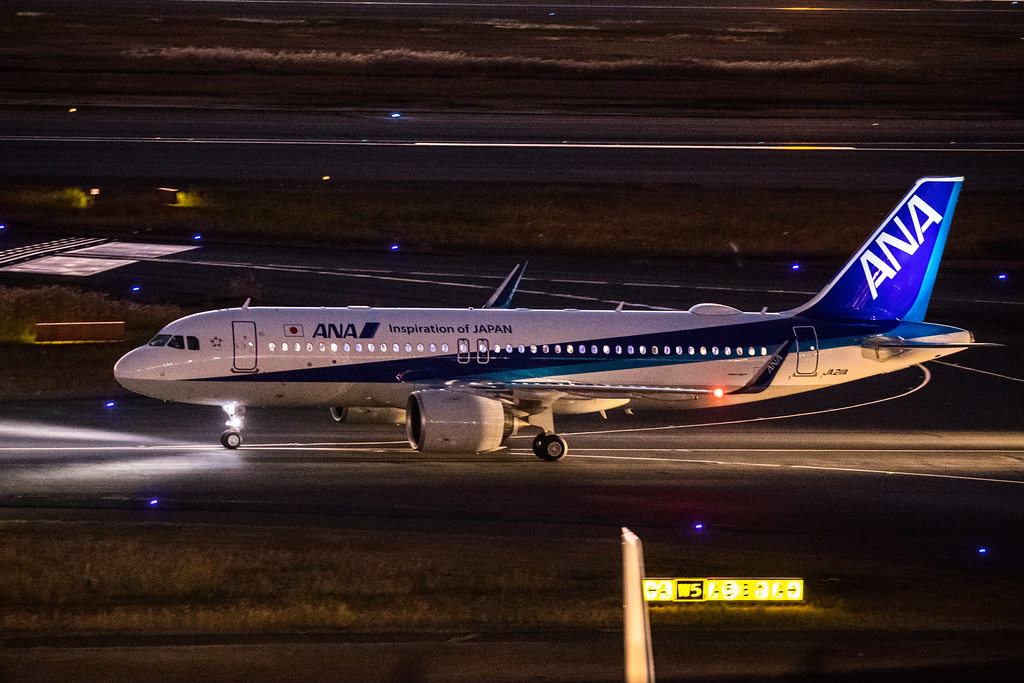 Canon EOS-1D X Mark II, EF100-400mm f/4.5-5.6L IS II USM, ƒ/5.0 1/30s ISO16000
The image below is the clearest; click to view the large version:
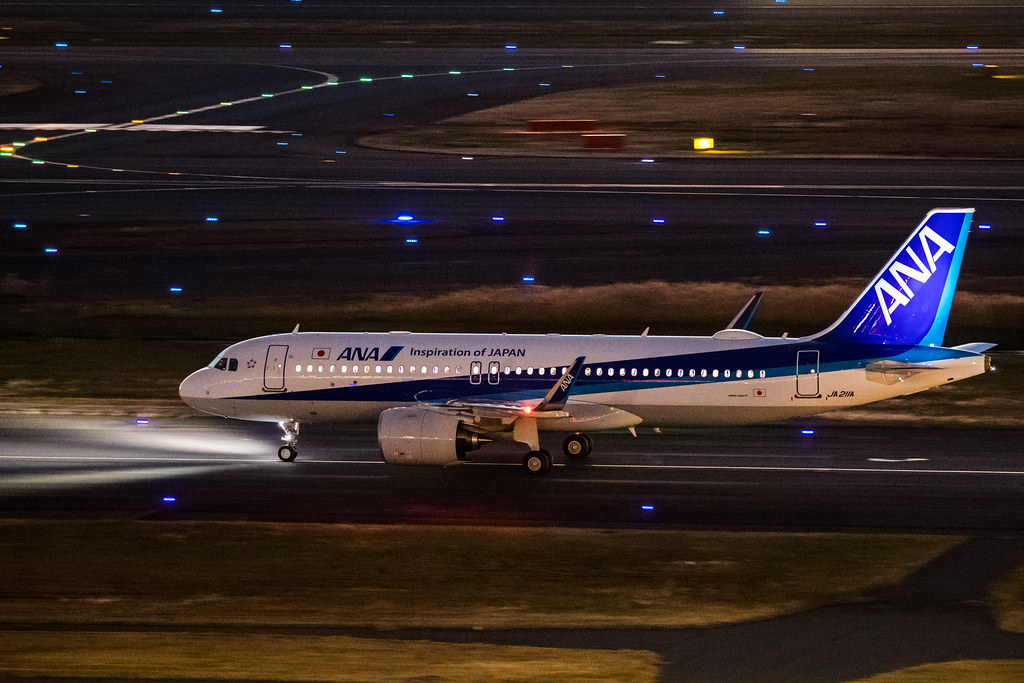 Canon EOS-1D X Mark II, EF100-400mm f/4.5-5.6L IS II USM, ƒ/5.0 1/20s ISO16000
ANA’s A320neo model is the A320-271N. After entering service, it will be primarily used for short-haul international routes, such as those to China. The seating configuration consists of 8 Business Class seats and 138 Economy Class seats. All seats are equipped with touchscreen interfaces, and onboard Wi-Fi is available.
According to Wikipedia, as of November 30, 2016, 14 airlines worldwide had introduced the A320neo:
AirAsia first service in 2016 Air Astana first service in 2016 Avianca Brazil first service in 2016 Azul Brazilian Airlines first service in 2016 Frontier Airlines first service in 2016 GoAir first service in 2016 IndiGo first service in 2016 LATAM Airlines Group first service in 2016 Lufthansa first service on 25 January 2016 Pegasus Airlines first service on 2 August 2016 Scandinavian Airlines first service on 26 October 2016 Spirit Airlines first service in 2016 Viva Aerobus first service in 2016 Volaris first service in 2016And this week, HK Express, China Southern Airlines, and ANA also received deliveries. ANA will eventually operate a fleet consisting of 7 A320neos and 26 A321neos.
Watching JA211A turn from Taxiway A onto Taxiway W, heading toward the maintenance hangar.
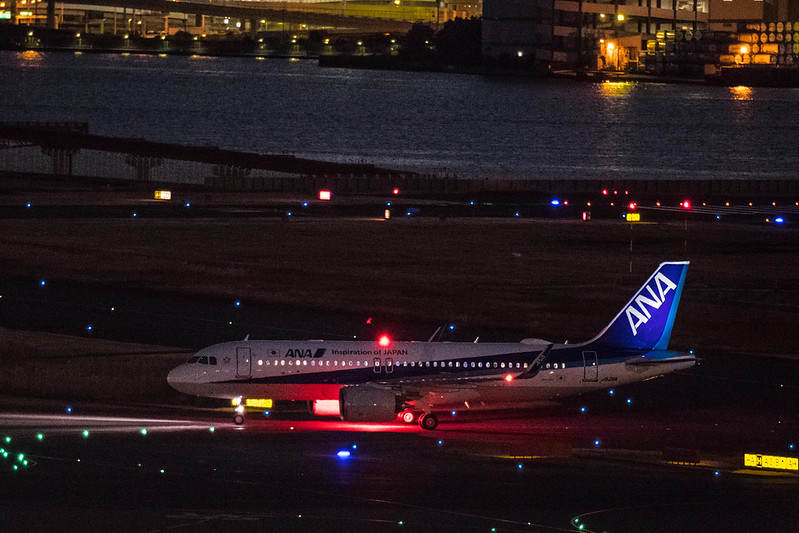 Canon EOS-1D X Mark II, EF100-400mm f/4.5-5.6L IS II USM, ƒ/5.6 1/50s ISO16000

In the future, if I have the chance, I must book a flight on an A320neo to experience this latest Airbus model firsthand.
Aircraft introduction on Aviation Wire: 小型機だけど大型低燃費エンジン 写真特集・ANA A320neo初号機(後編) 電動シートのプレミアムクラス 写真特集・ANA A321ceo国内線仕様(前編)