Open Boeing 787 APU Intake Door In Flight
Continuing from the previous post Comparison of APU Inlet Doors, let’s continue discussing the APU.
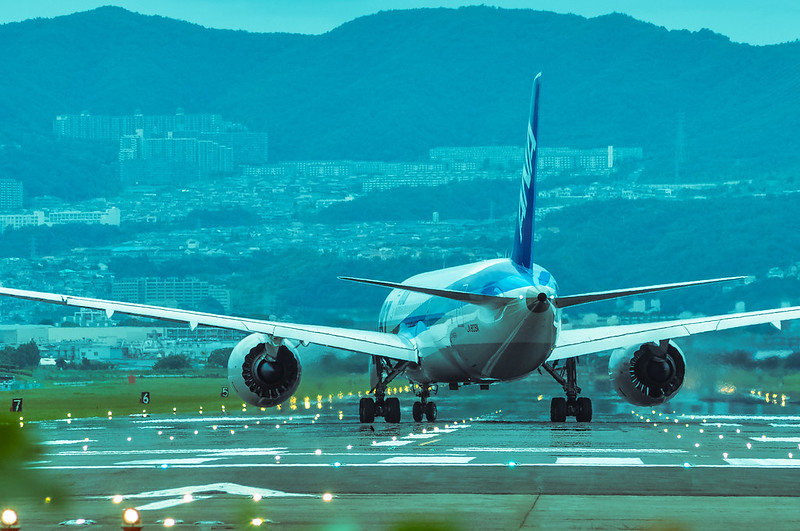
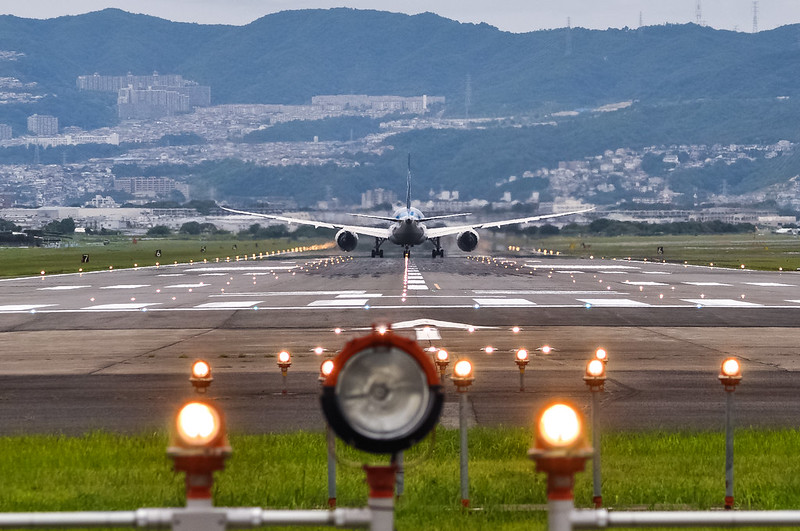
In a set of photos I took in the autumn of 2012 showing a 787 before and during takeoff, I discovered that the APU inlet door was actually open!
Common knowledge tells us that the APU is the Auxiliary Power Unit, used to supply power to the aircraft while on the ground. After the engines are started, the APU is turned off, and consequently, the APU inlet door is closed, as introduced in the Comparison of APU Air Inlet Doors.
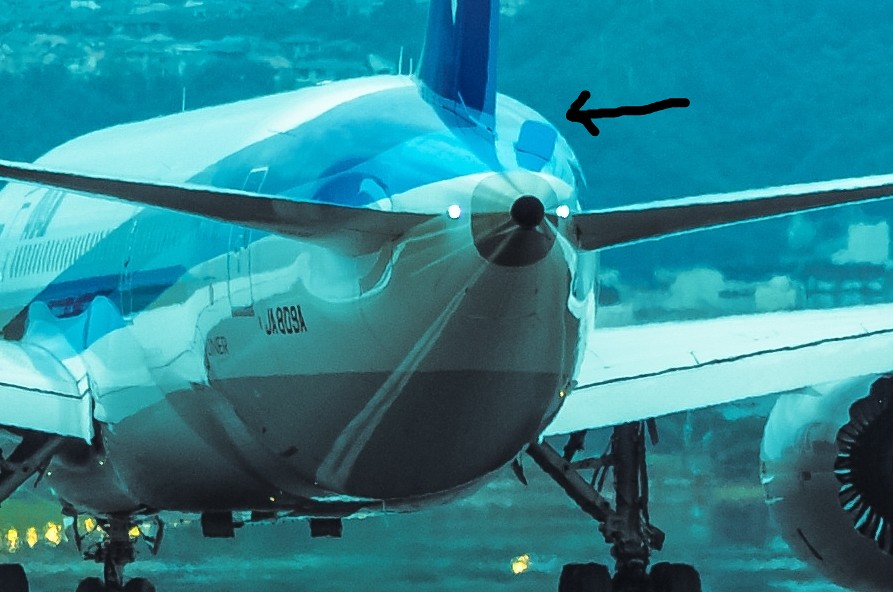
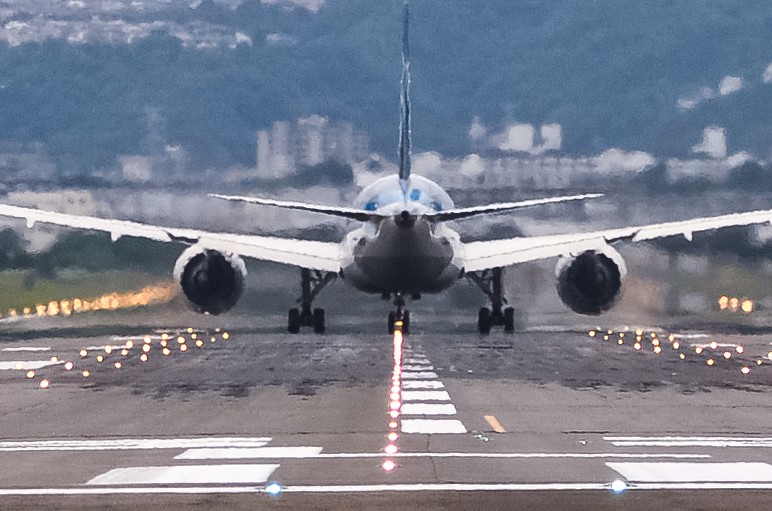
However, looking at the photos below, the APU door is clearly in the open state:
-
An All Nippon Airways Boeing 787, registration JA809A, crossing the Runway for immediate takeoff at 12:17:09. Location: Near the Senri River, close to Osaka Itami International Airport.
-
The aircraft during takeoff roll at 12:17:39. You can still see the APU inlet is open.
-
After takeoff, commencing a left turn at 12:18:30 and 12:18:37. Although not easy to identify, you can still tell the APU inlet is open.
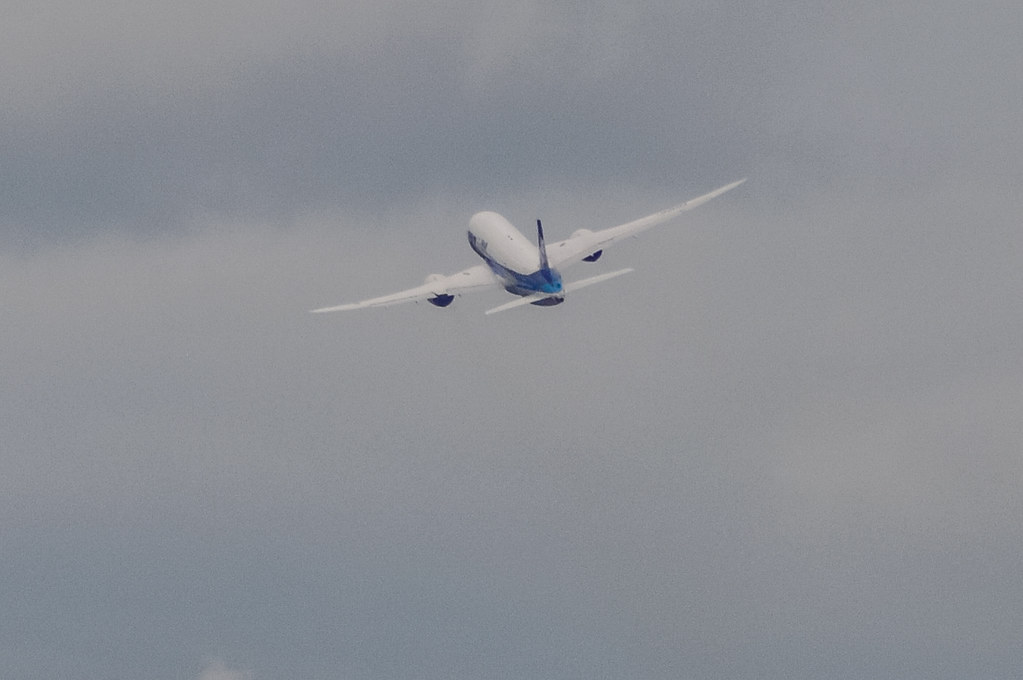
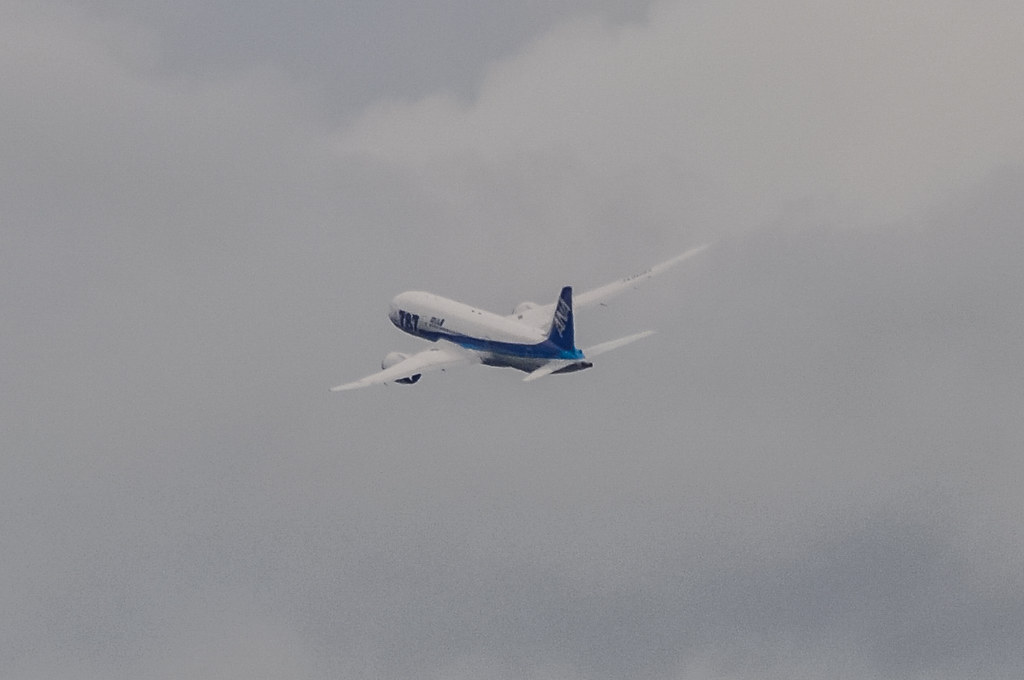
So I searched for information online and finally found an explanation on aviationweek.com. Boeing Tackles 787 APU Overheating Issue Interested friends please read the full text; I will only translate some key points here.
“Operators have discovered that after the APS5000 APU is shut down with the inlet door closed after landing, heat continues to build up in the tail compartment. After 20 min., this causes the rotor shaft to bow, and the shaft takes up to 2 hr. to straighten again.” Operators have found that with the APS5000 APU shut down and the inlet door closed after landing, heat continues to build up in the tail APU compartment. After 20 minutes, this causes the rotor shaft to bow, and the shaft takes up to 2 hours to straighten again (after cooling).
“An advisory bulletin from United Airlines says if an APU restart is attempted 20-120 min. after shutdown with the inlet door closed, the ‘bowed rotor shaft can cause turbine rub and significant damage. If this occurs, an advisory message on the engine-indicating and crew-alerting system shows the APU failed to start and requires the unit to be inspected with a borescope.’” United Airlines stated that if an APU restart is attempted within 20 minutes to 2 hours, the bowed rotor shaft can rub against the turbine, causing significant damage. The Engine Indicating and Crew Alerting System (EICAS) will display an APU start failure message and require a borescope inspection.
“The revised operating procedure calls for the APU selector switch to be put in the ‘on’ position during a shutdown, which will allow the inlet door to open and the the unit to cool down. The door must remain open for 40 min. before being closed, to enable the APU to be restarted.” The revised operating procedure requires that during the APU shutdown process, the selector switch remains in the ON position, allowing the inlet door to stay open and ensuring the APU unit cools down. The inlet door must remain open for 40 minutes before being closed to ensure it can be restarted normally.
I opened my copy of “Boeing 787 Cockpit Research” published in June 2013, and looked at the introduction to the left side of the overhead panel.
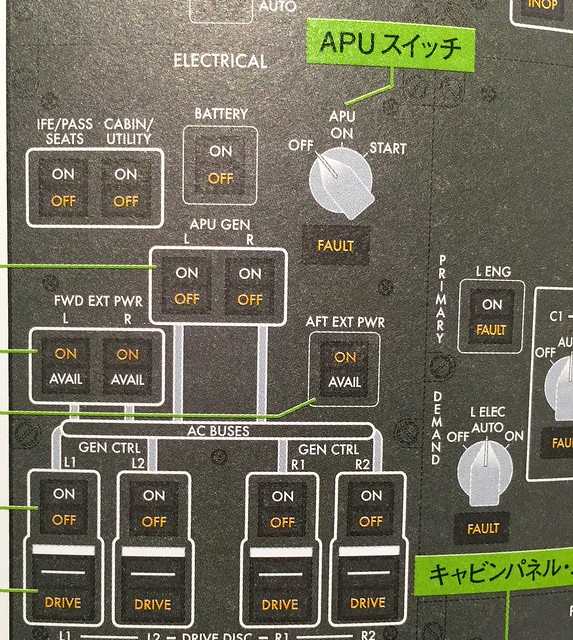 I was able to locate the APU selector switch and APU GEN switches.
One can imagine that in general operating procedures, one would first switch the APU Start to ON, then APU GEN ON. After the engines are all started, APU switch OFF and APU GEN OFF would suffice. However, after discovering this heat deformation issue with the APS5000 APU, they probably had to temporarily skip the APU switch OFF step. (I don’t know if it’s switched OFF and then back ON).
Everyone should remember that in 2012, when the Boeing 787 had just entered commercial service, battery overheating failures occurred, and the type was grounded for a long time.
The newest equipment will definitely have some issues during initial operation, but with continuous improvements, these problems are gradually resolved. Therefore, in my recent photos of the 787, I haven’t found this situation where the APU inlet is open. Thus, these photos of the aircraft during the initial operation and transition period have become very precious.
Additionally, the two photos at the top are enlarged versions. I am also posting the original images for reference.