Observing Details of Various Intake and Exhaust Vents on the Boeing 737-800 Tail
I was looking back at photos from last week at Haneda Airport and noticed there are many small openings on the tail of the Boeing 737-800,
and I didn’t know what most of them were for.
 So I marked them with small circles in the photo and consulted an expert, Mr. @dreamliner, and got the following answers.
1 Tail White Position Light Strobe Light 2 APU Compartment/Oil Cooling Air Inlet APU Cooling Air Inlet 3 APU Exhaust Outlet APU Exhaust Outlet 4 APU Access Panel 5 APU Compartment Combustible Liquid Drain 6 APU Compartment Combustible/Non-combustible Liquid Drain APU Shroud & Hydraulic Drain 7 Green Tail Skid, preventing tail strikes Tail Skid 8 APU Air Inlet APU Air Inlet Door 9 Aft Galley/Lavatory Waste Water Drain Mast Aft Heated Water Drain Mast 10 Galley Exhaust Outlet 11 Emergency Light (e.g., after emergency slide deployment) 12 Positive Pressure Relief Valve (Cabin pressurization emergency regulation, exhausts air from cabin, two in total. Not clearly visible in the photo, but there is actually another one below the outflow valve) Pressure Relief Valves 13 Outflow Valve (Cabin pressurization regulation) Outflow Valve 14 Negative Pressure Relief Valve (Cabin pressurization emergency regulation, draws air into cabin from outside) Negative Pressure Relief Valve
By the way, the shape of the APU Air Inlet in item 8 is quite strange. Why is it so irregular? It is very puzzling.
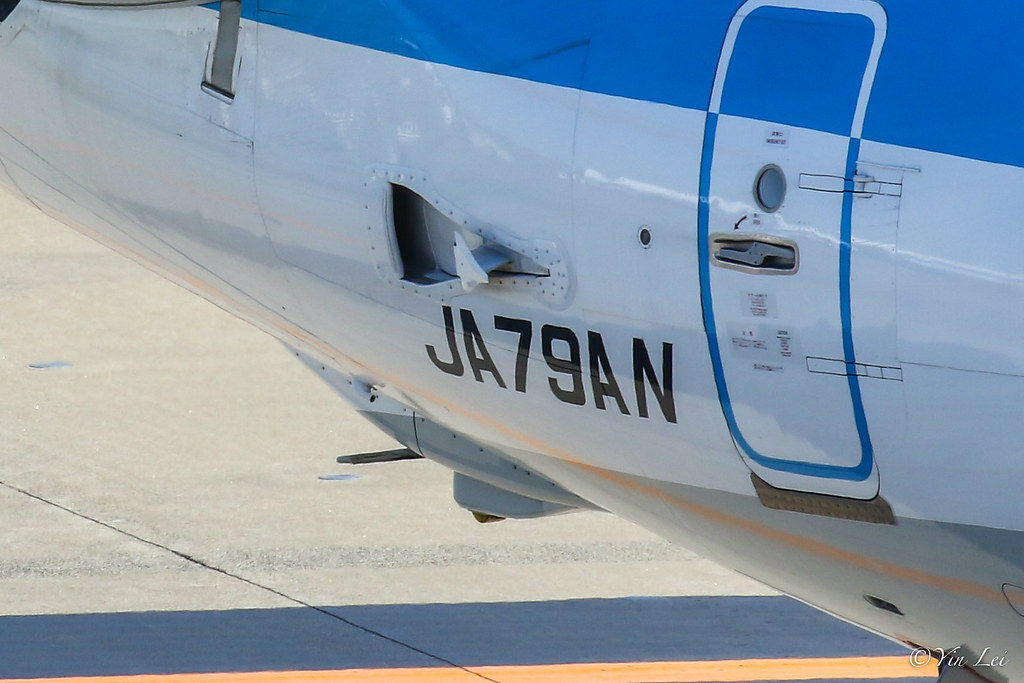 Here is a close-up photo for careful observation.
2018/04/14 Update Last year, I bought a book called “Mastering the Boeing 737”, which explains the inlet. I have copied the explanation below.
The vortex generator on the APU inlet door was added in 1977 to improve the APU's in-flight start performance. According to Boeing: This reverses the negative pressure area previously running through the APU, and aerodynamics help the starter choose during air starts. Later, a trailing edge hinged flap that can deflect inward by 25 degrees was added; it extends when the APU is starting or running.Searching through old photos, during the 2015 Hawaii Sightseeing Flight, I photographed an old 737-200 at Honolulu Airport, Registration N810TA, belonging to Transair, Delivered in October 1975, powered by two PW JT8D engines. Looking closely at the APU Air Inlet on the tail, sure enough, it lacks that small triangular vortex generator.

2018/07/28 Update
Checking my recent photos of the 737 MAX,
I discovered that the shape of the APU Air Inlet on the MAX has changed significantly,
It no longer has the bizarre irregular shape of the past, nor the vortex generator,
It is just a standard quadrilateral opening.
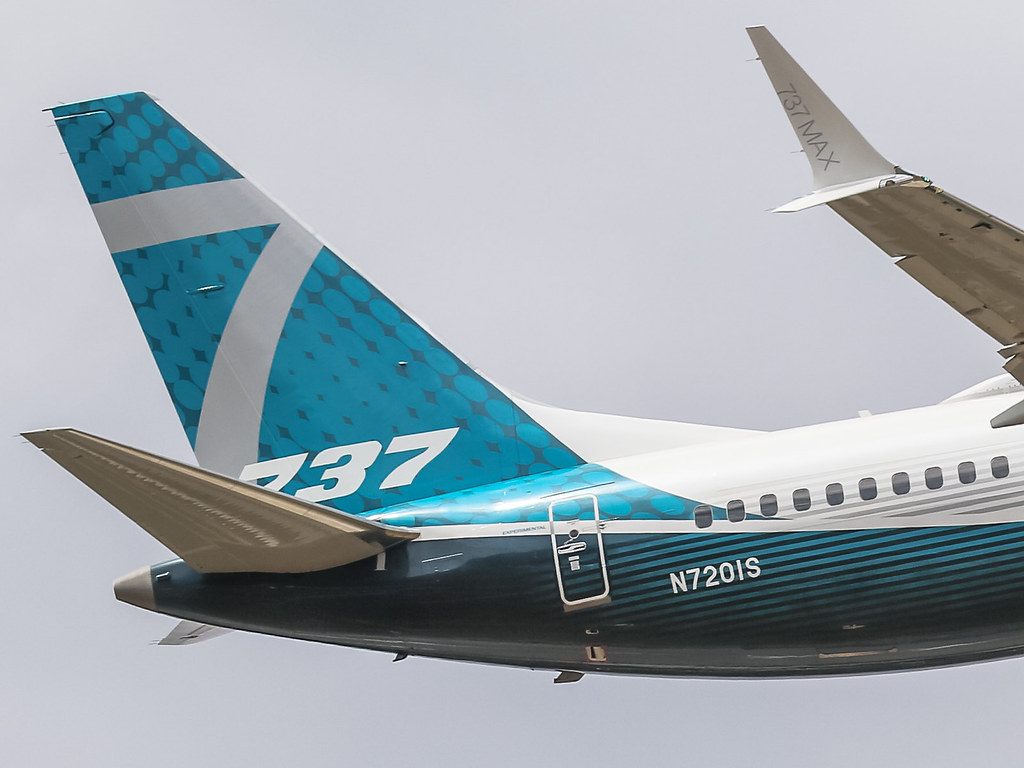

At the same time, you can see the tail shape of the MAX has also changed a lot, It has become a standard cone, The 737 system’s unique tail has evolved to the same shape as general passenger aircraft.
2021/07/03 Update The Boeing 737-200 N810TA introduced in this article crashed into the sea, so I guess we won’t be able to see it again in the future. Old photos of Transair Boeing 737-200 N810TA ditching into the sea
2021/07/31 Update
Posting an introduction to the APU intake and exhaust of the A320 for comparison
