Revisiting LUXURY FLIGHT
I visited LUXURY FLIGHT again recently; you can find the record of my last visit here. My first visit was mainly out of curiosity to see how their hardware equipment was, and since there weren’t many customers at the time, chatting with the shop owner felt quite nice. This time, I wanted to use their equipment to practice manual flying, so I chose to fly for one hour each in the Baron B58 and the 737 NG simulators, practicing completely under manual control.
I started with the Baron. This simulator uses X-Plane, but it felt tuned to be overly sensitive, which I wasn’t used to at all. Additionally, I wasn’t very familiar with this glass cockpit environment; after all, I still prefer the old analog instruments.
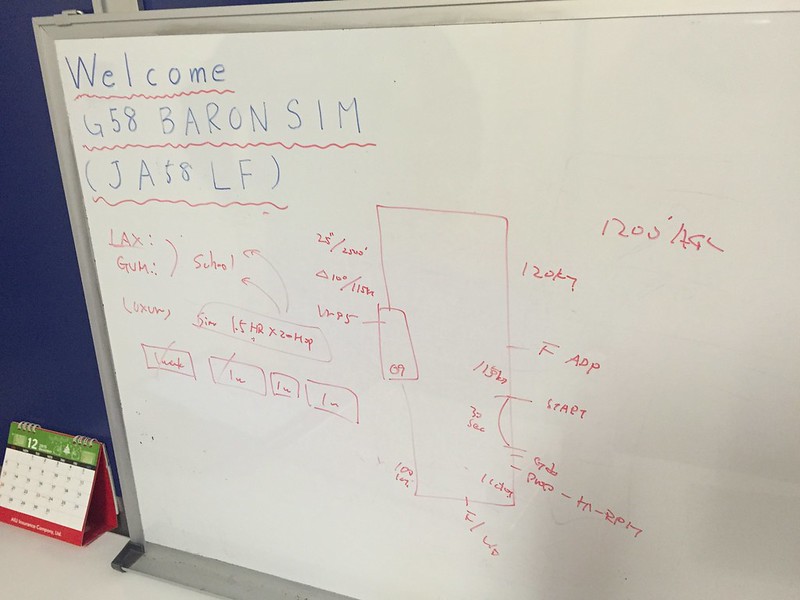
The practice content was relatively simple: just flying a few traffic patterns at Kobe Airport, adding touch and gos. The flight altitude was set to 1200ft AGL. On the downwind leg, the speed was 120kt; at this point, the throttle should be 2500 RPM, and the manifold pressure (PM) 25 inches. After passing the runway threshold, deploy Flaps and reduce speed to 115kt, starting a 30-second timer. After 30 seconds, lower the landing gear, push the throttle to maximum, and turn onto the base leg. On the base leg, lower another stage of Flaps, and after turning onto final, control the speed to 100kt. On the base and final legs, since Drag increases significantly, you must constantly increase the throttle to compensate.
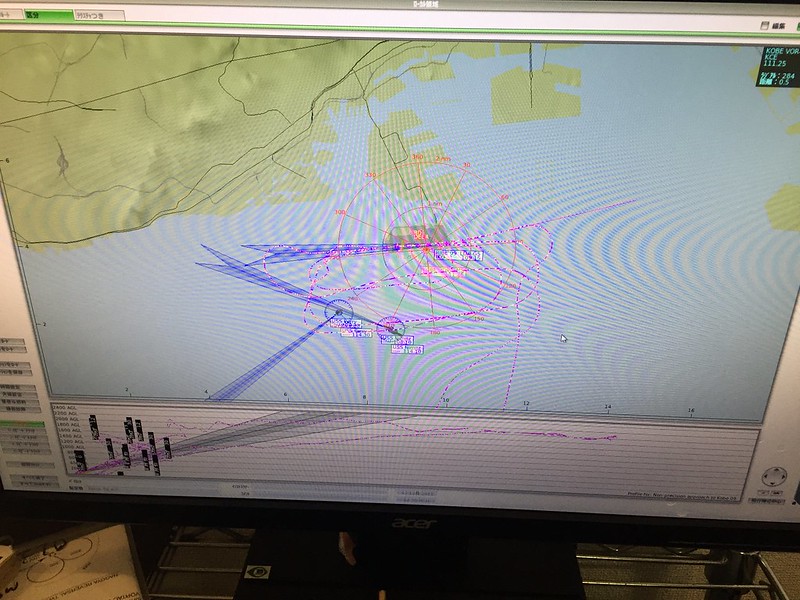
Looking at the flight path below, you can tell the control feel was extremely unfamiliar;
I couldn’t maintain stable control of altitude or speed. Looking at this photo feels a bit embarrassing.
However, I did learn something, such as the fact that I am too casual with yoke control when flying at home; this is a bad habit. I should grip it firmly and not let the Yoke shake easily, No matter how much feedback force there is, I should try my best to keep it stable, and adjust the trim at the appropriate time. Next time I have a chance to come, I must redeem myself!
Next was the 737. The practice content was even simpler: just straight and level flight at an altitude of 6000 feet. The engines were set to Auto Throttle, with N1 at 91.6. The target flight speed was maintained at 240, altitude at 6000, under completely manual control, so I could only rely on adjusting the pitch to maintain altitude.
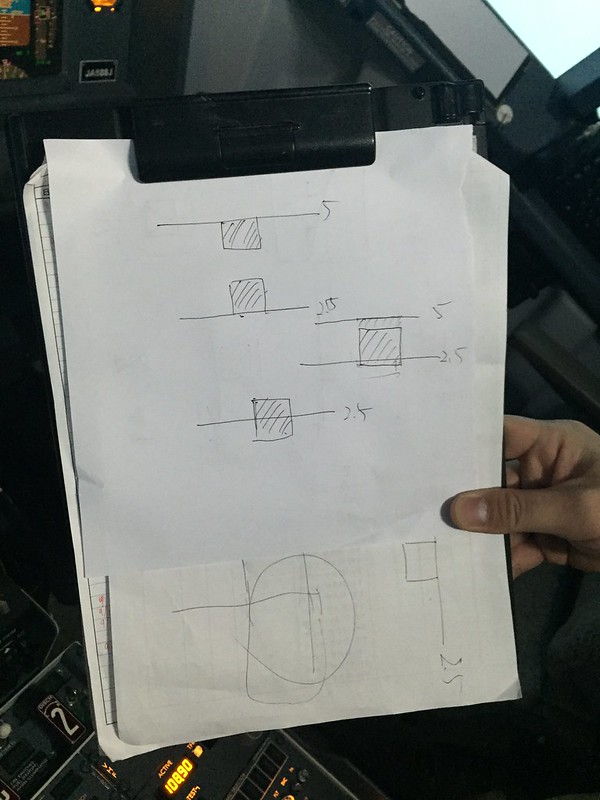 According to the schematic hand-drawn by the shop owner, the pitch for Level Flight is 2.5 degrees.
When climbing, keep the FD's square on the 2.5-degree line; at maximum, the top of the FD should not exceed the 5-degree pitch line.
When descending, place the top of the square against the 2.5-degree line.
Only this way can the requirement for stable flight be met.
According to the schematic hand-drawn by the shop owner, the pitch for Level Flight is 2.5 degrees.
When climbing, keep the FD's square on the 2.5-degree line; at maximum, the top of the FD should not exceed the 5-degree pitch line.
When descending, place the top of the square against the 2.5-degree line.
Only this way can the requirement for stable flight be met.
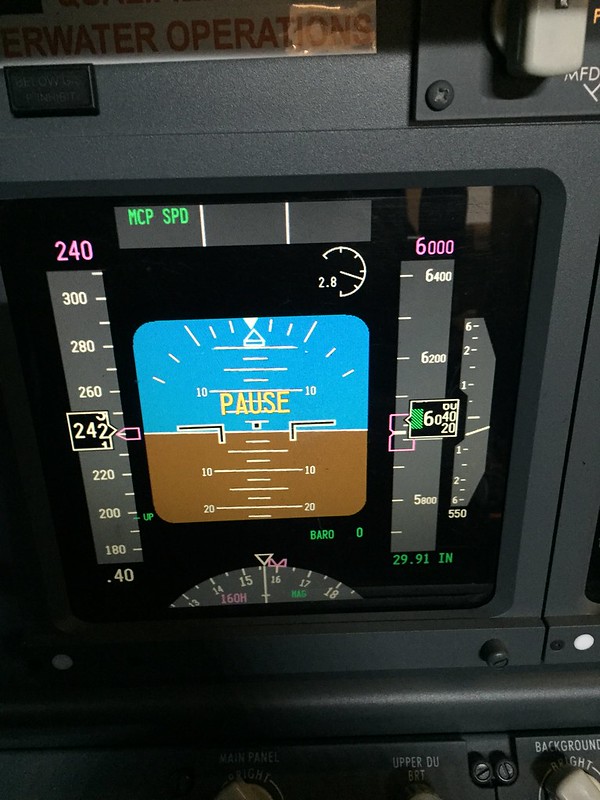
It’s easy to say, but truly difficult to do. If the force is slightly too strong, the pitch angle will exceed several degrees.
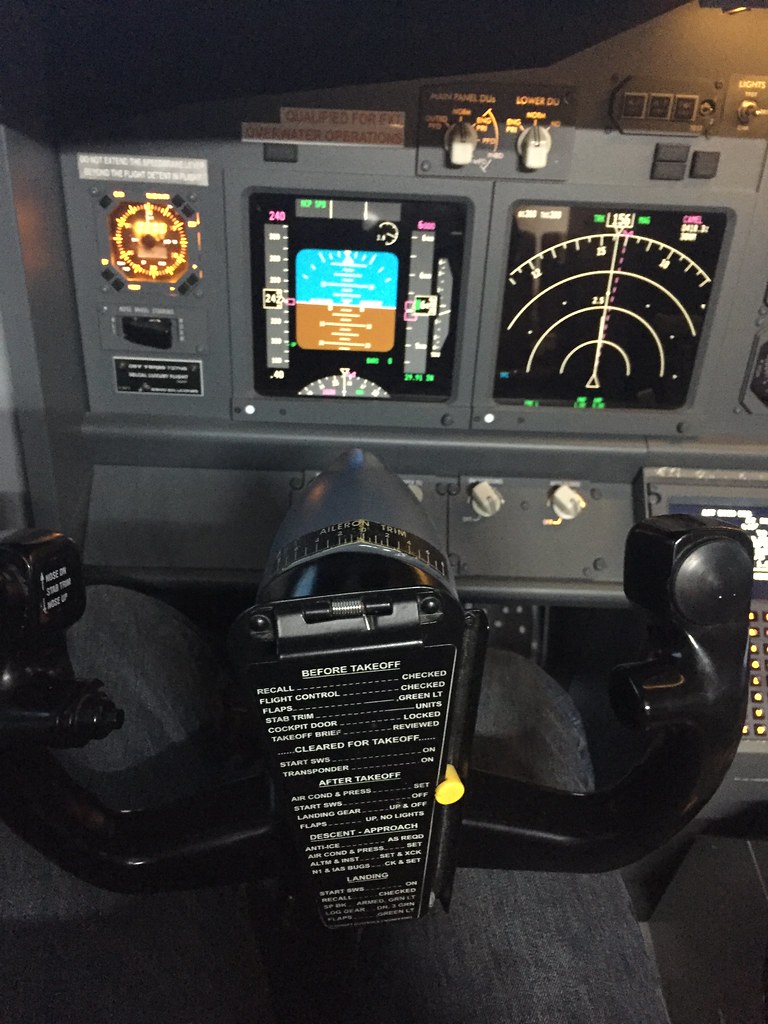 The 737 yoke is naturally a bit heavy. Constantly pulling on the stick,
my shoulders started to ache after a short while, and then the yoke felt increasingly heavy. Manipulating it well is exhausting; I was worn out.
This is the difference between flying for fun and real flight training.
The 737 yoke is naturally a bit heavy. Constantly pulling on the stick,
my shoulders started to ache after a short while, and then the yoke felt increasingly heavy. Manipulating it well is exhausting; I was worn out.
This is the difference between flying for fun and real flight training.
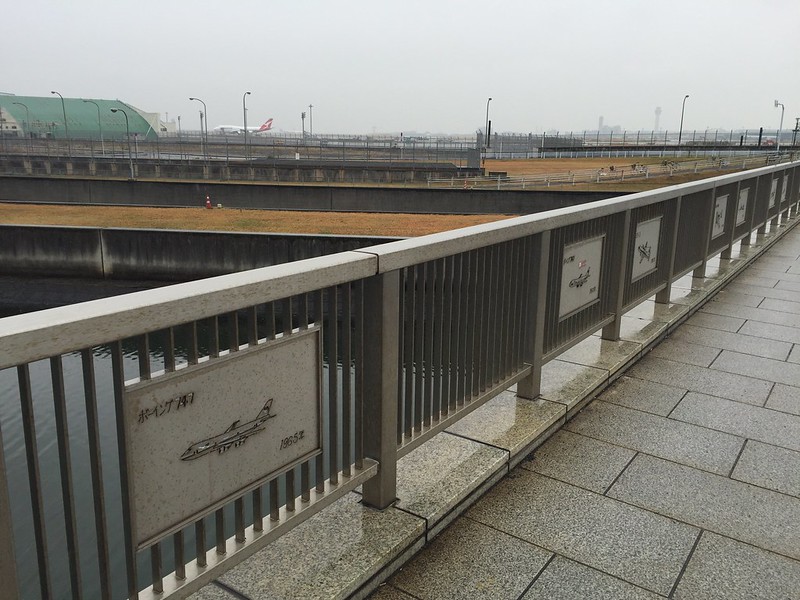
Walking out of the shop and heading forward for 10 minutes is Haneda Airport, but it was drizzling,
so after a short stroll, I didn’t stay any longer and headed home.
End