Visiting the 737NG Simulator at LUXURY FLIGHT
I’ve known about this simulation shop, LUXURY FLIGHT, for a few years, but since it was originally located in Saitama, it was a bit far, so I never went. Recently, it moved to be near Haneda, making transportation much more convenient. So, I took advantage of a morning to go there and practice flying the 737NG for an hour.
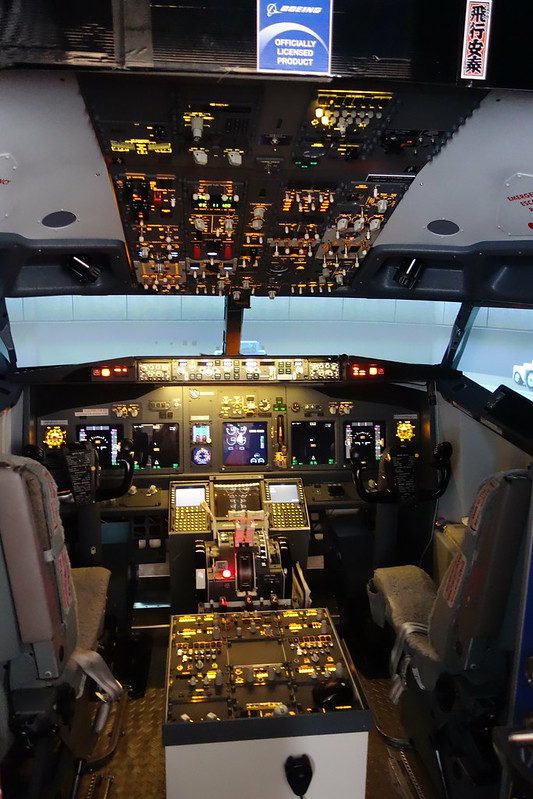
There are two simulators at LUXURY FLIGHT: one is a 737NG, and the other is a Beechcraft Baron B58. I signed up for the free seminar about the Baron held earlier this month.
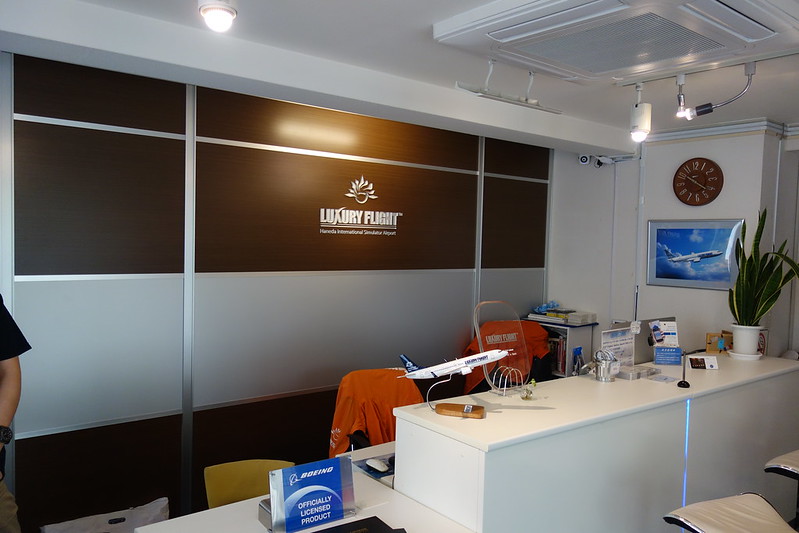
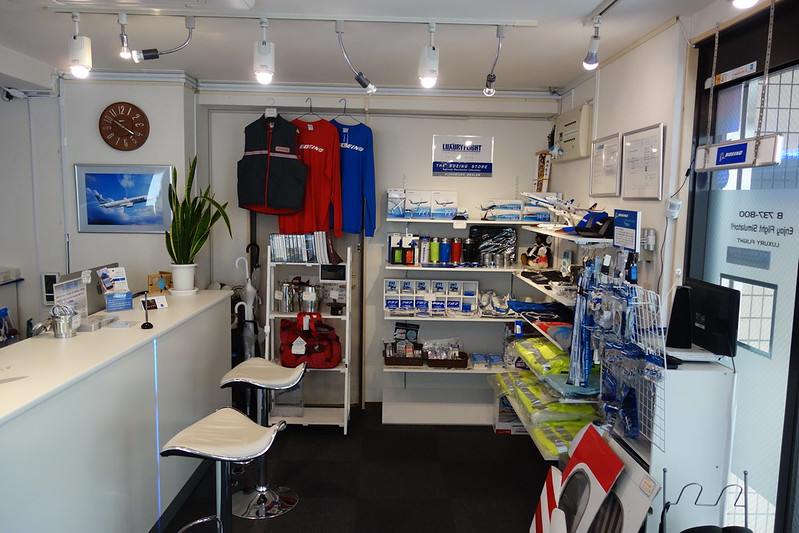
The interior of the shop is very clean and tidy. You can see quite a few aircraft models and aviation-related memorabilia for sale.
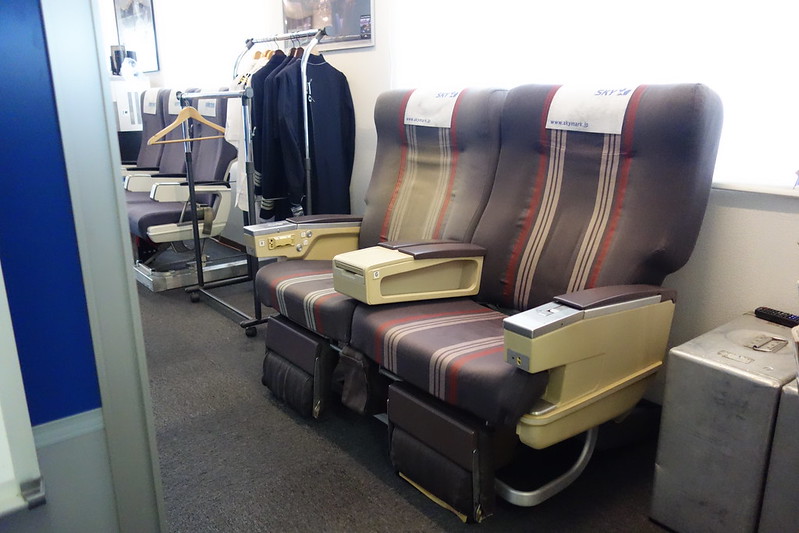
 The sofa in the waiting area is, of course, made from actual seats used in an aircraft.
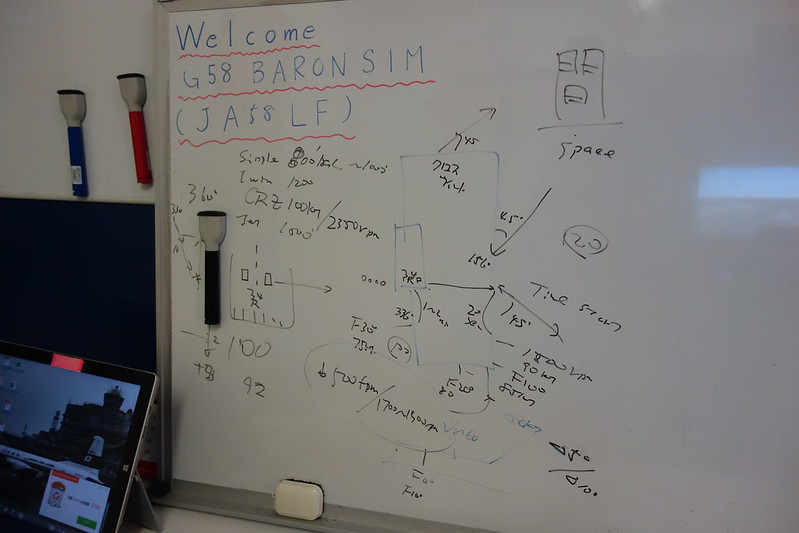
I participated in the Baron’s free seminar first. It was conducted in a ground school format.
Captain H, a retired captain with over 30 years of flying experience, gave me a one-on-one explanation, so I didn’t fly this simulator.
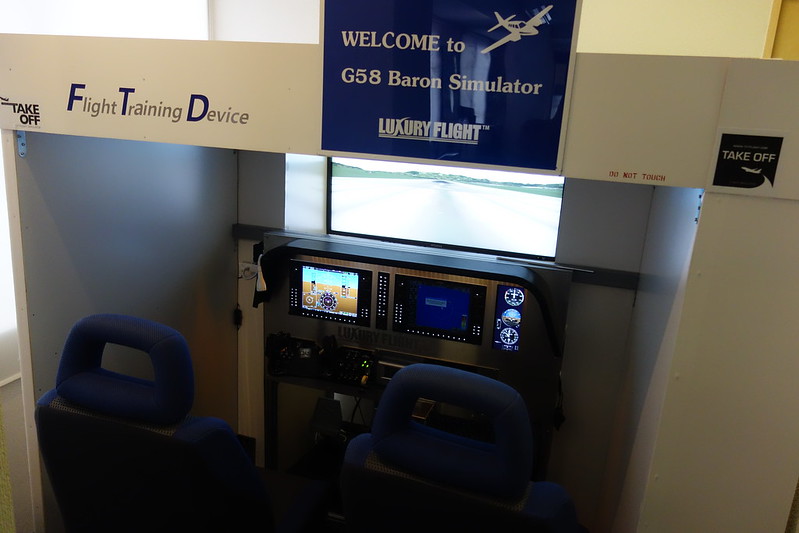
Mr. H previously worked mainly at Chofu Airport and Yao Airport. He has flown dozens of types of general aviation aircraft. According to him, he has flown basically every general aviation aircraft type visible in Japan. Being able to consult directly with such a senior pilot is a precious opportunity.
During the 30-minute briefing, there were several interesting and memorable topics:
- Regarding the sensation of wind during flight: Due to the weathervane effect caused by crosswinds acting on the fuselage, the pilot’s buttocks are quite sensitive. Often through this sensation combined with past flight experience, one can roughly mentally calculate the drift angle, and it is basically accurate.
- Communication during flight is very important. For example, constantly communicating with the weather and the aircraft. Observing the temperature tells you if it’s high pressure or low pressure today; judging the load on the engine by its sound means reducing the throttle to lessen the burden. In general corporate work, people with good interpersonal skills and good communication with their surroundings tend to succeed. This point is common to piloting.
- The attitude of small business jets in the air is very sensitive. For example, if a passenger walks to the lavatory at the back, the center of gravity shifts backward, and the pilot can clearly feel this change, needing to apply some pressure on the yoke. Also, in a smaller aircraft like a 172, if a passenger in the back seat falls asleep and shifts their body, the pilot can feel this slight sway of the fuselage.
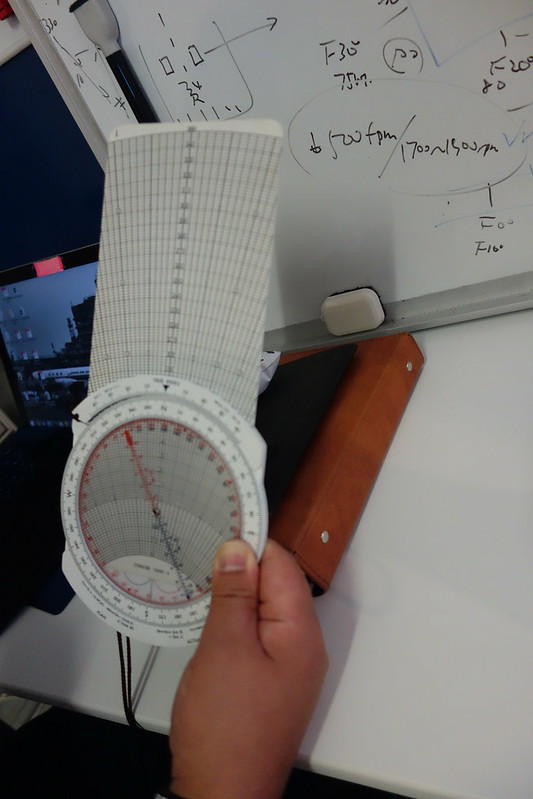
- Since flying in Japan often involves over-water operations, Mr. H uses a plastic flight computer, not a metal one, because metal rusts due to humidity!
- Flight control requires “Ma” (間), meaning a sense of Space (lead time). My understanding is that this corresponds to “anticipation” in Chinese. For example, after a control input, whether it’s control surfaces or the engine, it takes several seconds or longer to affect the aircraft’s attitude. This “Ma” can only be acquired through experience; it cannot be mastered by reading books or listening to lectures alone.
Next, I flew the 737NG with the shop owner, Mr. K. I asked about the hardware first. To my surprise, every component of this simulator comes from a different manufacturer. According to Mr. K, since every manufacturer’s products have their pros and cons—this company’s MCP is good, that company’s FMS is good—he adopted a method of purchasing them separately. For instance, regarding the 737 products used by Flight from Flightdeck Solutions (FDS), he only selected one component from them. I believe assembling these components must have taken countless effort.
When he bought it, the yen’s exchange rate was still relatively high, so it cost about 15 million yen in total. But now that the yen has fallen sharply (a few years ago it was 80 yen to the dollar, now it’s 120 yen), if he were to buy it now, he probably couldn’t afford it. The flight software used is FSX. The display utilizes three projectors. To ensure display performance, he used a total of eight computers!!! The specs of each machine are very high, with one costing 280,000 yen. That’s impressive.
Additionally, since it has been open for several years, most visitors experiencing the flight have no piloting experience. Most choose the cheapest 15-minute or 30-minute simple flights. Due to their lack of experience, some people operate the controls roughly and violently, resulting in damage to the equipment, which affects the business.
Furthermore, the shop’s business relies mainly on repeat customers. Because Mr. K and Mr. H are experienced, they can provide in-depth explanations to guests, so guests who truly love flight simulation join the membership and visit frequently. However, generally speaking, although many people love aircraft, those who enjoy flight simulation are a minority among aviation enthusiasts. Therefore, the simulator market isn’t very large. According to him, it’s “just enough to make a living”—I don’t know if he’s being modest.
After chatting for ten minutes, I felt that Mr. K is a standard Home Cockpit geek. He reads flight manuals very deeply, interacts frequently with active pilots, and his aviation knowledge is indeed very rich.
Alright, into the simulator.
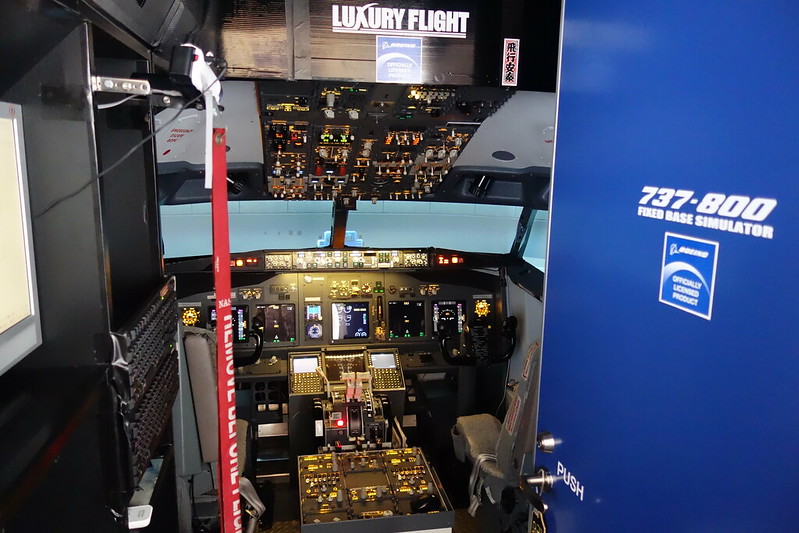 Hmm, the 737 feel is indeed unique. It’s not as clean and refined as the A320, but it is full of a blend of classical and modern styles. It has a distinct flavor. So, here are a few detail shots.
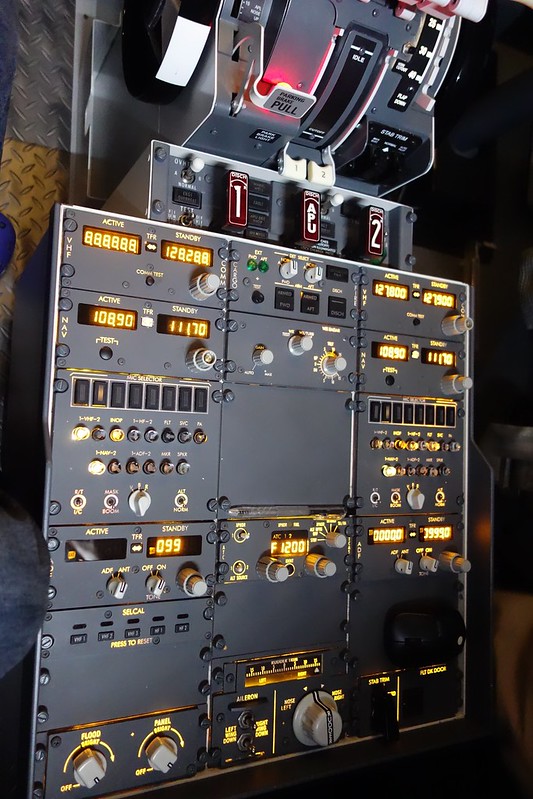
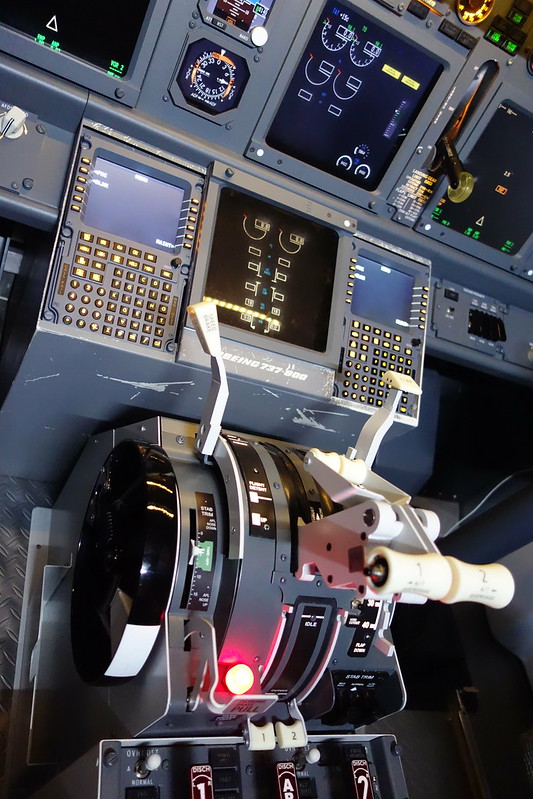
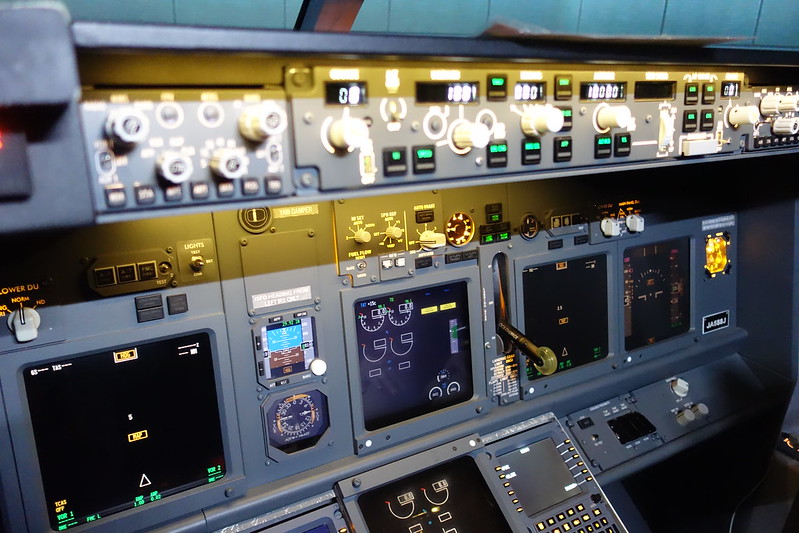
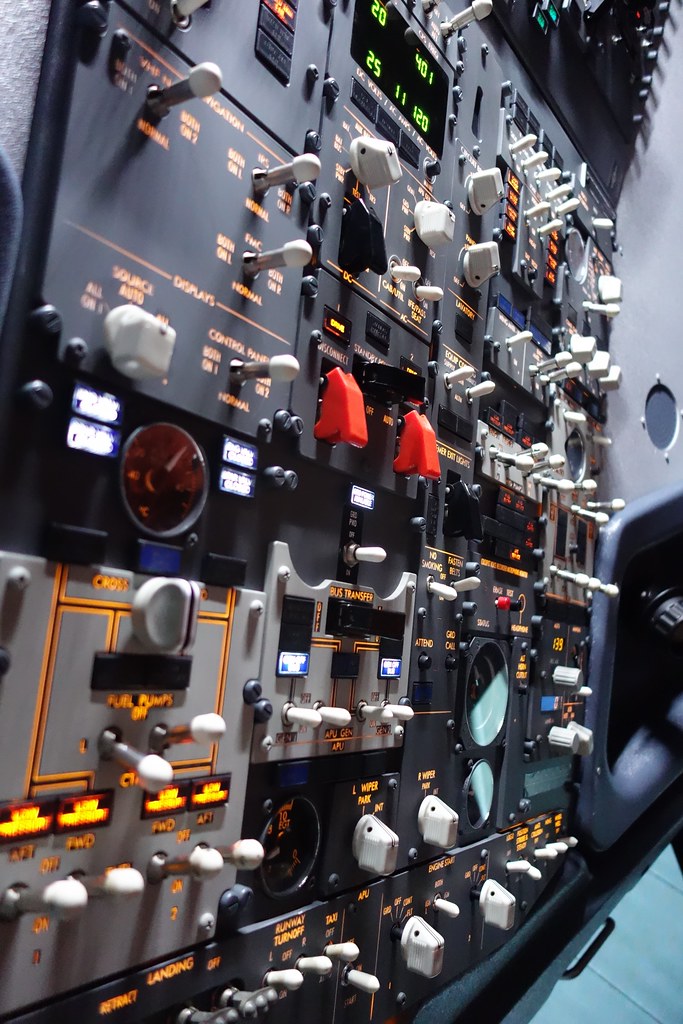 Those capped switches on the overhead panel need to be pulled up before they can be moved to a position.
The specific procedure was similar to my time at JFlight. Mr. K, the owner, sat in the right seat and gave commands, and I executed them, basically following the checklist.
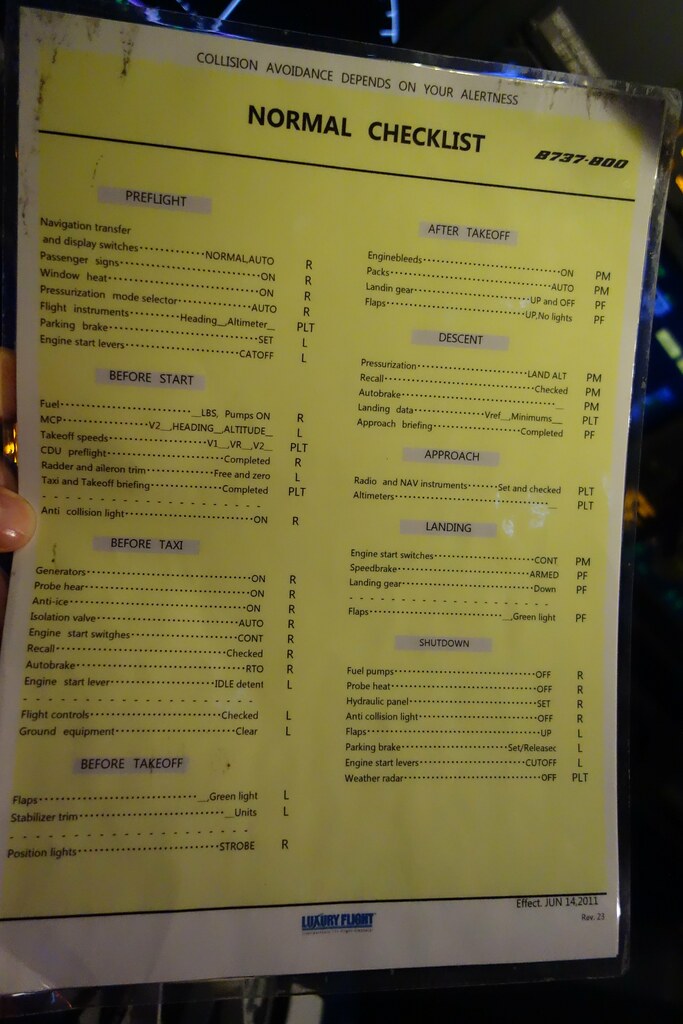 First, Preflight, overhead panel check. Inertial Navigation startup takes 8 minutes. Various switches, APU is already started.
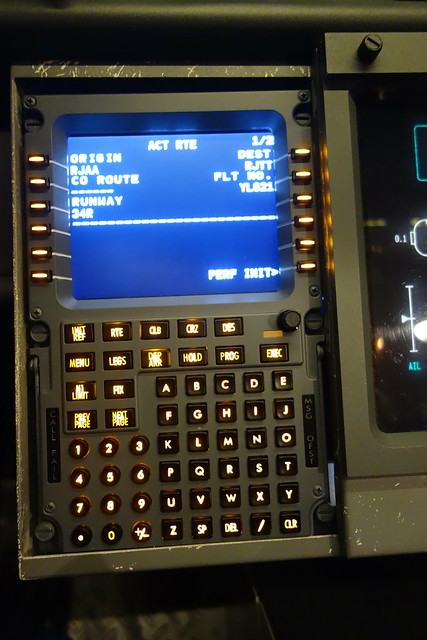
For the FMS flight plan, I chose the short route from Narita to Haneda again, RJAA-RJTT, taking off from 34R.
First, Preflight, overhead panel check. Inertial Navigation startup takes 8 minutes. Various switches, APU is already started.
For the FMS flight plan, I chose the short route from Narita to Haneda again, RJAA-RJTT, taking off from 34R.
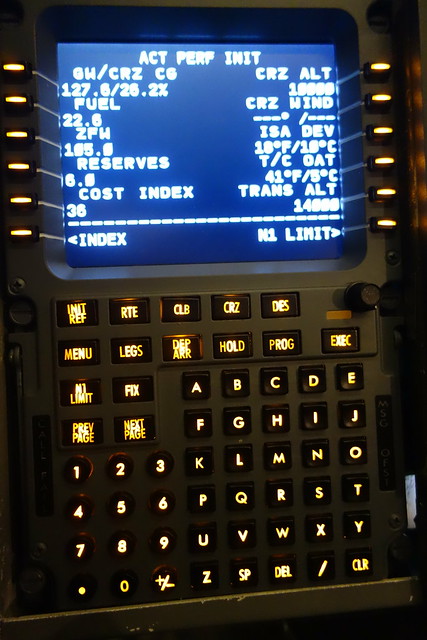
 Performance page: CG 26.2%, Gross Weight 165 tons, Fuel 22 tons, Reserve 6 tons, Cruise Altitude 10000ft, Cost Index 36, OAT 5 degrees.
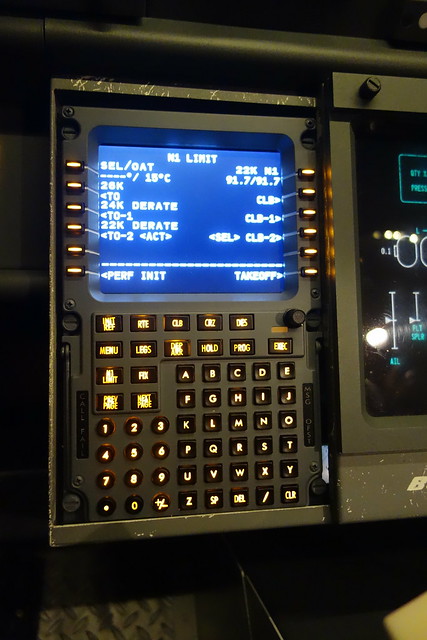
 Reduced power/thrust takeoff selected TO-2, and Climb also automatically selected CLB-2.
 Trim setting is manual,
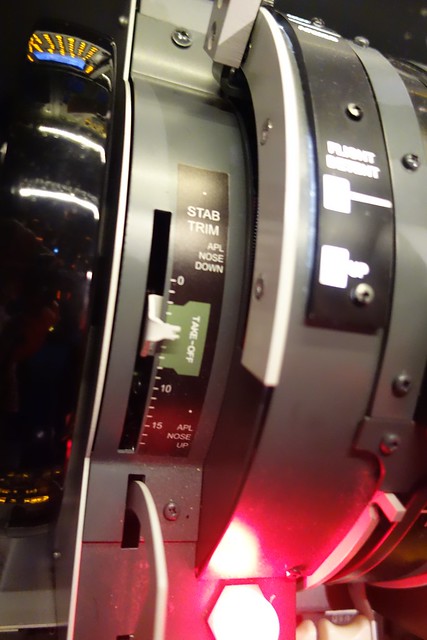 and the result can be seen on the EICAS.
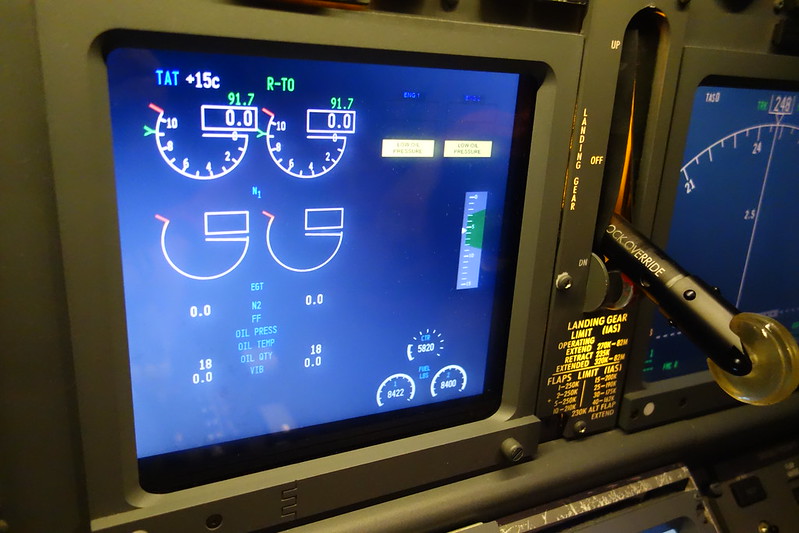 Takeoff page shows Flap 5, N1 91.7, Trim 4.95, V1 128KT, Vr 129KT, V2 139KT.
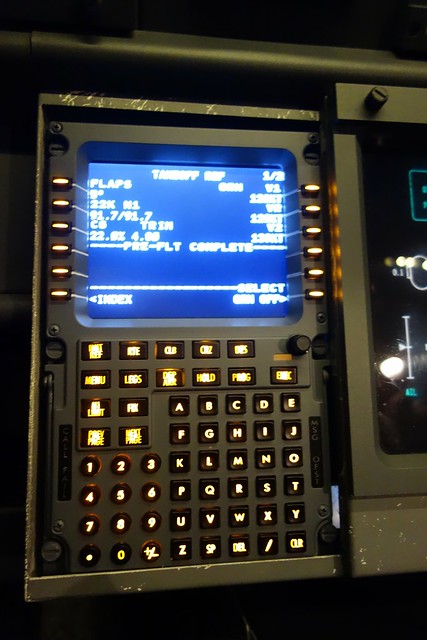 I forgot to take a photo after setting the MCP: Heading 336, 10000ft, FD ON and AP OFF.
The following operations were busy, with no time to take photos. Pushback and Before Start.
Turn on fuel pumps, check MCP, etc.
Release brakes, start pushback, start engines.
Then execute Before Taxi, going item by item.
Next, Taxi. Add power to N1 35%. The steering wheel control felt better in hand than before.
It looks like the practice at JFlight last time had some results, but don’t forget to keep your right hand on the throttle.
Taxied to the threshold of 34R, aligned heading to 336, centerline aligned with the right leg.
Throttle up to 40%, Before Takeoff checklist.
Roll, Takeoff, Rotate. Pitch was about twenty-something degrees. Then turned and continued to Climb following the FD commands.
I hand-flew following the flight director for a while. This was my first time flying FSX, and I felt the aerodynamic model of this software is very stable.
Mr. K kept praising my flying. Perhaps after several simulator sessions, I’ve become somewhat accustomed to this indescribable feeling of control.
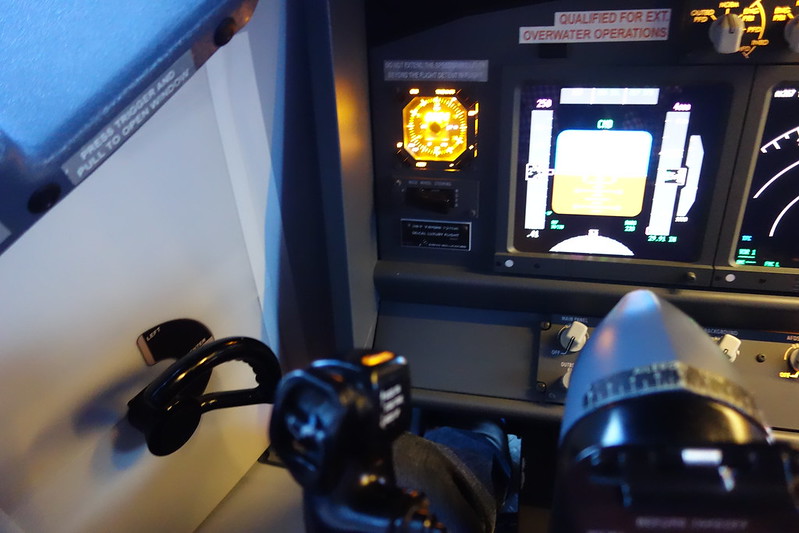
After reaching cruise altitude, I took my hand off the yoke, engaged AP, and took a few commemorative photos.
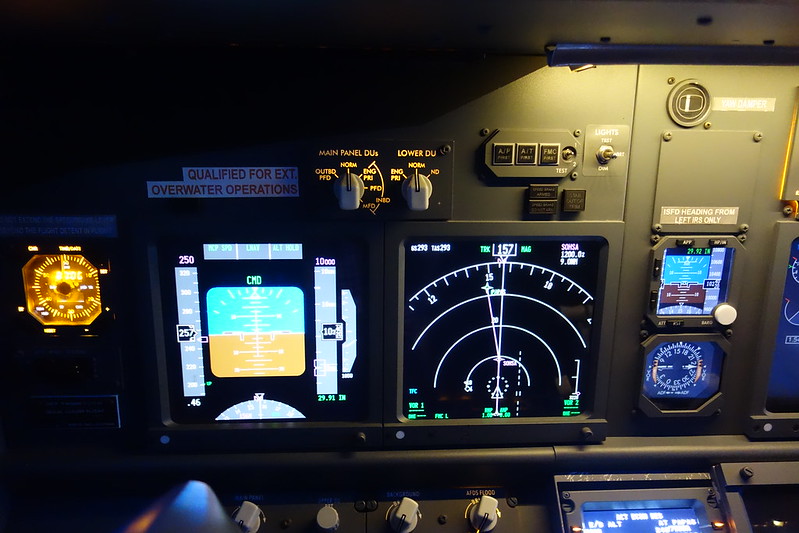
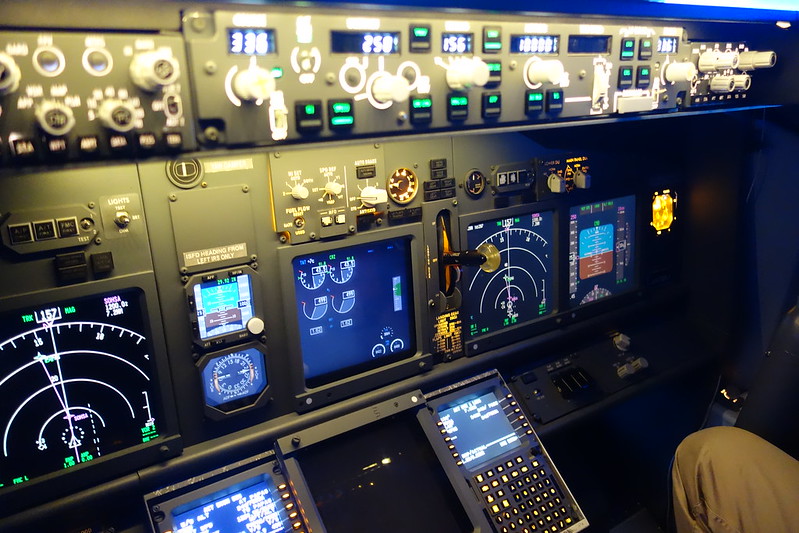
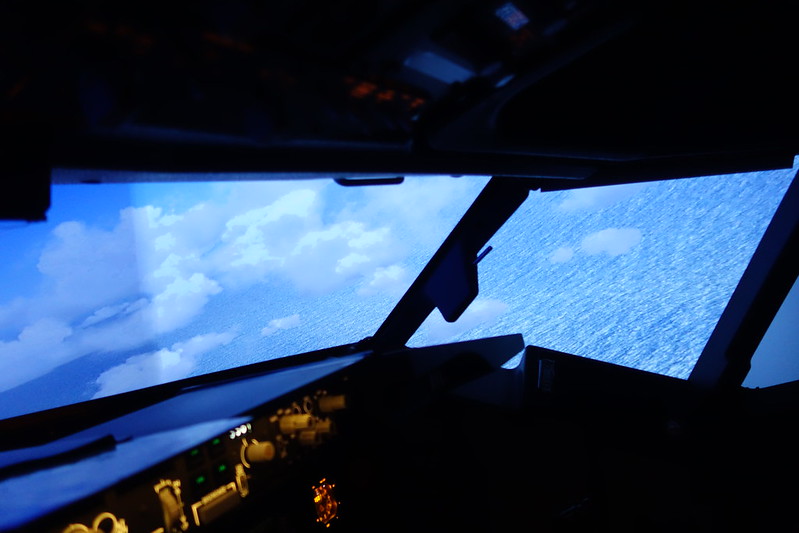 The sun's reflection on Tokyo Bay was beautiful.
Then, Approach preparation.
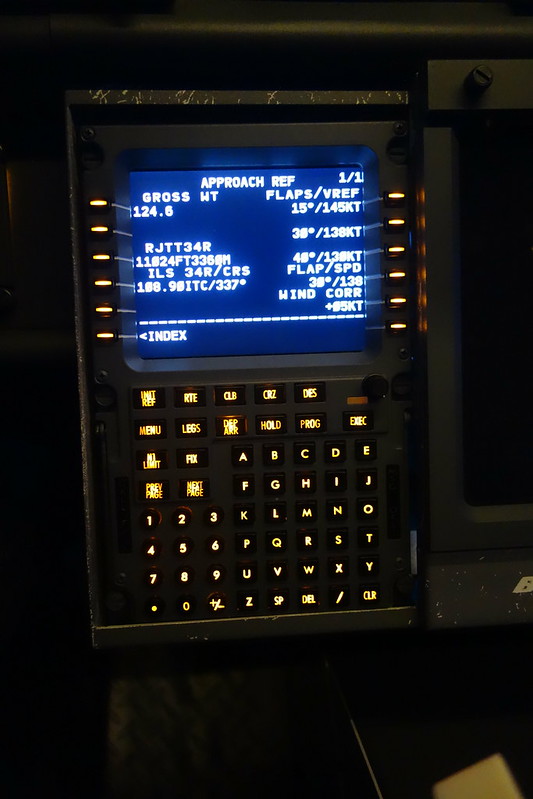 The Decision Height was Baro 220.
Soon, Haneda was right before our eyes, and the clouds looked lovely.
The Decision Height was Baro 220.
Soon, Haneda was right before our eyes, and the clouds looked lovely.
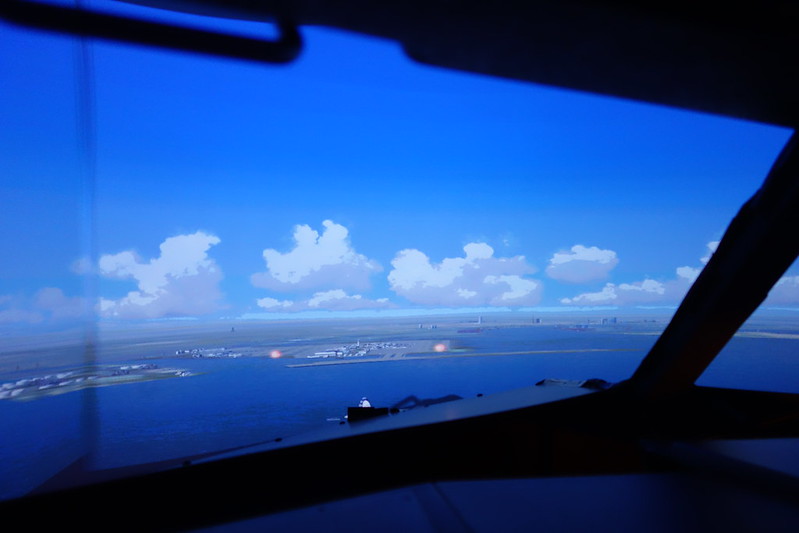
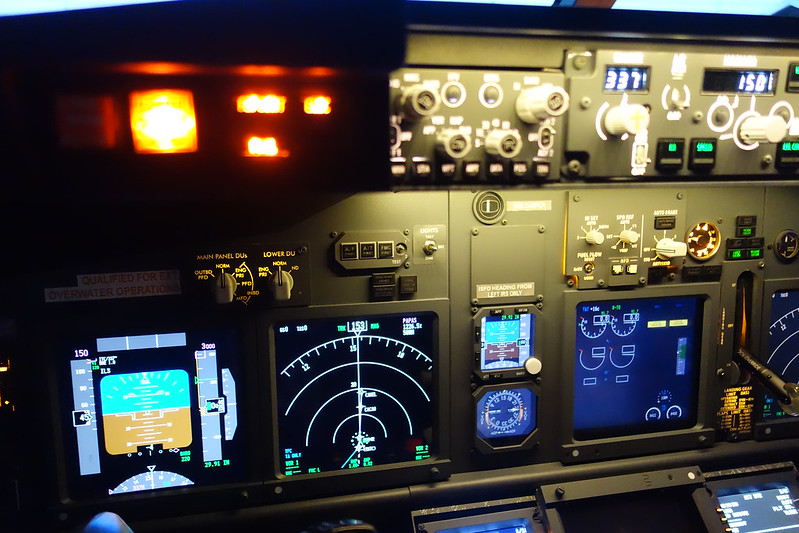
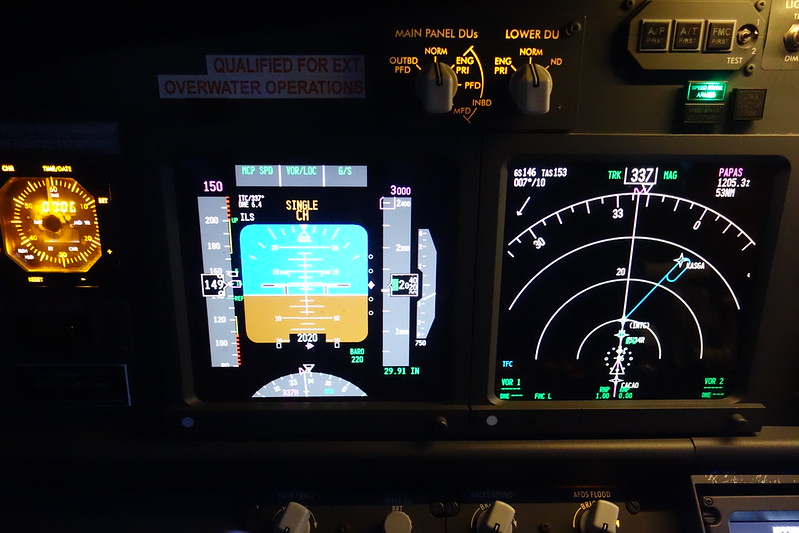 Disengaged AP on the yoke around altitude 500.
The landing was still not good; I flared too early, went to idle too late, bounced hard, and the reverse thrust timing was late. I need to find opportunities to continue practicing in the future.
Disengaged AP on the yoke around altitude 500.
The landing was still not good; I flared too early, went to idle too late, bounced hard, and the reverse thrust timing was late. I need to find opportunities to continue practicing in the future.
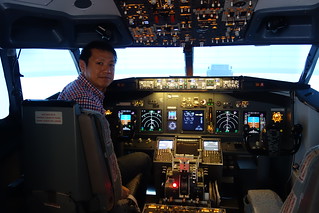
Finally, a commemorative photo.
To summarize my thoughts:
- It was my first time flying a 737. The procedures feel very different from the CAE Boeing 777 and A320 full-motion simulators I’ve experienced before. I need to find time to read the manual more in the future.
- I feel a bit more confident about ground taxiing, specifically regarding the tiller; when centering after a turn, you can’t snap it back all at once; you need to apply force gradually.
- I’m more familiar with the feeling of gentle yoke control required, but I can’t find the precise words to describe it. As Mr. K says, you must treat the aircraft as gently as you would treat a woman. Hehe, I understand, but isn’t that still a bit too abstract?
- Since I signed up for a Luxury Flight membership (membership fees are currently discounted), I plan to go practice touch & go again after a while.
- Mr. K’s guidance was great. It felt like flying with an experienced captain. I truly enjoyed the fun of flight simulation.
The End
Postscript
This flight practice session also appeared on Boss K’s blog. Although it’s a bit embarrassing, let me introduce it.