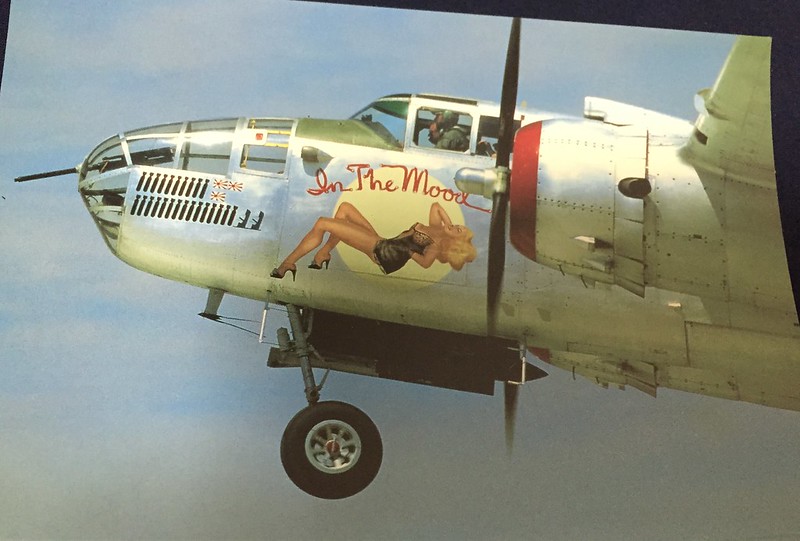
Lecture Notes on Aerial Photography by Professional Photographer Hideki Motoi
I recently had the opportunity to attend an aviation photography lecture by Mr. Hideki Motoi, and I have summarized my notes from the session below.
Mr. Motoi is a professional photographer with over 50 years of experience in aviation photography. He has serialized photography knowledge in the famous enthusiast magazine Kokuu Fan (the editor-in-chief was also present at this lecture) for many years, and I have known of him for a long time. It was a great honor to listen to his full 3-hour lecture in person. By the way, there were fewer than 30 participants in this small lecture, mostly middle-aged and elderly people aged 50-60. I was considered young in the group; it seems the age group of aviation photography enthusiasts is trending towards the older demographic.
First, Mr. Motoi proposed a viewpoint that enjoying each photograph involves four stages: “Shooting” -> “Selecting” -> “Post-processing” -> “Sharing with others” Participating in this entire process is where the true joy of photography lies. This perspective is quite interesting. The task of “Selecting” is likely the most difficult, as it requires a foundation of artistic vision and expressive techniques. Also, when photographing aircraft, if you can emphasize the curved highlights on the fuselage, it often yields excellent results.
Next, Mr. Motoi introduced the equipment he uses and his various setting methods, listed below one by one.
Camera: He currently mainly uses a Nikon D810, with prime lenses 300 f4 and 35 f1.8, and a zoom lens 70-200 f2.8. Regarding the question of Full Frame vs. APS-C, he strongly recommends Full Frame from the perspective of pursuing image quality.
Regarding pixel count, he believes that generally 12 megapixels is sufficient for standard professional printing use. Therefore, compared to high-pixel cameras, a good lens is more important.
Regarding Format Settings, he uses 14-bit RAW, which is beneficial for tonal gradation between light and dark. Also, despite using RAW, exposure parameters must absolutely not be treated carelessly.
Regarding Autofocus Area, he generally selects the sharpest part of the aircraft, such as the cockpit windshield, though this naturally depends on the composition. He frequently uses auto-tracking modes and constantly adjusts the focus point based on the aircraft’s flight status.
Regarding Shutter Speed, the key is to consider what to blur based on the subject! For example, when on the ground, blur the background buildings and trees; when in the air, blur the clouds; when there are two aircraft, blur one of them, etc. That is to say, to convey a sense of motion, if it’s just a bare plane under a blue sky, the image looks monotonous and lacks depth, making it uninteresting. Of course, purely from an aircraft enthusiast’s perspective, seeing various details on the airframe is also a form of satisfaction, but one must pay attention to the blurring effect. He frequently uses shutter speeds between 1/125 and 1/800; if it’s just against a blue sky background, 1/1000 is also acceptable.
Regarding Picture Control, he generally customizes it. Taking the D810 as an example, based on the Flat setting, he selects Outline +2, Clarity +2, Contrast +2, Saturation +1.5.
Regarding Exposure, Aperture and Shutter Speed are generally Manual, but ISO is set to Auto, so it could be called a semi-automatic mode. Of course, under certain special conditions, such as when the background is too bright or the aircraft’s landing lights are on, underexposure often occurs, so the ISO must also be set manually in these cases.
Regarding Metering Mode, he uses the D810’s Highlight-weighted Metering to ensure the brightest parts of the image are not overexposed. Speaking of which, it seems my Canon camera doesn’t have this function…
Regarding Exposure Compensation, due to the highlight-weighted metering mentioned above, compensation is generally not needed when photographing aircraft. However, when photographing scenery, he might use -0.3, and for people, +0.3.
Regarding the camera’s Active D-Lighting, he generally does not use it, but will use this function during software post-processing.
Regarding White Balance, he generally keeps it in Sunny mode when shooting outdoors, but uses Auto mode when indoors or shooting under multiple light sources.
Regarding ISO, it is certainly best to use the base sensitivity. He generally stays between 64-1600 during the day and below 8000 at night.
Regarding Noise Reduction, there are two types: Color noise (often yellow-green) and Luminance noise (often black spots). He generally does not use the camera body’s noise reduction function, preferring to handle it with software during post-processing, in the order of color noise reduction first (e.g., -2), then luminance noise reduction (e.g., -1).
Regarding Save Format, it is naturally RAW. Especially since post-processing software is constantly evolving, editing photos taken in the past with new software can often yield better results.
Regarding Lens Focal Length, generally if it is over 400mm, the problem of heat haze (kagerou) starts to become serious, so 300mm is generally sufficient.
Regarding the question of Zoom vs. Prime, if pursuing image quality, prime lenses are undeniably better, so one can only choose based on needs—it is impossible to have the best of both worlds. Also, do not be superstitious about old lenses; technology is advancing, so you must use new lenses designed for modern bodies.
Regarding Aperture, one cannot just consider the issue of depth of field; one must strongly be aware of its impact on optical performance! That is, changes in aperture have a huge impact on image quality, including resolution, chromatic aberration, lens flare (ghosts, flare), focus shift, and uniformity of imaging quality. Stopping down the aperture improves resolution and uniformity of imaging quality the most, and somewhat improves chromatic aberration and lens flare, but has little effect on focus shift. When shooting, he only uses a wide aperture in special situations, such as when wanting a softer effect and flare. If he wants a sharp effect, he reduces the aperture by 2-3 stops, generally around f8. However, sharpness and contrast start to degrade from f11, and the effects of diffraction deteriorate rapidly at f16 and above. Therefore, when forced to use f16, he will edit for sharpness during post-processing.
Regarding Vibration Reduction (VR), since it has absolutely no effect on image quality, he basically uses Nikon’s Sport VR mode.
Regarding Teleconverters, since they affect imaging quality, he rarely uses them.
Regarding Filters on the lens, for digital cameras, unlike film cameras of the past, UV filters etc. do not need to be considered. Since they affect imaging and have side effects like flare, he rarely uses them as well.
Regarding Panning Photography, pay attention to using your forehead as a pivot point; this ensures handheld shooting is stable. Also, when moving your body to track the aircraft’s flight, be careful not to move your feet, but to rotate your waist.
End
Postscript 2015/6/12
Today I received a postcard from Mr. Motoi. Hehe, thanks a lot.