EDTO vs ETOPS
Looking back at photos I took before, I noticed that this Asiana A330 has “EDTO” lettering on the fuselage.
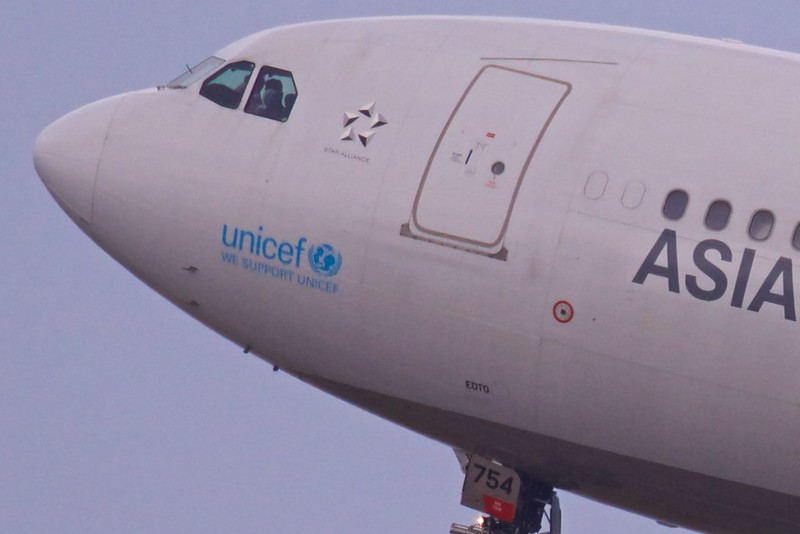
I only knew about ETOPS before; it turns out there is also EDTO. Let’s look at their definitions. The source is from the official website of ICAO.
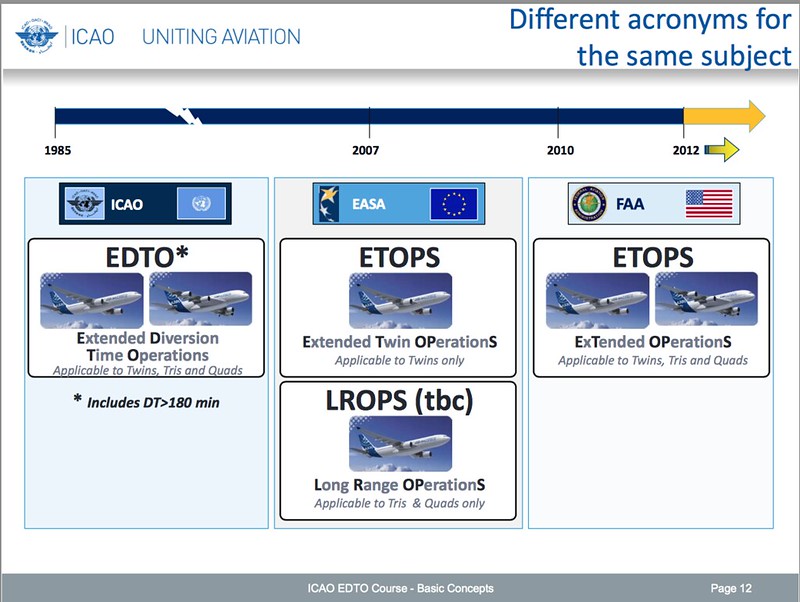 ETOPS and EDTO are different terms for the same thing: "Extended Diversion Time Operations".
ICAO calls it EDTO (Extended Diversion Time Operations), including twin, tri, and quad-engine aircraft.
Europe calls it ETOPS (Extended Twin OPerationS), specifically referring to twin-engine aircraft; for tri and quad engines, they use LROPS (Long Range OPerationS).
The US FAA's ETOPS (ExTended OPerationS) also includes twin, tri, and quad-engine aircraft.
(I remember it used to be called Extended-range Twin-engine Operational Performance Standards; it seems the definition of the name has evolved too.)
ETOPS and EDTO are different terms for the same thing: "Extended Diversion Time Operations".
ICAO calls it EDTO (Extended Diversion Time Operations), including twin, tri, and quad-engine aircraft.
Europe calls it ETOPS (Extended Twin OPerationS), specifically referring to twin-engine aircraft; for tri and quad engines, they use LROPS (Long Range OPerationS).
The US FAA's ETOPS (ExTended OPerationS) also includes twin, tri, and quad-engine aircraft.
(I remember it used to be called Extended-range Twin-engine Operational Performance Standards; it seems the definition of the name has evolved too.)
According to the Advisory Circular of CAAC, Extended Diversion Time Operations refers to an operation where the flight distance from at least one point on the planned route to any optional diversion airport for the extended range operation exceeds the flight distance corresponding to 60 minutes (for aircraft powered by two turbine engines) or 180 minutes (for passenger aircraft powered by more than two turbine engines) at the approved cruising speed with one engine inoperative in a still atmosphere under standard conditions. In this Advisory Circular, Extended Diversion Time Operations, ETOPS (Extended Range Operations), and Extended Diversion Time Operations, EDTO (Extended Diversion Time Operations) are synonymous.
This explanation is quite a mouthful… In other words, ETOPS is a special requirement proposed by international civil aviation authorities specifically to ensure the safe flight of twin-engine civil aircraft. When one engine or a major system of a twin-engine aircraft fails, the aircraft is required to be able to fly to the nearest diversion airport within a specified time using the remaining engine. For example, obtaining “180 minutes ETOPS” means that for the route flown by this aircraft type, the flight distance from any point on the route to the nearest diversion airport must not exceed 180 minutes. ETOPS rules are mainly applied in transoceanic flights because there are fewer diversion airports available to choose from. Without ETOPS capability, it means the aircraft needs to choose a route that stays as close to the coastline as possible to ensure safety. The stronger the ETOPS capability, the more direct routes airlines can open up using twin-engine aircraft.