'Rain Man" Meets the A350 XWB'
In Japanese, there is a term “Rain Man” (雨男) referring to someone who always encounters rain when they go out. Therefore, an umbrella is a travel necessity, just like a wallet. Regrettably, in a sense, I am also a “Rain Man.” For instance, in recent years, whenever I traveled to Nikko, Fukuoka, Hamamatsu, or Kyoto, I always ran into rain. This was proven true again during my trip to see the A350.
The A350’s first visit to Tokyo lasted for three days. The first and third days were clear and sunny, but偏偏 on the second day when I went to see it, the wind and rain were raging. It was so miserable that I had to hide under a tree to shelter from the cold and rain—truly bad luck. Fortunately, there were about 20 other aviation enthusiasts also taking photos, so I wasn’t lonely.
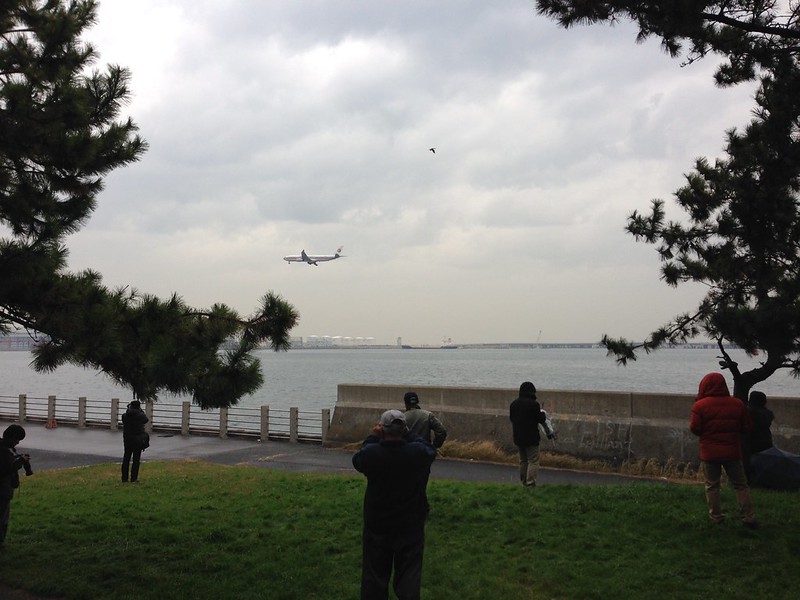
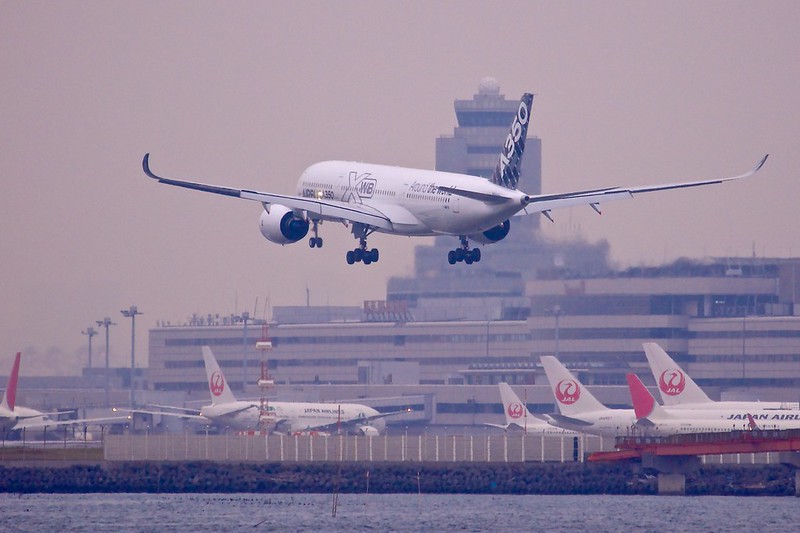
Getting back to the topic of the A350, I guessed the flight plan for the second day would be a Takeoff from Runway 05, a circle over Mt. Fuji, and then a landing on Runway 34L. Therefore, I placed my bet on Ukishima Park as the shooting location.
The result? The flight plan was exactly as I predicted,
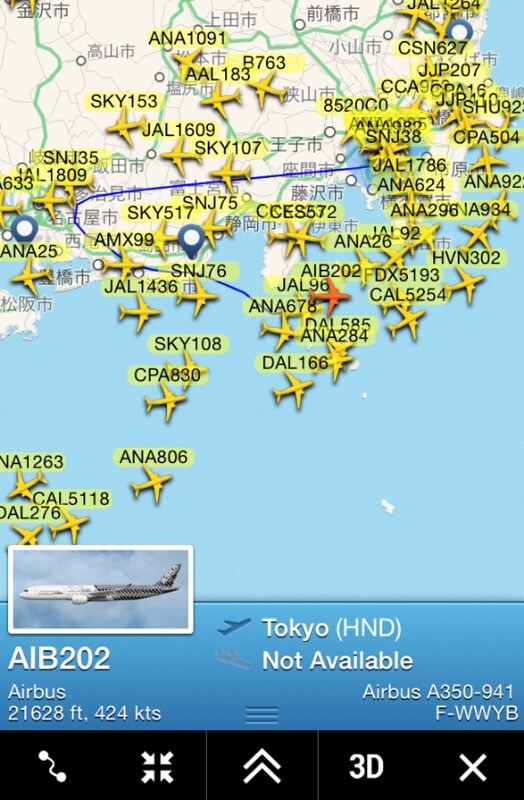 but due to the恶劣 weather, the gloomy dark clouds caused insufficient lighting, and the raindrops affected clarity. I reluctantly managed to take a few passable photos to just complete the task.
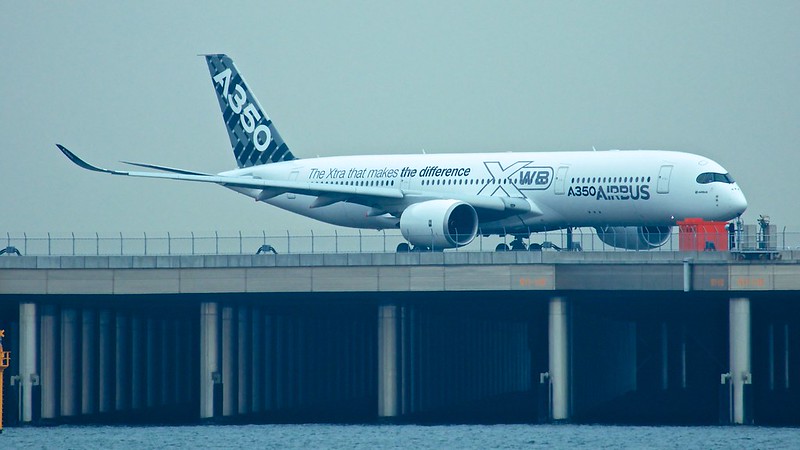
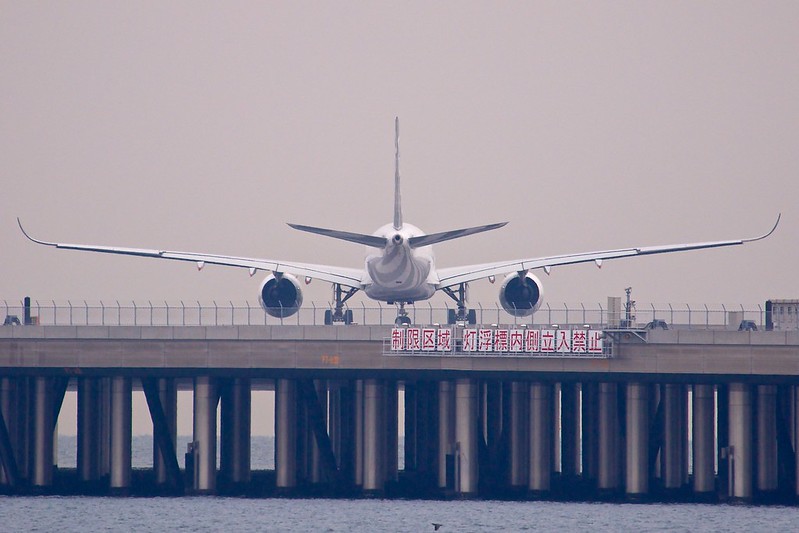
Before Takeoff on RWY05, while on the pier, one can see the special livery on the right side of the fuselage: “The Xtra that makes the difference” and “XWB A350 AIRBUS”.
The blended winglets at the wingtips are quite sleek. From this angle, they give the feeling of a bird spreading its wings to fly.
The engine diameter is very large, somewhat similar to the B777 in this regard.
Also, the black eye frame or black sunglasses on the nose indeed looks quite cool.
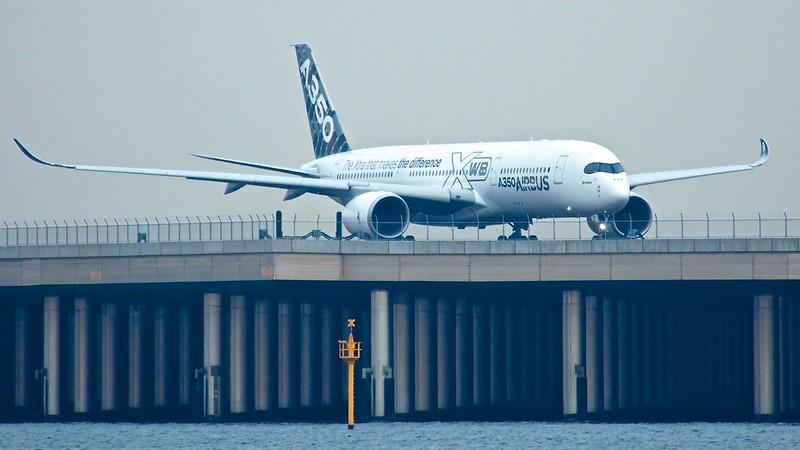
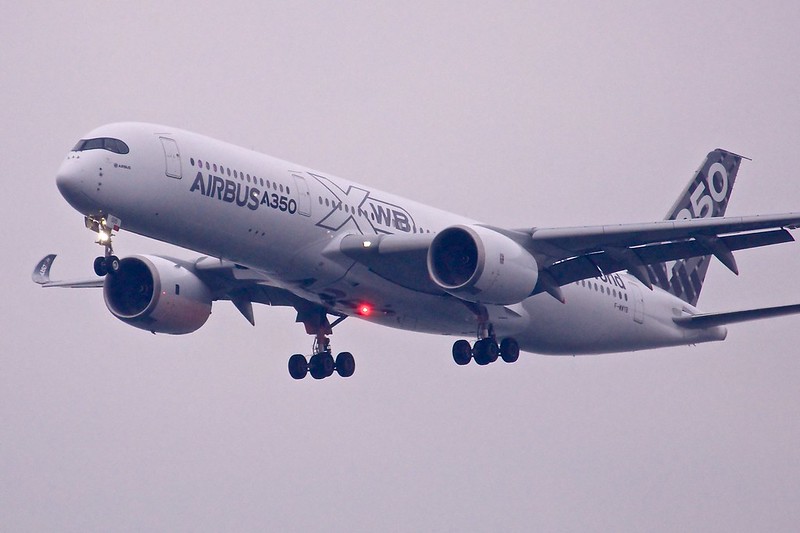
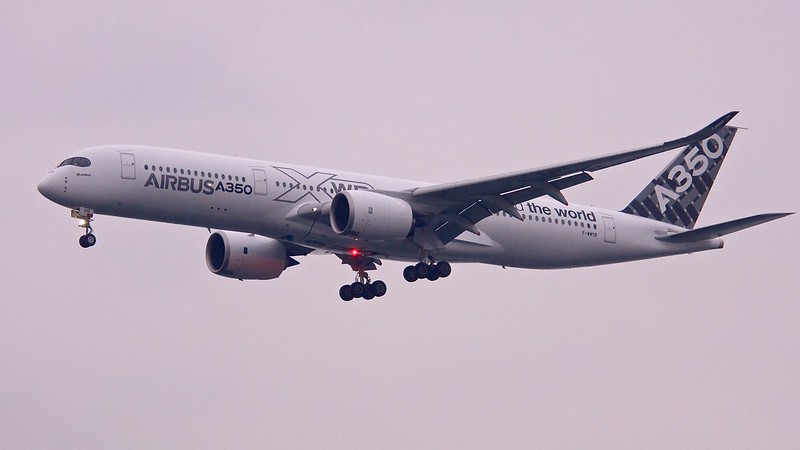
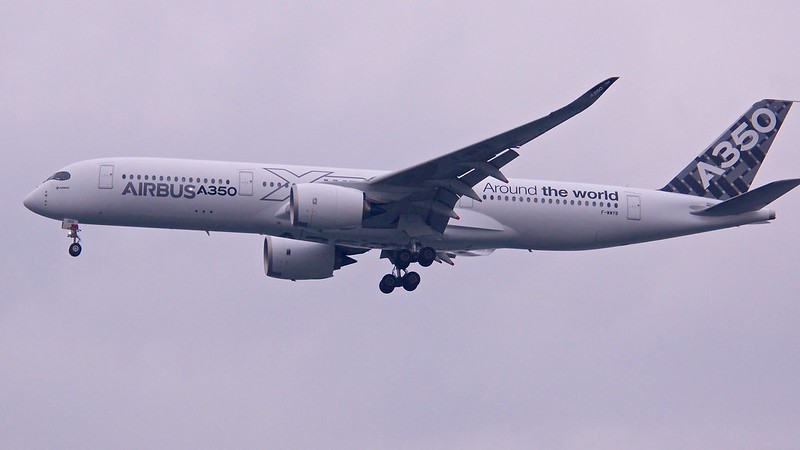
Photos from the Return and Landing. Looking at its slender fuselage, it is very close to the A330-300, and feels thinner than the B777.
The pointed nose is quite different from previous Airbus series, resembling the B787 somewhat.
Additionally, the livery on the left side of the fuselage is different from the right side. “Around the world” indicates its world tour. I believe that as A350s become more popular with various airlines in the future, it will be rare for us to see this livery again.
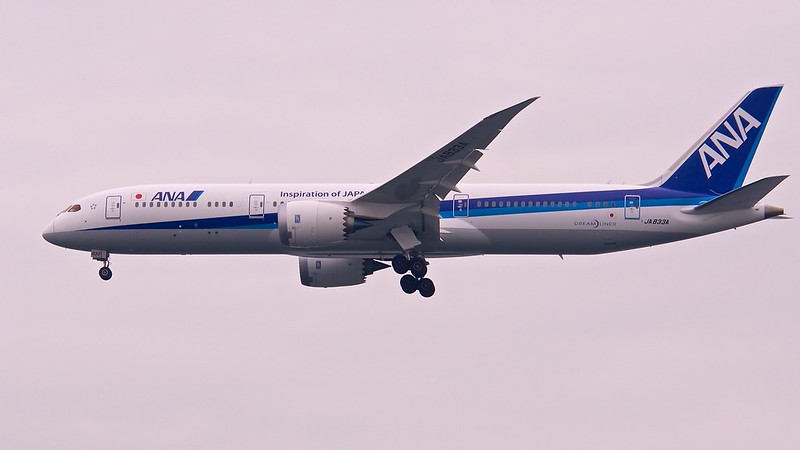
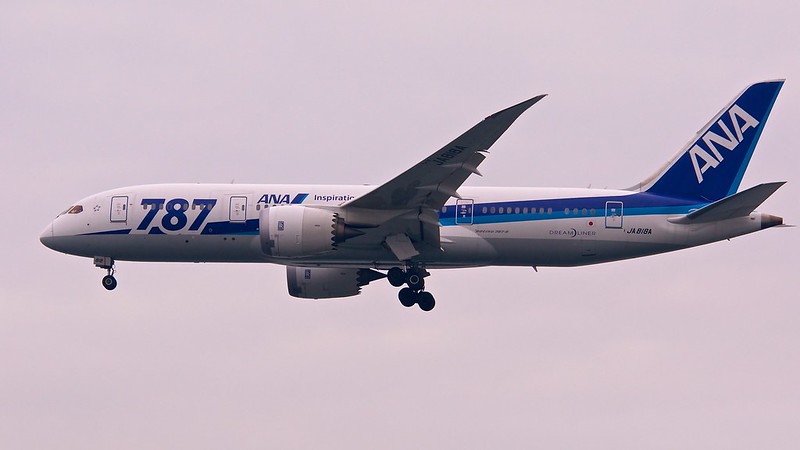
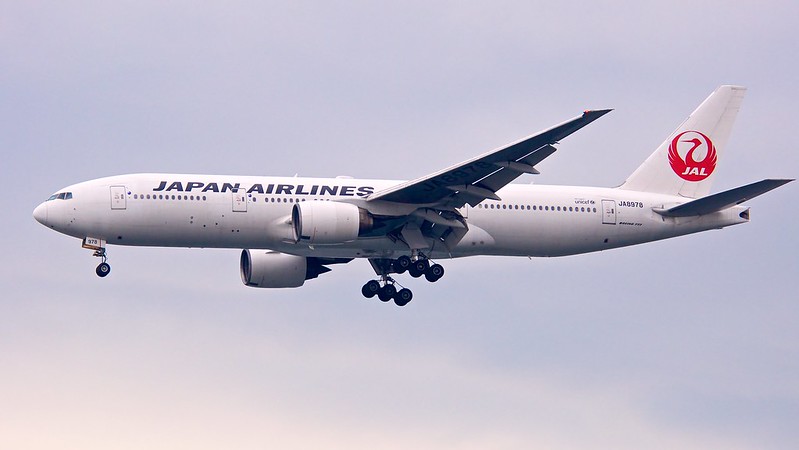
Finally, here are some comparison photos of the A350’s competitor models taken from the direct side view. We have the B787-9, A330-200, A330-300, B787-8, and B772. All have 4 cabin doors on one side and were all photographed on the same day.
F-WWYB Airbus A350-900 A350-941XWB. The vertical stabilizer is very small, similar to the 787.
JA833A ANA Boeing 787-9. This is my first time photographing a 787-9. Its fuselage is longer than the 787-8’s, so I recognized it from far away.
JA818A ANA Boeing 787-8. The number of windows between the first and second doors is fewer than on the 787-9, so it looks slightly short and stout.
JA8978 JAL Japan Airlines 777-200 777-289. Among these aircraft, the 777 is definitely the most robust. By the way, JAL decided to purchase the 350 to replace several dozen 777s introduced in the 90s, used for domestic and international routes with around 300 seats.
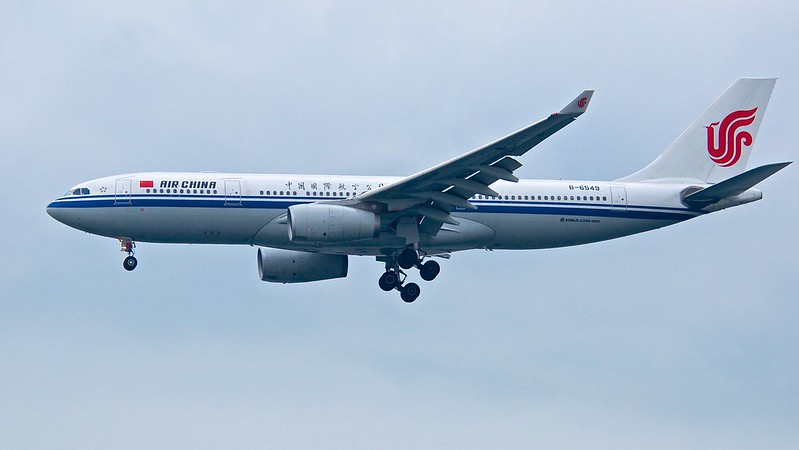
B-6549 Air China Airbus A330-200 A330-243. The number of windows between the first and second doors is fewer than on the -300 model, so it looks slightly short and stout.
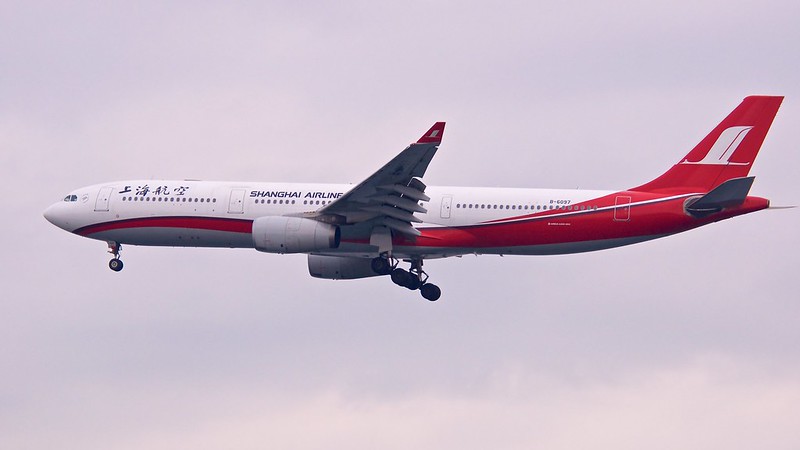
B-6097 Shanghai Airlines A330-300 A330-343X. In terms of appearance, the 330-300 is the closest to the 350-900.
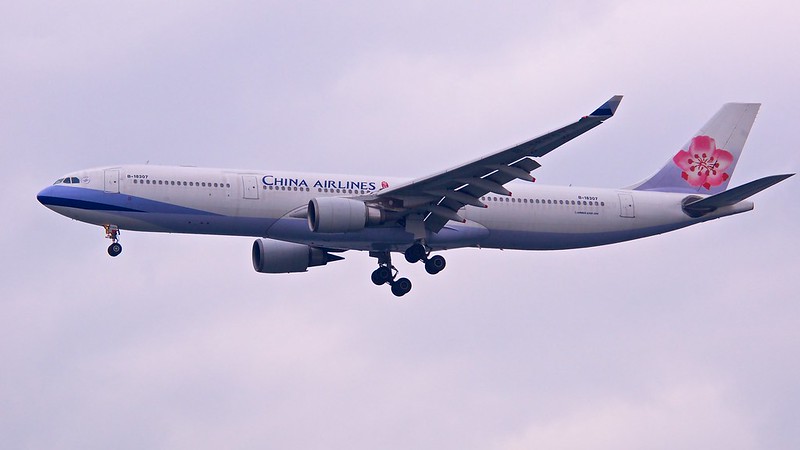
B-18307 China Airlines A330-300 A330-302
#The A350-900 is the standard model of the A350 family with 315 seats. The A350-1000 is the stretched version with 369 seats. The short-fuselage A350-700 has 276 seats. #For comparison, the standard passenger numbers for the 787-8, 787-9, and 787-10 are 242, 280, and 323 respectively. #The A330-300 has 300 seats, and the A330-200 has 246 seats. The future new model A330-800neo will have 252 seats, an increase of 6 from the -200 model; the A330-900neo will have 310 seats, an increase of 10 from the -300 model.
End
January 25, 2015 Supplement According to the analysis on this website, the ATC for the A350’s return might have been as follows:
Revised route clearance. Cleared to TIA via radar vector to BUNGU, Y81, ANGEL, Y109, MERCY, then direct.The flight route was likely as follows:
Cleared via MACRO ARRIVAL.
 MACRO ARRIVAL:
