Ceilometer
In aviation meteorology, the Ceiling is a crucial piece of data. Measuring the cloud base height is of great significance for flight safety. This blog previously introduced the restrictions on cloud base height under flight rules in the past article MVFR and LIFR. The article Summary of METAR Aviation Routine Weather Report Format also summarized how to obtain current meteorological data. But how is this data actually measured?
The instrument used to measure this data is called a Ceilometer.
In Japanese, it is known as 雲高計(うんこうけい)、雲底計(うんていけい)、雲高測定器(うんこうそくていき), or シーロメータ.
In Chinese, it can be translated as 云高仪, 测云仪, 云幂测量仪, 云幂仪, 云幕仪, etc.
Its appearance is as follows:
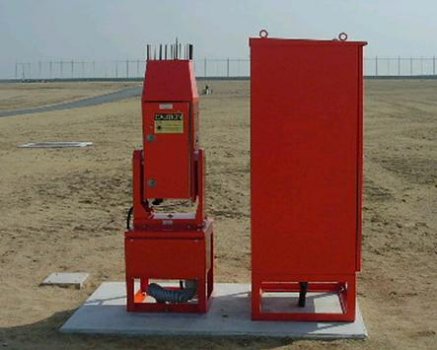
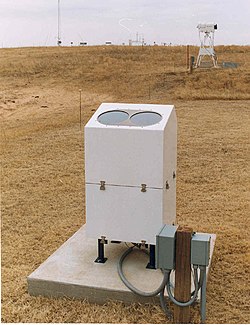

There are various types of Ceilometers, but the most commonly used today is the Laser Ceilometer.
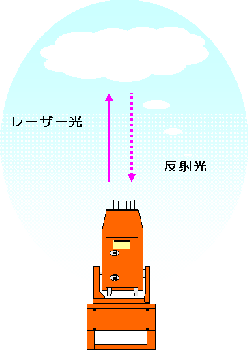
It is typically installed at the end of a Runway. Its operating principle involves emitting a laser beam into the atmosphere, which is scattered by the cloud layers.
The backscattered signal is received by the ceilometer’s optical system. By calculating the travel time of the light in the air, the height of the cloud base and other information can be measured.
I don’t have any on-site photos of a Ceilometer at the moment, but I will definitely look for one and take a picture next time I go to the airport.
End