Starflyer Kansai-Haneda Route Flight Review
Starflyer is a very small budget airline in Japan that began operations in 1996. They only have a total of 10 Airbus A320 aircraft, and naturally, their routes are few, so their business situation isn’t great.
While the company has low public recognition, it is quite well-known among aviation enthusiasts, mainly because their design is very distinctive, earning them the 1996 Good Design Award. One of their features is the use of a black基调 with white accents, making it very easy to recognize. The cabin equipment is also unified in black; not just the seats, even the lavatories are designed in black. When the company was first established, even the toilet paper was black, which sparked huge interest among aviation enthusiasts. Everyone would secretly take the toilet paper home as a souvenir; it was very popular. However, the airline couldn’t sustain the losses, so they eventually had to switch to using regular toilet paper.
Also, the in-cabin facilities are quite advanced: leather seats, footrests, touch-screen entertainment systems, and generous seat pitch. In short, the conditions are much better than ANA and JAL’s domestic aircraft. From my personal experience on this flight, I think its comfort level is two grades above the domestic ANA 787, and in terms of spaciousness, it’s even better than JAL’s international 777.
Also, their online booking system is very interesting. You just need to enter the date, flight, name (no Kanji, just Hiragana), and credit card number. No need for address, phone number, or birthday at all—it couldn’t be more convenient. Plus, check-in is very simple; just show your credit card to the staff at the counter, and you’re done. I’ve really fallen in love with this airline.
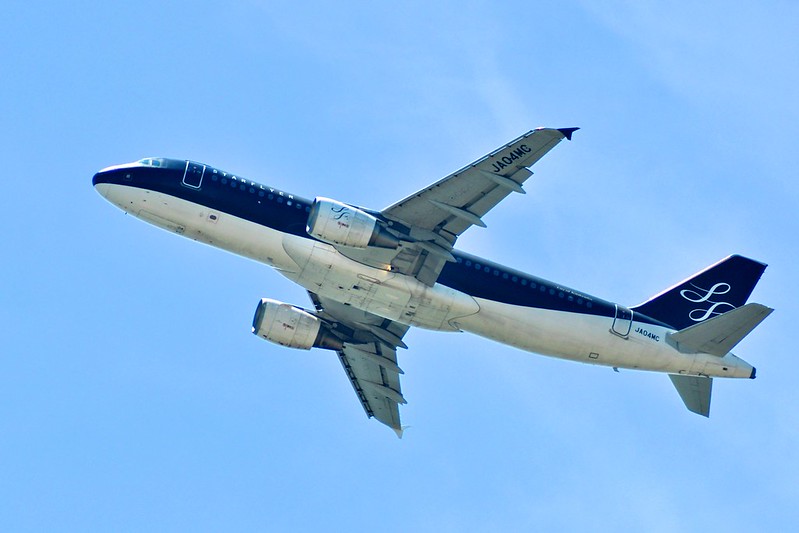 The aircraft above is the A320, registration JA04MC, which I flew on that afternoon. The photo was taken that morning during an interior visit to Kansai Airport.
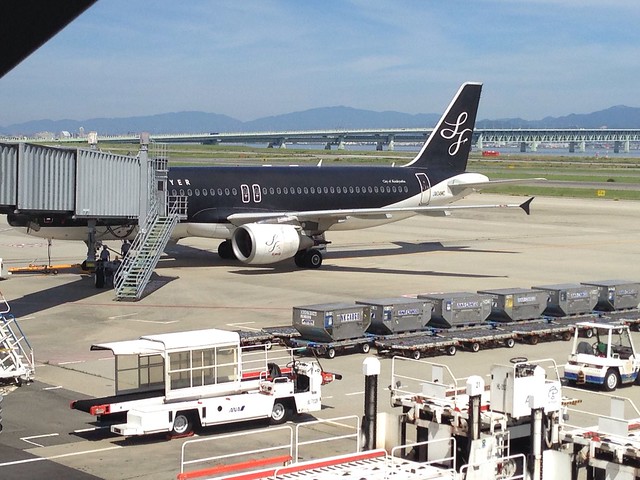
Viewing JA04MC from the terminal, you can see their black fuselage characteristics through these two photos.
Let’s take a look at the interior,
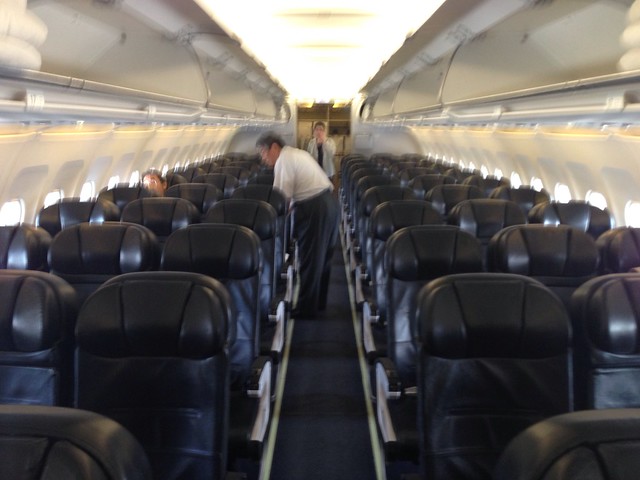
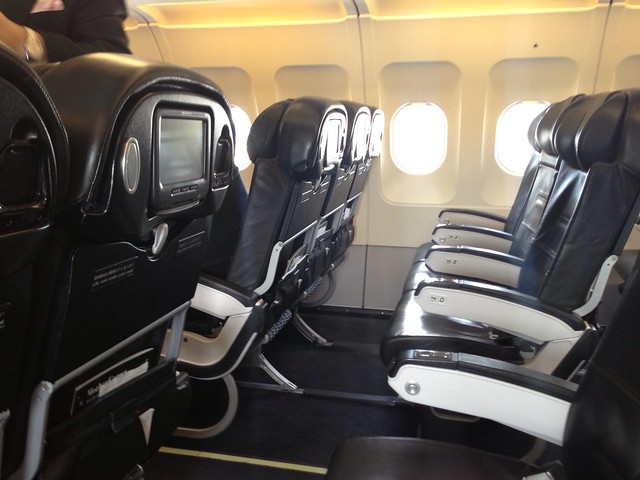
 Black leather seats, don't they look premium?
I don't know why the load factor that day was less than 40%. It's a real shame for such a great aircraft.
Black leather seats, don't they look premium?
I don't know why the load factor that day was less than 40%. It's a real shame for such a great aircraft.
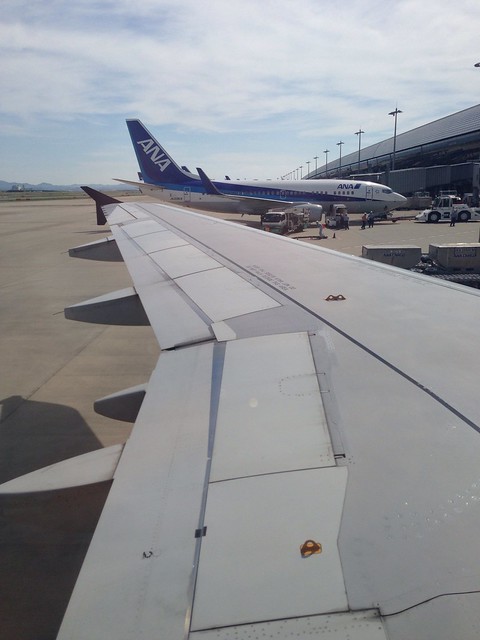
Alright, preparing for pushback. A souvenir photo before turning off my iPhone. From here on, I used a DSLR.
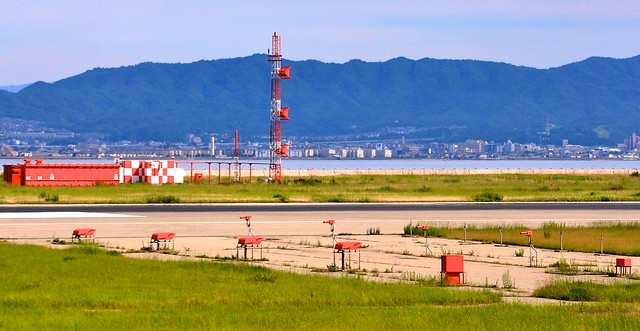
Before entering the Runway, looking out the window at the PAPI and ILS glide slope antenna for Kansai Airport Runway 06R; being close up allows for a clear view.
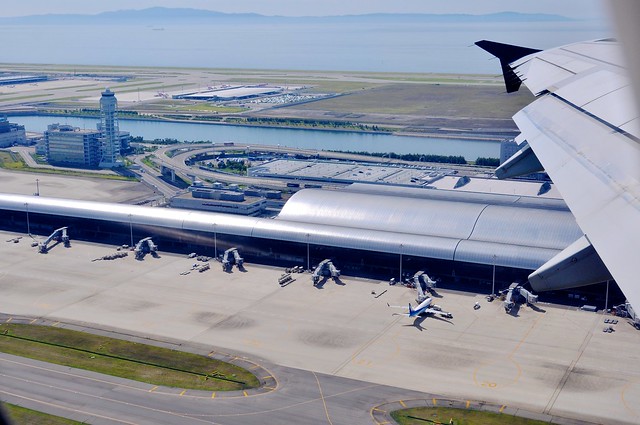
Takeoff. Probably due to the light load, the Takeoff roll on the Runway was less than half its total length, and the aircraft climbed lightly.
Terminal 1 was right underfoot, and the Tower and the distant Terminal 2 began to come into view.
Based on the wind direction and my recollection, the Departure procedure for that day was likely the KANSAI REVERSAL TWO DEPARTURE.
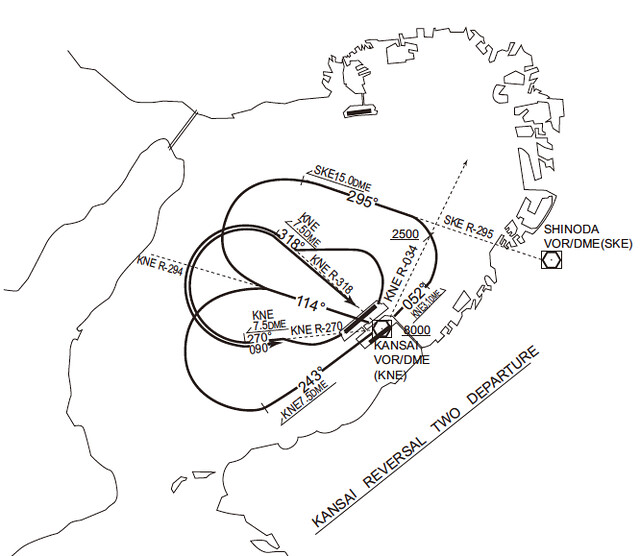 The aircraft climbed along the 52-degree radial of the Kansai VOR (KNE) (Northeast),
at 3.1 NM DME, it started a left turn to intercept the 295-degree radial of the SKE VOR (Westward),
at 15 NM DME from SKE, it turned left 180 degrees again to track eastward along the 294-degree radial of the Kansai VOR,
and arrived at that VOR to complete the departure procedure.
Altitude restriction: crossing the 34-degree radial of the Kansai VOR, ensure altitude is above 2500 feet.
The aircraft climbed along the 52-degree radial of the Kansai VOR (KNE) (Northeast),
at 3.1 NM DME, it started a left turn to intercept the 295-degree radial of the SKE VOR (Westward),
at 15 NM DME from SKE, it turned left 180 degrees again to track eastward along the 294-degree radial of the Kansai VOR,
and arrived at that VOR to complete the departure procedure.
Altitude restriction: crossing the 34-degree radial of the Kansai VOR, ensure altitude is above 2500 feet.
Basically, this means that after Takeoff, to reduce noise, the aircraft has to circle over Osaka Bay while continuously Climbing, and only after reaching a certain altitude does it enter over land to continue the journey.
Okay, let’s look at a few photos from the Departure.
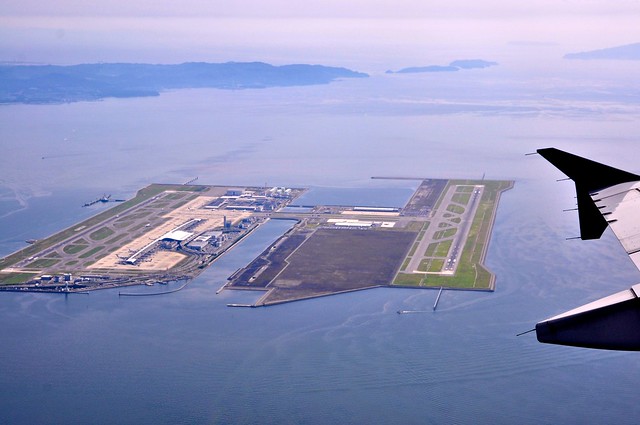
Flying west on the 295-degree radial of SKE VOR, looking down at Kansai Airport, you can see it consists of two artificial islands in the sea.
On the left is Runway 06R/24L and Terminal 1; on the right is Runway 06L/24R and Terminal 2.
Terminal 2 is still very small in scale but will continue to expand in the future.
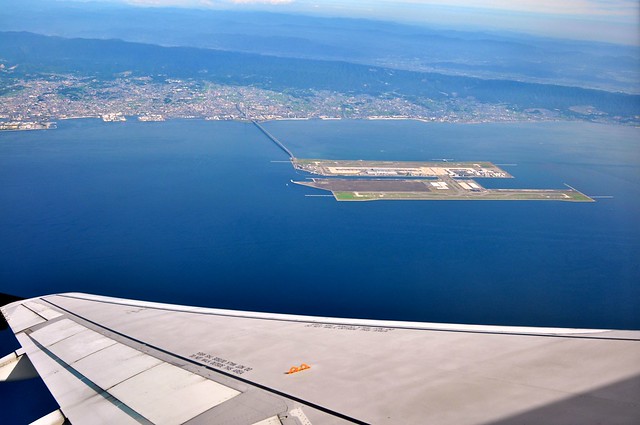
Turning from west to south, looking back at the airport, a 5km long bridge connects the airport to the mainland.
Osaka’s narrow urban area, a slender mountain ridge; beyond the mountains is Nara.
Turning east, you can clearly see another airport, namely Kobe Airport, which is also located on the sea.
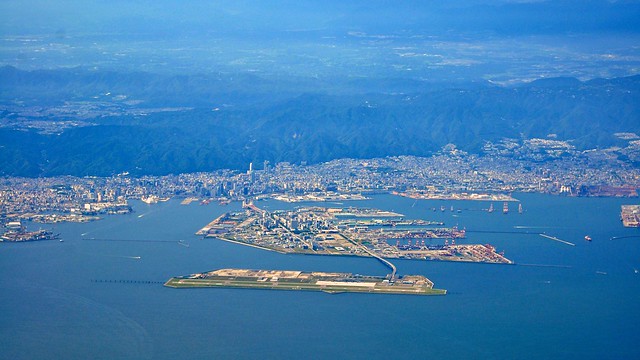 Looking at Kobe City from the air, it’s also a narrow city sandwiched between mountains and the sea.
Between the airport and the mainland is a huge artificial island, with dense high-rises at the port, and ships on the sea leaving long white Tracks, a feast for the eyes.
Looking at Kobe City from the air, it’s also a narrow city sandwiched between mountains and the sea.
Between the airport and the mainland is a huge artificial island, with dense high-rises at the port, and ships on the sea leaving long white Tracks, a feast for the eyes.
Finally turning back north, arriving over the airport, the famous Akashi Kaikyo Bridge is visible from the left window.
To the left of the bridge is Awaji Island, and beyond that is the famous Seto Inland Sea.

Departure procedure complete, the aircraft began heading east, likely flying along Airway Y33 towards Nagoya Chubu Centrair International Airport. Passing over downtown Osaka, Nara, and Mie, the weather was wonderful, and the scenery was endless.
A panoramic view of Osaka Bay and Osaka City:
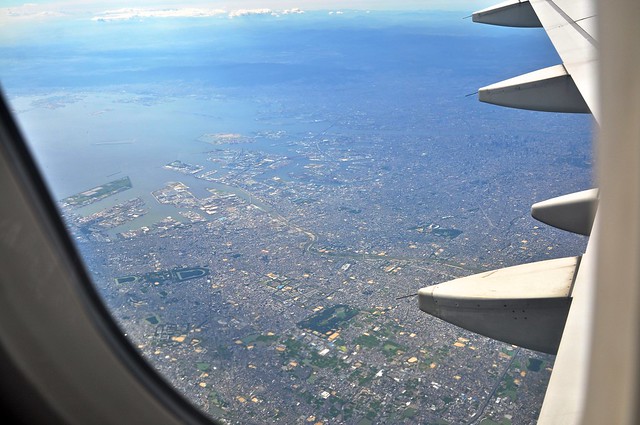
The skyscrapers in the Umeda district of downtown Osaka, Yao Airport nearby, Itami Airport in the distance,
the Yodo River crossing the city center, and Osaka Castle surrounded by greenery—everything is in sight.
The greatest pleasure of traveling by plane over the Shinkansen is the scenery.
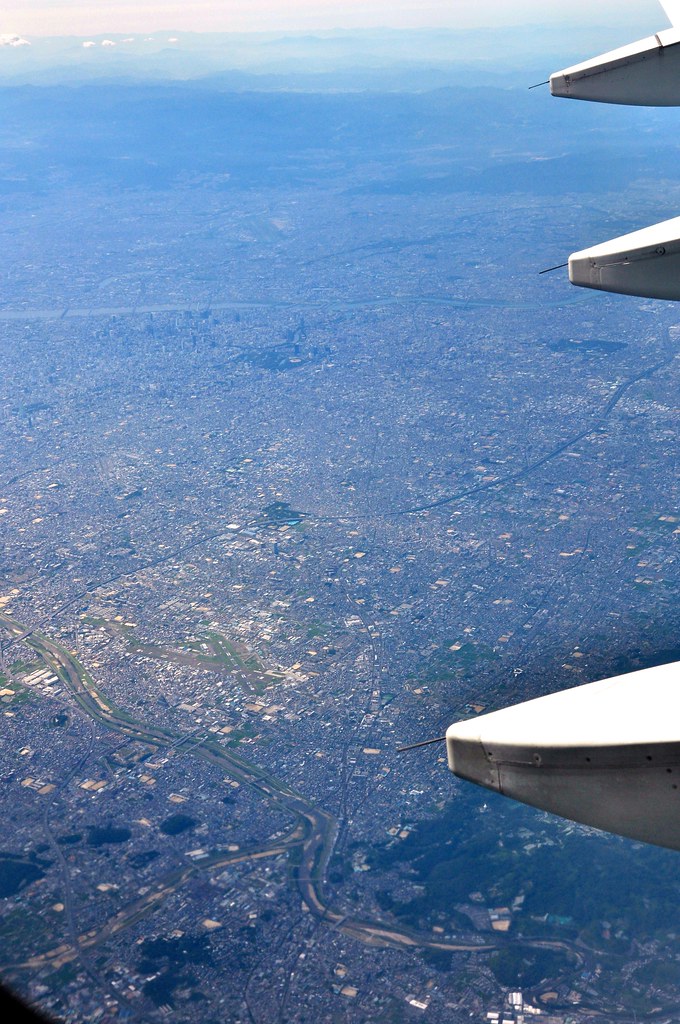
The mountains of Nara and the distant Lake Biwa (Japan’s largest freshwater lake)

The mountains and coastline of Mie; I wonder where the famous Ise Grand Shrine is?
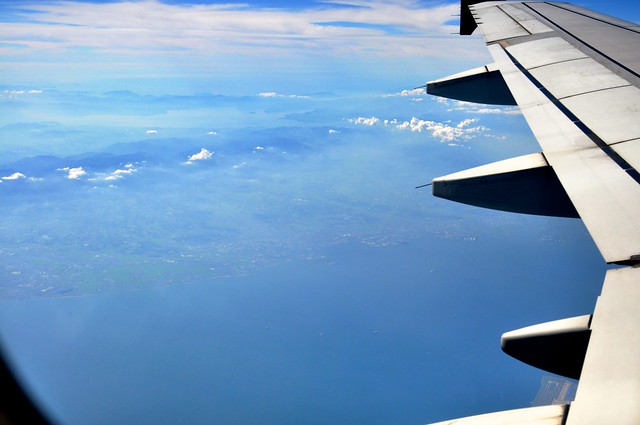
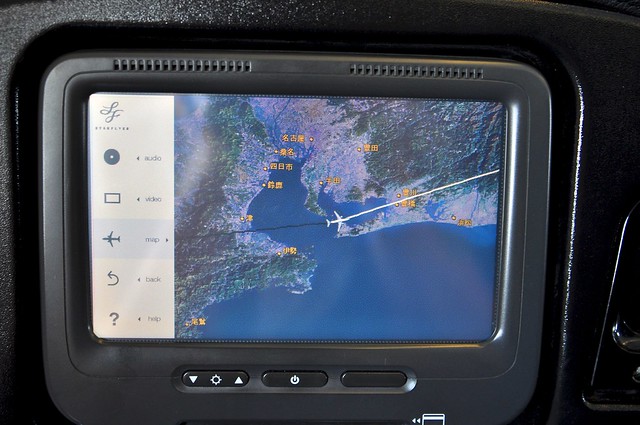
Arriving over Nagoya, presumably entering Airways Y33 and Y71, passing Shizuoka and the Izu Peninsula, heading straight for Oshima.
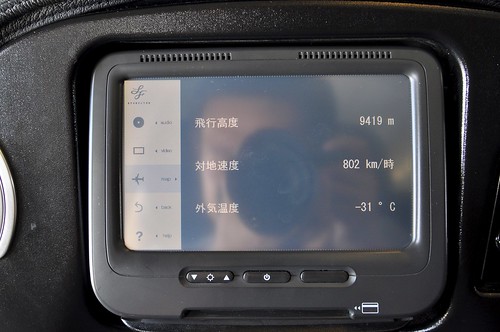 At this time, the cruising altitude was 9400 meters, with a ground speed of 800 km/h.
Passing Nagoya, thick high clouds appeared, and the land was no longer visible, but the sea of clouds was spectacular,
especially seeing Mt. Fuji emerge, which added a lot of color to the journey.
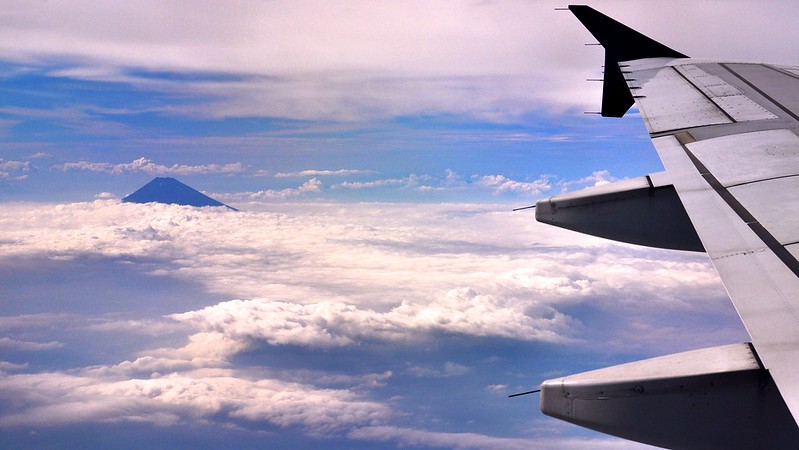
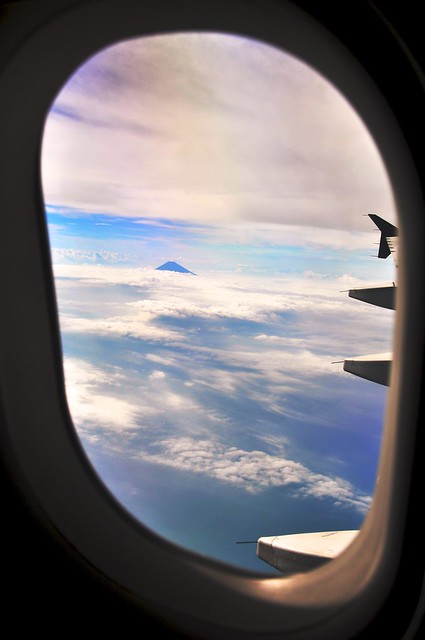
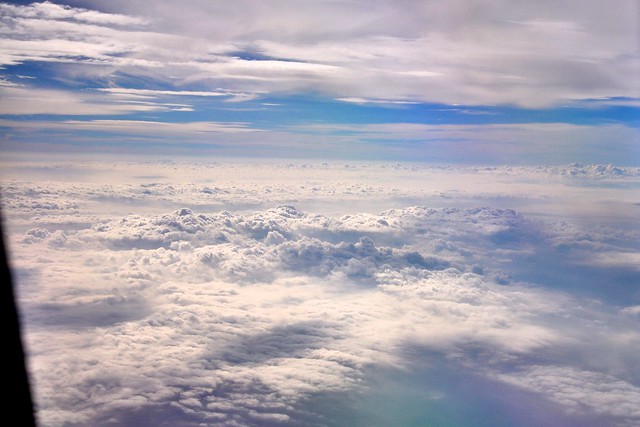
After this, the Descent began. Crossing Sagami Bay and entering Chiba, the clouds disappeared.
Based on the terrain, the landing was undoubtedly using the ARLON Arrival procedure, and the Approach was likely the ILS 34L Zulu procedure.
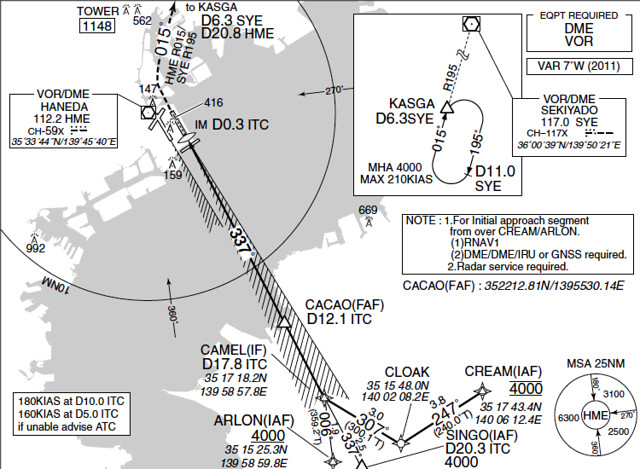
The aircraft crossed Tokyo Bay, and the familiar Yokohama Landmark Tower in the distance drew closer; landing was imminent.
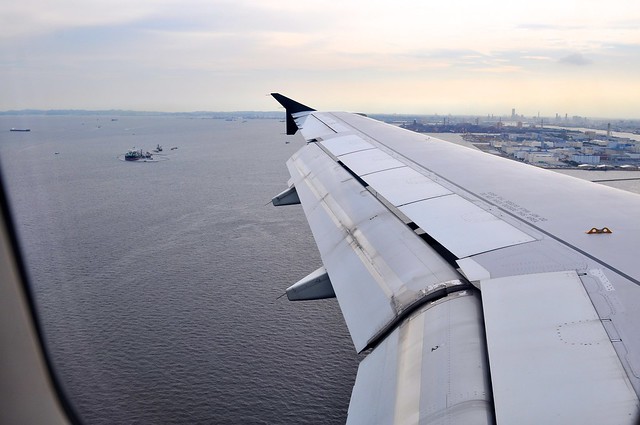
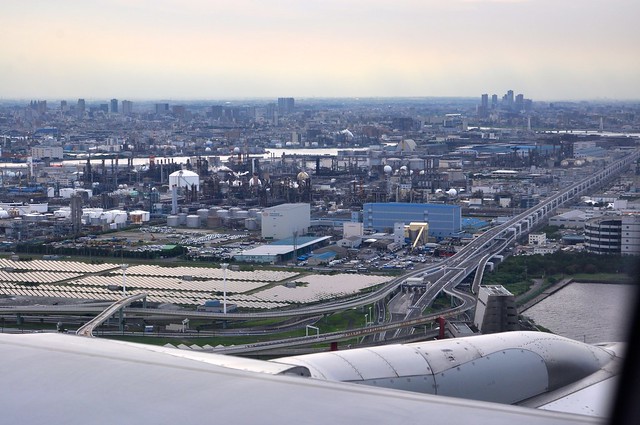
In the bottom right corner of the photo below, you can see the famous Haneda Airport plane spotting spot—Ukishima Park. The center of the frame shows the Kawasaki factories; photos of aircraft with these factories in the background are often taken from the Haneda terminal.
A smooth touchdown,
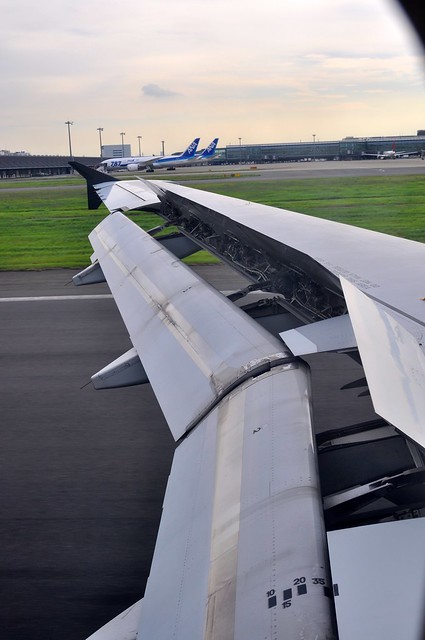
Tokyo, I am back.
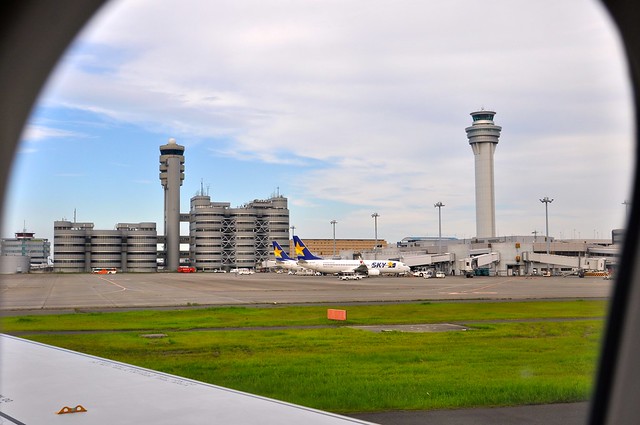
End
Postscript, October 3, 2014 JA04MC was retired on September 25th after operating its last flight, HND-KKJ 71. Since it was the last 144-seater aircraft, all of Starflyer’s passenger aircraft are now 150-seaters. It is said that this airframe will be leased to Freebird Airlines in Turkey.