Observing Airliner Crosswind Takeoff
I recently visited Osaka International Airport again to observe aircraft takeoffs and landings at the approach end of Runway 32L. The set of photos below captures a sequence of a Boeing 777 jet airliner taking off in a left crosswind. This might be helpful for understanding aircraft control, so here is a brief summary.
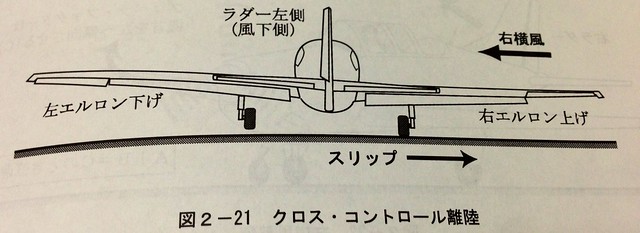
Generally, after starting the takeoff roll, pilots use the cross-control technique (sideslip method): apply light left rudder, and point the nose slightly into the wind (to the right) to counteract the left crosswind’s weathercock effect; simultaneously, the left crosswind creates uneven Lift on the wings—greater on the left, less on the right. To maintain balance, the pilot applies left aileron input to decrease the Lift on the left wing. Consequently, the Lift on both wings is roughly equal, the aircraft remains in a basically balanced and stable state, and the nose points essentially toward the center of the Runway.
The diagram below explains the sideslip method. Note that this illustration shows a right crosswind scenario, so the control inputs and aircraft attitude are opposite to those described above.
However, this is merely an idealized operation. In reality, wind speed and direction are constantly changing. Pilots must adapt to the weather conditions and react flexibly and instantly to various wind shears.
Alright, let’s look at the photos below.
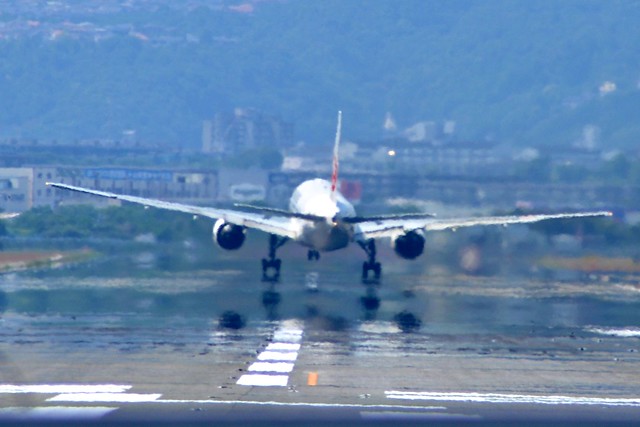
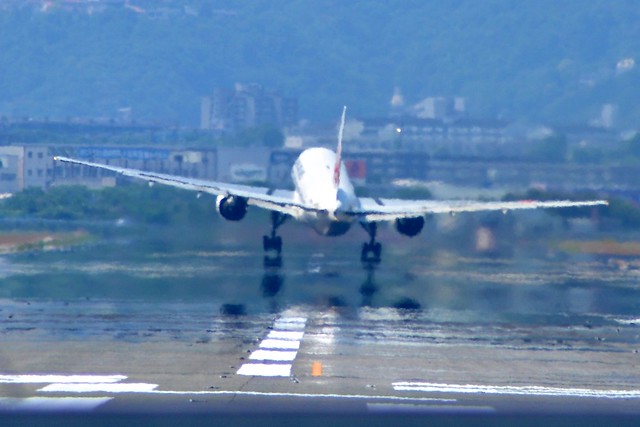
After Vr speed, the pilot pulls back on the yoke, raising the nose. You can see the left wing is higher than the right wing,
and the left main landing gear lifts off earlier than the right.
Perhaps the wind speed exceeded the pilot’s expectations, and the Lift on the left wing surpassed that on the right.
Therefore, the aircraft’s attitude is the exact opposite of what was intended; the aircraft’s bank (sideslip) and drift are very noticeable.
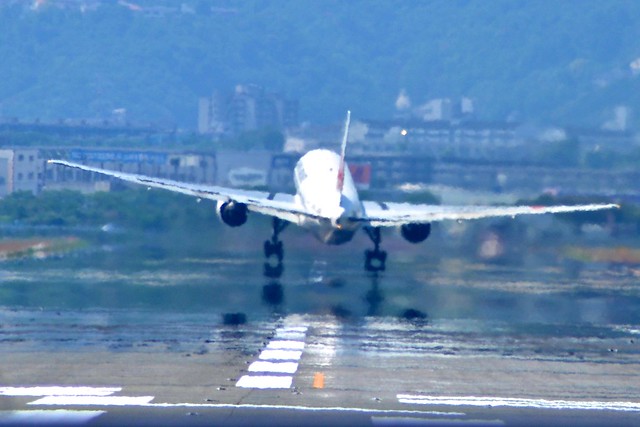
After the aircraft is fully airborne, the pilot transitions from sideslip correction to drift correction (crab method), neutralizing the rudder and yoke,
striving to keep the wings level and maintaining a Heading corrected for drift to ensure a normal Climb gradient.
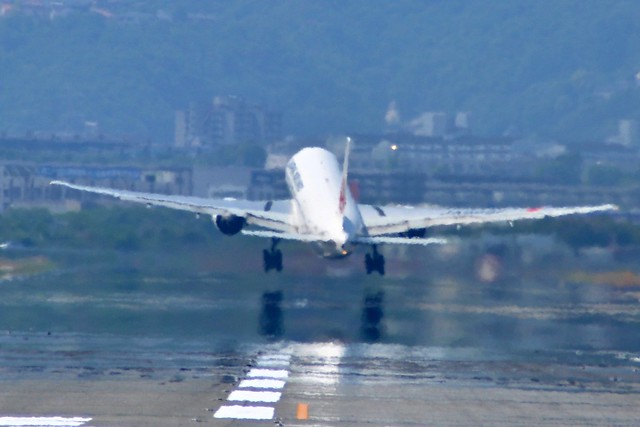

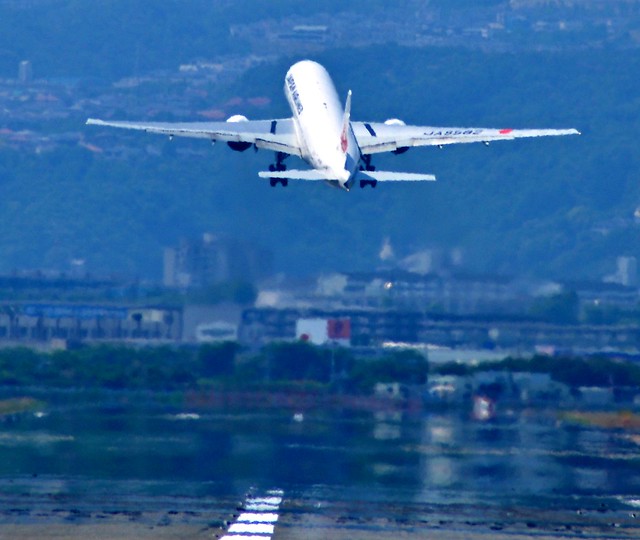
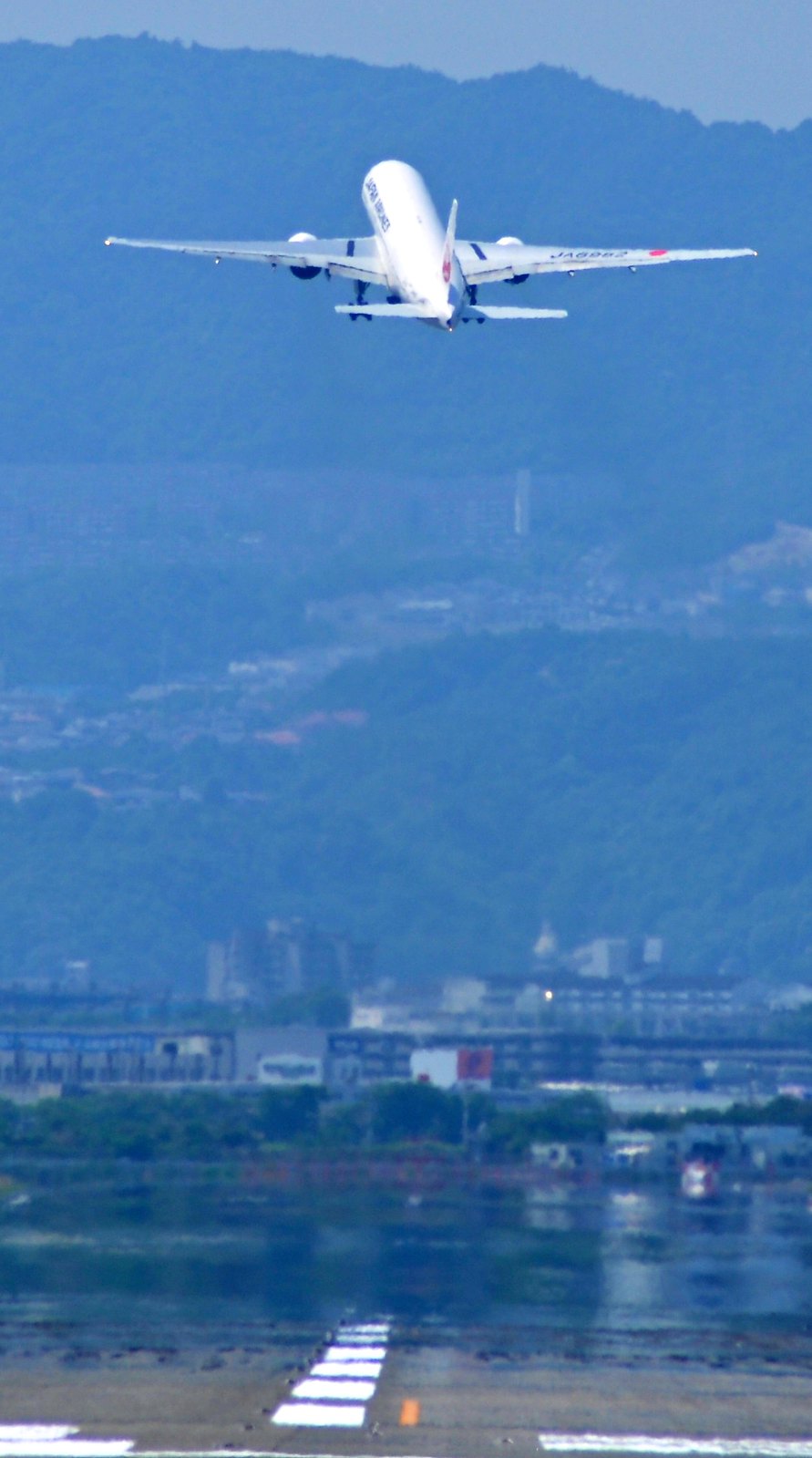
Throughout this sequence of maneuvers, the aircraft’s forward direction was consistently maintained on the Runway centerline, deviating very little even after the wind shear occurred. The skills of professional pilots are truly impressive.
End