Hiroshima Airport Shooting Notes
Recently, I traveled to Hiroshima for sightseeing. On my way back home, I took a JAL flight from Hiroshima Airport to Tokyo and took the opportunity to look around the airport vicinity and take some photos. Here is a brief summary.
The way to get to the airport is by taking the airport bus from the North Exit of Hiroshima Station; it takes about 45 minutes to arrive.
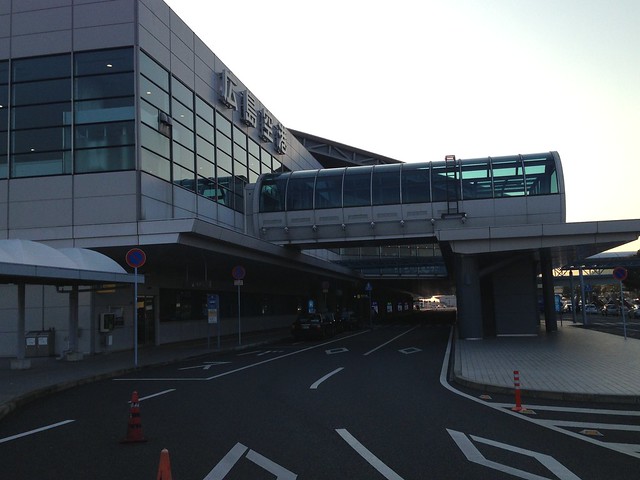
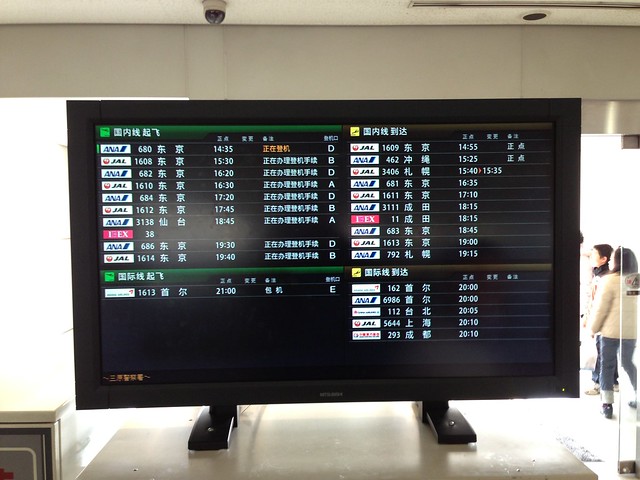 Since Hiroshima Airport has international flights to China, the information displays also show information in Chinese, which is nice.
Upon entering the airport, I headed straight for the observation deck on the 3rd floor. Only after coming up did I realize that there is an admission fee; it is a coin-operated entrance, costing 100 yen per person. Well, I was already there, so I paid to enter. From my impression, not many airports charge for the observation deck; I seem to have only encountered this in Okinawa and Hokkaido.
There were quite a few people in the observation deck, mostly appearing to be there to see people off or pick them up.
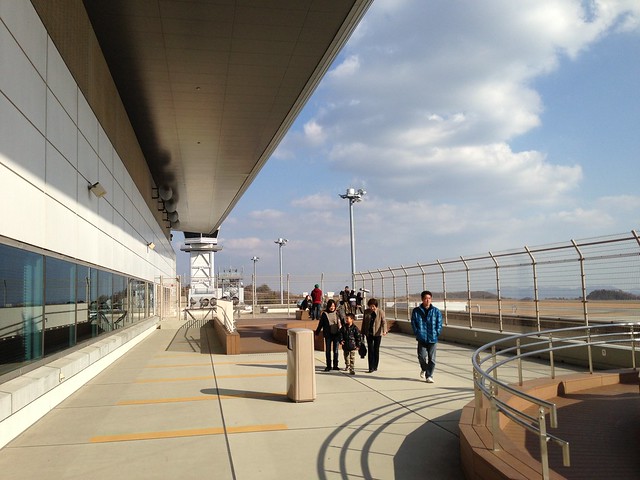
Hiroshima Airport is relatively small, with only one Runway (RWY10/28) and 6 gates,
 The daily number of flights is also very low, with only 3-4 takeoffs and landings per hour, and they are basically domestic Japanese routes,
Apart from ANA, it’s JAL. The variety of aircraft types is small; ANA mostly uses 777s, and JAL mostly uses 737s.
For photography enthusiasts, this might be a bit too lonely and monotonous.
The daily number of flights is also very low, with only 3-4 takeoffs and landings per hour, and they are basically domestic Japanese routes,
Apart from ANA, it’s JAL. The variety of aircraft types is small; ANA mostly uses 777s, and JAL mostly uses 737s.
For photography enthusiasts, this might be a bit too lonely and monotonous.
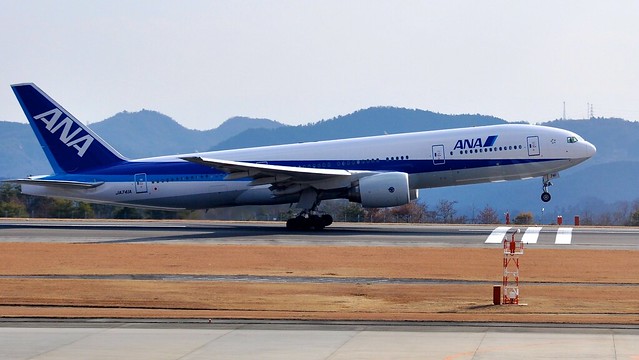
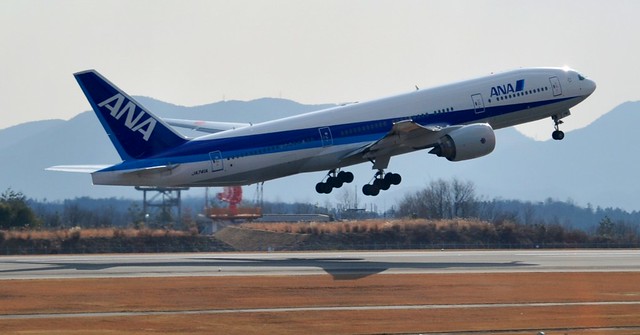 When taking off, the aircraft pull up right in front of the observation deck, on Runway RWY28. The location is good, but unfortunately, it is against the light.
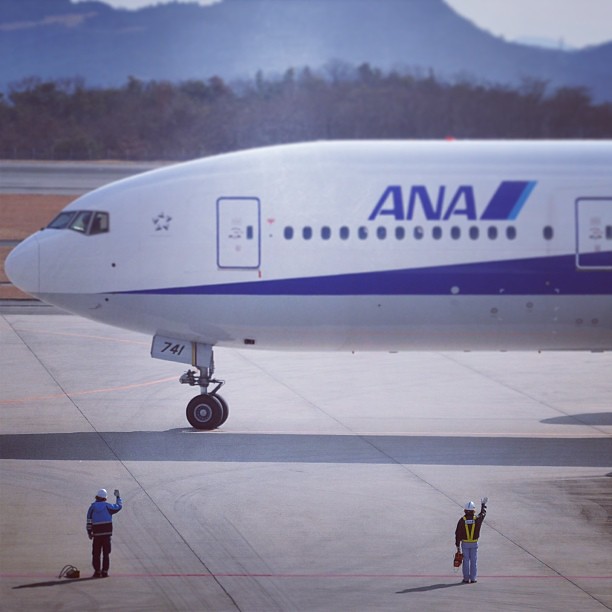
The observation deck is quite close to the aircraft. Carefully observing the ground crew’s work, you can see some details of their operations,
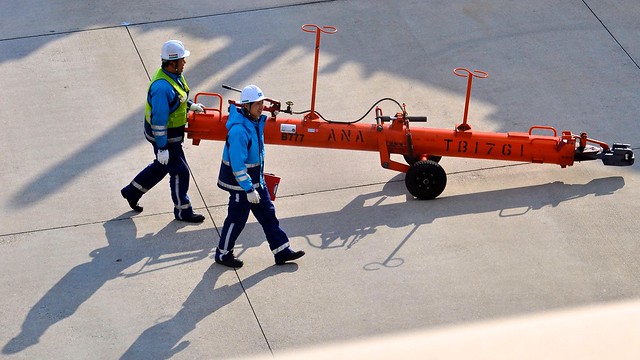 For example, in the photo above, after seeing off a plane, a maintenance mechanic walks back pushing the tow bar. I hadn’t really noticed this scene before. There is a wheel under the tow bar, and it doesn’t look too hard to push.
Look at this photo,
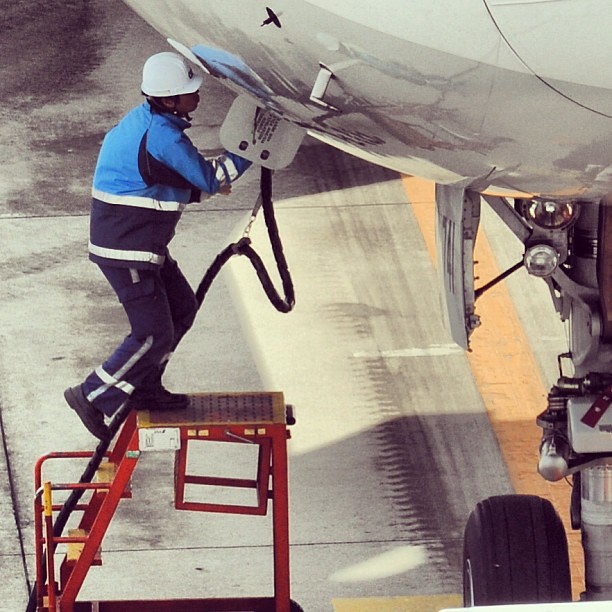 Before the ANA Boeing 777 is pushed back, the mechanic unplugs the ground power unit from under the fuselage. The 777 fuselage is very high, so he needs to climb on a stand to reach it.
The aircraft is pushed back and the engines are started. It begins to taxi, and the mechanic waves to the aircraft. Although this is a common scene, one can still feel a sense of warmth amidst the routine.
Before the ANA Boeing 777 is pushed back, the mechanic unplugs the ground power unit from under the fuselage. The 777 fuselage is very high, so he needs to climb on a stand to reach it.
The aircraft is pushed back and the engines are started. It begins to taxi, and the mechanic waves to the aircraft. Although this is a common scene, one can still feel a sense of warmth amidst the routine.
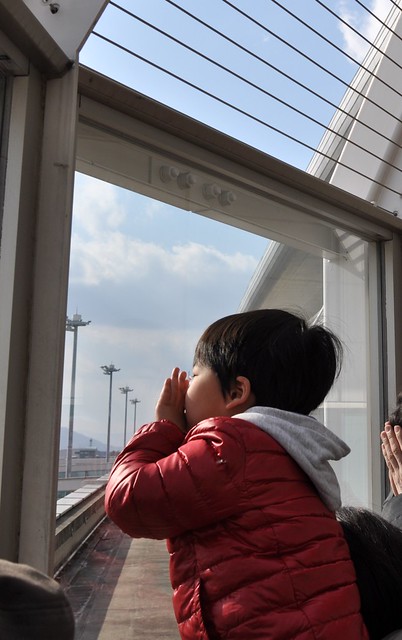
However, there is one downside to this airport observation deck: it has both a protective net and a layer of glass separating the deck from the outside, While this is understandable from a safety perspective, from a photography perspective, it is always uncomfortable to shoot through stained glass, So I decided to leave here and look for other photography spots nearby.
There is a small hill about a 15-minute walk east of the airport, located right next to the Runway. I heard a long time ago that this is a good observation spot,
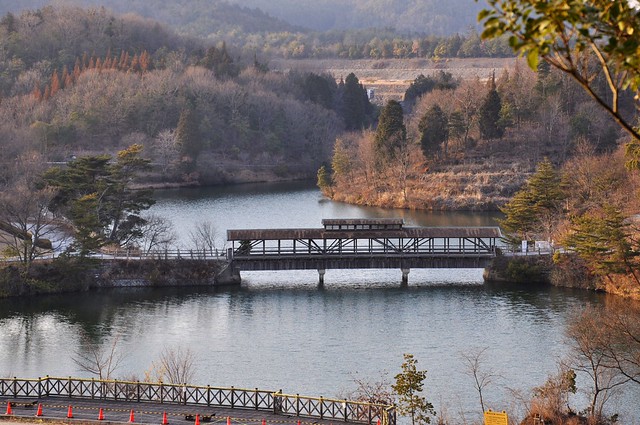
So I walked east from the airport, passing a hotel and a park (this park is actually quite beautiful),
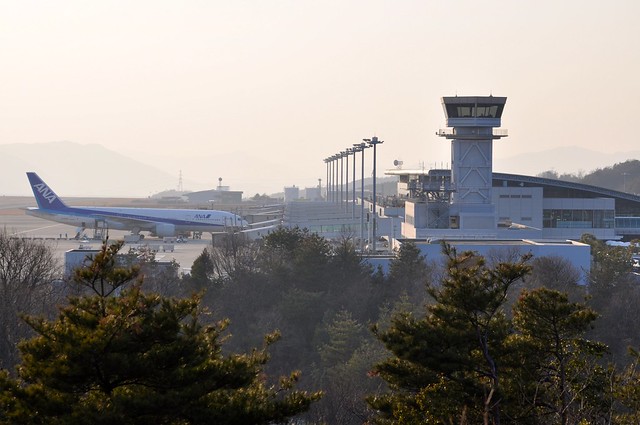
 It was easy to find this small hill. Climbing to the top of the west side, you can see the airport Tower, Apron, and Terminal from directly the side,
 While the south side faces the Runway directly. Some photography enthusiasts and families with children were also here watching the planes.
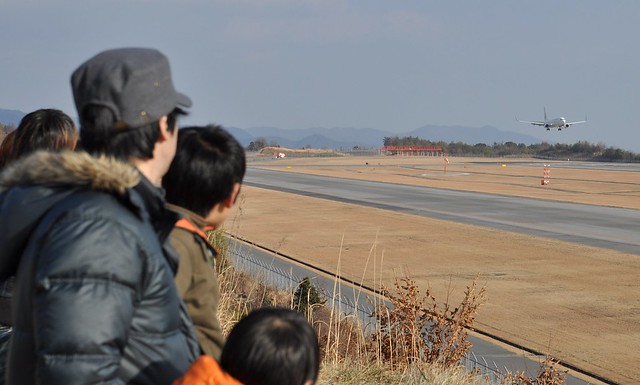 Just then, a JAL 737 landed, and as it passed in front of me, it deployed reverse thrust,
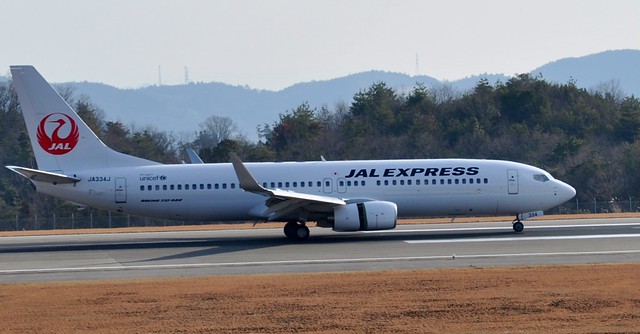 Yeah, this spot is indeed quite nice. I remember the name of this park is “Hikouki no Mieru Oka” (The Hill where Airplanes are Visible).
I also chatted with a local aviation enthusiast who was taking photos nearby and learned that there is another park nearby called “Picnic Plaza” which is also good,
It is also located next to the Runway, and the terrain is lower, so the planes seem closer, but it is quite far away, so I didn’t have time to check it out today.
Yeah, this spot is indeed quite nice. I remember the name of this park is “Hikouki no Mieru Oka” (The Hill where Airplanes are Visible).
I also chatted with a local aviation enthusiast who was taking photos nearby and learned that there is another park nearby called “Picnic Plaza” which is also good,
It is also located next to the Runway, and the terrain is lower, so the planes seem closer, but it is quite far away, so I didn’t have time to check it out today.
Immediately after, another JAL 737 was ready to depart,
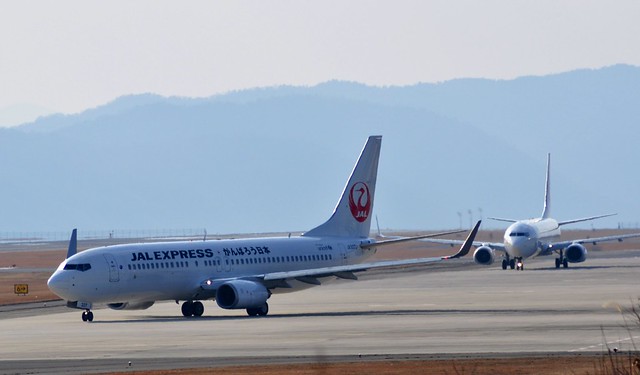 The one behind is the one that just landed. The one in front taxied slowly along the Taxiway to right in front of us. The pilot saw us and waved to us in a friendly manner,
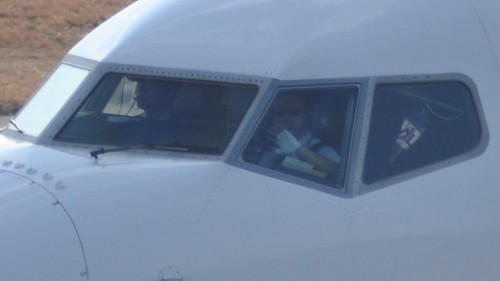 Haha, thanks a lot.
Being close is great; not only can the pilots in the cockpit be seen clearly, but some details of the aircraft’s exterior can also be observed,
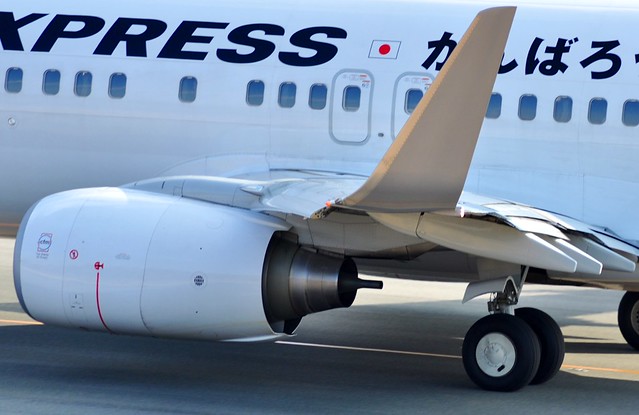
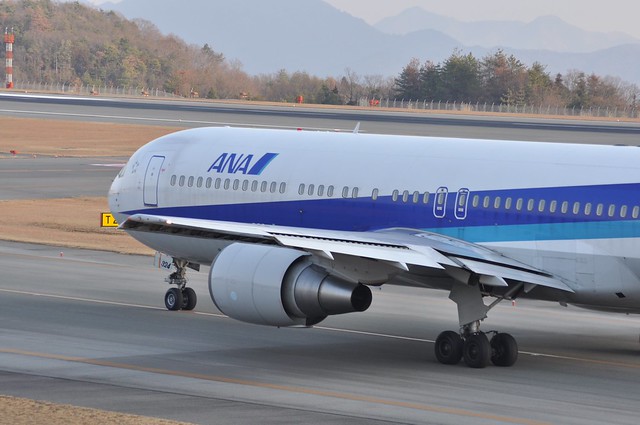 At this moment, I started lamenting that my lens wasn't sharp enough...
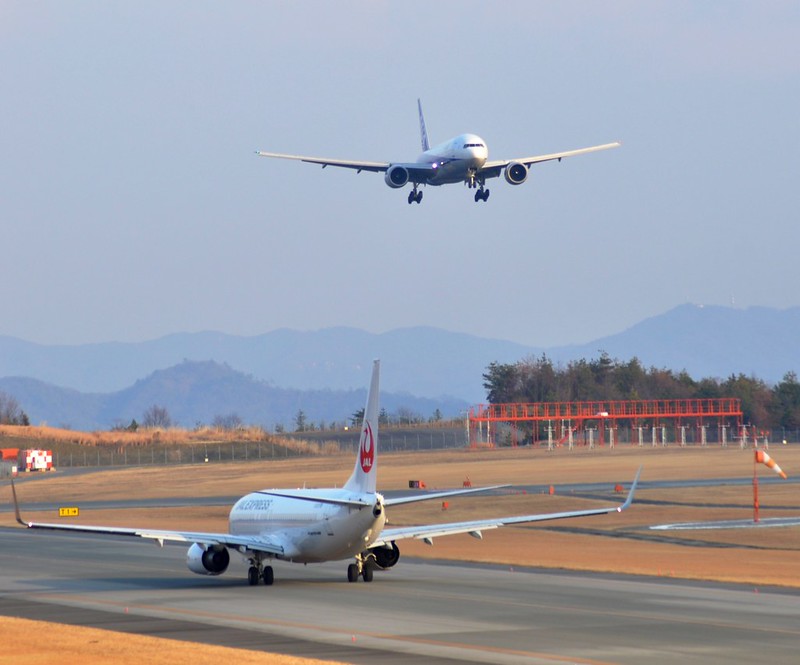
A taxiing JAL 737 and a landing ANA 777
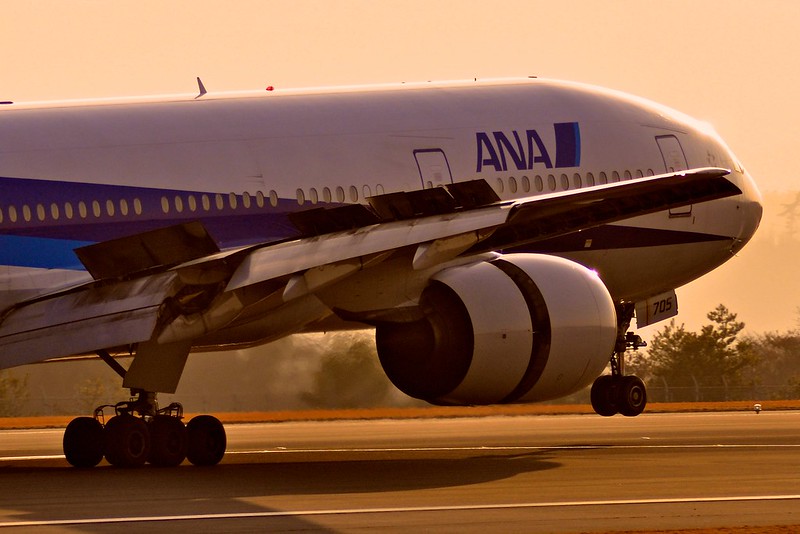
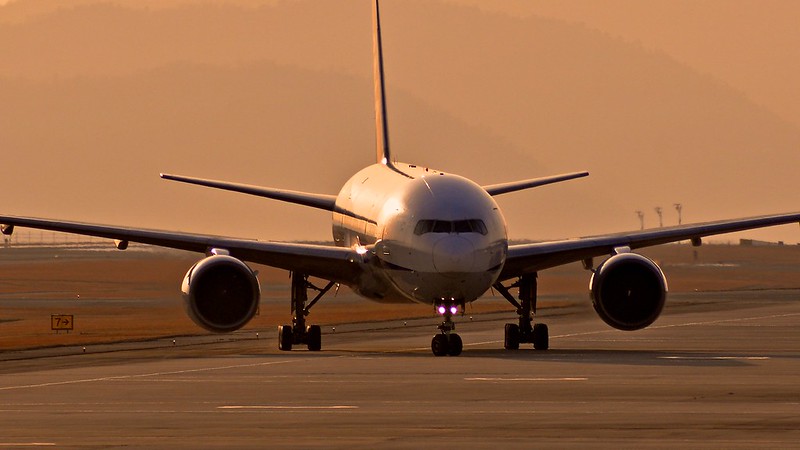
It was nearly 5 PM, and the sky was gradually getting dark. The light during the period around sunset is quite interesting, so I seized the time to take a few more photos before heading back to the airport.
By the way, there is also a flight simulator in the airport that allows for simple takeoff and Landing operations. It costs 200 yen per go,
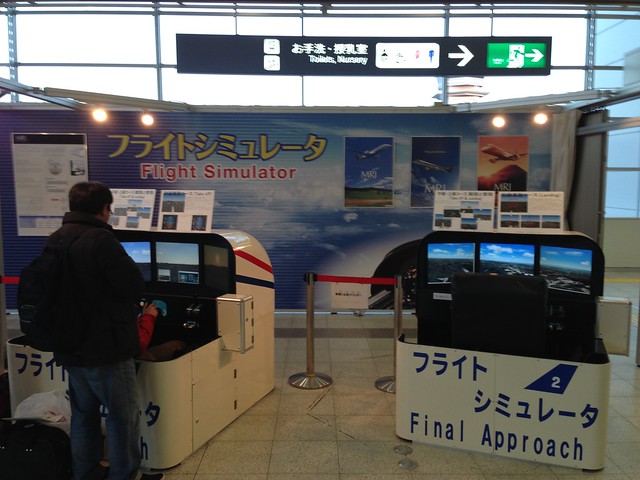 I tried it and felt it was too simple with too few functions to be satisfying; it is far inferior to X-Plane, haha.
The aircraft for the return flight to Tokyo was a McDonnell Douglas 90. This model of old aircraft is being completely retired from Japan this month, so opportunities to fly on it in the future will be slim to none,
So I specifically booked this flight online. The price was quite expensive, but considering the rarity of the opportunity, I bore with it.
The cabin seating is in a 2-3 configuration, and it feels quite comfortable,
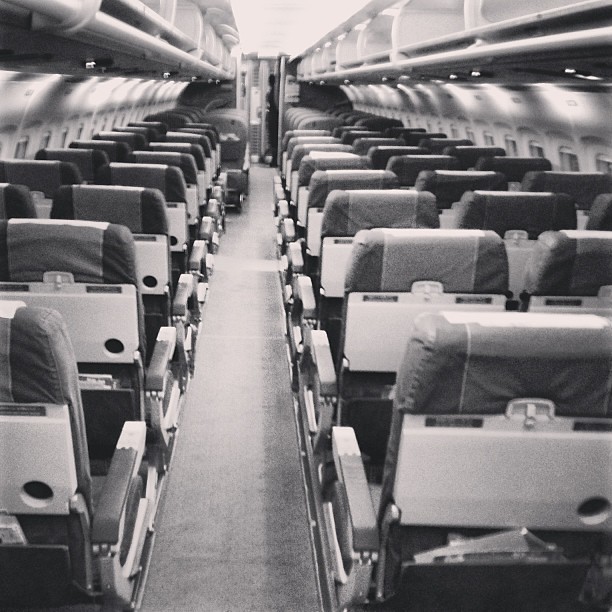 The interior of the plane is maintained very cleanly, and it doesn’t feel like an old plane about to be retired at all.
Look at these vintage headphones, aren’t they nostalgic?
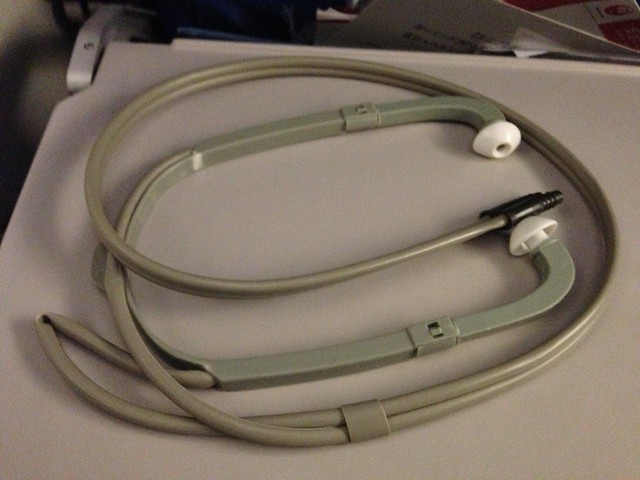
The Captain’s in-cabin announcement was also very good; he spoke deliberately slowly, and I was able to note down the data: Cruise Altitude 33000 feet Speed 1080 km/h!! Over Kyoto at 20:11 Over Hamamatsu at 20:20 Over Oshima at 20:30 Tokyo south wind, wind direction 7 degrees, possible Turbulence, etc.
Because I specifically booked a window seat on the left, the night view was excellent, especially around Nagoya and Yokohama. The lights were brilliant, showing the style of a big city.
The MD90 aircraft body is small, and the overall feeling of the ride was very light. Whether Climbing or Turning, it felt very effortless, Perhaps because I’ve been on 777s and 330s a lot recently, compared to the slow movements of these wide-body aircraft, the MD90 gave me a very exhilarating flying experience.
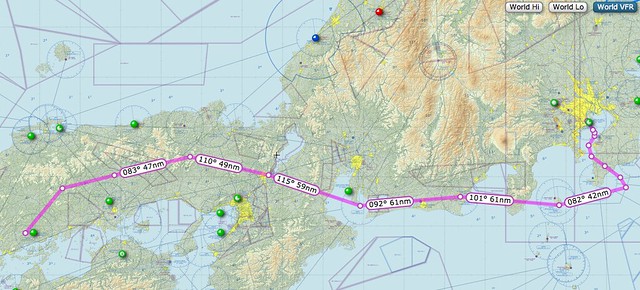
Based on visual estimation, this flight flew the MOMOT ONE RNAV Departure procedure,
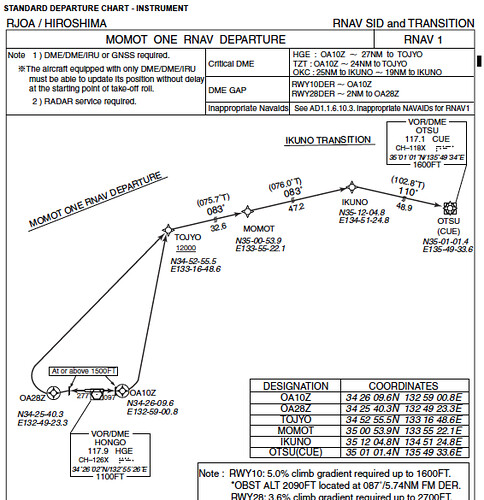
The general route is roughly “RJOA HGE OA28Z TOJYO MOMOT IKUNO CUE KOWA SZE XAC ADDUM AWARD NANSO UMUKI KAIHO AVION ALLIE AZURE HME RJTT”,
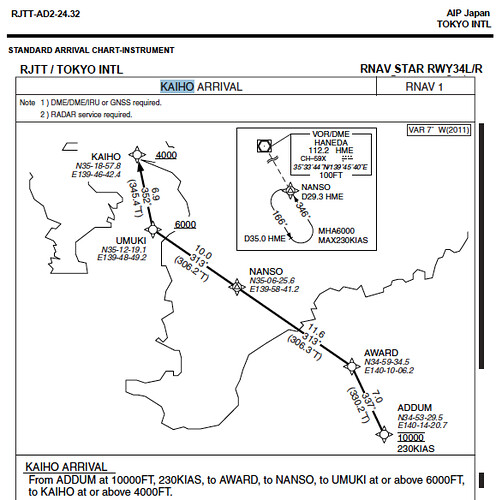
Over Chiba, the KAIHO Arrival procedure was executed,
And the final Landing was the Haneda Arrival procedure ILS X-ray 34L.
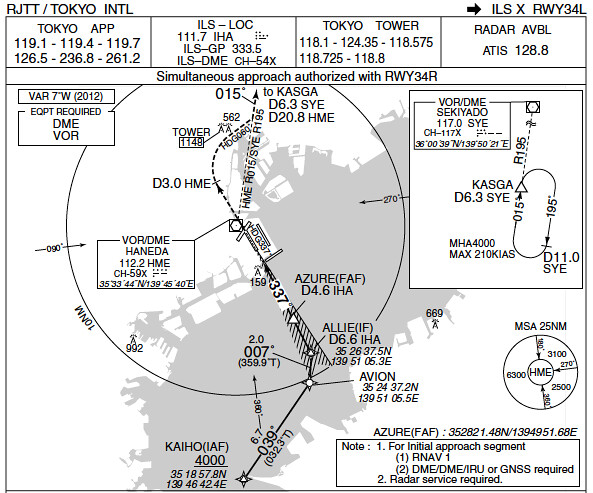
I simulated it on SkyVector, and it seems about right. Because with ILS Zulu 34L, the descent would be directly from over Chiba, whereas this time we flew over Tokyo Bay, So we could see the port cities of Yokosuka and Yokohama. Especially the Yokohama Bay Bridge, the skyscrapers of Yokohama Minato Mirai 21, and the large Ferris wheel, Yokohama Landmark Tower, the tallest building in Japan, etc., could all be seen clearly from the left window. The night view was truly amazing. From AVION, making a slight Turn to ALLIE and finally aligning with the Runway, in the short few seconds, I pressed my face against the window and tried my best to look forward, Seeing the bright lights of Runway 34L at Haneda Airport and the approach lights in the distance was very satisfying.
When disembarking in Tokyo, I saw that part of the cockpit was visible from the outside, so I snapped a quick photo with my iPhone. It’s quite clear.
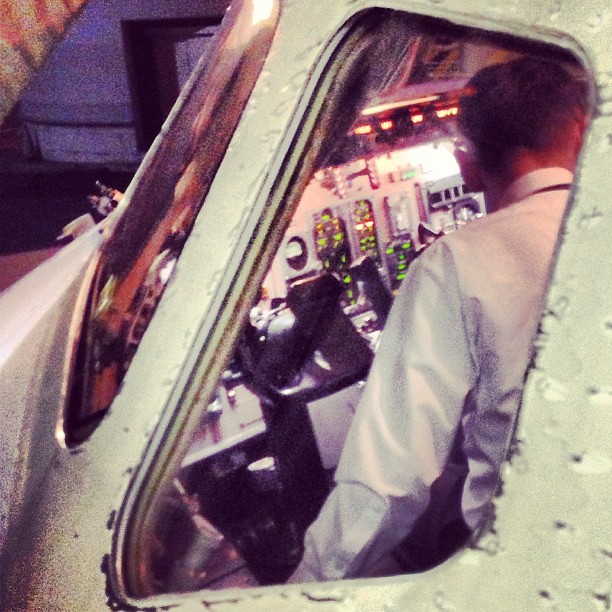
Finally, a commemorative photo from the outside. Goodbye.
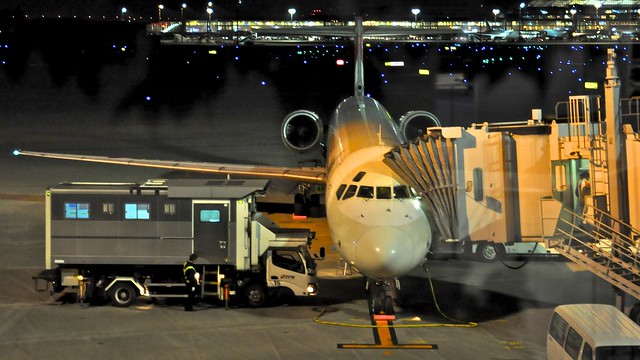 (Regrettably, I forgot whether the aircraft registration for this flight was JA8020 or JA8029…)
End