Title: A Log of Riding on the Boeing 787
I rarely take domestic flights in Japan. Recently, however, I took the opportunity of a business trip to skip the Shinkansen and fly an All Nippon Airways (ANA) Boeing 787 from Tokyo to Osaka instead. Below is a brief summary.
I booked the ticket via the ANA website. After entering my membership number and password, and selecting the date as well as the departure and arrival airports, I could see the schedule for the day’s flights from Tokyo Haneda International Airport to Osaka Itami International Airport. I selected the flight that suited me best based on the schedule, price, and aircraft type, then made the reservation, selected my seat, and entered credit card information. It was very simple. I then received an email containing a link; a single tap on my iPhone displayed the boarding pass in Passbook.
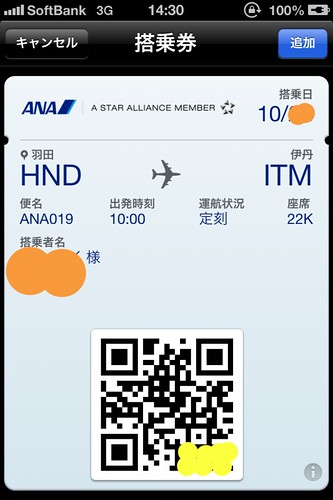 This meant there was no need to print an e-ticket; I could board directly with my phone.
On the day of departure, I checked the email notification sent by ANA the previous day, which stated the boarding gate was Gate 63 at Terminal 2. I then took the train to the airport. Below is a chronological log.
09:00 Arrived at Haneda Airport. On the way, I checked the airport weather—wind direction, wind speed, and cloud ceiling—and estimated which Runway the flight would likely use. Unfortunately, I forgot to record the raw data…
09:10 Arrived at the observation deck on the 5th floor of Terminal 2. Photographed the aircraft registration number JA811A for this flight, aircraft type Boeing 787-8.
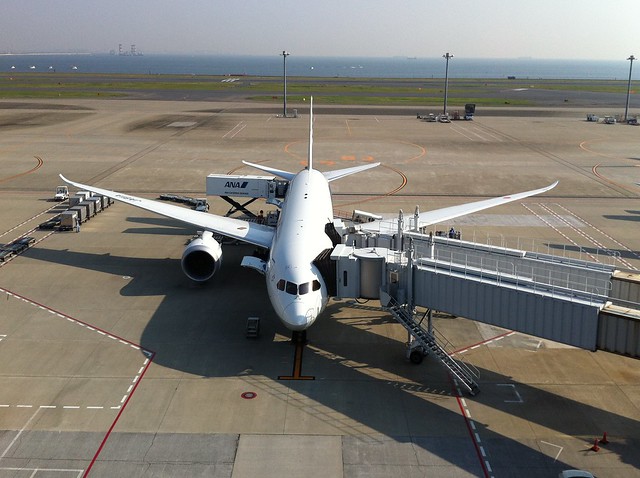 I had plenty of time, so I started taking photos of various aircraft taking off and landing on nearby Runway 34R and various ANA aircraft parked at the terminal. I took over 200 photos in total.
09:40 Went downstairs to the departure floor. Security check. Took out my phone and swiped it over the card reader to enter the boarding lounge.
09:50 Boarding. Swiped my phone over the card reader once more, and the boarding process was complete.
The passengers on this flight all appeared to be on business trips, dressed in suits.
I had plenty of time, so I started taking photos of various aircraft taking off and landing on nearby Runway 34R and various ANA aircraft parked at the terminal. I took over 200 photos in total.
09:40 Went downstairs to the departure floor. Security check. Took out my phone and swiped it over the card reader to enter the boarding lounge.
09:50 Boarding. Swiped my phone over the card reader once more, and the boarding process was complete.
The passengers on this flight all appeared to be on business trips, dressed in suits.
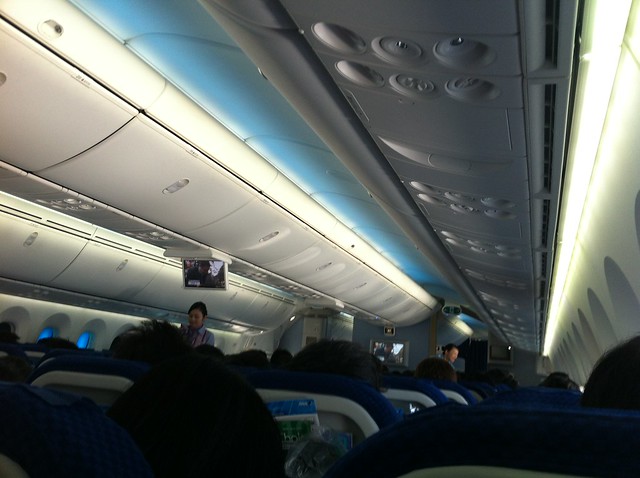 Observed the 787’s unique window dimming buttons and the large, slender windows from my seat.
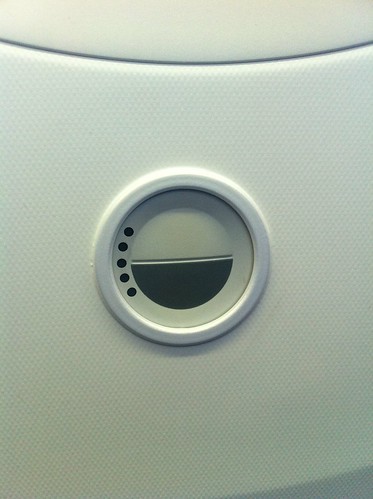 There are 5 dimming levels, controlled by two buttons: the top button brightens, the bottom button darkens. At the darkest setting, the window turns a shade of blue.
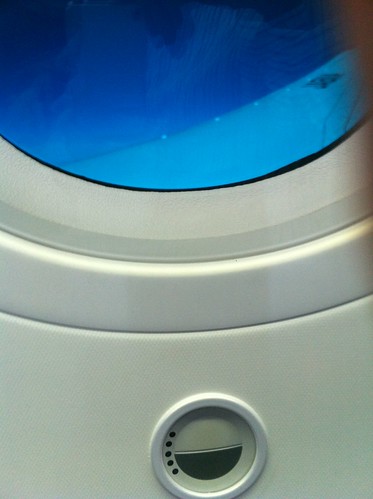 My seat was on the right side at the window, right next to the main wing. Not the best seat choice.
09:58 In-flight announcement stated the cabin door was closed. The load factor looked to be about 95%.
10:01 In-flight safety demonstration video began. Turned off iPhone.
10:03 Pushback began.
10:05 Engine start. Air conditioning stopped briefly. Engine noise inside the cabin increased slightly.
10:07 Aircraft began taxiing. Passed Runway exit sign Z, entered Taxiway C, and taxied south.
Since I had downloaded the airport diagram in advance, I was able to grasp the aircraft’s movement route by observing the various signage points.
My seat was on the right side at the window, right next to the main wing. Not the best seat choice.
09:58 In-flight announcement stated the cabin door was closed. The load factor looked to be about 95%.
10:01 In-flight safety demonstration video began. Turned off iPhone.
10:03 Pushback began.
10:05 Engine start. Air conditioning stopped briefly. Engine noise inside the cabin increased slightly.
10:07 Aircraft began taxiing. Passed Runway exit sign Z, entered Taxiway C, and taxied south.
Since I had downloaded the airport diagram in advance, I was able to grasp the aircraft’s movement route by observing the various signage points.

Haneda Airport Diagram
10:08 Flaps set to 20 degrees.
10:11 Passed Taxiway A, continued taxiing south and entered Taxiway R. As expected, we are using Runway 05.
10:15 Taxied to the holding point of Runway 05. Saw runway sign 05D1.
10:16 Fasten seatbelt sign illuminated with the “ding-dong” electronic chime.
10:16:50 Engines spooled up for takeoff thrust. Engine noise roared in the cabin, but it didn’t feel particularly loud.
10:17:25 Lifted off.
10:17:40 Heard the mechanical sound of landing gear retracting. Started a right turn.
10:18:40 Flaps retracted. Took about 30 seconds.
10:21 Over Tokyo Bay. Climb rate decreased slightly. Mount Fuji could be seen in the distance.
10:23 Fasten seatbelt sign extinguished. Flying over the sea. The Sagami Bay and the Kanagawa coastline were visible on the right.
Turned on iPhone and set to Airplane Mode.
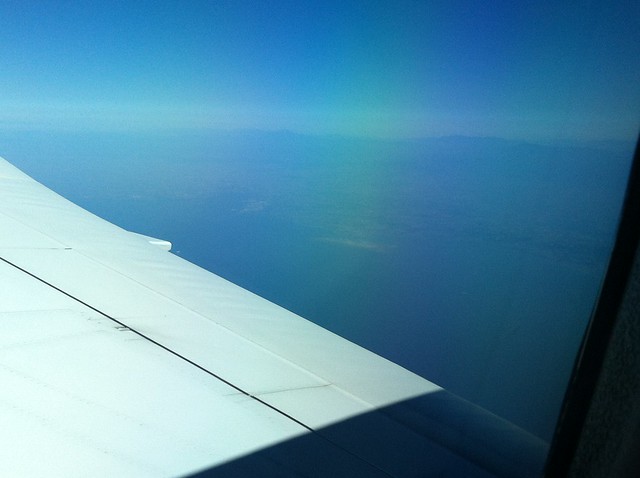
10:28 Passed Mount Fuji in Shizuoka Prefecture on the right.
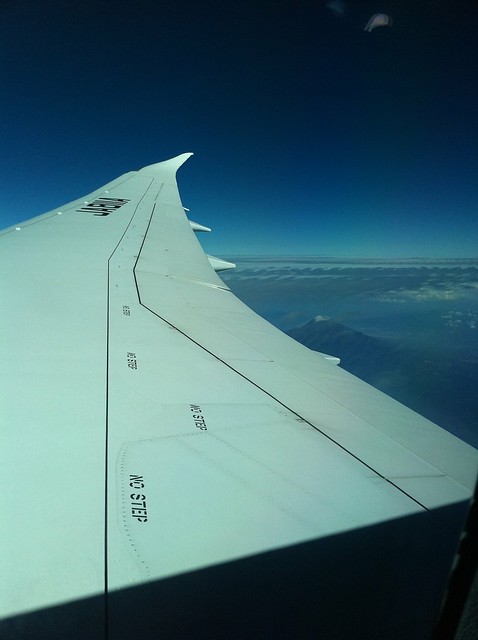
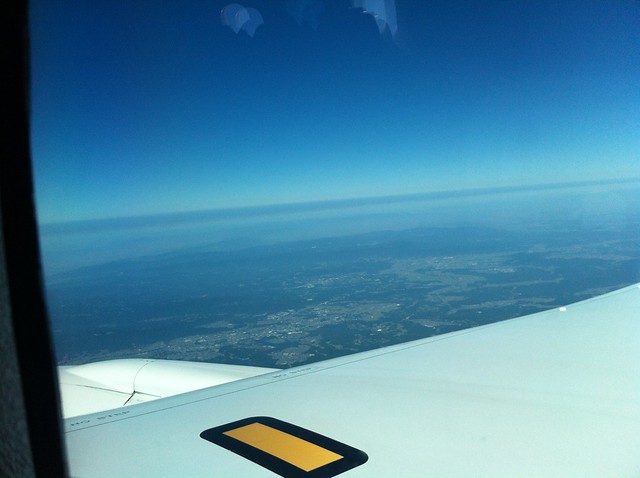
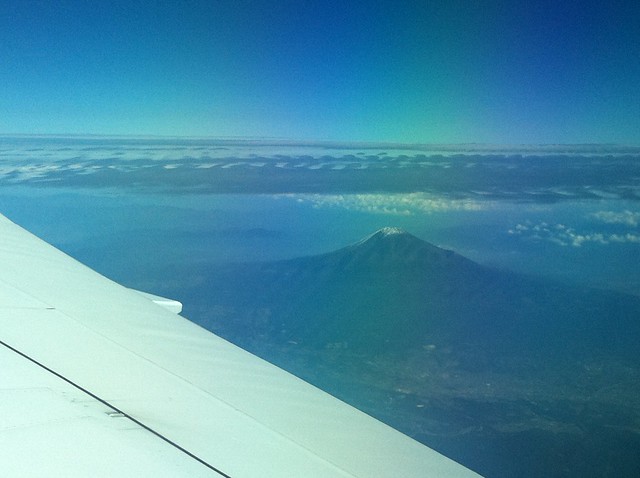 Visible in the photo below are the 787’s unique upward-curved wing design and sleek flap fairings.
 10:35 In-flight beverage service began.
10:39 Captain announced we were passing Hamamatsu City, Shizuoka Prefecture, and entering the cruise phase. I didn’t catch the flight altitude clearly.
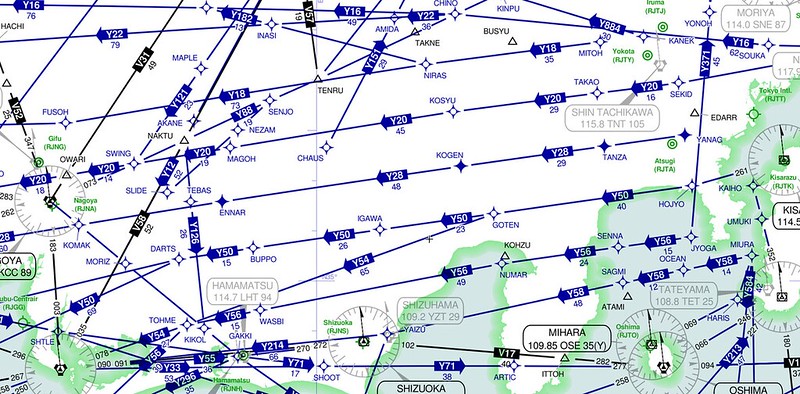
Estimated we are flying on Airway Y56.
10:35 In-flight beverage service began.
10:39 Captain announced we were passing Hamamatsu City, Shizuoka Prefecture, and entering the cruise phase. I didn’t catch the flight altitude clearly.
Estimated we are flying on Airway Y56.
 10:43 Could see Chubu Centrair International Airport near Nagoya, Aichi Prefecture passing below.
 10:46 Felt like the flight altitude started to Descend. Flying over Mie Prefecture.
10:48 Slight right Turn. Entered Nara Prefecture?
10:46 Felt like the flight altitude started to Descend. Flying over Mie Prefecture.
10:48 Slight right Turn. Entered Nara Prefecture?
 10:49 Fasten seatbelt sign illuminated.
10:50 In-flight announcement began the Descent phase. Turn off phone.
Estimated we are now flying on Airway Y54.
10:49 Fasten seatbelt sign illuminated.
10:50 In-flight announcement began the Descent phase. Turn off phone.
Estimated we are now flying on Airway Y54.
 10:51:30 Spoilers deployed, cabin noise increased. Some Turbulence.
10:54 Passed over the mountains between Osaka and Nara (likely Mt. Ikoma near Yao Airport; if sitting on the left, you might see Yao Airport).
Spoilers retracted. Landing gear extended.
10:55 Flaps set to 20 degrees.
10:56 Spoilers deployed. Over Osaka city, passing the Yodo River. Some Turbulence.
10:57 Flaps set to 30 degrees. Ground buildings getting closer.
10:58:49 Landed on Runway 32L at Osaka Itami Airport. Spoilers deployed to maximum position.
11:01 In-flight announcement announced Gate 10. Saw runway sign C3E4.
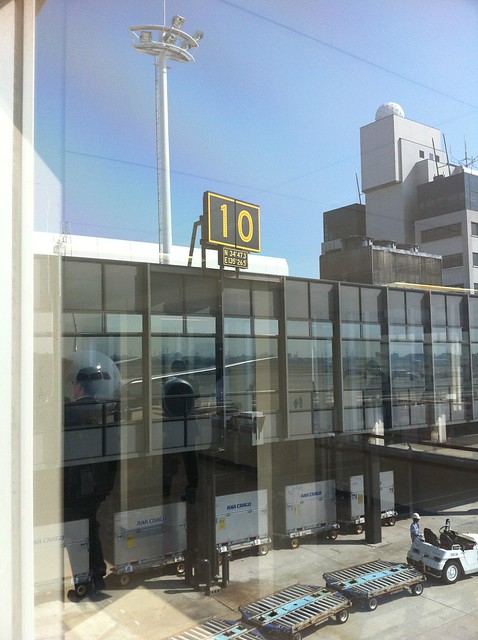
11:02 Parked at boarding Gate 10.
11:06 Disembarked. Saw the latitude and longitude display on the sign at Gate 10. Pilots use this to calibrate the inertial navigation system.
10:51:30 Spoilers deployed, cabin noise increased. Some Turbulence.
10:54 Passed over the mountains between Osaka and Nara (likely Mt. Ikoma near Yao Airport; if sitting on the left, you might see Yao Airport).
Spoilers retracted. Landing gear extended.
10:55 Flaps set to 20 degrees.
10:56 Spoilers deployed. Over Osaka city, passing the Yodo River. Some Turbulence.
10:57 Flaps set to 30 degrees. Ground buildings getting closer.
10:58:49 Landed on Runway 32L at Osaka Itami Airport. Spoilers deployed to maximum position.
11:01 In-flight announcement announced Gate 10. Saw runway sign C3E4.
11:02 Parked at boarding Gate 10.
11:06 Disembarked. Saw the latitude and longitude display on the sign at Gate 10. Pilots use this to calibrate the inertial navigation system.
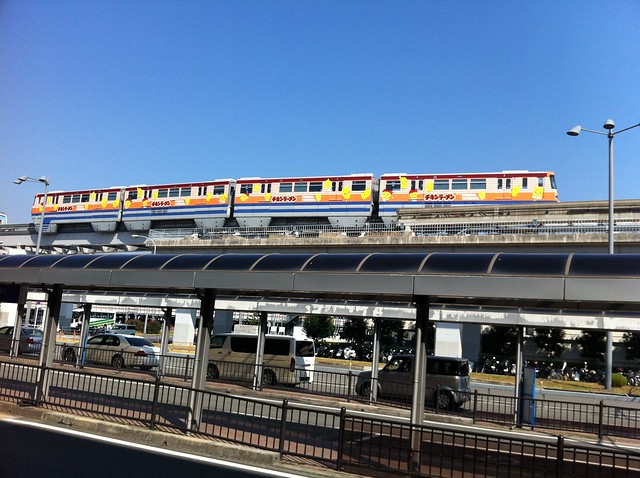
 11:10 Left the airport. Saw the monorail heading to the city. The instant noodle ad on the train car was interesting, so I took a photo immediately.
Thoughts on this flight:
Low cabin noise. Even when sitting by the window, I didn’t feel it was loud during takeoff and landing, when engine noise is at its peak.
Cabin pressure changes were smooth during Climb and Descent; my ears felt no discomfort at all.
Perhaps because it is a dedicated domestic aircraft, the seat pitch was narrow, there were no personal entertainment systems, and the interior decoration was simple. This probably reflects ANA’s practical business philosophy.
The windows are large, slender, and offer a good view of the outside scenery, especially the sky above. However, the width isn’t much different from other models. The dimmable feature is nice, especially for taking photos, as it makes the blue sky look better.
End