Title: Inside the Airliner Cockpit 2.3 Push Back from the Gate and Engine Start
After the pilot obtains the clearance and completes the pre-departure 5-minute preparations (pre-start procedures), they can request pushback from Ground Control, for example:
Pilot: “Tokyo Ground, Air System 115, request push back, spot 2, information F”
This means: “Tokyo Ground Control, this is Air System 115, requesting pushback from Gate 2, we have Information F (Foxtrot).”
Upon receiving this radio request, the airport Ground Controller will check the traffic congestion on the Apron. If there are no other aircraft moving nearby, or if the movement of this flight will not affect other aircraft, they will reply:
“Air System 115, push back approved, Runway 16R”
This means: “Air System 115, pushback approved, please use Runway 16R (Right).”
Upon receiving the command to push back, the aircraft can finally depart.
Regarding the departure times displayed on the airport screens, most people might assume this is the moment the aircraft lifts off the ground. In reality, this time refers to when the aircraft leaves the Jet Bridge (boarding gate), i.e., the moment the aircraft transitions from a stationary state to movement.
Similarly, the arrival time is not the moment the aircraft touches down on the ground, but rather the moment the aircraft taxis to the parking spot and comes to a complete stop.
First, the Captain contacts the ground maintenance crew waiting on the ground via the intercom system. The ground crew connects their headset to the aircraft’s external interface to communicate with the cockpit.
Captain: “Ground, ready for push and start.” Mechanic: “Received. Release parking brake.” Captain: “Brake released. Hydraulic pumps on.” (The dialogue cited here is for a Boeing 777-200. The left and right main landing gears of the 777 each have 6 tires, and the two rear tires can be controlled hydraulically to turn left and right like a car’s wheels, giving the massive body of the 777 a smaller turning radius during ground turns.) Mechanic: “Received. Clear for pushback.”
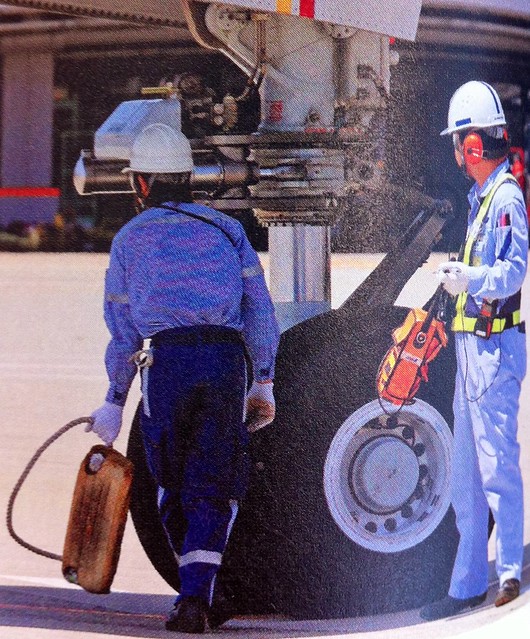
At this point, another ground crew member standing beside the communicating mechanic will remove the wheel chocks in front of the landing gear, as shown below:
 Then, a powerful pushback tug connected to the aircraft’s nose gear via the tow bar shown in the figure below,
 pushes the several-hundred-ton aircraft, slowly pushing the aircraft—nose facing the terminal building—backwards.
The ground maintenance crew also moves backward with the aircraft.
pushes the several-hundred-ton aircraft, slowly pushing the aircraft—nose facing the terminal building—backwards.
The ground maintenance crew also moves backward with the aircraft.
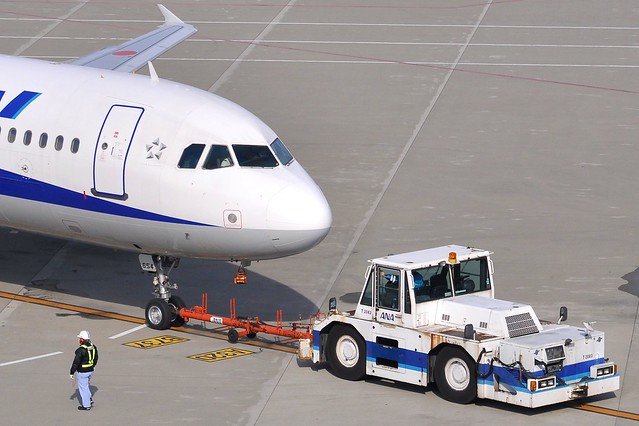 (Photo above taken at Nagoya Chubu Centrair International Airport)
It is important to note that during pushback, the pilot must absolutely not turn the nose wheel tiller or apply the brakes, as doing so could damage the nose gear or the tow bar. The direction of movement during pushback must be entirely controlled by the tug.
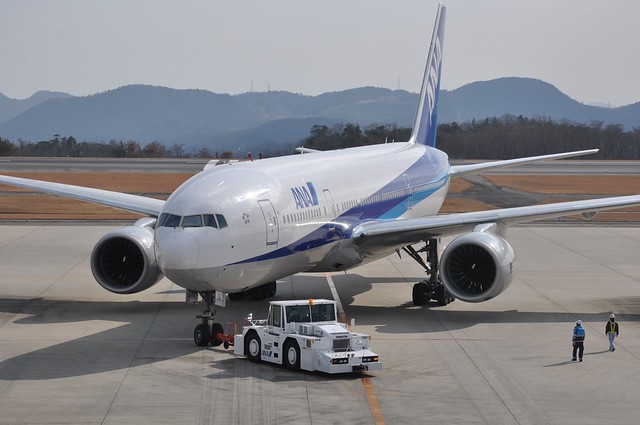 The tug pushes the aircraft backward during a turn. Photo taken at Hiroshima Airport.
At the same time, the cabin broadcast begins, and flight attendants begin announcing flight information and instruct passengers to fasten their seatbelts.
The pilots in the cockpit aren’t idle either; they execute the Before Start Checklist (shown below is for a Boeing 737-500).
 After confirming there are no issues, they contact Ground again.
Captain: “Ground, ready for engine start.” Mechanic: “Received. Clear to start.” Captain: “Start number 2 engine, right side.” Captain: “Start number 1 engine, left side.”
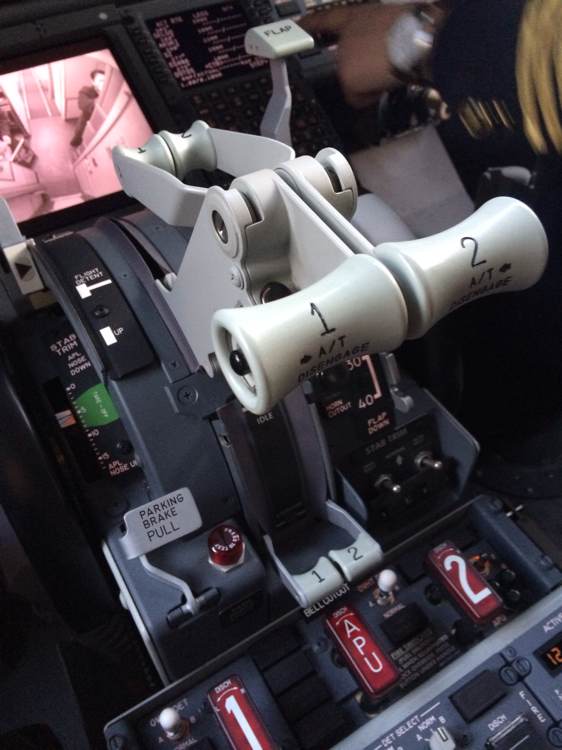 (This is a photo of a Boeing 737-800. Special thanks to Mr. berqiang from Baidu Tieba for providing it, sourced here.)
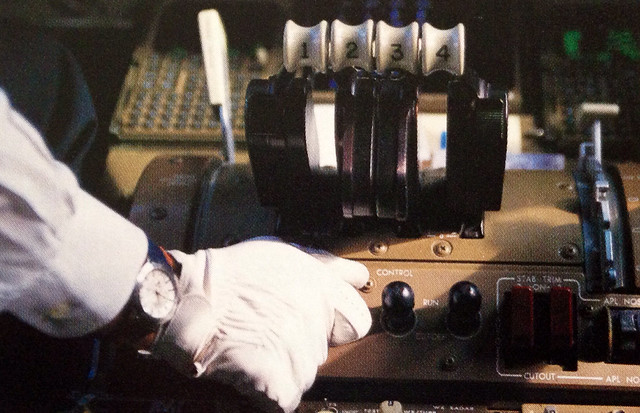
Below is a photo of a Boeing 747-400 pilot opening the engine fuel valve:
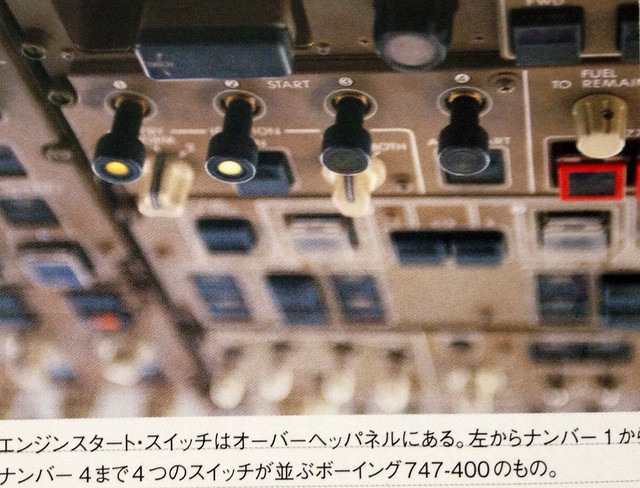
 Below is the 747 engine start valve located on the overhead panel:
I read in a book that Airbus and Boeing are opposite, with Airbus starting engine No. 1 on the left first. However, when I actually observed the startup sequence of this A320 at Nagoya Chubu Centrair International Airport, I found that it also started with the right engine first.
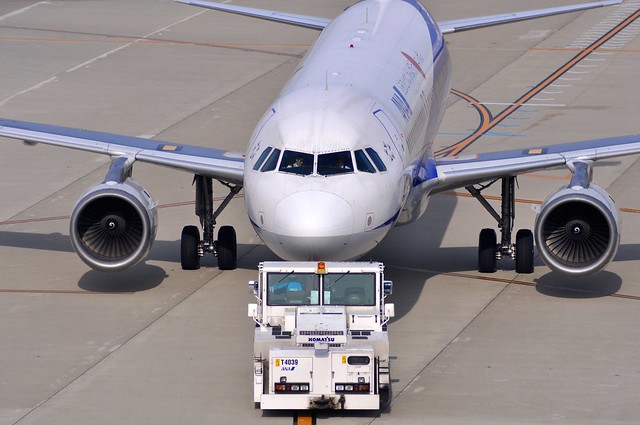 When taking the photo above, the right engine was started first. You could hear a roar significantly louder than the APU, and that engine had already begun to enter a stable rotation phase, while the left engine remained stationary, waiting to be started.
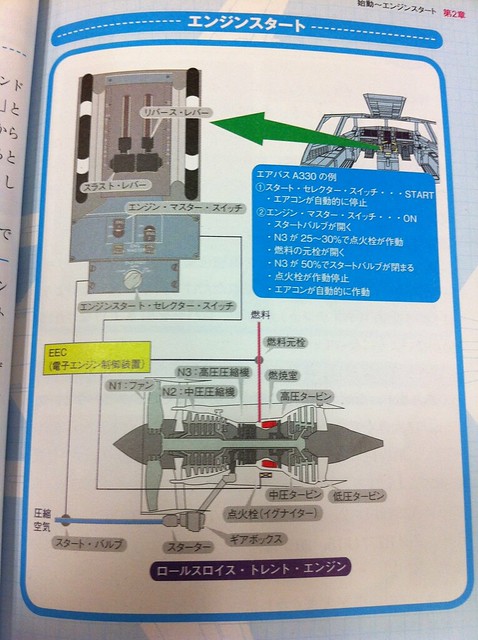
Engine startup requires the APU (Auxiliary Power Unit) mentioned earlier. To deliver the compressed air generated by the APU to the engines, the pilots first turn off the cabin air conditioning, set the Thrust levers to the idle position, and then press the engine start switch. The valve in the middle of the engine opens, and compressed air is sent to the high-pressure compressor, causing the engine blades to accelerate and rotate.
When the N2 (N3 for Rolls-Royce engines) speed on the EICAS display reaches 25-30%, the fuel control is set to the RUN position. Aviation fuel is injected into the combustion chamber for ignition, causing the compressed air to burn.
 Under normal circumstances, the EGT (Exhaust Gas Temperature) gauge will show a rapid rise, and the engine’s roar will continuously increase.
The principle of modern jet engines is to suck in air through the rotating fan at the front, compress it via the compressor, ignite it with aviation fuel to burn, generate immense heat, and release it through the rear nozzle. This produces a huge reaction force relative to the aircraft body, pushing it forward. For the stages of intake/compression/combustion/exhaust, instruments are needed to monitor the engine status. One of the most important is the EGT (Exhaust Gas Temperature) gauge. By measuring the temperature of the exhaust gases, it monitors whether the exhaust is overheating to determine if the engine is normal. During startup or takeoff, the EGT must be strictly controlled not to exceed specified values.
Additionally, there are gauges for engine speed N1, fuel flow, oil flow, oil temperature, pressure, vibration, etc., all displayed on the EFIS and MFD, as shown below:
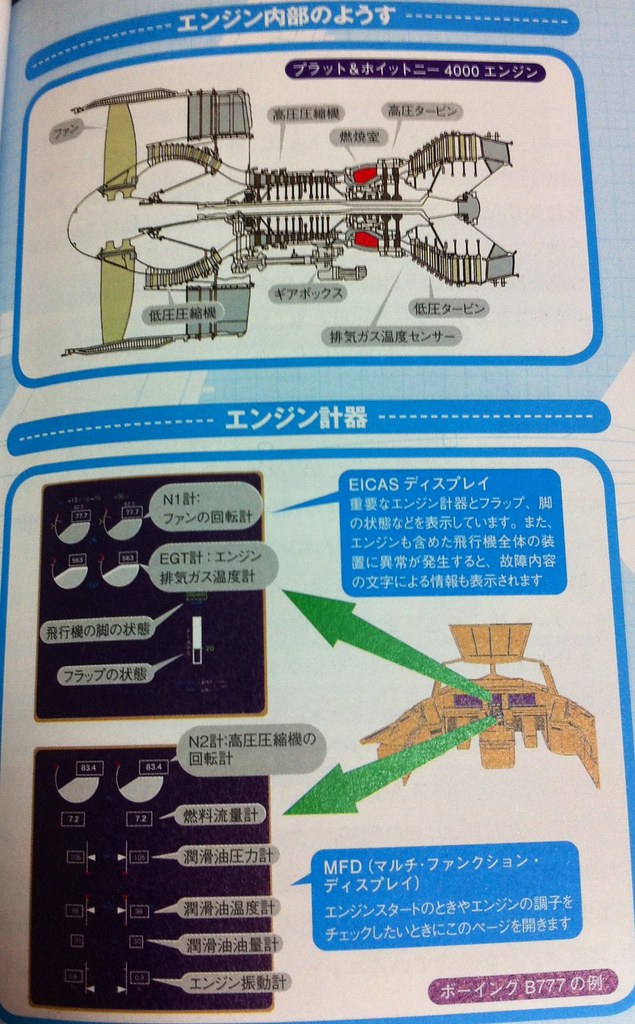
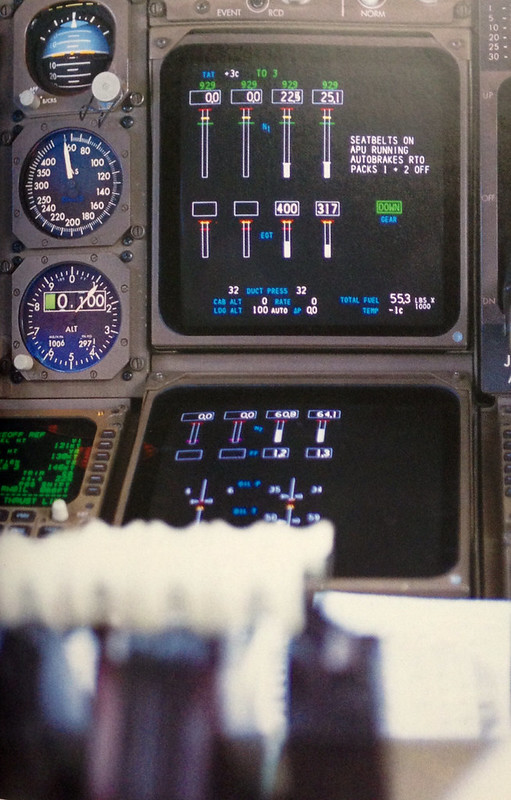
The pilots carefully observe the various engine parameters. When the engine speed reaches 50% of the maximum value and stabilizes completely, the air valve and igniter can automatically shut off, marking the official end of the engine start procedure. The aircraft’s air conditioning, lighting, and other equipment begin to be powered by the engines, and the APU can be shut down. Jet engines used in airliners take a relatively long time to start; from stop to idle state usually takes tens of seconds. Pilots must use the on-board stopwatch to record the required time.
After the air conditioning powered by the APU is turned off and until the engine startup is complete and the air conditioning is restarted, the noise in the cabin will suddenly decrease, and the temperature inside will rise slightly. Next time you fly, you can observe these details to know when the pilots are starting the engines.
Additionally, the airflow blown backward when the engine is at idle is not very strong. As long as one doesn’t get within a few meters, there is no danger. Therefore, ground maintenance personnel can observe the engine startup status while walking with the aircraft towards the Taxiway.
Slowly, the aircraft is pushed by the tug to the end of the Apron and begins preparing to taxi towards the departure Runway.
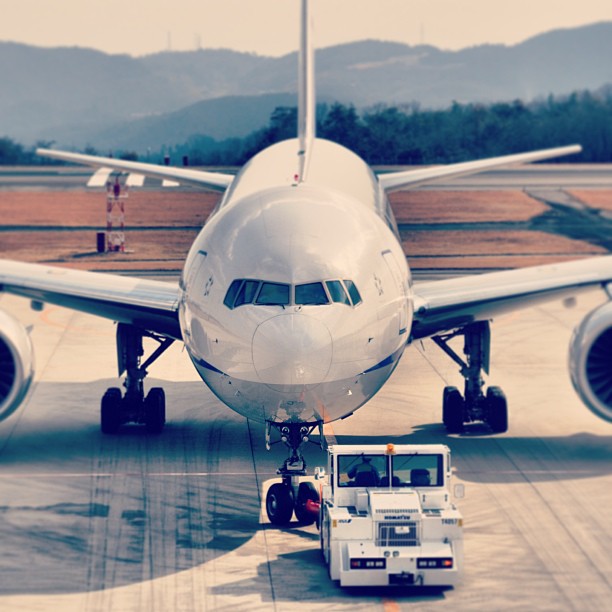 (Photo above taken at Hiroshima International Airport)
Prev: Standard Instrument Departure SID TOC: Table of Contents Next: Ground Taxi Route Taxi
End