Training Diary: Practicing Traffic Pattern and Touch and Go After a Two-Week Break
Due to a business trip, I haven’t practiced X-Plane for two weeks. Fearing my skills might have gone rusty, I hurriedly took the weekend to review. Today was mainly repetitive touch and go maneuvers, circling the airport round and round.
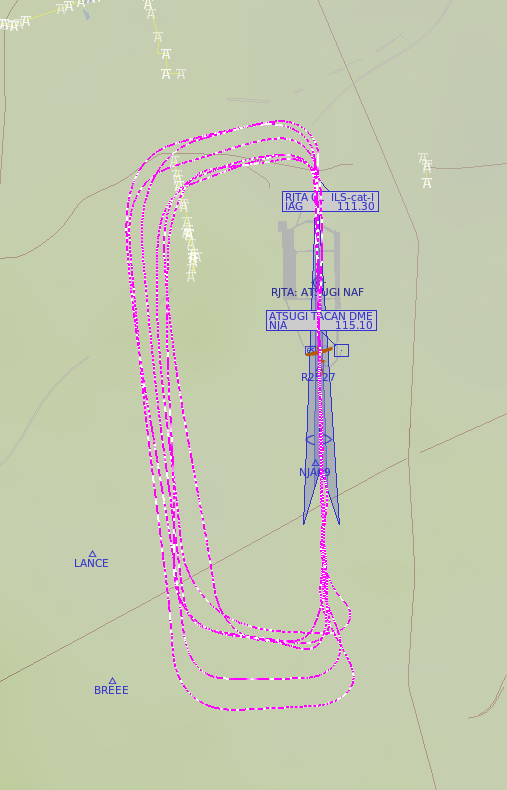
Looking at the track plot, I feel the base leg is still the biggest problem. The airspeed is a bit too fast, the timing for entering the final approach is quite late, and additionally, the nose isn’t properly aligned with the runway.
My standard traffic pattern operations are as follows:
Departure Leg: Rotate at 55 knots, climb at airspeed 80~90 knots. Reduce throttle to 2000rpm at 300 feet, turn at 500 feet. In this phase, two points feel important. First is the rudder: during taxi on the runway and just after liftoff, the plane always feels like it’s yawing left (likely the P-Factor effect, here is an article discussing this), so pay attention to the turn coordinator’s inclinometer ball and use rudder to keep it centered. Second, the nose tends to pitch up immediately after takeoff, so moderately push the nose down to ensure the climb angle isn’t too steep.
Crosswind Leg: Maintain climb speed of 80~90 knots, turn at 900 feet. In this phase, also ensure the climb angle isn’t too steep. Try to make this side slightly longer to allow more time for adjustments during the base leg.
Downwind Leg: Reduce throttle to 1800rpm, level off at 1000 feet, cruise speed 90 knots. When abeam the runway threshold, reduce throttle to 1500rpm to descend to 800 feet, increase pitch to reduce airspeed to 80 knots. The difficulty here is that when raising the nose to decelerate, the descent rate increases, so it always takes a long time to reach 800 feet, which makes me anxious. I really need to practice these maneuvers more. When the runway threshold is at a 45-degree angle to the wing, I should enter the base leg. However, because I spend too much time adjusting altitude, the angle at turn is often less than 30 degrees.
Base Leg: Reduce throttle to 1400rpm, raise the nose to lower airspeed to 70 knots, drop flaps to 10 degrees. Begin the turn at 500 feet. The problem here is still that speed control isn’t natural enough; if it takes too long, I overshoot the runway. As you can see in the image above, I flew an S-shape on the final a few times. The track is terrible.
Final Approach: Reduce throttle to 1300rpm, airspeed 65 knots. If the speed is too high, I can drop flaps to 20 degrees, but if speed control is fine, it seems okay not to add more flaps. Cut the throttle at the runway threshold, use rudder to align with the centerline, flare for landing, etc. The issue in this phase is still failing to align with the runway threshold; the attitude always feels like a crosswind landing, which feels strange. Also, the altitude sometimes drops too low, forcing me to increase throttle to maintain altitude when approaching the runway. Maintaining a smaller, more stable descent rate during the base and final legs is an important goal for the future.
End